
Features
Schools’ House System

 Nostalgic memories crowded my remembering mind as I heard band music from schools close to my home, practicing for forthcoming sports meets – Royal, Ladies’ and Mahanama Colleges. In addition to enjoying listening to schools’ sports practices, I remembered with distaste parents I had to ward off who sought my complicity in cheating to get their five year olds into Royal Primary.
They sought to transform their suburban living to my address; one mother even intent on inserting my Colombo 3 address in the birth certificate of her infant to get the child into Royal, failing which they’d settle for one of the other two proximate boys’ schools. Cheating was not and is not in my living style. My reluctance to cheat was incomprehensible to the new breed of parents. When my elder son had to enter college, we moved well before he was five to an annexe proximate to Royal College giving up spacious living in Ratmalana.
I got diverted: cheating is a practice that is total anathema to me, as it is to other older persons. We were bred and nurtured at home and school in a different way to most of those who now occupy center stage in our country. And that directly impinges on the subject of my article this Sunday – which is healthy competition and fair play, embedded and nurtured by the House System in the schools we attended.
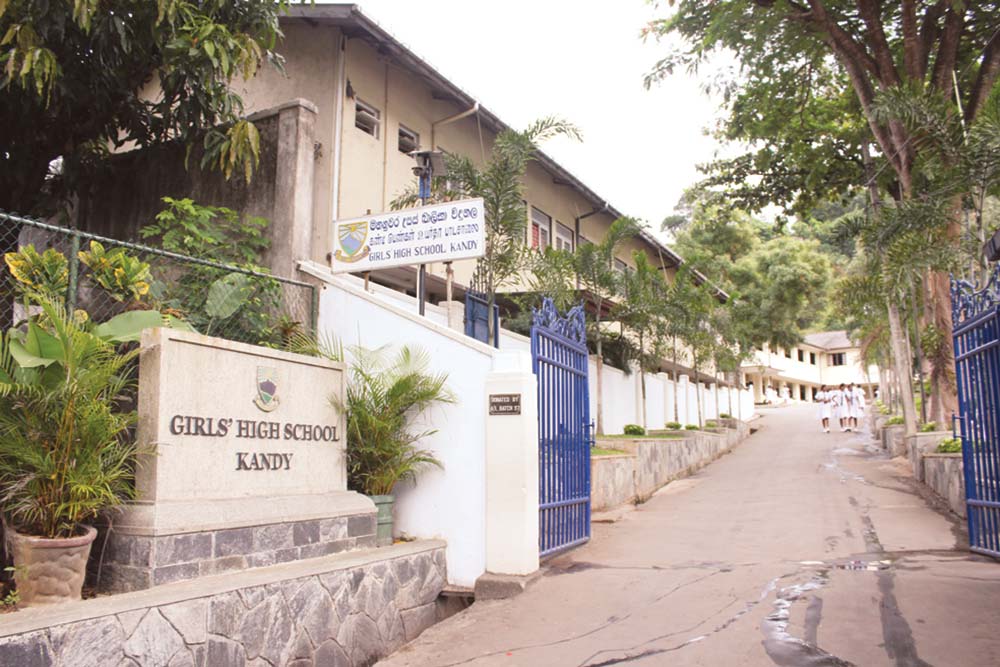
Most schools now have their houses with set colours and probably mottoes and distinctive flags. I am blown up with righteous pride as I write about school houses since my school – Girls High School, Kandy – was the first girls’ school to adopt the house system. The school, now more familiarly named as Kandy High (KHS), was founded in 1879 by Rev Samuel Langdon with his wife. the first principal.
The house system was introduced in 1921. This is a first among others like adopting a school song, hymm, school uniform, badge and tie, Guiding and Brownies, which KHS is proud of. Recorded with happy memories interrupted with nail biting competitiveness is that we almost died for the House we belonged to from the four: Eaton (light blue), Langdon (dark green), Lawrance (yellow) and Sansom (dark blue). Names were of principals of the period 1879 to 1920; colours were from the school crest of a yellow sun against a pale blue sky shining over a dark blue mountain with a grassy stretch of land in the foreground.
Origin of the House System
Being within the British Empire when the education system of Ceylon was greatly enlarged and enhanced, missionary schools opened here copied customs, systems and ways of running schools from Britain, and the best in Britain.
The house system began in boarding schools where students ate, drank and slept; i.e. lived in individual houses during school terms. My reference reading did not indicate whether these houses were owned by outside-school individuals or the school itself at the very beginning. Soon enough the ‘houses’ came within the school premises and administration, and each was referred to as a ‘boarding house’. The schools thus became boarding schools where a ‘house’ referred to a boarding dormitory in the school, and students were distributed among the four (or more or less) houses. A housemaster or housemistress was assigned to each house in loco parentis. Houses competed with one another at sports and maybe in other ways, thus providing a focus for group loyalty.
The house system is associated with public schools in England termed boarding schools. In day schools the word house is likely to refer to a grouping of pupils rather than to a particular building. The house system still operates in boarding schools such as Harrow, Eton and Winchester Colleges, copied exactly by Trinity College, Kandy. Maybe by other large colleges in Colombo and other cities.
In Trinity College the dormitories and thus houses were named Fraser, Napier, Alison and Ryde. Boarders were assigned their Houses which system prevailed for sports events and meets. The less number of day students were all in Garret House. An Old Boy of TCK told me that this system prevails no more, with the transformation of a purely boarding school to one with more day scholars.
Hillwood College was a boarding school which had very few day students. The school had its four Houses but the hostels were divided according to age of inmates: the youngest were in Netherwood, the pre-teens in Middlewood, those in their mid-teens in a much smaller place down below called Cave Memorial Hostel, and the seniors in the dorm named Hillwood, adjacent to the principal’s office, admin office and senior classrooms. High School which had only around 32 hostelers who were in different dormitories, un-named; Houses were within the school system.
Houses may be named after saints, more often with names of outstanding managers or principals of the school. Kingswood went even further than Trinity College and named its four Houses – Eton, Harrow, Rugby and Winchester.
Buddhist schools usually revered persons in Buddhist history, by borrowing their names. A few schools prosaically select names of colours. Visakha Vidyalaya has Dias, Dawes, Jayatillake, Pulimood, Motwani and Weerasooria recording its woman founder, managers and principals. Leelananda de Silva who I spoke with said that in Mahinda College, Galle, Dr F L Woodward, Oxford classicist, wished to retain Sri Lankan-ness and borrowed names for Mahinda’s Houses from our historical heritage by naming them Pandukabhaya, Parakrama, Gemunu and Tissa.
Benefits of the House System
No doubt the house system enhanced the aim of schools which was, is and should be the development of the personality of its students; to assist students to mould their characters so they become well balanced members of society; useful citizens to their country. How is this done? Mainly by fostering the quality of loyalty and willingness to give the best of themselves for the good of the House they belong to. Also character building through clean competitiveness which connotes fair play and acceptance of victory or defeat in the correct spirit. Thus inter-house sports meets in almost every school, whether urban or rural.
Visions of girlhood
The final verse of the KHS School Song has these lines:
“When we look back and forgetfully wonder
What we were like in our work and our play
Then it may be there will often come o’er us.
Visions of girlhood shall float then before us”
The song mentions netball matches played, dancing, debates and exams.
Remembered are our sports meets which meant the world to us. Tradition in the 1950s was that the sports meet was organized entirely by the Games Captain with the School Captain, supervised by Games Teachers. Hence when I was Games Cap, Carmen de Zylva and I did the shopping for prizes and made all arrangements. Remembered is that we had races for Old Girls, Teachers, and even the men servers in the school, each appropriated to a House. Remembered is that we took Banda who rang the school bell at the beginning of school and end, and after each period, to Sansom House while Suppiah and the other two were in the other houses. Best remembered with a missed heartbeat still, are netball matches with the formidable Hillwood team dressed in full Kandyan sari against our divided skirts. They invariably won!
Those were the days, my friend, of loyalty, keen, clean competition and playing the game as it should be played, to win or lose, fair and square.


 ‘Adapt, shrink or die’ – thus runs the warning issued by the Trump administration to UN humanitarian agencies with brute insensitivity in the wake of its recent decision to drastically reduce to $2bn its humanitarian aid to the UN system. This is a substantial climb down from the $17bn the US usually provided to the UN for its humanitarian operations.
Considering that the US has hitherto been the UN’s biggest aid provider, it need hardly be said that the US decision would pose a daunting challenge to the UN’s humanitarian operations around the world. This would indeed mean that, among other things, people living in poverty and stifling material hardships, in particularly the Southern hemisphere, could dramatically increase. Coming on top of the US decision to bring to an end USAID operations, the poor of the world could be said to have been left to their devices as a consequence of these morally insensitive policy rethinks of the Trump administration.
Earlier, the UN had warned that it would be compelled to reduce its aid programs in the face of ‘the deepest funding cuts ever.’ In fact the UN is on record as requesting the world for $23bn for its 2026 aid operations.
If this UN appeal happens to go unheeded, the possibilities are that the UN would not be in a position to uphold the status it has hitherto held as the world’s foremost humanitarian aid provider. It would not be incorrect to state that a substantial part of the rationale for the UN’s existence could come in for questioning if its humanitarian identity is thus eroded.
Inherent in these developments is a challenge for those sections of the international community that wish to stand up and be counted as humanists and the ‘Conscience of the World.’ A responsibility is cast on them to not only keep the UN system going but to also ensure its increased efficiency as a humanitarian aid provider to particularly the poorest of the poor.
It is unfortunate that the US is increasingly opting for a position of international isolation. Such a policy position was adopted by it in the decades leading to World War Two and the consequences for the world as a result for this policy posture were most disquieting. For instance, it opened the door to the flourishing of dictatorial regimes in the West, such as that led by Adolph Hitler in Germany, which nearly paved the way for the subjugation of a good part of Europe by the Nazis.
If the US had not intervened militarily in the war on the side of the Allies, the West would have faced the distressing prospect of coming under the sway of the Nazis and as a result earned indefinite political and military repression. By entering World War Two the US helped to ward off these bleak outcomes and indeed helped the major democracies of Western Europe to hold their own and thrive against fascism and dictatorial rule.
Republican administrations in the US in particular have not proved the greatest defenders of democratic rule the world over, but by helping to keep the international power balance in favour of democracy and fundamental human rights they could keep under a tight leash fascism and linked anti-democratic forces even in contemporary times. Russia’s invasion and continued occupation of parts of Ukraine reminds us starkly that the democracy versus fascism battle is far from over.
Right now, the US needs to remain on the side of the rest of the West very firmly, lest fascism enjoys another unfettered lease of life through the absence of countervailing and substantial military and political power.
However, by reducing its financial support for the UN and backing away from sustaining its humanitarian programs the world over the US could be laying the ground work for an aggravation of poverty in the South in particular and its accompaniments, such as, political repression, runaway social discontent and anarchy.
What should not go unnoticed by the US is the fact that peace and social stability in the South and the flourishing of the same conditions in the global North are symbiotically linked, although not so apparent at first blush. For instance, if illegal migration from the South to the US is a major problem for the US today, it is because poor countries are not receiving development assistance from the UN system to the required degree. Such deprivation on the part of the South leads to aggravating social discontent in the latter and consequences such as illegal migratory movements from South to North.
Accordingly, it will be in the North’s best interests to ensure that the South is not deprived of sustained development assistance since the latter is an essential condition for social contentment and stable governance, which factors in turn would guard against the emergence of phenomena such as illegal migration.
Meanwhile, democratic sections of the rest of the world in particular need to consider it a matter of conscience to ensure the sustenance and flourishing of the UN system. To be sure, the UN system is considerably flawed but at present it could be called the most equitable and fair among international development organizations and the most far-flung one. Without it world poverty would have proved unmanageable along with the ills that come along with it.
Dehumanizing poverty is an indictment on humanity. It stands to reason that the world community should rally round the UN and ensure its survival lest the abomination which is poverty flourishes. In this undertaking the world needs to stand united. Ambiguities on this score could be self-defeating for the world community.
For example, all groupings of countries that could demonstrate economic muscle need to figure prominently in this initiative. One such grouping is BRICS. Inasmuch as the US and the West should shrug aside Realpolitik considerations in this enterprise, the same goes for organizations such as BRICS.
The arrival at the above international consensus would be greatly facilitated by stepped up dialogue among states on the continued importance of the UN system. Fresh efforts to speed-up UN reform would prove major catalysts in bringing about these positive changes as well. Also requiring to be shunned is the blind pursuit of narrow national interests.

 Hi! Great to be back after my Christmas break.
Thought of starting this week with egg white.
Yes, eggs are brimming with nutrients beneficial for your overall health and wellness, but did you know that eggs, especially the whites, are excellent for your complexion?
OK, if you have no idea about how to use egg whites for your face, read on.
Egg White, Lemon, Honey:
Separate the yolk from the egg white and add about a teaspoon of freshly squeezed lemon juice and about one and a half teaspoons of organic honey. Whisk all the ingredients together until they are mixed well.
Apply this mixture to your face and allow it to rest for about 15 minutes before cleansing your face with a gentle face wash.
Don’t forget to apply your favourite moisturiser, after using this face mask, to help seal in all the goodness.
Egg White, Avocado:
In a clean mixing bowl, start by mashing the avocado, until it turns into a soft, lump-free paste, and then add the whites of one egg, a teaspoon of yoghurt and mix everything together until it looks like a creamy paste.
Apply this mixture all over your face and neck area, and leave it on for about 20 to 30 minutes before washing it off with cold water and a gentle face wash.
Egg White, Cucumber, Yoghurt:
In a bowl, add one egg white, one teaspoon each of yoghurt, fresh cucumber juice and organic honey. Mix all the ingredients together until it forms a thick paste.
Apply this paste all over your face and neck area and leave it on for at least 20 minutes and then gently rinse off this face mask with lukewarm water and immediately follow it up with a gentle and nourishing moisturiser.
Egg White, Aloe Vera, Castor Oil:
To the egg white, add about a teaspoon each of aloe vera gel and castor oil and then mix all the ingredients together and apply it all over your face and neck area in a thin, even layer.
Leave it on for about 20 minutes and wash it off with a gentle face wash and some cold water. Follow it up with your favourite moisturiser.

 Superlatives galore were used, especially on social media, to highlight R&B singer Ne-Yo’s trip to Sri Lanka: Global superstar Ne-Yo to perform live in Colombo this December; Ne-Yo concert puts Sri Lanka back on the global entertainment map; A global music sensation is coming to Sri Lanka … and there were lots more!
At an official press conference, held at a five-star venue, in Colombo, it was indicated that the gathering marked a defining moment for Sri Lanka’s entertainment industry as international R&B powerhouse and three-time Grammy Award winner Ne-Yo prepares to take the stage in Colombo this December.
What’s more, the occasion was graced by the presence of Sunil Kumara Gamage, Minister of Sports & Youth Affairs of Sri Lanka, and Professor Ruwan Ranasinghe, Deputy Minister of Tourism, alongside distinguished dignitaries, sponsors, and members of the media.
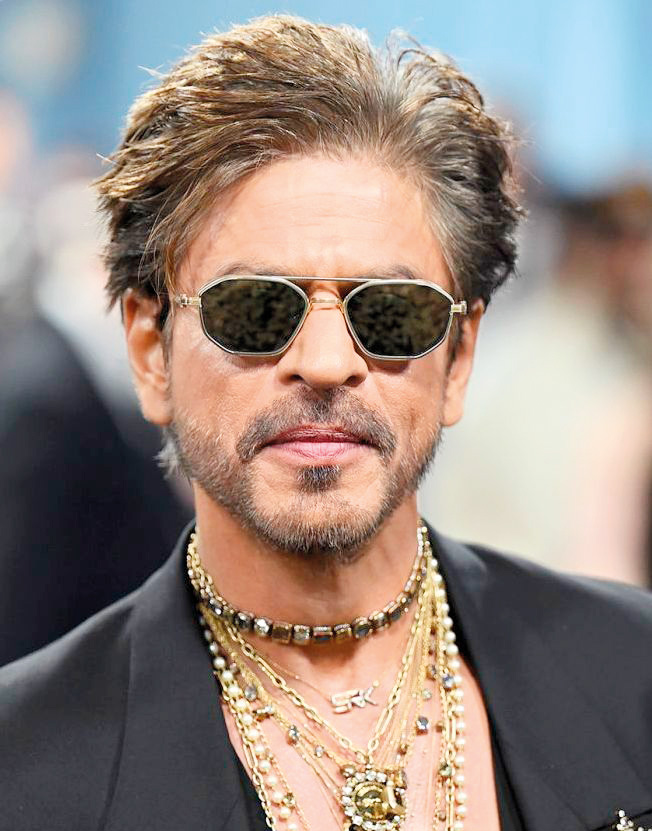
Shah Rukh Khan: Disappointed his fans in Sri Lanka
According to reports, the concert had received the official endorsement of the Sri Lanka Tourism Promotion Bureau, recognising it as a flagship initiative in developing the country’s concert economy by attracting fans, and media, from all over South Asia.

Nick Carter: His concert, too, was cancelled due to “Unforeseen circumstances
However, I had that strange feeling that this concert would not become a reality, keeping in mind what happened to Nick Carter’s Colombo concert – cancelled at the very last moment.
Carter issued a video message announcing he had to return to the USA due to “unforeseen circumstances” and a “family emergency”.
Though “unforeseen circumstances” was the official reason provided by Carter and the local organisers, there was speculation that low ticket sales may also have been a factor in the cancellation.
Well, “Unforeseen Circumstances” has cropped up again!
In a brief statement, via social media, the organisers of the Ne-Yo concert said the decision was taken due to “unforeseen circumstances and factors beyond their control.”
Ne-Yo, too, subsequently made an announcement, citing “Unforeseen circumstances.”
The public has a right to know what these “unforeseen circumstances” are, and who is to be blamed – the organisers or Ne-Yo!
Ne-Yo’s management certainly need to come out with the truth.
However, those who are aware of some of the happenings in the setup here put it down to poor ticket sales, mentioning that the tickets for the concert, and a meet-and-greet event, were exorbitantly high, considering that Ne-Yo is not a current mega star.
We also had a cancellation coming our way from Shah Rukh Khan, who was scheduled to visit Sri Lanka for the City of Dreams resort launch, and then this was received: “Unfortunately due to unforeseen personal reasons beyond his control, Mr. Khan is no longer able to attend.”
Referring to this kind of mess up, a leading showbiz personality said that it will only make people reluctant to buy their tickets, online.
“Tickets will go mostly at the gate and it will be very bad for the industry,” he added.
-
 News6 days ago
Street vendors banned from Kandy City
-

 Sports3 days ago
Gurusinha’s Boxing Day hundred celebrated in Melbourne
-

 News6 days ago
Lankan aircrew fly daring UN Medevac in hostile conditions in Africa
-
 News1 day ago
Leading the Nation’s Connectivity Recovery Amid Unprecedented Challenges
-

 Sports4 days ago
Time to close the Dickwella chapter
-

 Features6 days ago
Rethinking post-disaster urban planning: Lessons from Peradeniya
-

 Features2 days ago
It’s all over for Maxi Rozairo
-

 Opinion6 days ago
Are we reading the sky wrong?