
Sports
Rugby in Sri Lanka hasn’t been short of the company of influential personalities

By a Special Sports Correspondent
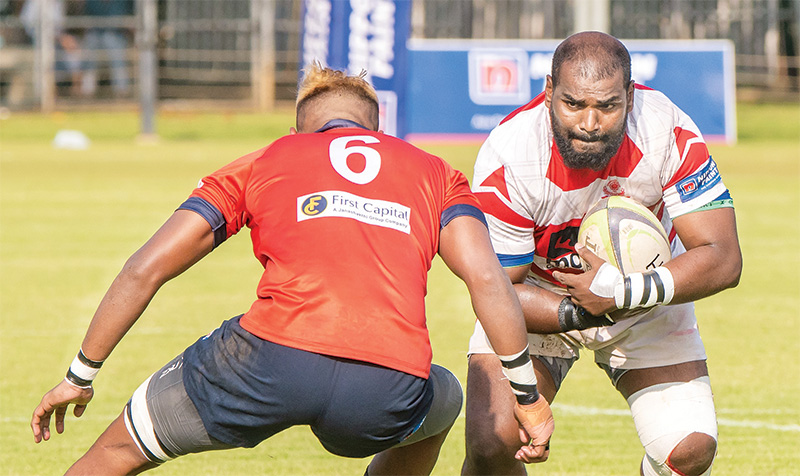
Rugby has had its influential personalities over the years since the sport was introduced to the islanders in 1879. From personalities in the likes of IGP Rudra Rajasingham, Y.C Chang, Denzil Kobbekaduwa, Anton Benedict, Priyantha Ekanayake, DIG (retd) Hafeez Marso, Senior DIG (retd) Nimal Lewke, Priyantha Ekanayake, Hisham Abdeen, Ananda Kasthuriaarachchi, George Simpkin, Ana Saranapala and expatriates like Fijian Apisi Nagata and Tulagaese Tawita (Laga) Sri Lankans came under the influence of a horde of individuals who set their mark wherever they set foot. This writer, being in his early fifties, can vouch for the influence of Saranapala, Ekanayake, Simpkin, Tawita, Nagata and Kasthuriaarachchi on the players because he closely involved with rugby union; covering the sport’s events and happenings for local newspaper as a rugby correspondent.
When these personalities stepped into take challenges they reformed entire set-ups which were performing under par before they arrived on the scene. This writer remembers CH&FC struggling to be in contention for honours in the mid eighties, but failing to do so until two Fijians by the name of Nagata and Jalasi Radro arrived on the scene. It was Nagata’s influence which transformed the CH side into a formidable outfit during this time. From also making up the numbers in the inter-club tournament the ‘Gymkhana Club’ made it to the Clifford Cup finals in 1988 and lost a close battle against eventual winners Air Force Sports Club. Rugby fans and players of that era remember how Nagata conducted so many rugby sessions for youth and schools.
 Then we saw how Tawita was entrusted with duties at Kandy SC, CR&FC, Royal College and even the national side. Like Nagata, Tawita was a coach cum player. From the sporting fields to the mercantile sector and even in parliament we need personalities who can influence everyone around them. There is reminiscences of Tawita having tears in his eyes when he spoken to the players before a national assignment. Now this is a man from another country and he was put in charge of the national side for a single assignment because Sri Lanka very rarely in the past had anyone appointed as national coach for a specific period of time. The longest standing national coach Sri Lanka had was the late George Simpkin. The New Zealander was instrumental in reducing the size of the place of rice that the players were eating and fill it instead with nutritious content, which helps build lean muscle and reduce the intake of overall calories. At that time, when rugby was less physical, he drilled into the mind of players that playing rugby at Asian level was more of an aerobic sport and demanded long hours in the gym doing specific training for speed and endurance.
You also have to talk about Ekanayake; a number eight and line out jumping expert par excellence. He led Sri Lanka at three Asiads (Asian Championships) and led from the front. His presence was felt in games where the national side was up against much stronger and bigger made opposition players from other continents. There was once a game arranged between the Sri Lanka President’s XV and a banking team from Fiji. In the first backline move Sri Lanka made there were so many casualties in the host team because of ruthless tackling by the Fijians. Ekanayake stood out in that game playing his heat out and rallying the remaining players together to ensure the Sri Lankan team that was compiled for this game didn’t lose badly. We know that Ekanayake can bark out orders and make players pull out hidden energies; just to survive on the field or escape being swallowed up by bigger and faster players. Ekanayake also went on to become the president of the Sri Lanka Football Union (Now Sri Lanka Rugby) and during his tenor all clubs were united and compiling a team for national duty received all-round support.
Sri Lanka made history in 2001 when its under 19 junior team qualified for the World Cup in Chile. The head coach for that assignment was Kasthuriaarachchi; a mathematics teacher in a government school when not playing rugby. He had a hard tour to Chile with the players baggage going missing at the airport apart from having to take on some of the world’s best teams. This writer saw him training the boys in Colombo at the Asian Tournament which was precursor for the World Cup. Sri Lanka qualified on the virtue of finishing third in the tournament behind Japan and South Korea. This writer can remember Kasthuriaarachchi (Castro) giving a lecture to three players in that squad Mario Oorloff, Harin Kaluarachchi and Tikiri Dissanayake about how to fall on the rugby field adopting a technique which guarantees you’ll play rugby for a long time. There have been coaches who have taught valuable lessons outside the rugby field and Castro is one of them. For the record Castro also played A Division rugby for Kandy Sports Club.
Mention must be made of the CH&FC side contesting the Cup Championship at the ongoing Division 1 rugby tournament. From being placed last in the points table last season CH&FC has risen from the dumps and is knocking on the door for a high finish. The man behind the success is coach Sanath Martis who has drilled confidence into the players and made them play a form of rugby where every second spent on the field is accounted for. This writer counts seconds with interest because if a cameraman stands on the touchlines and clicks some images of a ruck formation each frame will be so different to the other with players dropping off and new players joining in the equation. We can see the relatively new players in the side playing with vengeance. This is not a side that has players with great reputation apart from some senior players like Dushmantha Priyadarshana and Prasath Madusanka who are veterans in the game. Even skipper Awantha Lee is new to club rugby, but there is a sense of playing the game with purpose floating in the air and fans can see where it is coming from. If one picks the most influential coach this season, Martis will be right up there along with CR’s Dushanth Lewke. The purpose behind writing this column is not to picker a winner, but to drive in the message as to who has been influential and in what department of the game.



Under 19 Cricket
Left-arm spinners Vishwa Peiris and Demion de Silva took five wickets each as St. Joseph’s cruised to an innings and 51 runs victory over St. Benedict’s in the Traditional Mack – Croner trophy cricket encounter at Darley Road on Tuesday.
St. Benedict’s came to the match having done well in the Tier B tournament matches but the spin might of the Joes was too hot for them to handle as they collapsed for 62 runs in the second innings.
The result somewhat exposed the gap between the Tier A and Tier B teams of the Under 19 Division I category as the team from Kotahena were bowled out within 25 overs. They were following on after being dismissed for 197 runs in the first innings, where Nushan Perera grabbed five wickets bowling the bulk of the overs for the Joes. He was adjudged the Best Bowler.
While Vishwa was the Man of the Match, Rishma Amarasinghe (Best Fielder) and Senuja Wakunugoda (Best Batsman) won the other individual awards.
The Joes made 313 in their innings with Senuja top scoring with 106 runs.
In the Division I Tier ‘A’ matches Gurukula (against St. Sebastian’s) and St. Anthony’s Katugastota (against Royal) registered first innings victories.
Maliyadeva took first innings points against De Mazenod in a tier B match.
(RF)
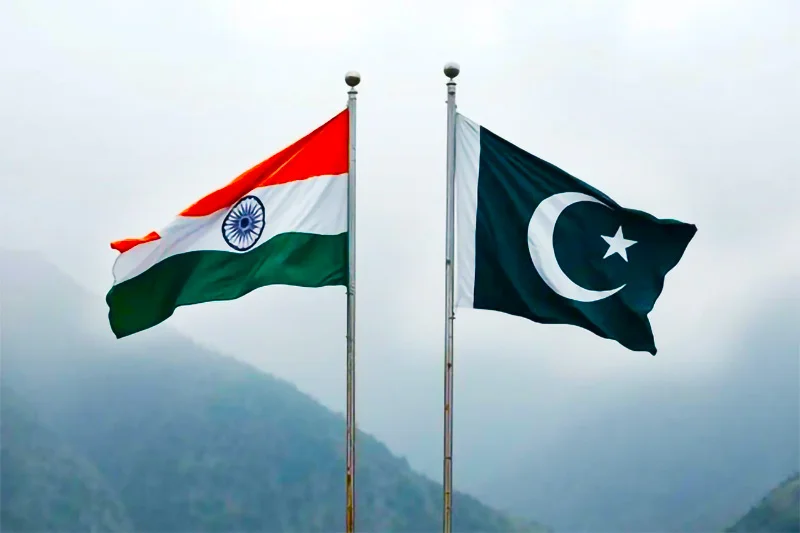
Organisers of the ICC T20 World Cup are sweating over after Pakistan refused to play nuclear-armed neighbours India in Colombo, a decision that has left administrators scratching their heads and staring at a potential financial googly.
The India–Pakistan contest, the jewel in the tournament’s crown, is the game that oils cricket’s economic engine. If the marquee clash is bowled out, the loss of revenue will have every stakeholder feeling the pinch from boardroom to boundary rope. Islamabad’s call to withdraw, taken at government level, has sparked fears the verdict will not be overturned.
Anticipation for the grudge match had reached fever pitch. Tickets vanished on day one of sales, while Colombo’s hotels were snapped up quickly. Five-star rooms that normally fetch 150 US dollars were hiked to 600 USD, some even soaring to 800 USD as the city braced for a carnival.
With the capital full to the rafters, tour operators shuttled visitors to nearby Negombo, an hour’s drive from the stadium, while others opted for apartments as accommodation ran dry. Flights, too, were booked well in advance, but uncertainty over the epic duel has now cast a long shadow.
“We haven’t had many cancellations yet, but we fear the worst. Everyone will take a hit if the game doesn’t take place,” aviation industry official Thusitha Perera told Telecom Asia Sport.
Gihan Wickramasinghe, representing Colombo’s hoteliers, echoed the concern. “Our hope is the match goes ahead. If not, we’ll have to refund bookings and the tour operators will be hit even harder.”
Tour operator Lisa Fernando said the anxiety was mounting. “Two groups from Dubai alone, 75 people, were coming. Corporate clients had planned trips down south as well. There’s a lot of money at stake and so much unnecessary stress.”
Indian fan Varun Kumar from Bangalore has already paid for flights and hotels but intends to travel regardless. “Sri Lanka has been on my bucket list. Whether the match happens or not, we’ll come to experience the country,” he said.
Sri Lanka Cricket remains optimistic the contest will be rescued before the final over is called. But if the showpiece is scratched, it would be a hammer blow to an economy only just finding its feet after years of setbacks, leaving the tournament badly caught behind.
SSC Open Tennis Championship 2026
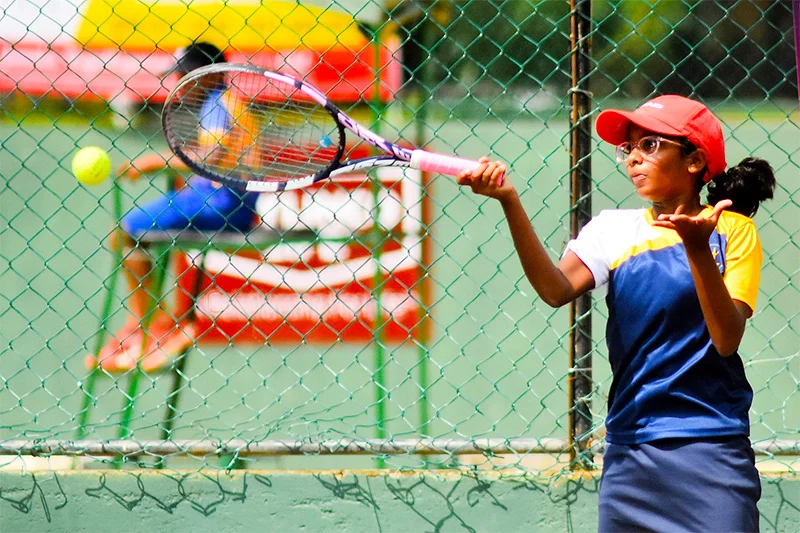
Zacharia Akbar and Thishya Banagala were crowned champions in the Under 12 boys’ and girls’ singles respectively of the SSC Open Tennis Championships in Colombo.
In the boys final, Zacharia Akbar beat Kashya Seneviratne 6-2, 2-6, 6-4. The S.Thomas’ College player reached the finals with a 6-1, 6-3 win over Satheesh Appathuri in the semi-finals.
The Under 12 girls’ final saw Thishya Banagala beat Thiyansa de Silva 7-5, 6-2.
The Visakha Vidyalaya player reached the final after a 6-4, 6-4 win over Manuli Seneviratne in the semis.
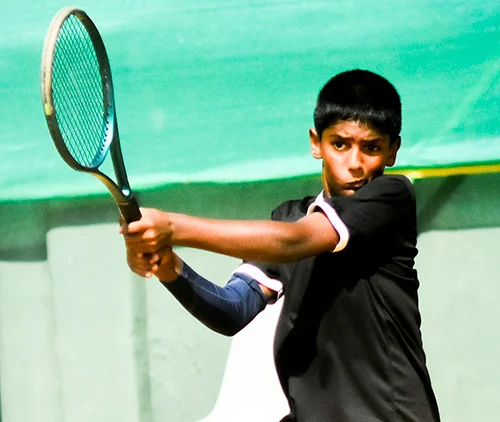
Zacharia Akbar (Pix by Kamal Wanniarachchi)

Trump confirms talks with Iran as US military shoots down Iranian drone

Shower will occur in the Northern, North-central, Eastern and Uva provinces and in Nuwara-Eliya and Matale districts

House erupts over suspension of Deputy Secretary General

78th Independence Day celebrations at Bogambara Stadium

Colombo-Kandy railway line to be fully restored this year – Minister Bimal

FCID records statements from Shiranthi and Namal

‘Dates have the highest sugar content to fight Coronavirus’

Sunday Island 27 December – Headlines

#SundayIsland 17th December – Headlines

Sunday Island – 28th March

Sunday Island Headlines – 21 March

Sunday Island – 21st February – Headlines
-
 Opinion5 days ago
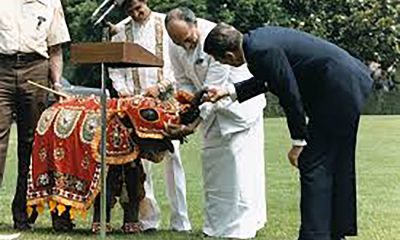
Sri Lanka, the Stars,and statesmen
-
 Business6 days ago
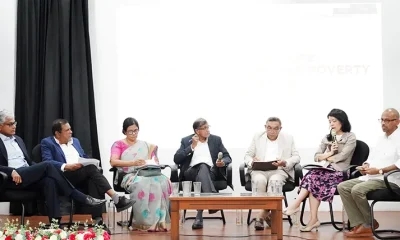
Climate risks, poverty, and recovery financing in focus at CEPA policy panel
-

 Business4 days ago
Hayleys Mobility ushering in a new era of premium sustainable mobility
-

 Business1 day ago
SLIM-Kantar People’s Awards 2026 to recognise Sri Lanka’s most trusted brands and personalities
-
 Business4 days ago
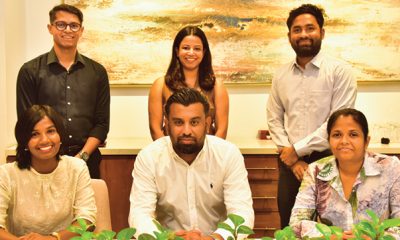
Advice Lab unveils new 13,000+ sqft office, marking major expansion in financial services BPO to Australia
-
 Business4 days ago
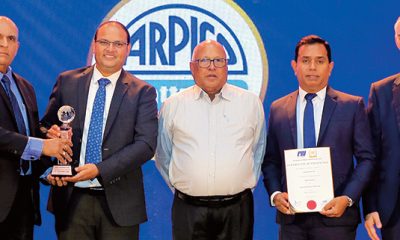
Arpico NextGen Mattress gains recognition for innovation
-

 Business3 days ago
Altair issues over 100+ title deeds post ownership change
-
 Business3 days ago
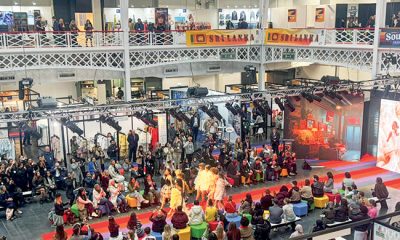
Sri Lanka opens first country pavilion at London exhibition