
Sports
Root holds the fort with unbeaten 99 as India put brakes on Bazball


Shubman Gill declared the return of “boring Test cricket” but England did not care. They scored uncharacteristically slowly – at just 3.02 runs per over – and ground their way into the ascendancy on their slowest-scoring full day of the Bazball era, as Joe Root reached the close a run short of his 37th Test century and his eighth at Lord’s.
“Baz-Baz-Bazball! Come on, I want to see it,” Mohammed Siraj was heard telling Root over the stump microphones, as England put their attacking shots away during a wicketless second session. “No more entertaining cricket, lads,” Gill told his team-mates, after Ollie Pope left the ball alone outside his off stump. “Welcome back to the boring Test cricket.”
Boring suited England just fine. The crowd at Lord’s were probably anticipating a very different day when they cheered Ben Stokes’ decision to bat first after winning his third consecutive toss, but a sluggish surface and a disciplined bowling effort from India’s seamers – including the returning Jasprit Bumrah – led England to scale back their usual aggressive intent.
But India will be heartened by the fact that after a long day in the field, they have kept England in check. The bowling heroes of their 336-run win at Edgbaston, Siraj and Akash Deep, both went wicketless, but timely scalps for Bumrah, Ravindra Jadeja, and two in an over from Nitish Kumar Reddy ensured that England never got away from them.
Root walked in straight after Reddy’s first over, which accounted for both England openers and saw Gill drop a tough chance off Pope in the gully, and quickly got his head down. He put on 109 with Pope for the third wicket, then an unbroken 79 with Stokes for the fifth – though Stokes’ apparent groin issue could become a major worry.
India had their own injury problem to worry about: Rishabh Pant tried to grimace through the pain after being struck on the index finger as he tried to gather a rare loose ball from Bumrah, but instead spent the last 49 overs off the field. But Dhruv Jurel proved an able deputy, taking a fine catch to dismiss Pope as Jadeja found his outside edge with the first ball after tea.
Brendon McCullum ordered a pitch with “plenty of life in it” after England’s heavy defeat at Edgbaston but his plea either arrived too late or fell on deaf ears. It was clear within an over that this was a slow surface, with Ben Duckett edging through to Pant on the half-volley; Bumrah, who replaced Prasidh Krishna, immediately called for the slip cordon to stand closer.
Duckett was repeatedly struck on the body in the first hour as Bumrah nipped the new ball off the seam, while Zak Crawley was frenetic. He changed his guard several times and threw his hands at the ball; while he nailed three cover drives, he slashed another over the slips and regularly played-and-missed at both Akash Deep and Siraj.
But it was Reddy, wicketless in Birmingham, who made the breakthroughs. He struck first with perhaps the worst ball of the morning, a long-hop on Duckett’s hip which he under-edged to Pant on the pull, but then dismissed Crawley with one of the best, a wicked outswinger which angled in then shaped away late the take the outside edge.
Pope was reprieved by Gill in between those two dismissals and batted as though determined to live up to his tag – coined by Steve James in the Times – as “the worst starter since prawn cocktail”. But he made it through to lunch unscathed, and dug in alongside Root after the interval; early in the second session, they went 28 consecutive balls without scoring.
Root, the senior pro, recognised that the best way to play Bumrah was from the non-striker’s end: he faced only two balls of his five-over spell after lunch, pinching singles from both to give Pope the strike back. They added 70 in a sleepy second session, as India’s seamers hung the ball wide outside off stump and waited for a mistake which didn’t come.
It finally arrived straight after tea, as Pope flashed hard at Jadeja and edged through to Jurel. He stood disconsolate, bent over his bat handle in disbelief that he had thrown his wicket away. India had another soon after, as the battle between the ICC’s No. 1-ranked Test batter and bowler ended swiftly: Bumrah nipped one back off the seam to peg Harry Brook’s off stump back.
Stokes was underway early with consecutive cuts for four, but looked uncomfortable against spin once more and survived an lbw shout from Reddy via DRS thanks only to the on-field umpire’s call. He was in obvious discomfort after a leave against Akash Deep, but batted on getting treatment from England’s physio during another long delay.
Root, meanwhile, cruised along as he does, only once putting his foot down with a rasping slog-sweep off Jadeja. He was a boundary away from his hundred in the final over of the day but could only manage a two and then a single. History bodes well: the previous 16 men to sleep on 99 in Test cricket have all reached three figures the following morning.
Brief scores:
England 251 for 4 in 83 overs (Ben Duckett 23, Ollie Pope 44, Joe Root 99*, Ben Stokes 39*; Nitish Kumar Reddy 2-46) vs India
[Cricinfo]

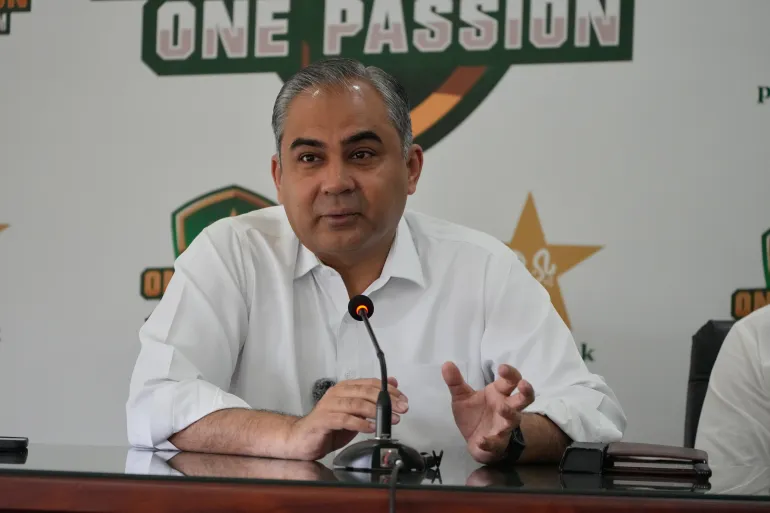
Pakistan’s premier domestic T20 league will take place in empty stadiums due to the recent spike in oil prices, says a top official of the Pakistan Cricket Board (PCB).
The franchise-based Pakistan Super League, set to kick off on Thursday, also cancelled its opening ceremony in Lahore, PCB chairman Mohsin Naqvi said on Sunday, citing a fuel shortage caused by the conflict in the Middle East.
The league was set to be played in six cities, but now only Lahore and Karachi will be hosting the games, with the opening encounter set to be played at Gaddafi Stadium in Lahore.
Pakistan has faced soaring oil prices prompted by the United States-Israel war on Iran and the subsequent spread of the conflict across the region. Pakistan’s government has asked its citizens to restrict their movements due to rising fuel prices.
“We don’t know how long this war will continue,” Naqvi said.
“We can’t ask people to restrict their movements and then have 30,000 people in stadiums every day. We decided that as long as this [oil] crisis is ongoing, we will not have crowds at matches. This was a difficult decision, but it needed to be made. The opening ceremony will also be cancelled.”
Naqvi said the PCB will issue refunds for all sold tickets within 72 hours and will also compensate franchise owners for the loss of revenue from gate receipts.
Naqvi apologised to the four cities – Rawalpindi, Faisalabad, Multan and Peshawar – that will no longer host PSL games this season. “We have to restrict our movements, and we do not want to waste our resources,” he said. “I especially apologise to Peshawar, which was due to host PSL games for the first time, [but] there will be no crowds anyway, so there was no reason to go to those cities.”
Naqvi said he consulted Pakistan’s Prime Minister Shehbaz Sharif, who is also the PCB patron, and the eight franchises before finalising the decision to stage the games in empty stadiums.
Several foreign players have pulled out of PSL due to personal reasons, including Australians Jake Fraser-McGurk and Spencer Johnson, South African Ottneil Baartman and Gudakesh Motie of the West Indies.
[Aljazeera]

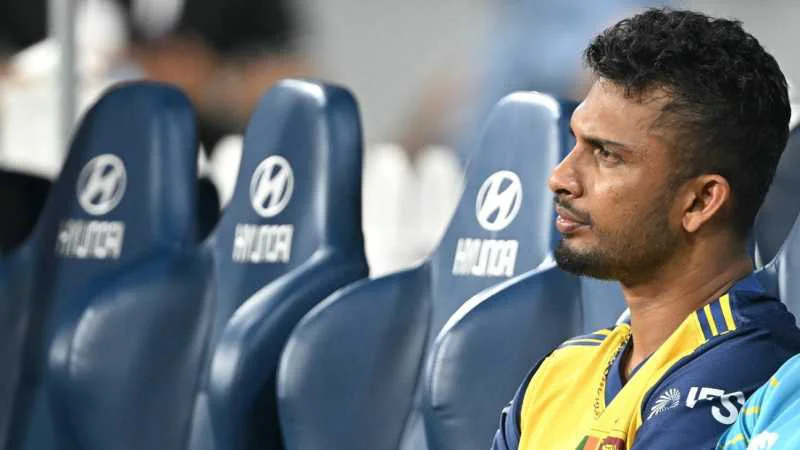
Dasun Shanaka has replaced the injured Sam Curran at Rajasthan Royals (RR) for IPL 2026 and has informed his PSL team, Lahore Qalandars, of his decision.
Shanaka will join RR for INR 2 crore (US$ 214,000 approx.).
”Sam brings immense value with both bat and ball,” Kumar Sangakkara, director of cricket and head coach, RR, said. “However, we are pleased to have found an ideal replacement in Dasun Shanaka, a finisher with the bat and a quality all-rounder who helps maintain the balance of our side.”
Curran, who was part of a pre-auction trade between Chennai Super Kings (CSK) and RR in which CSK acquired Sanju Samson and RR also got Ravindra Jadeja, has a groin issue, which has ruled him out of the IPL.
Qalandars, meanwhile, are replacing Shanaka with Australia allrounder Daniel Sams. PCB chief Mohsin Naqvi recently also said the board will be taking action against players such as Shanaka and Blessing Muzarabani who have been opting out of the PSL for IPL deal.
Shanaka, a lower-order batter and medium-pace bowler who led Sri Lanka at the recent T20 World Cup in India and Sri Lanka, comes in with good batting form: he hit a 20-ball 50 against Oman and 76 not out in 31 balls against Pakistan. He has played one season of the IPL in the past, in 2023, when he played three games for Gujarat Titans (GT) with unspectacular returns.
He becomes the second player to walk away from his PSL team to join an IPL franchise in the past few days after Muzarabani opted out of his deal with Islamabad United once Kolkata Knight Riders (KKR) reached out to him to be a replacement for Mustafizur Rahman, who the team had to release on instructions from the BCCI because of geopolitical tensions between India and Bangladesh.
For RR, Shanaka joins a strong list of overseas players, the others being Shimron Hetmyer, Lhuan-dre Pretorius, Donovan Ferreira, Jofra Archer, Nandre Burger, Kwena Maphaka and Adam Milne.
RR, who finished one off the bottom last season, begin their IPL 2026 campaign next Monday, March 30, in Guwahati against CSK. (cricinfo)

Today is a red-letter day for Rangiri Dambulla International Cricket Stadium. Exactly 25 years ago, to this very day, the venue hosted its maiden international, Sri Lanka locking horns with England and in the quarter-century since, the ground has grown from a bold gamble into one of the country’s prized cricketing possessions.
From Sachin Tendulkar’s silken drives to Dale Steyn’s thunderbolts, the game’s greats have left their imprint here. Dambulla has seen it all, high-octane contests, spin clinics and finishes that have gone down to the wire.
The brainchild of former SLC President Thilanga Sumathipala, Dambulla was not built on a whim but on a clear game plan. Sri Lanka, weary of rain playing spoilsport and washing games down the drain, needed a venue in the dry zone. A study into the country’s driest regions pointed squarely to Dambulla, centrally located, easily accessible and, crucially, less at the mercy of the weather gods.
If location was the first box ticked, aesthetics were the icing on the cake. Perched along the Colombo – Sigiriya road, the ground offers a view that can take your breath away. Climb up to the main stand and you are greeted by a sea of green, with the serene Ibbankatuwa Tank glistening in one corner. Sunsets here are straight out of a postcard. In another corner looms the historic Dambulla Rock, where King Valagamba, in exile, regrouped before marching back to reclaim his kingdom from south Indian invaders. Cricket here, quite literally, is played in the shadow of history.
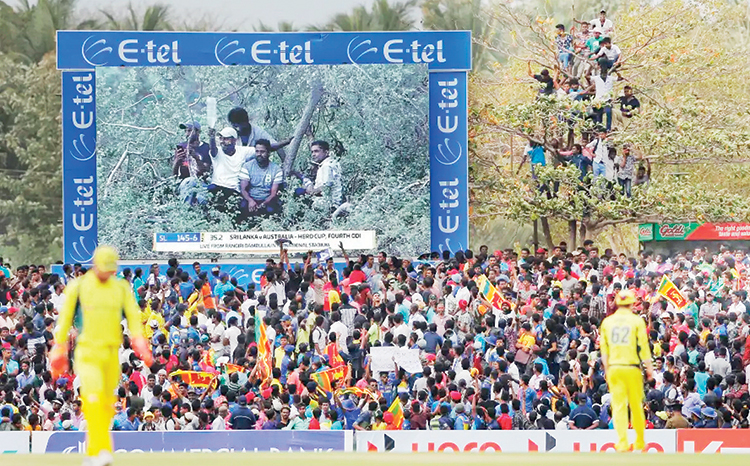
Dambulla isn’t just a cricket ground. This is part of Thilanga’s visionary thinking. He wanted the game to trickle down to the grassroots, to take cricket out of Colombo’s comfort zone and into the heartland. The response has been overwhelming. Whenever the big boys roll into town, the stands are packed to the rafters and when space runs out, fans perch on nearby trees just to catch a glimpse, a reminder that cricket, in this part of the country, is more than a game; it is a way of life.
The stadium itself was built in double-quick time, a project fast-tracked with military precision. Former captains Bandula Warnapura and Duleep Mendis, then part of the SLC set-up, oversaw the construction, ensuring the ground was ready to host top-flight cricket without missing a beat. Sujeewa Godaliyadda, now SLC Treasurer, has been part of the furniture here from day one, guarding the venue like the apple of his eye.
Back in 2001, the surrounding area was little more than a quiet outpost. Fast forward to today and the landscape has changed beyond recognition, hotels, restaurants and supermarkets have sprung up, proof that cricket has been a catalyst for economic growth. The ripple effect has been unmistakable; livelihoods have improved and the region has been put firmly on the map.
Of course, the journey has not always been smooth sailing. At times, Dambulla was left out in the cold, sidelined due to petty politics while other venues were given the nod. Hambantota’s Suriyawewa had its moment in the sun, but when rain threatens to play havoc, Dambulla remains the trump card. Unlike some white elephants, this ground delivers when it matters.
In recent years, the venue has come back into its own. Floodlights have been upgraded, state-of-the-art training facilities have been added and Dambulla is now being groomed as a Centre of Excellence. A new media centre is in the pipeline, while expansion plans are on the drawing board to meet the ever-growing demand from fans eager to soak in cricket in this picturesque setting.
by Rex Clementine

Referendum defeat leaves Italy’s Meloni looking more vulnerable

Pakistan T20 cricket league to be held in empty stadiums amid oil crisis

Showers expected in the Western, Southern, Uva and Sabaragamuwa provinces and in Kandy and Nuwara-Eliya districts after 2.00 pm.

Tehran says Trump’s peace talk claims are ‘fake news’

SJB: China, India taking advantage of Lanka’s unregulated oil market

SL to redevelop Trinco tank farm expeditiously

‘Dates have the highest sugar content to fight Coronavirus’

Sunday Island 27 December – Headlines

#SundayIsland 17th December – Headlines

Sunday Island – 28th March

Sunday Island Headlines – 21 March

Sunday Island – 21st February – Headlines
-

 News6 days ago
CIABOC questions Ex-President GR on house for CJ’s maid
-
 News5 days ago
Bailey Bridge inaugurated at Chilaw
-

 News5 days ago
Pay hike demand: CEB workers climb down from 40 % to 15–20%
-

 News4 days ago
CIABOC tells court Kapila gave Rs 60 mn to MR and Rs. 20 mn to Priyankara
-

 Features1 day ago
Trincomalee oil tank farm: An engineering marvel
-

 Editorial6 days ago
Couple QR-based quota with odd-even rationing
-
 Features4 days ago
Science and diplomacy in a changing world
-

 News3 days ago
Colombo, Oslo steps up efforts to strengthen bilateral cooperation in key environmental priority areas