
Sports
Rohit Sharma’s Test captaincy faces its first huge test

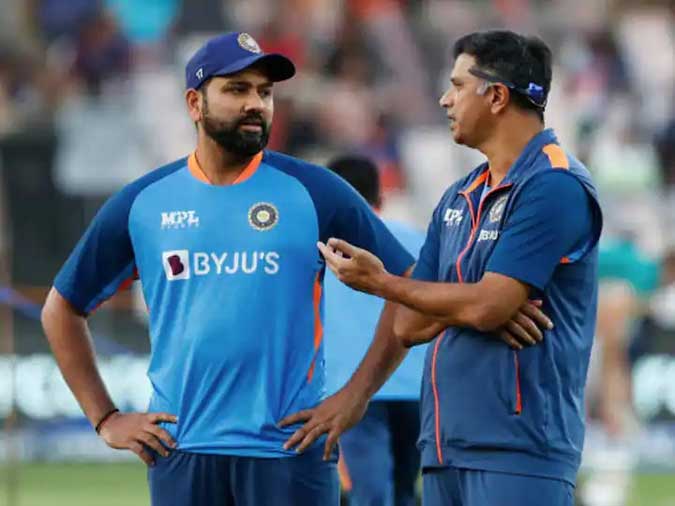
It’s been a little over a year since it officially began, but has the Rohit Sharma era as India captain really begun at all?
It’s made a spluttering sort of start in Test cricket: Rohit missed three of India’s five Tests since he became their all-format captain. Injuries, in fact, have forced Rohit to miss eight of India’s last 10 Test matches. He was Player of the Match in India’s last Test before this stretch of games, a landmark victory that took them to a 2-1 series lead in England, months after they had beaten Australia 2-1 in Australia.
Since then, India’s world-beating aura has faded somewhat – they lost Tests they could have won in Johannesburg, Cape Town and Birmingham, and won one they could quite conceivably have lost in Dhaka – and Rohit has mostly been an absent figurehead.
He has had more of a chance to make an impact as a white-ball captain, and his overall results have been fantastic. Rohit has the best win-loss ratio of any India ODI captain who has led at least 10 times in that format, and only Hardik Pandya, who has only captained in 11 matches, sits above him on the corresponding T20I list.
Reaching the semi-finals of the 2022 T20 World Cup a year after exiting the same tournament at the group stage could be seen as a significant achievement for both Rohit and Rahul Dravid, who took over as head coach after the 2021 tournament. But it wouldn’t be lost on either of them that, for all the gains India made as a T20I side between the two tournaments, particularly in terms of batting approach, the same failings cost them in both 2021 and 2022.
Dravid knows from experience that tournament results end up defining captains, and that one bad tournament can cancel out the goodwill earned via bilateral results, especially in white-ball cricket. He could be remembered as the captain who turned India into a world-class chasing team in ODIs, but it’s likely that far more remember him for leading India to a group-stage exit at the 2007 World Cup.
Process dominates cricket discourse far more in Rohit’s era than it did in Dravid’s, but results – specifically results in “big” games and tournaments – eventually come to define the tenures of captains, coaches and selectors.
That Rohit succeeded Virat Kohli was itself, in part, down to a sense that he would be a big-tournament captain, and India had been starved of big-tournament titles since 2013. At the time he took over the white-ball teams, Rohit had just won his fifth IPL title as Mumbai Indians’ captain, and there were three ICC trophies up for grabs in the next two years.
Tournament results are, of course, heavily dependent on how good a team is relative to the competition, the format – one or two bad days are enough to send a strong contender out of the T20 World Cup at the group stage than they are to prevent one from reaching the IPL playoffs – and luck.
When teams win, though, the complicated story of their success is often simplified, and retold with the captain cast as some sort of all-knowing, benevolent mastermind. In the media, this premise is usually backed up with player testimonials – it’s a fresh surprise each time players in winning teams say good things about their captains, no doubt – rather than any analysis of how this superhero captain’s decision-making differed from that of other captains in similar situations, and no one ever asks whether the same team, filled with so many other winning ingredients, could have just as easily won with a different captain.
For whatever it was worth, then, Rohit came to the India captaincy with something of an aura. Now, just over a year since becoming all-format captain, there are threats to his leadership in every format.In T20Is, the threat has a name. Hardik has captained India in every T20I they’ve played since the World Cup semi-final against England in November. Rohit scored a scratchy 27 off 28 balls in that match, and he hasn’t played a T20I since. Now this is mostly because India are building up to an ODI World Cup and are looking to rest their senior players from T20Is, but it’s not inconceivable that one or more of the young top-order contenders who are now getting their chance could make themselves exceedingly difficult to leave out by the time T20Is become top priority again.
The future of Rohit’s ODI captaincy, meanwhile, could hinge on whether or not India translate their status as favourites for this year’s home World Cup into actually winning it. It’s an unfair amount of pressure, but it is what it is.
His Test captaincy, of course, has barely begun at all.
It’s against this backdrop that Rohit will lead India in one of Test cricket’s highest-profile contests. The 2016-17 Border-Gavaskar Trophy was perhaps the greatest Test series India has hosted this millennium – yes, arguably even greater than 2000-01 for the range of quality performances from both sets of players – a series where Australia made them reach into their deepest reserves of skill and stamina to complete a 2-1 comeback win.
The Australia of 2022-23 could be an even better collection of players than the one that toured in 2016-17, and could be an even better team if they address one key structural issue – the seeming lack of a quality second spinner.
India will, as ever, begin the series with a formidable spin attack and, despite the absence of Jasprit Bumrah, a group of quicks who are often deadly in home conditions. The batting will give them a few more headaches: India will be without Rishabh Pant’s genius and – for the first Test at least – Shreyas Iyer’s counterattacking flair against spin. This is a worry because they’ve been India’s best batters in subcontinental conditions since the start of 2021, a period in which Cheteshwar Pujara has averaged 34.61 in Asia and Virat Kohli 23.85. Rohit’s red-ball rhythm, meanwhile, is a bit of an unknown, since he hasn’t played a Test match since March 2022.
For all that, India should still be favourites, but if you’re an India fan and your normal pre-series anticipation is tinged with a sense of nameless dread, it could be because of this: R Ashwin is 36; Rohit, Pujara and Umesh Yadav are 35; Kohli and Ravindra Jadeja are 34; and Mohammed Shami is 32. Ishant Sharma and Ajinkya Rahane, both 34, may already have played their last Tests.
It’s fallen upon Rohit to captain India’s most successful generation of Test cricketers when they’re ageing at the same time. Managing this transition could be an exceedingly tricky task, and quite a lot of it – what can a mere captain do, for instance, to unearth successors to all-time greats? – is beyond his control, but it’s one other thing he’ll be judged on, for better or worse.
The Rohit Sharma era, then, could be a short one. And if this series against Australia – upon whose outcome hinges India’s qualification for the World Test Championship final – doesn’t go to plan, it could threaten to end before it’s even had a chance to properly begin.
(cricinfo)



Akbar Brothers Ltd delivered a commanding all-round performance to clinch the ‘A’ Division title at the 33rd MSBA League Basketball Tournament, defeating defending champions Fairfirst Insurance 70–60 in a thrilling final held recently.
Despite a group stage loss to Fairfirst, a revitalized Akbar Brothers team returned for the final with renewed focus, executing a strategic and disciplined game plan with some excellent passing and defense. Akbar Brothers came in with all guns blazing right from the outset. The first quarter was all Akbar’s that stacked up a 13 to 4 lead. Fairfirst mounted a strong challenge in the second quarter, narrowing the margin, but Akbar’s momentum secured a 35–28 lead at halftime, a margin they maintained with composure through to the final whistle.
Dasun Mendis led the charge for Akbar Brothers with 18 points and was named the tournament’s Most Valuable Player (MVP). Chenura De Alwis added 17 points to the tally, while Shehan Udayanga posted a valiant 22 points for Fairfirst. Dimitri Grebe anchored Akbar Brothers with strong leadership, with Hiran Wijesooriya captaining Fairfirst.
Earlier in the tournament Akbar Brothers beat Sampath Bank (82-71), Seylan Bank (91-68) David Pieris (110-78) and Seylan Bank in the semi final (83-60)
The final, held at the Royal College Indoor Sports Complex, saw a vibrant turnout of supporters as Akbar Brothers proved their championship mettle with teamwork, resilience, and clinical execution.
Akbar Brothers – Dimitri Grebe (Captain), Dasun Mendis, Chenura De Alwis, Randil Henry, Taher Akbarally, Selvam Savarimuttu, Franklyn Morais, Sanketha Jayarathne, Jeewan Priyankera , Praneeth Udumalagala, Ajith Kuruppu (Coach), Adrian Gabriel (Asst. Coach)
Fairfirst Insurance – Hiran Wijesooriya (Captain), Shehan Udayanga , Lakshan Kulathunga, Roshan Randima, Arnold Brent, Isuru Perera, Denzil Nicholas, Nimesh Fernando, Keshawa Perera, Charaka Anuhas, Asanga Perera (Coach)

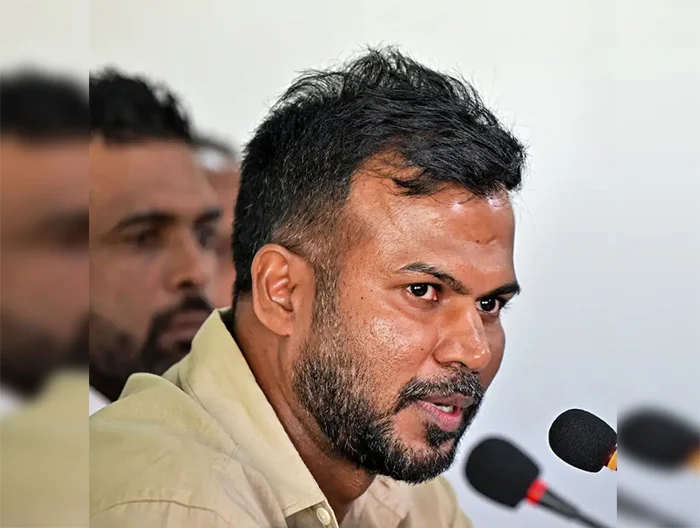
With just six weeks to go for the World Cup that Sri Lanka will co-host, the ground appears to be shifting under the selectors’ feet. Moves are underway to replace former opening batter Upul Tharanga as Chairman of Selectors, the latest in a series of shake-ups that have gathered pace alarmingly close to the showpiece event.
First came the reshuffling of the coaching staff. Then there were strong signals that captain Charith Asalanka could be moved aside. Now the selection panel itself is set for an overhaul. One is tempted to ask whether all this chopping and changing is really necessary with the tournament looming large on the horizon.
It is true that the selectors’ term will expire by the book, a new panel must take guard. But with less than two months left before the World Cup, common sense would suggest to let the status quo remain.
Tharanga’s panel has not been flawless, but it has hardly been a basket case either. Recent weeks have produced some sobering results, including a 3-0 ODI whitewash in Pakistan and an embarrassing T20 loss to Zimbabwe. Yet the team showed resilience, regrouped and fought their way into the finals, where they eventually went down to Pakistan.
There were tangible gains too. Sri Lanka climbed to fourth in the ODI rankings and even pulled off a Test victory over England. The wheels came off mainly in the T20 format, where they failed to progress beyond the first round of the last World Cup — a shortcoming that cannot be pinned on selection alone.
If there must be a changing of the guard, logic dictates that it should wait until after the World Cup. Midstream changes at the top rarely help steady a ship already sailing in choppy waters.
What is more troubling is the prospect of a familiar face returning to the hot seat — someone under whose watch Sri Lanka endured disastrous returns. During that previous tenure, selections were muddled and knee-jerk. A poor series often meant wholesale culling, with players axed almost as soon as they were drafted in, leaving no room for continuity or confidence.
There were baffling calls too: Maheesh Theekshana fast-tracked into Test cricket on the strength of his white-ball exploits, while Dunith Wellalage was handed a Test debut before even playing a T20 International. Such horses-for-courses thinking, taken to extremes, left Sri Lanka without a clear road map.
The end result was grim. Sri Lanka finished ninth at the 2023 World Cup, failed to qualify for the Champions Trophy and for the first time in their history, missed out on an ICC event altogether.
Sri Lanka Cricket’s deeper problem is a lack of willing candidates. Few former players are keen to step into the firing line of selection, a role that guarantees brickbats regardless of results. Cornered, the board has repeatedly turned to recycled hands — men who have done the job before, with precious little to show for it.
With the World Cup just around the bend, Sri Lanka can ill afford to keep moving the goalposts. Stability, not another roll of the dice, may yet be their best play.
by Rex Clementine
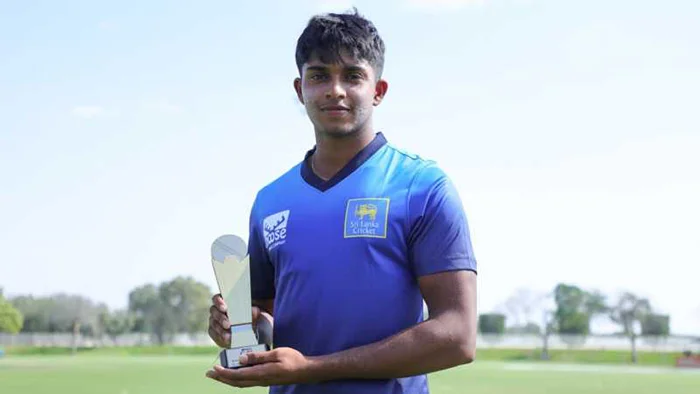
It was a run-out that started it all after Sri Lanka Under-19s captain Vimath Dinsara asked Nepal Under-19s to bat first in their Group B game at the Under-19s Asia Cup. Nepal were steady at 30 without loss, but come the eighth over, Dinsara combined with wicketkeeper Aadham Hilmy to run Niraj Kumar Yadav out for 10. That started a slide, and Nepal never recovered thereafter.
Sethmika Seneviratne had Sahil Patel caught for 12 in the ninth over, bowled Vansh Chhetri for a duck in the 11th, and then had Dilsad Ali caught without scoring in the 13th. Sri Lanka reduced Nepal to 37 for 4, with the four wickets gone for the addition of just seven runs within six overs.
At that stage, Nepal’s captain Ashok Dhami joined Cibrin Shrestha. Just when they looked set to help Nepal find a way back, Rasith Nimsara broke the 24-run stand by having Dhami caught behind for 9 to start the 21st over. Soon, 61 for 4 became 82 all out. Vigneshwaran Akash struck next to dismiss Shrestha for 18, which was Nepal’s highest score.
No Nepal batter after Shreshta even got into double figures, while Seneviratne got two lower-order batters to complete his five-for. Seneviratne finished with 5 for 25, and left Sri Lanka’s batters with little to do.
Although Nepal had Sri Lanka at 25 for 2 in the 83 chase, that only seemed like consolation. Dimantha Mahavithana (39*) and Kavija Gamage (24*) wiped Nepal out with an unbroken stand of 59, as Sri Lanka won with eight wickets and a massive 35.1 overs to spare.
Scores
Sri Lanka U-19s 84 for 2 (Mahavithana 39n.o., Kavija Gamage 24n.o., Mandal 1-16)
Nepal U-19s 82 (Shrestha 18, Seneviratne 5-25, Sigera 1-3)

Akbar Brothers crowned MBSA A-Division champions

Several spells of showers will occur in the Northern, North-Central, Eastern, Uva and Central provinces

Bondi Beach gunmen who killed 15 after targeting Jewish celebration were father and son, police say

Govt. urged to take action against deputy minister

India sends stock of life-saving medicines

George Keyt Foundation contributes to national disaster relief efforts

‘Dates have the highest sugar content to fight Coronavirus’

Sunday Island 27 December – Headlines

#SundayIsland 17th December – Headlines

Sunday Island – 28th March

Sunday Island Headlines – 21 March

Sunday Island – 21st February – Headlines
-
 Features6 days ago
Finally, Mahinda Yapa sets the record straight
-
 News7 days ago
Cyclone Ditwah leaves Sri Lanka’s biodiversity in ruins: Top scientist warns of unseen ecological disaster
-
 Features6 days ago
Handunnetti and Colonial Shackles of English in Sri Lanka
-
 Business4 days ago
Cabinet approves establishment of two 50 MW wind power stations in Mullikulum, Mannar region
-
 News5 days ago
Gota ordered to give court evidence of life threats
-
 Features7 days ago
An awakening: Revisiting education policy after Cyclone Ditwah
-

 Features5 days ago
Cliff and Hank recreate golden era of ‘The Young Ones’
-
 Opinion6 days ago
A national post-cyclone reflection period?