
Sports
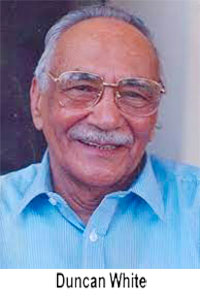
Remembering the country’s first Olympic medallist Duncan White


Duncan White preparing the starting blocks.
BARRIER BREAKERS
During this Olympic year it is pertinent to remember one of country’s greatest athletes Major Duncan White on his 23rd death anniversary (July 3). On his way to success, he had to glide over 10 barriers and not break them!
Duncan White was born on the 1st of March 1918 at Lathpandura a rural village 2km from Baduraliya in the Kalutara District
His early education was at Trinity College Kandy. He was the captain of athletics in 1936 when Trinity College won the John Tarbat Challenge cup and the Jefferson cup for the Relays. White won the 220yds establishing a new record, 120yds Hurdles and the Long Jump. He was a member of the Trinity Rugger team which won the Bradby trophy. He was awarded the Trinity Lion for Athletics
On leaving Trinity College, he joined the Medical Department as a Physical Training Instructor and represented the Department at the Government Services Meet. In 1937 he participated in the National Championships representing Ace Athletic Club he returned a time of 52.0 secs in September and further improved it to 50.4secs the same year. Running in the 440 yds Hurdles event he clocked 56.4 secs. In 1940 he returned a time of 56.0 secs in the 440yds Hurdle event at the National Championships. It took 20 long years to improve the record till Nimal Fernando of the CT & FC returned a time of 55.7 secs. In 1944 running for the Ceylon Army Duncan clocked 22.2 secs for the 200m, which was equalled by W. Wimaladasa of the Army in 1964. D.K Podimahathmaya had the privilege of erasing Duncan’s record of 22.2 by .1 of a second after 24 years.
In 1938 he represented Ceylon at the British Empire Games held in Sydney in 1938. He was the only schoolboy in the team. He represented Ceylon at the first Indo-Ceylon dual meet held in Colombo in 1940 and at the second Indo-Ceylon Meet held in Bangalore. At the first Indo-Ceylon Meet he won gold medals in the 400m and 400m Hurdles events and helped win the two relays. In Bangalore he won a gold medal in the 400m hurdles and won a silver in the 110m hurdles.
 After breaking records in the National arena he turned to the wider International arena. He was a member of the first Ceylon team to an Olympic Games. That was the 1948 London Olympic Games. There was a special significance for Ceylon as it was in the year 1948 that we gained Independence from the British Empire. Duncan White won the silver medal beaten by Roy Cochran of USA by only 7/10th of a second. While Cochran established an Olympic Games Record, Duncan White too bettered the previous record.
On the strength of his performance at the Olympic Games he was awarded a Government Scholarship to follow a course in Physical Education at the prestigious Loughborough College of Physical Education. At Loughborough, he Captained the College for three consecutive years. During his period the College won the British University Athletics Championships.
At the 1950 British Empire Games held in Auckland, New Zealand Duncan White won the gold medal in the 440yds hurdles event with a new British Empire Games Record which was only 3/5th of a second outside the World record.
On completing his studies at Loughborough College he returned to Ceylon in 1951, took up the post of a lecturer at the Training College Maharagama. In 1960 he took up the post of Athletic coach for the schools of the Department of Education with the approval of the then Minister of Education E.A. Nugawela.
He did yeoman’s service to the young athletes of the schools, especially the Central Schools. R.A.C. Hubert of Piliyandala Madya Maha Vidyalaya was one such athlete who did well in the 400m. I am personally aware that he had gone to Gamini Vidyalaya Benthota on three occasions. He also had helped Harris Manikkam at the Christian College Kotte athletic camps. There he had screened his final run in the 400m Hurdles at the 1948 London Olympics. C.W. Pitigala as a sharp student at that time had asked Duncan why he had looked back while fixing the blocks. He had commented on his observant nature and answered. “when I was nailing my starting blocks someone had shouted “Hey Ceylon you are late” So he had turn back and said “shut up” and nailed his blocks. While nailing the blocks he injured his finger. He ignored the injury and concentrated on the event. And the rest was history. It is a good lesson for our young athletes not to get ruffled for the slightest thing at the start of an event.
In 1964, he left for Nigeria to take up the post of Senior Lecturer in Athletics at the University of Ibadu. Later he settled down in Nuneaton, Warwickshire.
Duncan White was awarded the Member of the British Empire (MBE) in 1949 and the Helms World Trophy as the Most Outstanding Athlete in Asia.
Duncan White married Angela Siebel and they had six children Nita, Marilene, Fiona, Daniel, Maxine and Christopher.
His teammates to the British Empire Games held in Auckland New Zealand said that when Duncan White ran the last lap for Sri Lanka in the 4x400m Relay the whole stadium stood up and cheered him because it was a fantastic run. He had overtaken several runners and came fourth. Several officials had asked him why he had not entered for the 400m event.
Late Cyril Gardiner, the then chairman of the prestigious Galle Face Hotel, as a mark of respect to Duncan White adorned his name on a plaque at the entrance to the Galle Face Hotel as a distinguished guest of the Hotel. It was at this Hotel that I had the privilege of meeting the great man on his last visit to Sri Lanka.
In 1991 Major-General Denzil Kobbekaduwa had organized a Peace Relay Run from Vavuniya to Colombo to celebrate the founding of the Duncan White Foundation. When the runners who came to Kurunegala were given T shirts with the Duncan White Logo embossed. One runner while putting on the T shirt had asked another “kawdayako Duncan kiyanne.”
In 1996 the late Luxman Kadirigamar initiated and obtained dual citizenship for Duncan White.
Duncan White was conferred the honour of ‘Deshamanya’ by President Chandrika Bandaranayake Kumaratunga, celebrating the 50th Anniversary of the Silver Medal feat at the London Olympic Games.
K.L.F. Wijedasa
(The writer is a former national record holder of the men’s 100 metres)


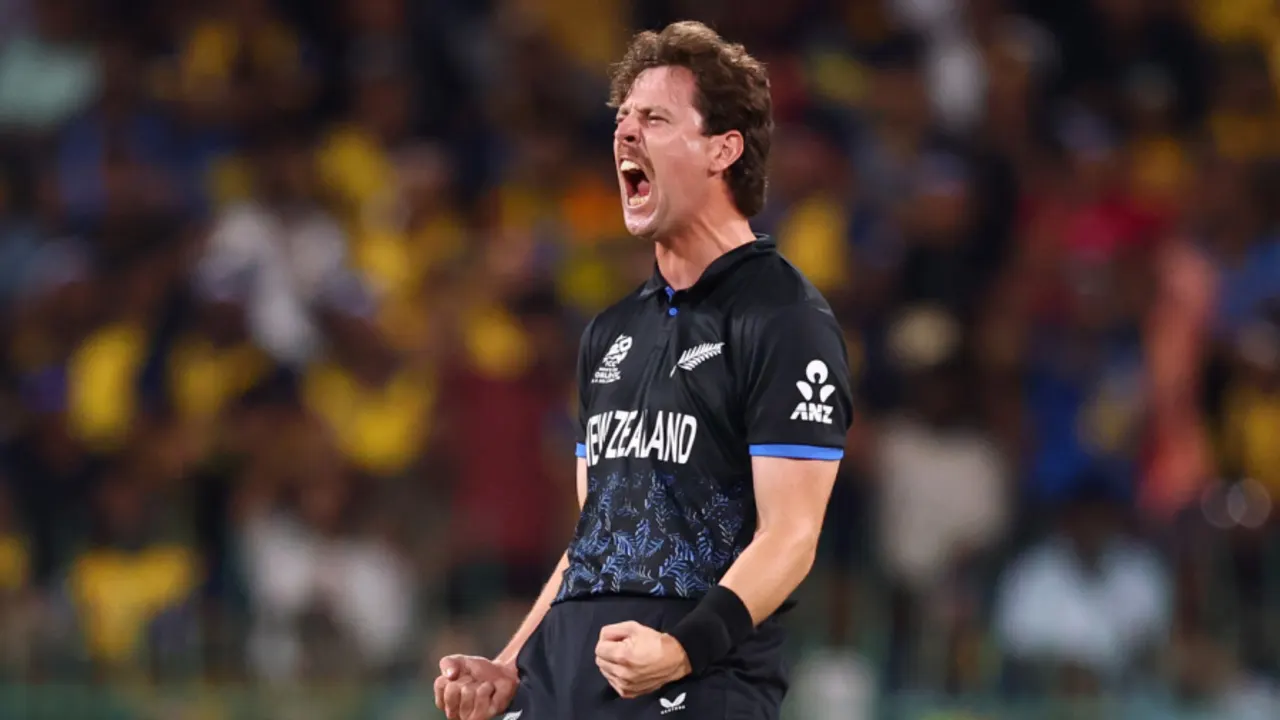
“I’m going to put it very simple: it’s hurtful, it’s painful and it’s shameful,” Farveez Mahroof, the former Sri Lanka allrounder, said, pretty much summing up the mood among cricket fans in the island after their abject failure against New Zealand on Wednesday in Colombo. That it came after being bowled out for 95 by England and meant Sri Lanka’s T 20 World Cup 2026 was over just added to the sense of dejection.
“It’s not a pitch that you can play through the line, I get it. But the way some of the batters just gifted their wickets away, apart from Pathum Nissanka’s delivery [from Matt Henry], every other dismissal was a soft dismissal, giving the wickets away, just like the England game, where all ten were soft dismissals,” Maharoof said on ESPN Cricinfo TimeOut after the match. “Continuing the same trend into another game, a must-win game, shows Sri Lanka were not up to the mark with the bat.”
Nissanka has been Sri Lanka’s best batter in the tournament, and the main man in their win over Australia, when he slammed a 52-ball 100 not out. On Wednesday, Henry produced a peach to Nissanka first ball, and “whatever hopes that Sri Lanka had just vanished”.
At the T20 World Cup, which Sri Lanka came to after losing 3-0 to England in a series at home, they beat Oman and Ireland, teams ranked lower than them, and then Australia in the group stage, but since then, it has all been downhill. Zimbabwe, England and now New Zealand have beaten Sri Lanka, and the last two have come after poor batting performances.
“It’s becoming a bad habit to have. I have been doing this analysis for seven-eight years, I keep saying the same old thing: once in a while, a good game, and our hopes are high; all of a sudden, come crashing down to the earth,” Maharoof said, referring to the Australia game. “It’s not the first time. I just hope something down the line, this has to come to an end, some hard decisions have to be made.
“I think after the next game, before the next series starts, Sri Lanka’s selectors and the think tank should really think of the future, what are the capabilities of the players, who should stick and who should not stick, and move on. I expect probably in the next couple of weeks, some hard decisions are going to be made. If not, I will be very surprised.”
Sri Lanka end their campaign with a game against Pakistan, in Pallekele on February 28.
[Cricinfo]
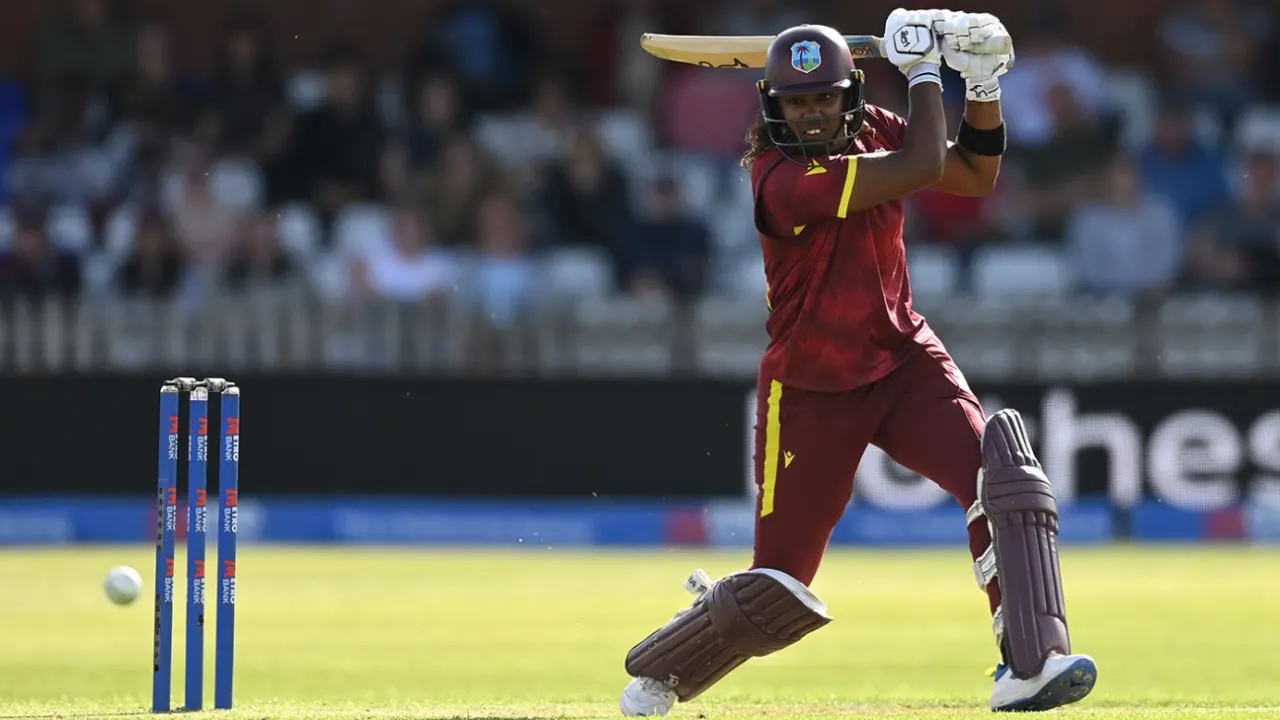
Hayley Matthew’s tenth ODI century led West Indies to a six-wicket victory in the final match of the series against Sri Lanka and gave them their first points in the new Women’s Championship cycle.
Sri Lanka had already secured the series but couldn’t clinch a whitewash as Matthews dominated: she started the match by removing opposite number Chamari Athapaththu in the first over of the contest and then compiled an 118-ball hundred, which took West Indies most of the way in their chase.
“I felt like I was in a pretty good space batting-wise and probably just [in the] first game got pretty unlucky with how I got out and then in the second match gave my own hand away,” Matthews said. “So I certainly felt like I was in a space where I wasn’t exactly being too threatened at the crease and I knew I just had to lock in and try to take it a bit deeper.”
The home side was in early trouble in St George’s against a target of 218 with Qiana Joseph and Shemaine Campbelle falling to Malki Madara to leave West Indies 12 for 2. But after taking 12 balls to find her first boundary, Matthews did not look back as she took charge of the innings, adding 124 for the third wicket with Stefanie Taylor, who moved second on the all time run scorers list in ODIs.
Matthews’ fifty came from 48 balls before she slowed a little in the second half of her innings, but the asking rate was never a threat for West Indies. She did give a chance on 70 when Nilakshika Silva was unable to hold a return catch. The ball after reaching the century, though, Matthews picked out deep midwicket but a stand of 49 between Deandra Dottin and Chinelle Henry finished the job.
Following the early loss of Athapaththu, Sri Lanka’s innings was anchored by Harshitha Samarawickrema’s 70 off 112 balls. She added 78 for the third wicket with Vishmi Gunaratne, but the visitors struggled to lift the scoring rate in the latter stages as West Indies chipped away, with Karishma Ramharack removing Gunaratne and Samarawickrama in the space of four overs.
Brief scores:
West Indies Women 218 for 4 in 46 overs (Hayley Matthews 100, Stefanie Taylor 38, Chinelle Henry 32*; Malki Madara 2-33) beat Sri Lanka Women 217 for 7 in 50 overs (Hasini Perera 27, Harshitha Samarawickrama 70, Kavish Dilhari 45*, Hayley Matthews 2-33, Karishma Ramharack 2-39) by six wickets
[Cricinfo]

Pulisha Thilakarathne top scored with 89 runs and held the top order batting together as Trinity scored first innings points and took major honours in the Ranil Abeynayake Memorial Trophy cricket encounter at BRC ground on Wednesday.
Trinity took a first innings lead of over 50 runs and declared their innings with two wickets in hand to find Thomians doing better in the second essay.
Jayden Amaraweera was in the forefront of the Thomian revival in the second innings as he scored his second half century of the match. Aaron Kodituwakku missed a second half century by five runs.
For Trinity, Mahendra Abeysinghe and Dinal Fernando were the others to make contributions with over 40 runs, while Aadham Hilmy made 32.
Scores:
S. Thomas’ 189 all out in 77.4 overs
(Aaron Kodituwakku 72, Jaden Amaraweera 50, Shanil Perera 37n.o.; Kanika Anthony 5/66, Dinal Fernando 3/34) and 182 for 5 in 53 overs (Jaden Amarawera 68, Aaron Kodituwakku 45;
Chaniru Senarathne 2/44)
Trinity 54 for 1 overnight 246 for 8 decl. in 58.2 overs (Pulisha Thilakarathne 89, Mahendra Abeysinghe 44, Dinal Fernando 45, Adam Hilmy 32; Abheeth Paranawidana 4/95, Gimhan Mendis 3/41) (RF)

Maharoof expects ‘some hard decisions’ after Sri Lanka’s T20 World Cup exit

Matthews’ century leads West Indies to six-wicket victory

Cuba says it shot dead four people on US-registered speedboat

’Reimagining International Relations from a Global South Perspective’ offers a timely and rigorous contribution, providing key insights into policy, diplomacy, and global governance – PM

Fair weather will prevail over most parts of the island

CID arrests former top military intelligence officer under PTA

‘Dates have the highest sugar content to fight Coronavirus’

Sunday Island 27 December – Headlines

#SundayIsland 17th December – Headlines

Sunday Island – 28th March

Sunday Island Headlines – 21 March

Sunday Island – 21st February – Headlines
-
 Features4 days ago
Why does the state threaten Its people with yet another anti-terror law?
-
 Features4 days ago
Reconciliation, Mood of the Nation and the NPP Government
-

 Features4 days ago
Victor Melder turns 90: Railwayman and bibliophile extraordinary
-

 Features3 days ago
LOVEABLE BUT LETHAL: When four-legged stars remind us of a silent killer
-
 Features4 days ago
Victor, the Friend of the Foreign Press
-
 Latest News6 days ago
New Zealand meet familiar opponents Pakistan at spin-friendly Premadasa
-

 Latest News6 days ago
Tariffs ruling is major blow to Trump’s second-term agenda
-
 Latest News6 days ago
ECB push back at Pakistan ‘shadow-ban’ reports ahead of Hundred auction