
Sports
Remembering Martin Crowe

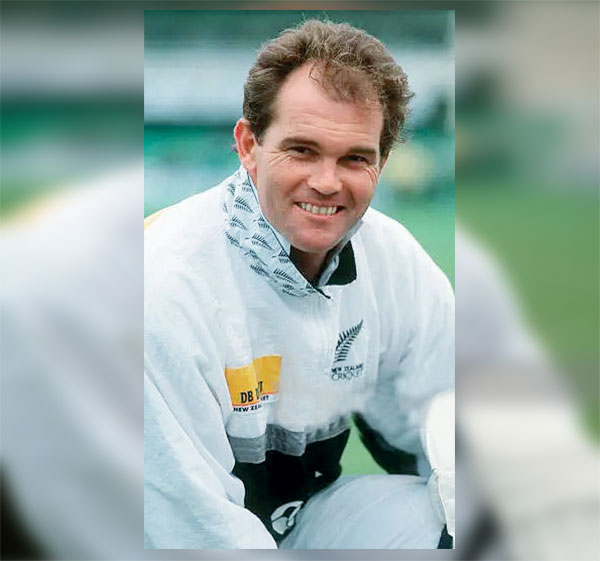
by Rex Clementine
Anyone who debuts as a teenager has got to be a special talent and to do it against the Aussies makes it even more special. Martin Crowe was 19 when he debuted against Greg Chappell’s side of which the attack was spearheaded by Dennis Lillee and Jeff Thomson.
Crowe was a natural. He had so much time to play his shots. Technically sound and so pleasant on the eyes.
Crowe was destined for greatness from a young age. He was 21 when Somerset picked him as the county’s overseas signing. Guess whom he replaced? A certain Viv Richards.
What made Martin Crowe a cut above the rest was not just his technique or stroke-play, he was a keen student of the game and a fierce competitor. Sri Lanka’s maiden Test win overseas should have come in 1991 in Wellington but Crowe’s competitive nature put an end to it. In the same game, he broke Glenn Turner’s record for the highest individual score (259) by a Kiwi in Tests. But cruelly was dismissed one run short of a triple hundred. That one run would have meant that he became the first New Zealander to score a triple hundred in Tests. The worst thing was that he was dismissed by the harmless medium pace of Arjuna Ranatunga.
Tactically, he was brilliant. New Zealand were cruising in the 1992 World Cup as Crowe used Mark Greatbatch as an opener during field restrictions and handed the new ball to spinner Dipak Patel surprising opponents.
By the time Crowe retired he was New Zealand’s highest run getter in both forms of the game. He could have done more but knee injuries restricted him. He quit at 33.
More than his batting exploits or captaincy skills, Sri Lankans will remember him for one thing, for saving the county from cricketing isolation.
There was no international cricket played in Sri Lanka from 1987 to 1991 due to the war. In 1991, Ian Pieris was President of Board of Control for Cricket and S. Skandakumar was the Secretary. They attended the ICC meeting and appealed to the rest of the cricketing word to tour Sri Lanka. Australia had given an undertaking to come in September 1992 followed by New Zealand later that year. Over the next 12 months, India, West Indies, England, Pakistan and South Africa were scheduled to come.
The Australian series was a grand success but when the Kiwis landed there was trouble. Navy Commander Clancy Fernando was killed in front of Taj Samudra hotel where the teams were putting up. Troubled by the suicide attack, just outside their team hotel, the New Zealand team wanted to go home.
Not only the tour but cricket’s future in Sri Lanka was in jeopardy.
It was captain Martin Crowe who decided to stay on and convinced his team to do so. Yet, all his team didn’t agree. Some players wanted to go back home. Crowe ensured replacements were flown in from New Zealand and the tour went on uninterrupted.
Sri Lanka owe it to Crowe for ensuring the tour went on. Had it been interrupted, the country would have faced another long isolation without cricket.
In 2016, Martin Crowe lost his battle with cancer and died at the age of 53 sending the cricketing world into mourning. He was certainly someone ahead of his time and the World Test Championship that’s currently in play was first mooted by him. Crowe certainly was a friend of Sri Lanka. Impressed by cheerleader Percy Abeysekara’s passion for the game, Crowe once gave away his Man of the Match award to the cheerleader. Several years later upon hearing that Crowe was unwell uncle Percy organized a bodi pooja. He called up journalists asking them to put a reminder in the papers so that fans could turn up for the event. He promoted the event with these words, ‘I crow, you crow, we all crow, for Martin Crowe.’



A depleted New Zealand attack – effectively reduced to just two-and-a-half frontline bowlers – was made to toil as a defiant West Indies rearguard stretched the contest into a fifth day on an increasingly docile Hagley Oval surface.
Forced off the field on day three by an eye infection, Shai Hope returned with sunglasses under his helmet to compile an unbeaten 116. It followed his first-innings 56 and marked his second century in three innings, a seamless extension of the defiance he showed while stonewalling India for long periods in New Delhi in October.
If Hope was the fulcrum, Justin Greaves was the anchor beside him. He reined in his instincts to play a composed, almost uncharacteristically restrained hand to finish 55 not out off 143 balls. His unbroken fifth-wicket partnership with Hope was worth 140 as New Zealand’s attack toiled under the blazing Christchurch sun.
Nathan Smith did not come out to bat and spent the entire innings off the field with a side strain. When Matt Henry left the field after the 35th over – later heading to hospital next door for scans – with West Indies 92 for 4, New Zealand may have hoped to finish off the game quickly.
But with his bowling resources rapidly thinning, Tom Latham – already standing in with the gloves due to Tom Blundell’s torn hamstring that ruled him out of not just this Test but the next – was left to lean heavily on Rachin Ravindra and Michael Bracewell’s part-time spin around pacer Jacob Duffy. On a surface that only got easier to bat on against the old ball, Hope and Greaves settled in and applied themselves admirably.
Having begun with positive intent, Hope was tested periodically with the short ball, Duffy setting a square leg halfway to the rope along with a short leg and fine leg for the pull. Hope mostly swayed and ducked out of harm’s way, and on the rare occasions he was tempted into the shot, he did well to keep it down. He brought up his fourth Test century off 139 deliveries.
Duffy employed a similar plan to Greaves, whose natural game is far more instinctive. But to his credit, Greaves appeared to take a cue from Hope, choosing restraint instead. He played only when the ball was at his body, using his height to ride the bounce and fend safely. While he was a lot more enterprising against spin, the fundamental of his knock was crease occupation.
Hope and Greaves laid down the template for those who perished prior to their arrival. Tagenarine Chanderpaul and John Campbell were put through a stern new ball test by Foulkes and Henry as they repeatedly tested both their edges in an engaging first spell. Chanderpaul’s propensity to shuffle across got him into trouble more often than not, and was out to a short ball that he inside-edged to the keeper for 6 off 45 balls.
Campbell – out an over earlier – was taken out by Foulkes as he jabbed at an away-swinger with no feet movement as Bracewell took a superb low catch at second slip. In the overs prior to his dismissal, Campbell wore a blow on his boot as he smashed one back off an inside-edge, making him groan in discomfort. This may have eventually had a hand in his dismissal.
Alick Athanaze never got going, and the frustration of being unable to score had him attempt a pull, only to be rushed into the stroke by Bracewell. He only managed to toe-end a pull to mid-on. And when Roston Chase fell in eerily similar fashion to his dismissal in the first innings – nibbling at a Henry away-swinger while being rooted to the crease – West Indies were collapsing swiftly and were 72 for 4.
A four-day defeat loomed until Greaves and Hope dug in to give West Indies some hope even as New Zealand’s tired attack wheeled away in the hope of a mistake. That wasn’t to come, as West Indies took the fight into the final day even though hopes of scaling down the 531-run target they were set seem just a pipe dream for now.
Earlier in the morning, New Zealand surprised many by choosing to bat on. Perhaps this was to give their bowlers more rest on a placid surface, considering the slew of injuries. Kemar Roach picked up three of the four wickets to fall, finishing with figures of 5 for 78 to take his wickets tally to 290.
Brief scores:
West Indies 167 and 212 for 4 (Shai Hope 116*, Justin Greaves 55*; Jacob Duffy 2-60) trail New Zealand 231 and 466 for 8 dec (Rachin Ravindra 176, Tom Latham 145; Kemar Roach 5-78) by 319 runs
(Cricinfo)

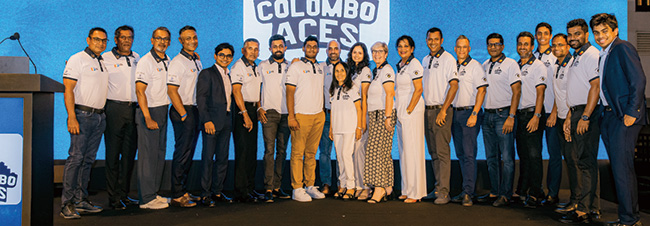
Colombo Aces officially introduced its Golf Team for the inaugural Ceylon Golf League 2025, Sri Lanka’s first franchise-based golf tournament — at a special unveiling event held recently in Colombo.
Co-founded by entrepreneurs Shamal Perera and Suhayb Sangani, along with Sri Lankan cricket legend Mahela Jayawardene, the inaugural Ceylon Golf League 2025 commenced on the 5th December at the Royal Colombo Golf Club, featuring eight franchise teams.
Across three days and three formats, eight city-based franchises will compete in a high-intensity showcase that sets a new benchmark for the sport locally.
Responding to the impact of recent floods, Ceylon Golf League 2025 is pledging over LKR 10 million from this weekend’s proceeds to support the Government of Sri Lanka in restoring affected infrastructure nationwide. In addition to the prize money already allocated to the main fund, Colombo Aces will contribute a further LKR 250,000 to the cause.
The Colombo Aces Golf Team will be led by Jehan De Saram, a highly respected PGA-qualified Sri Lankan golf professional who serves as both Captain and Head Coach. De Saram brings extensive experience to the role, having previously been the Director of Golf at the Royal Colombo Golf Club and a former national coach for the Sri Lanka golf team. Renowned for developing young talent, he has also competed in numerous local and international tournaments, adding significant depth and expertise to the Aces’ coaching setup.
Colombo Aces Golf Team – Kushal Johnpillai, Uchitha Ranasinghe (Men’s 2 & under), G.G Sathsara, Chanaka Perera (Men’s 3 to 6), Rajeev Rajapaksa, Chulaka Amarasinghe (Men’s 7 to 10), Reza Magdon Ismail, Thusith Wijesinghe, Kapila Dandeniya (Men’s 11 to 14), Fazlur Muzammil, Dhevan Peiris (Men’s 15 to 18), Usha De Silva, Sanduni Wanasinghe (Ladies’ 20 & under), Sandra Cadien, Vihara Herath and Fran De Mel (Ladies’ 21 & over) .
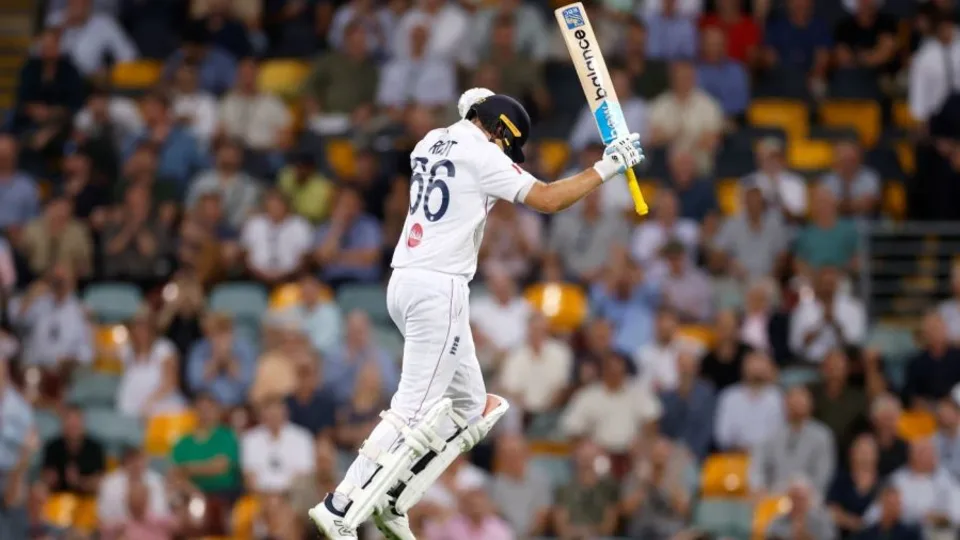
After an interminable break between matches following 48 hours of mayhem in Perth, the Ashes resumed with England producing a rollercoaster batting performance as Joe Root ended his century jinx on Australian soil in the day-night second Test.
In the final hour of an absorbing opening day, Root raised his arms aloft under the lights before taking off his helmet to celebrate his 40th Test century and first in Australia.
Root finished unbeaten on 135 from 202 balls and anchored an England first innings that at times showed restraint, but was also marked by reckless dismissals. Four batters fell for ducks with England again tormented by pink ball maestro Mitchell Starc, who finished with 6 for 71 to power past Wasim Akram’s record for most Test wickets by a left-arm quick.
But after the humiliation of batting just 67.3 across two innings in Perth, England batted the whole day – albeit only 74 overs were bowled – as they posted their first score over 300 in a Test in Australia since January 2018.
Brief scores:
England 325 for 9 in 74 overs (Joe Root 132*, Crawley 76, Harry Brook 31, Jofra Archer 32*; Mitchell Starc 6-71) vs Australia

Death toll rises to 607, missing persons reduce to 214 at 1800hrs today (5)

Sri Lanka Navy takes delivery of Ex-USCGC DECISIVE

Hope holds firm as West Indies drag New Zealand into fifth-day battle

Ireland among countries boycotting Eurovision after Israel allowed to compete

Putin says Russia will take Donbas by force or Ukraine’s troops will withdraw
486 dead, 341 missing, 171,778 displaced as at 0600hrs today [05]

‘Dates have the highest sugar content to fight Coronavirus’

Sunday Island 27 December – Headlines

#SundayIsland 17th December – Headlines

Sunday Island – 28th March

Sunday Island Headlines – 21 March

Sunday Island – 21st February – Headlines
-
 News6 days ago
Weather disasters: Sri Lanka flooded by policy blunders, weak enforcement and environmental crime – Climate Expert
-
 Latest News6 days ago
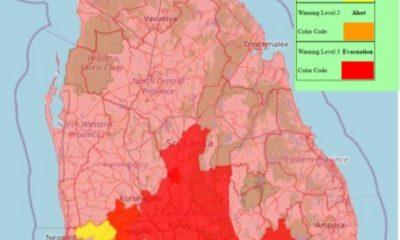
Level I landslide RED warnings issued to the districts of Badulla, Colombo, Gampaha, Kalutara, Kandy, Kegalle, Kurnegala, Natale, Monaragala, Nuwara Eliya and Ratnapura
-

 Latest News6 days ago
INS VIKRANT deploys helicopters for disaster relief operations
-
News3 days ago
Lunuwila tragedy not caused by those videoing Bell 212: SLAF
-
 Latest News7 days ago
Department of Irrigation issues Critical flood warning to the Kelani river basin
-
 Latest News4 days ago
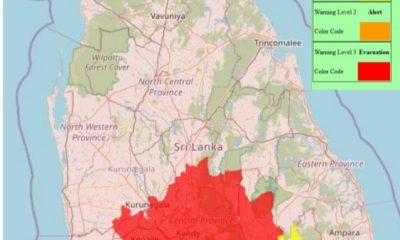
Level III landslide early warnings issued to the districts of Badulla, Kandy, Kegalle, Kurunegala, Matale and Nuwara-Eliya
-
 News2 days ago
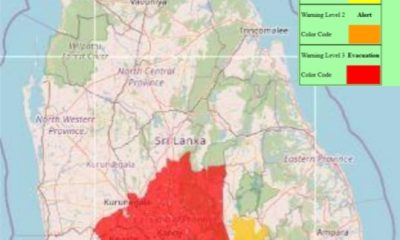
Level III landslide early warning continue to be in force in the districts of Kandy, Kegalle, Kurunegala and Matale
-

 Editorial7 days ago
Needed: Action not rhetoric