
Sports
Relief to see Dhananjaya among the runs: Naveed Nawaz

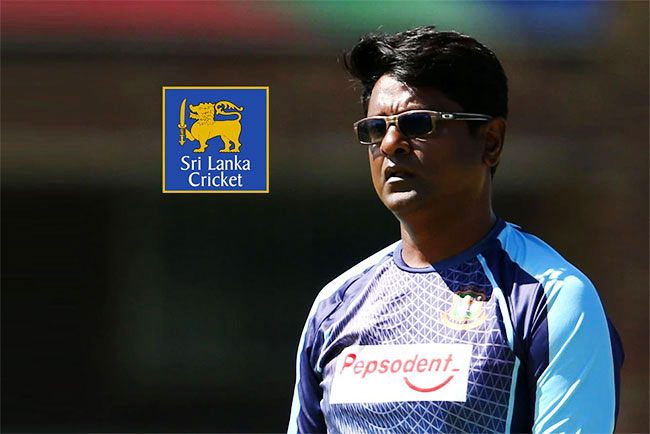
Sri Lanka secured a much-needed victory against Afghanistan to keep their slender hopes of qualification for the semifinals alive. Naveed Nawaz, Sri Lanka’s assistant coach, said it was an important victory for the team who also tried to reach the target of 145 as soon as possible for a lift in their net run rate but were able to finish it only in the penultimate over.
“Yeah, the net run rate was important. On the other hand, the win was important as well,” said Nawaz when asked if Sri Lanka could have got to the target sooner. “So we were keeping an eye on the net run rate as well while trying to secure a win. That was the most important thing for us. At the rate things were going, we were chasing 144, which we needed to get in at least 18-plus overs, which would jack up our net run rate into a decent position.”
Sri Lanka, with two wins from four games, will play against England in their final group encounter. Nawaz said they will go out with a positive mindset, attempting to win the game and boost their net run rate while hoping for other results to go their way.
“There’s one more game to go, and I think in our minds we’ve got to go hard and we’ve got to win that game and see where the tournament ends up. I think we’ll have to depend on how Australia goes in their next game to see if we have got any outside chance of making it to the semis,” he said.
Dhananjaya de Silva was the star batter for Sri Lanka in this game, with his unbeaten 66 off 42 helping the team over the line with six wickets in hand. He was involved in useful partnerships with Kusal Mendis, Charith Asalanka and Bhanuka Rajapaksa as Sri Lanka came up with a much-improved effort with the bat compared to their previous game where they had slipped to 24 for 5 against New Zealand.
“It’s always the case that we’ve been talking to lose less wickets during the powerplay as well as the first ten overs, where if you look at the pattern that’s building in most teams, the number of runs that you get in the first ten overs has been far less than the subcontinent. And the number of runs you get at the bottom end has been quite a bit. So that’s always been our plan during this World Cup, and whenever we had a good opening stand or someone taking responsibility from the top to move on, we’ve done well,” said Nawaz.
“I think it’s a relief that Dhananjaya is coming into runs. He’s always shown potential — 30s, 40s, 20s all the time. But I think it’s good to see him finishing a game and coming through that game over 60 not out, which is a good sign for us,” he added.
Nawaz also heaped praise on Wanindu Hasaranga, who finished with 3 for 13, which included two wickets and only three runs in the 20th over. “He’s always been one of our main bowlers and one of the top bowlers in the world. So that’s why we back him to bowl in the last over of the game as well, and he handled it brilliantly, bowled really well. I think that was one of the reasons that we could keep the Afghans below 150.”
Meanwhile, Afghanistan’s hopes of progressing further came to an end with this loss. Head coach Jonathan Trott said it was a mixed-bag campaign for the team where there didn’t capitalise on chances. He provided examples of the matches against England and also this game, where Afghanistan weren’t able to finish well with the bat.
“I’d say there’s been some good parts and there’s been some really average parts. We haven’t got things right. We seem to be able to get ourselves into positions but then not utilise them and actually then kick on with the batting,” Trott said. “So twice now, against England and this game. I’m not saying against England we would have had a massive score, but we would have certainly been able to put a lot more pressure on England if we’d been a little bit smarter in the last couple overs, and the same here.
“I think we lost four overs and we only got 31 runs, so 24 balls. Only being four wickets down, that’s not good enough. Those sort of areas are what can sort of take the game away from the opposition, or if you don’t get it right, bring them back into it,” he said. “We were definitely a few runs short. When your last over goes to three runs, you certainly left a few out there. We could have done a lot better with the bat. We got into position to kick on and didn’t utilise the short boundary anywhere near enough.”



Salman Ali Agha said that he would have done things ‘differently”, after Mehidy Hasan Miraz ran him out in controversial circumstances in the second ODI in Dhaka.
Agha, who made 64 from 62 balls, had been backing up at the non-striker’s end when Mohammad Rizwan drove the ball back towards him. He was still out of his ground as Mehidy swooped round behind him in an attempt to gather, and Agha had appeared ready to pass the ball back to the bowler before Mehidy reached down to grab it first and throw down the stumps.
Agha reacted furiously to the dismissal, throwing his gloves and helmet down in disgust at the decision. However, he later came to the post-match press conference, ahead of captain Shaheen Shah Afridi and player of the match Maaz Sadaqat, to clear the air.
“I think sportsman spirit has to be there,” Agha said. “What he [Mehidy] has done is in the law. I think if he thinks it’s right, it’s right, but if you ask me my perspective, I would have done differently. I would have gone for sportsman spirit. We haven’t done this [type of thing] previously, we would never do that in the future as well.”
Agha explained that he had been trying to pick up the ball to give to Miraz, thinking it was likely to have been called dead. “Actually, the ball hit on my pad and then my bat,” he said. “So I thought he can’t get me run-out now, because the ball already hit on my pad and my bat.
“I was just trying to give him the ball back. I was not looking for the run or anything like that, but he already decided [to make the run-out].”
Agha however regretted his angry reaction. “It was just heat-of-the-moment kind of stuff,” he said. “If you ask me what would I have done, I would have done things differently. But it was everything, whatever happened after that, it was in the moment.”
He was also involved in a robust exchange with Bangladesh wicketkeeper Litton Das, though he didn’t divulge many of the details.
“I can’t remember what I was saying and I can’t remember what he was saying,” he said. “I’m sure I wasn’t saying nice things, and I’m sure he wasn’t saying nice stuff as well. But it was just heat of the moment, so we are fine.
Asked if he had patched things up with Mehidy, Agha said: “I haven’t yet, but don’t worry, I’ll find him.”
Pakistan won the match by 128 runs via the DLS method.
[Cricinfo]

The Bahrain and Saudi Arabia Grands Prix that were scheduled for next month are set to be cancelled as a result of the war in the Middle East.
A formal decision to call off the races has not yet been made but is expected before the end of the weekend.
Freight would need to start being shipped to the Middle East in the coming days. With no sign of the conflict between the US/Israel and Iran coming to a conclusion, holding the races would put personnel at too great a risk.
Neither event will be replaced, with the season being cut to 22 grands prix and F1 taking a commercial hit of more than £100m, given Bahrain and Saudi Arabia pay two of the highest hosting fees.
The race in Bahrain was scheduled to be on 12 April with Jeddah the following weekend.
Consideration was given to holding events at Portimao in Portugal, Imola in Italy or Istanbul Park in Turkey.
But it was accepted that the time to organise a race at any of those locations was too short, and there was little chance of securing a hosting fee.
The decision will mean there is a five-week break between the Japanese Grand Prix on 29 March and Miami on 3 May.
(BBC)


Royal College made steady progress in reply to their arch rivals’ first innings total as skipper Rehan Peiris and Ramiru Perera guided them to 175 for four wickets at stumps on day two of the 147th Battle of the Blues at the SSC ground on Friday.
Royal needed only 51 overs to reach their end-of-day total after S. Thomas’ College had earlier adopted a cautious approach before being bowled out for 302 runs.
Royal suffered an early setback when open batsman Hirun Liyanarachchi was dismissed for naught in the very first over, caught behind by Aaron Kodituwakku off the bowling of Gimhan Mendis.
Skipper Rehan Peiris then steadied the innings, repairing the early damage with two useful partnerships. He first added 41 runs for the second wicket with Udantha Gangewatta and followed it up with a 34-run stand for the third wicket alongside Sri Lanka Under-19 skipper Vimath Dinsara.
Dinsara struggled to find fluency during his stay at the crease, managing 11 runs off 30 balls before being trapped leg-before by Gimhan Mendis, who finished the day with two wickets.
Rehan continued to anchor the innings and produced the most productive stand of the Royal innings when he combined with Ramiru Perera for a vital 78-run partnership for the fourth wicket. The Royal skipper’s determined knock finally ended on 63 when he was dismissed by Ludeesha Matarage.
From there, Ramiru Perera and Yasindu Dissanayake ensured there were no further setbacks, batting cautiously until bad light forced the umpires to call off play.
Perera remained unbeaten on 70, an attractive innings that included ten boundaries, while Dissanayake provided solid support at the other end as Royal closed the day strongly.
Earlier in the day, resuming from their overnight score, the Thomians continued with their ultra-cautious approach, scoring at just over two runs per over. Reshon Solomon top-scored with 66 runs, while Ludeesha Matarage and Raphael Hettige chipped in with useful contributions in the twenties.
S. Thomas’ were eventually bowled out for 302 just before the lunch interval on the second day, having consumed 124 overs during their four-session first innings.
Gagan Gamage was the pick of the Royal bowlers with impressive figures of four wickets for 49 runs. He received good support from Sehandu Sooriyaarachchi, who claimed three wickets for 64 runs, while Himaru Deshan picked up two wickets for 43. Ramiru Perera also chipped in with a wicket to complete the Thomian innings.

Agha calls for ‘sportsman spirit’ after controversial dismissal

US embassy in Baghdad hit by strike as Trump says military targets ‘obliterated’ on Iran’s key oil island

Showers or thundershowers will occur at several places in the Western, Sabaragamuwa, Central, North-western and Uva provinces and in Galle, Matara, Mannar and Anuradhapura districts after 2.00 pm.

Bahrain & Saudi Arabia Grands Prix to be cancelled

Pink Floyd guitar sold for record-breaking $14.6m

Promoting Local Industries is a key priority of the Government – PM

‘Dates have the highest sugar content to fight Coronavirus’

Sunday Island 27 December – Headlines

#SundayIsland 17th December – Headlines

Sunday Island – 28th March

Sunday Island Headlines – 21 March

Sunday Island – 21st February – Headlines
-

 News6 days ago
Repatriation of Iranian naval personnel Sri Lanka’s call: Washington
-
 Features6 days ago
Winds of Change:Geopolitics at the crossroads of South and Southeast Asia
-

 News5 days ago
Prof. Dunusinghe warns Lanka at serious risk due to ME war
-

 Sports4 days ago
Royal start favourites in historic Battle of the Blues
-

 Sports3 days ago
The 147th Royal–Thomian and 175 Years of the School by the Sea
-

 News3 days ago
Historic address by BASL President at the Supreme Court of India
-

 Business7 days ago
Seven decades of sartorial excellence: The legacy of Linton Master Tailors in Kandy
-

 News4 days ago
CEBEU warns of operational disruptions amid uncertainty over CEB restructuring