
News
Ranjan’s writ application to save his seat will be called on March 31

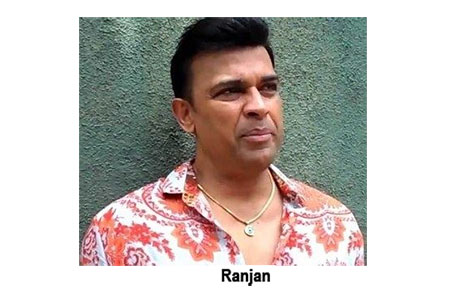
By Chitra Weerarathne
The Application for a Writ of Mandamus filed by Ranjan Ramanayake, in the Court of Appeal, will be next called on March 31.
It was called before the Court, yesterday, and all parties said that written submissions had been filed on schedule.
SJB MP Ramanayake was convicted by the Supreme Court for contempt. He was sentenced to four years rigorous imprisonment.
Ramanayake filed a Writ in the Court of Appeal, seeking a Mandatory Order on the Secretary General of Parliament, restraining the latter from informing the Commissioner of Elections that he had vacated his seat in Parliament, consequent to the conviction for contempt.
The Court of Appeal has said that the status will remain as at now until the next date of calling of the civil petition.
Faiz Mustapaha, President’s Counsel, appeared with M.A. Sumanthiran PC, Suren Fernando PC and Keerthi Tillekeratne for Ramanayake.
Indika Demuni de Silva Additional Solicitor General, PC, appeared with Nerin Pulle, Senior Deputy Solicitor General and Dr. Avanthi Perera, Senior State Counsel for the respondents, the Secretary General of Parliament, and the Commissioner of Elections.
The bench comprised Justice Arjuna Obeysekera (President).

Centre for Human Rights and Research Sri Lanka has alleged that the victims of Cyclone Ditwah in the Rajanganaya area recieved dud cheques from the government.
Civil society activist Rajith Keerthi Tennakoon, in a statement issued on behalf of the centre, has said that wide coverage was given to President Dissanayake handing over cheques to 17 persons. More than half of the cheques bounced due to insufficient funds in the government account.
Tennakoon said that in terms of financial rules and regulations, cheques could not be issued when sufficient funds weren’t available. The activist called for an investigation into those who authorised the issuance of dud cheques. (SF)
Sri Lanka must urgently step up airport screening, hospital surveillance and public health preparedness following a deadly Nipah virus outbreak in India’s West Bengal state, health experts warn, as heavy regional travel begins ahead of the Lunar New Year holidays.
Five confirmed Nipah infections – all among healthcare workers – have been reported from a private hospital in Barasat, near Kolkata, with nearly 100 contacts placed under quarantine.
Several Asian jurisdictions, including Thailand, Nepal, Taiwan and Hong Kong, have already activated enhanced airport health screening protocols.
The warning for Sri Lanka is particularly stark: Nipah virus has already been detected in local flying fox (Mawavula) populations, confirming that the pathogen is present in the country’s wildlife.
“This means Nipah is not a distant threat. The virus exists here, and that changes the entire risk equation,” said Professor Inoka C. Perera, Principal Investigator of the IDEA Laboratory and IDEAnet project at the University of Colombo.
Unlike many previous outbreaks linked to direct bat-to-human transmission, the West Bengal cluster involves human-to-human spread inside a hospital, one of the most dangerous scenarios for outbreak escalation.
Indian health officials say the outbreak began after a patient with severe respiratory symptoms died before Nipah infection was identified. Two nurses who treated the patient in late December later tested positive. Three additional cases – including a doctor – were subsequently confirmed, all linked to the same facility. One nurse remains in critical condition.
Public health experts note that similar hospital-based transmission drove earlier outbreaks, including the 2001 Siliguri incident in India, where three-quarters of infections occurred among hospital staff and visitors.
Nipah virus is among the world’s most lethal zoonotic diseases, with fatality rates ranging from 40% to 75%. It can cause severe respiratory illness and acute encephalitis, often progressing rapidly to coma and death.
There is no approved vaccine and no specific cure. Treatment depends on intensive supportive care, while monoclonal antibodies – available only in limited quantities – must be given immediately after diagnosis. Delayed detection dramatically increases mortality and the risk of onward transmission.
Sri Lanka’s risk is heightened by frequent travel with India and the widespread presence of Pteropus fruit bats. However, scientists say the country has one critical advantage: advance warning.
He told The Island: “We know the virus is circulating in bats, but we have not yet seen human cases. That gives Sri Lanka a rare opportunity to prepare before lives are lost.”
The IDEA Laboratory, working with the Robert Koch Institute of Germany, has established RT-PCR diagnostic capacity for Nipah virus, trained healthcare professionals nationwide, and built a hospital-based surveillance network capable of early detection.
Health experts are calling for immediate measures, including: Health screening at international airports, particularly for arrivals from India, strengthened infection prevention and control protocols in hospitals, heightened surveillance for unexplained fever, respiratory illness and encephalitis, expanded monitoring of flying fox populations, clear public guidance on food safety and early symptom recognition.
The West Bengal outbreak is the first major Nipah incident in the state in nearly 20 years and has emerged near Kolkata, one of India’s most densely populated cities. With the virus capable of spreading person-to-person, experts stress that this is a regional health emergency, not a local anomaly.
Kerala’s experience has shown that swift diagnosis, strict isolation and aggressive contact tracing can contain Nipah outbreaks. Sri Lanka, scientists warn, must act before the first human case appears.
“Every day without a Nipah case is a chance to build defences,” Prof. Perera said. “Waiting until the virus reaches hospitals is a mistake we cannot afford.”
By Ifham Nizam
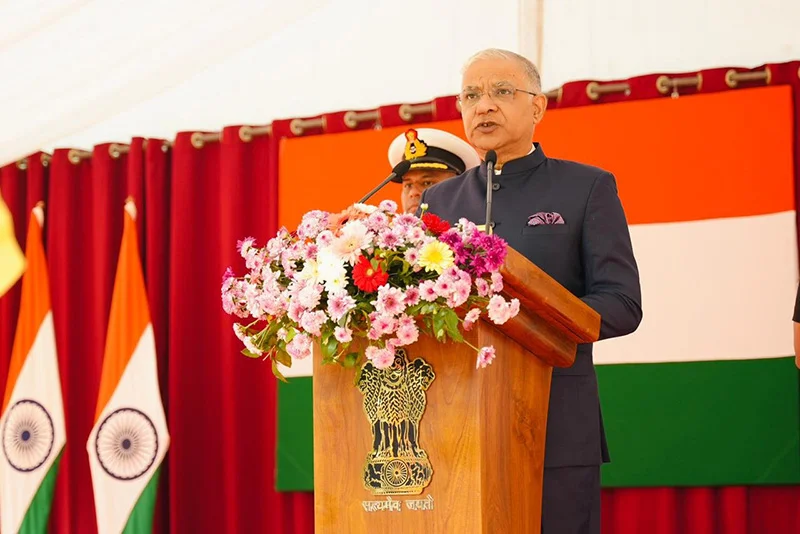
Indian High Commissioner Santosh Jha outlined major post-Ditwah work undertaken by the Modi administration in Sri Lanka. Addressing the evening reception at India House on the occasion of the 77th Republic Day of India, Jha said: “Immediately after Ditwah, External Affairs Minister of India, Dr. S. Jaishankar visited Sri Lanka, as Prime Minister’s Special Envoy, to express our solidarity and to announce an assistance package of over 450 million USD. The package is meant to support Sri Lanka’s Rebuilding Sri Lanka Initiative post-Ditwah. It covers five broad sectors:
i. rehabilitation and restoration of road, railway and bridge connectivity;
ii. rebuilding housing and water supply;
iii. support for health and education;
iv. support for agriculture and livestock; and
v. working towards better disaster response and preparedness.
We are aware that the utility of this package lies in its execution and impact. We are working closely with the government of Sri Lanka to ensure timely implementation. I am happy to report that delivery on the ground has already begun. In particular the more urgent tasks of restoring bridges and railway lines; and relocating houses and hospitals have already begun. Discussions have also been held to enhance Sri Lanka’s preparedness to deal with future natural disasters.”
Commenting on other developments, Jha said: “The importance of our security and defence cooperation cannot be overstated, especially as we are located in such proximate geography. This manifests when we collaborate to crack-down on transnational criminal networks and illegal activities in our neighbourhood. It also manifests in our joint endeavours to ensure maritime security. It is increasingly felt when we have to address man-made or natural disasters, as was evident, most recently, during Cyclone Ditwah. It has also been useful in augmenting Sri Lanka’s defence capabilities through supply of platforms, training programmes and joint exercises, including those aimed at building Sri Lanka’s capabilities on disaster mitigation and relief and rehabilitation.”
“Sri Lanka has a special place in this foreign policy vision. Our unbreakable bond is underpinned by our civilisational linkages and geographical proximity. Today, we enjoy exceptional levels of trust, goodwill and friendship – not just between our leaders but also between our peoples. India-Sri Lanka relations have emerged as a global model for cooperative partnership between neighbours.
The visit of Prime Minister Shri Narendra Modi to Sri Lanka in April 2025 and earlier by President Anura Kumara Dissanayaka to India in December 2024 has charted an ambitious roadmap for this partnership. Physical, Digital and Energy connectivity are agreed as key pillars of our partnership. Shared aspirations for development and shared commitment to security have emerged as key goals.
Over the last year, we have worked strenuously to realise these shared objectives. Construction of the Sampur Solar Power project has already been launched. We have made significant progress on grid interconnection. Talks are ongoing on the development of Trincomalee as an energy hub between India, Sri Lanka and the UAE.
India is also supporting modernisation of physical infrastructure. The upgraded railway track, with modern signalling system the on Maho-Omanthai railway line, is under implementation. In the past decade or so, India has helped rebuild or restore about 500 KMs of railway line; and installed about 400 KMs of signalling systems. The project for modernisation of the Kankesanthurai Port is expected to be launched soon. The passenger ferry service between Nagapattinam and Kankesanthurai is now a regular feature. We are now working to restore ferry links between Rameswaram and Talaimannar. In the aviation sector, there are around 180 weekly flights between India and Sri Lanka. Last year, Trichy was added as the second destination after Chennai, with flight connectivity to Jaffna.
Digitization is a key focus area of our partnership. Sri Lanka’s digitization journey is poised for a take-off with progress in implementation of Sri Lanka Unique Digital Identity (SLUDI) project. This will enable unfolding the entire stack of Digital Public Infrastructure (DPI) in Sri Lanka. Sri Lanka’s aspiration to build a cashless system is supported by the introduction of UPI payment system in Sri Lanka.

India Cup 2026 Golf Tournament celebrates sporting excellence and Indo–Lanka friendship

Some Ditwah victims given dud cheques: Civil Society outfit

Nipah outbreak in India triggers alarm: Sri Lanka urged to act before first human case

Jha outlines post-Ditwah India projects, security and defence cooperation

Climate risks, poverty, and recovery financing in focus at CEPA policy panel

AI concerned over alleged death threats to Sandya Eknaligoda

‘Dates have the highest sugar content to fight Coronavirus’

Sunday Island 27 December – Headlines

#SundayIsland 17th December – Headlines

Sunday Island – 28th March

Sunday Island Headlines – 21 March

Sunday Island – 21st February – Headlines
-
 Business3 days ago
ComBank, UnionPay launch SplendorPlus Card for travelers to China
-

 Business4 days ago
ComBank advances ForwardTogether agenda with event on sustainable business transformation
-
 Opinion7 days ago
Remembering Cedric, who helped neutralise LTTE terrorism
-
 Opinion4 days ago
Conference “Microfinance and Credit Regulatory Authority Bill: Neither Here, Nor There”
-
 Business7 days ago
CORALL Conservation Trust Fund – a historic first for SL
-

 Opinion6 days ago
A puppet show?
-

 Opinion3 days ago
Luck knocks at your door every day
-
 Features6 days ago
‘Building Blocks’ of early childhood education: Some reflections