
News
Ranil’s writ application: CA issues notice on AG

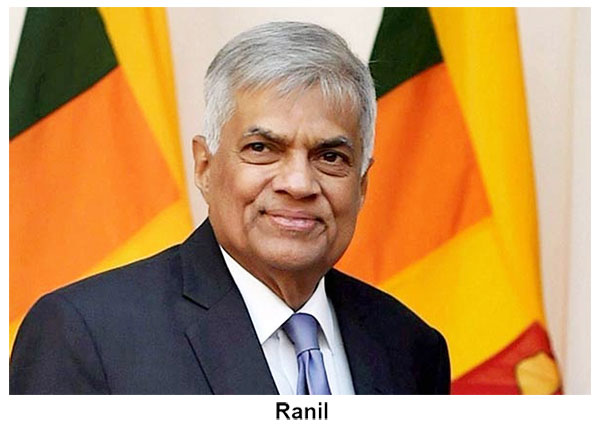
The Court of Appeal yesterday issued notices on the Attorney General in connection with a writ petition filed by former Prime Minister Ranil Wickremasinghe seeking a stay order against summoning him before the Presidential Commission of Inquiry proving incidents of political victimisation.
The directive was made by a Court of Appeal three-judge-bench comprising Justice Nissanka Bandula Karunaratne, Justice Lafar Thahir and Justice D. M. Samarakoon. They also fixed the petition for support on 02 March.
Appearing for Wickremesinghe, Faiz Musthapa, PC, said that his client had already filed a writ petition seeking the annulment of recommendations made against him by the Presidential Commission of Inquiry appointed to probe incidents of political victimisation. However, the President had again appointed a separate commission to determine how the political victimisation commission recommendations could be implemented. The new commission had summoned his client on 28 February.
Musthapa, PC, said that as his client had filed a writ petition, it was not fair for the Commission to summon him. He urged the court to stay the notice issued by the Commission appointed to determine how the political victimization commission recommendations could be implemented.
Justice Nissanka Bandula said that before they issued an order they needed to question the respondents and thus they asked the AG to appear before the court on 02 March.



At the award presentation ceremony of the International Rehabilitation Institute last week, Professor G.L. Peiris, as Chief Guest, in his keynote address, dealt with the special relevance of rehabilitation at this time. The traditional criminal law makes provision for punishment after a crime has been committed, and punishment usually takes the form of a prison sentence. It is even more important, however, to explore practical means of prevention and also to have recourse to a custodial sentence as a last resort rather than as the typical response.
The modern approach is that punishment is seen not as retributive but as a means of rehabilitating the offender in society. Prison sentences, bringing a first offender into the prison environment and association with habitual offenders, carries the risk of recidivism, the available statistics indicating the likelihood of return to prison on repeated occasions.
He placed emphasis on the importance of informed social attitudes to ensure that an offender does not carry a permanent stigma, reducing his opportunities for employment and acceptance in society. The importance of religious instruction in early childhood, and the close connection between temple and village, was stressed.
Professor Peiris was honoured with an award of appreciation by academic colleagues.

The Colombo Municipal Council (CMC) has resumed parking fees in the city with effect from today (23).
Parking management and fee collection will recommence from 6 am, following a decision by the Finance Standing Committee of the Council.
Charges were temporarily suspended from March 18 due to heavy traffic and long queues near fuel stations. Authorities said the situation had improved with the introduction of the QR code system and odd-even rationing.
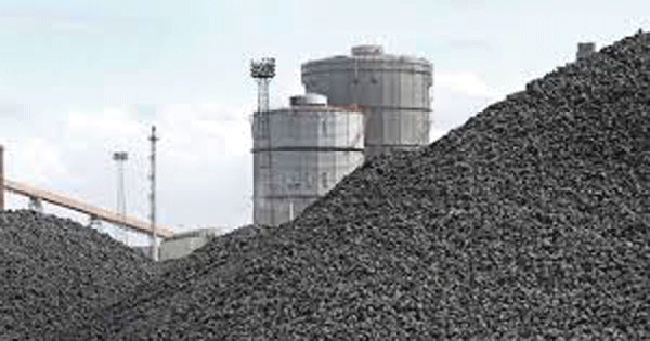
The ongoing controversy surrounding the importation of substandard coal to the Lakvijaya (Norochcholai) Coal Power Plant has spiralled into a full-blown national energy crisis, with severe technical disruptions, mounting financial losses, and growing fears of widespread power outages, a former General Manager of the Ceylon Electricity Board has warned.
Speaking with authority shaped by decades of experience, the retired electrical engineer did not mince his words: “This is not a routine operational issue. This is a systemic failure that is now threatening energy security.”
At the heart of the crisis lies the compromised quality of coal supplied to the Lakvijaya plant, the country’s largest coal-fired power station.
According to the former CEB chief, the plant’s generation capacity has dropped sharply due to coal that fails to meet the required Gross Calorific Value (GCV) of 5,900 kcal/kg.
“Generation losses in the range of 80 to nearly 180 megawatts are not minor fluctuations. They represent a serious erosion of base-load capacity at a time when demand is steadily rising,” he said.
The technical consequences have been immediate and severe. Coal mills—critical components in pulverising coal for combustion—have reportedly clogged due to high ash content and poor grindability, particularly in Unit 3.
Engineers have been forced to resort to diesel-fired burner guns to stabilise boiler operations, a move the former GM described as “a costly and inefficient emergency measure.”
“Diesel is not meant to be a fallback for sustained operations. It is a last resort. When you start relying on it regularly, you are effectively admitting that the system is failing,” he added.
Beyond immediate disruptions, the long-term risks to infrastructure are deeply concerning. Substandard coal increases the likelihood of slagging and fouling within boilers, potentially leading to overheating and irreversible damage.
“You are not just losing power generation today—you are shortening the lifespan of multi-billion-rupee assets,” he warned.
The financial fallout has been equally staggering. Internal estimates from the CEB and the Public Utilities Commission of Sri Lanka suggest that losses from multiple coal shipments range between Rs. 7.5 billion and Rs. 8.5 billion.
Compounding the crisis is the cost of replacement power. With the coal plant unable to operate at full capacity, authorities have increasingly turned to diesel-based emergency generation.
“The economics are brutal,” the former GM explained. “A unit of electricity from coal costs roughly Rs. 20 to 25. Diesel generation can go up to Rs. 60 or even Rs. 75. That gap translates into tens of millions of rupees in additional daily expenditure.”
He estimated that the country is incurring an extra burden of over Rs. 50 million per day due to this forced shift—costs that ultimately fall on the public.
Even more troubling, he noted, is that contractual penalties imposed on suppliers are insufficient to offset the losses.
“The recoverable penalties are nowhere near the actual damage. There is a gap of nearly Rs. 2 billion, which means the taxpayer is left footing the bill,” he said.
The environmental implications of the crisis add another layer of urgency. One shipment reportedly contained ash levels as high as 21 percent—almost double the acceptable standard.
“This means thousands of tonnes of additional waste. Where is it going? How is it being managed?” the former GM questioned.
Worse still, when diesel burners are used to stabilise boilers, Electrostatic Precipitators (ESPs)—designed to capture harmful fly ash—must be temporarily shut down. This results in the release of toxic particulates into the atmosphere.
“You are talking about emissions containing mercury, arsenic, and lead. These are not abstract risks. They have direct consequences for public health, particularly for communities living around Norochcholai,” he stressed.
The crisis has also exposed serious lapses in procurement and governance. The former GM pointed to the reduction of procurement timelines from 42 days to just 21 days, as well as the lowering of supplier eligibility thresholds.
“These are not procedural tweaks—they fundamentally alter the integrity of the procurement process,” he said, adding that such changes may have limited competition and allowed less experienced suppliers into the system.
He also raised concerns over reports that coal had been fed directly into boilers before independent quality verification.
“If true, that is a dangerous precedent. Quality assurance exists for a reason. Bypassing it undermines operational safety and accountability,” he noted, while acknowledging the CEB’s position that direct feeding was intended to avoid double handling.
Looking ahead, the timing of the crisis could not be worse. With the southwest monsoon approaching, experts fear that delays in procurement or the rejection of substandard shipments could push fresh imports into a period when rough seas make unloading at Norochcholai extremely difficult.
“If shipments are delayed into the monsoon window, you are staring at a real risk of supply disruptions. That is when load shedding becomes unavoidable,” the former GM warned.
He called for immediate corrective measures, including stricter quality enforcement, transparent procurement practices, and accountability at all levels.
“This is a preventable crisis. But it requires decisive action. Otherwise, we are heading towards a situation where technical failure, financial loss, and environmental damage converge into a national emergency,” he said.
By Ifham Nizam

Prof. Peiris honoured by International Institute of Rehabilitation

CMC resumes parking fees

Substandard coal deepens energy crisis, warns former CEB Chief

Sri Lanka, ICRC to develop unified national database for missing persons

Experts urge hydration and fruit intake amid heatwave

Healthguard Distribution powers Sri Lanka’s ‘Port to Pharmacy’ medicine supply chain

‘Dates have the highest sugar content to fight Coronavirus’

Sunday Island 27 December – Headlines

#SundayIsland 17th December – Headlines

Sunday Island – 28th March

Sunday Island Headlines – 21 March

Sunday Island – 21st February – Headlines
-

 News5 days ago
CIABOC questions Ex-President GR on house for CJ’s maid
-

 News6 days ago
Sri Lankan marine scientist Asha de Vos honoured at UNGA opening
-

 News6 days ago
Australian HC debunks misleading travel risk claims for Sri Lanka
-

 News4 days ago
Bailey Bridge inaugurated at Chilaw
-

 Latest News6 days ago
Wednesdays declared a government holiday with effect from 18th March
-

 News4 days ago
Pay hike demand: CEB workers climb down from 40 % to 15–20%
-

 News3 days ago
CIABOC tells court Kapila gave Rs 60 mn to MR and Rs. 20 mn to Priyankara
-

 Editorial5 days ago
Couple QR-based quota with odd-even rationing