
News
Ranil W’s thoughts on present priorities

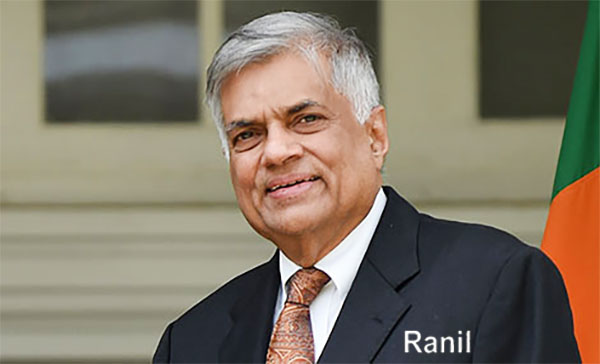
by Saman Indrajith
UNP leader and former Prime Minister Ranil Wickremesinghe says that the country is fast sliding into a very serious food crisis. “The Finance Minister the other day informed Parliament of the present status of the economy.
“Loan interest rates have been increased by around 12 to 13 per cent. Dollar reserves have dropped to unprecedented lows. There is no way to import fuel, gas and fertilizers. Such a situation leads to a food crisis. The government mismanaged this crisis right from the beginning. Now it has grown to catastrophic proportions,” he said.
The former Premier said in an interview with the Sunday Island : “We should consider every country our friend. The US, Japan and India are of the same stance. This government has antagonized each of them. So we are confronted with a very bad and unfortunate situation.”
Excerpts:
Q: How would you comment on some analysts’ view that the government is wrongly trying to find a political solution for an economic crisis and it will continue to fail to find it because what we need is an economic solution? Many trace the origin of current crisis to economic causes. Could Parliament find a solution?
RW: The government now has to operate under the provisions of the 20th Amendment. You would recall that we opposed that amendment right from the beginning. Having realized that they have exhausted all ways and means possible under 20A, some government ministers are now in a mighty hurry to bring a 21st Amendment.
That, however, is not the solution for this economic crisis. People carry a heavy burden as we talk right now and are undergoing many hardships. Hardly a day passes without hearing of job losses, retrenchments and lay-offs. Businesses are collapsing before our eyes. We must pay much more attention to the economy than we do now.
People will rise against all of us when they realize that another amendment to the Constitution would not serve their purposes or resolve their crises. There are political issues too to be addressed but our primary focus, energy and time must be to address this economic crisis. It should be sorted out before we talk about issues such as abolishing the executive presidency. The executive presidency cannot be completely abolished without the people’s consent at a referendum. Unlike such issues, the economic crisis demands earliest possible solutions. The first priority should be fixing the economic crisis.
Q: There is a serious fuel crisis. Stocks are dwindling fast without sufficient replenishment. India is reported to have offered fuel worth USD 200 million. What would follow?
RW: The government has asked for a USD 200 million fuel loan from India when the stocks they had given us earlier run out. It would, most probably, be granted. Another billion dollar loan for essential goods has also been sought. Even if we secure both loans, the problem is that the current stocks come to an end in June.
The 500 million dollars we now have as reserves are not enough to buy our requirement of fuel which is around four shipments. The additional USD billion cannot be spent to buy everything we want. India does not have everything we need. We urgently have to buy food, medicine and fertilizer.
Q: There are demands that Mahinda Rajapaksa steps down. What follows?
RW: The Opposition is calling for the resignation of both the Prime Minister and the President. The people say the same. Parliament can solve the economic crisis. It could do so because it has the supreme power over public finance.
Q: IMF has called for debt restructuring. China does not want to restructure its loans. What would be the possible consequences?
RW: This could be addressed if we prepare middle and long term plans and present them to Parliament. We should be specific in stating there what we plan to do. The Finance Minister told the House that he had spoken to the Chinese Ambassador. The Minister also said that the Ambassador expressed willingness to help. Various countries have various proposals and ideas. It takes time to sort them out. It took about five to six years for Zambia to sort out their financial crisis. Just because talks are conducted, there is no guarantee of solutions.
Q: There are two No-Confidence motions before Parliament. What is the UNP’s stand on them?
RW: We have already said we support them. It is the action to be taken after the no-confidence motions that matters now.
Q: Some in the Opposition call for an election. They argue that an election is the way out of the crisis. Your position?
RW: Sri Lanka cannot afford an election right now. Some parties spent over 10 billion rupees in the last election. Not only the parties but also the candidates have to spend a hell of a lot of money for elections. Parties cover their expenses from supporters. It is difficult to think that supporters can help their parties at a moment like this. So going for an election is a very hard option at this time.
Q: Global economic experts have made worrisome predictions about Sri Lanka’s inflation rate?
RW: This is only the beginning of the spiral. At this rate we would overtake Lebanon very soon and be the country with the world’s highest inflation. We’ve reached the third slot within six months. It may take less time to hit the first place.
Q: Are you agreeable with the idea of an interim government?
RW: The Constitution does not have provisions for an interim government. I do not know how anyone could bring about any form of governance that has not been provided for by the Constitution. The Constitution has provisions to end a government and how a new government would replace it. There are provisions for a caretaker government for an interim period. That is if there’s a delay between the dissolution of the House of Representatives, the conclusion of the general election and the formation of a new government. Apart from that I know nothing about that idea. Whoever commands numerical supremacy in the House is given the governing powers.
Q: The Finance Minister told Parliament that giving a Rs 10,000 increment to public servants soon after the Yahapalana government coming to power was a historic blunder…..?
RW: That is his opinion. My opinion is different. We did that to ease the burden on people at that time. We also brought down the prices of essential goods at the same time. Many families who had both parents working in public service got 20,000. We also worked to get a pay hike for the private sector.
That was where we started going forward. After such increases in salaries we introduced a price formula for fuel so that whenever the price goes down in the world market the benefit is enjoyed by our consumers too. When there was an increase in fuel price in 2020 to 2021 we did not shift it to the consumer.
Q: In your assessment how long it would take to get this country back on track if proper management is introduced at this point of time?
RW: It depends on our policies. If we have a strong policy, we could put this country back on track in two years. People should be given relief during those two years and in the meantime we have to work to go forward. These are extraordinary times. They need extraordinary measures.
The UNP has the capacity and vision to go forward. We must open our minds and see how others have done that. I recall how those now in the government stopped our campaign to give each child a tab computer. They spread the falsehood that using tabs would make children infertile.
We tried to go for a Free Trade Agreement. That was sabotaged. They demanded that LIOC should be chased away from this country. Would we be getting at least this much of fuel if we had removed them? How much they criticized us for bringing in LIOC. It is they who give fuel to this country now.


Romania, a country that has maintained diplomatic relationship with Sri Lanka for several decades in various fields, has become an increasingly popular destination among Sri Lankan skilled and semi-skilled Labour categories, especially in the fields of construction, manufacturing, hospitality, and services sectors.
At present, the recruitment of Sri Lankan workers to Romania is carried out by licensed private employment agencies under the
supervision of the Sri Lanka Foreign Employment Bureau. However, since both parties have recognized the need of establishing a more organized and sustainable recruitment method due to increasing demand, the Cabinet of Ministers has approved the proposal presented by the Minister of Foreign Affairs, Foreign Employment, and Tourism to enter into a Memorandum of Understanding between the Government of the Democratic Socialist Republic of Sri Lanka and the Government of Romania regarding cooperation in the field of the labour sector with the following objectives.
• Establishment of proper mechanism for recruitment and management of workers.
• Promotion of ethical and transparent recruitment practices.
• Protection of rights and welfare of the migrant workers.
• Facilitation of regular discussions between the formal and relevant authorities ofboth countries.
• Improvement of technical cooperation, skills recognition, and capacity building in the labour sector.
The Cabinet of Ministers has approved the proposal presented by the President, in his capacity as the Minister of Finance,
Planning, and Economic Development to repeal Management Services Circular No. 01/2019 , dated 15-03-2019, issued regarding the implementation of development projects, and to issue a new management services circular including updated provisions instead.
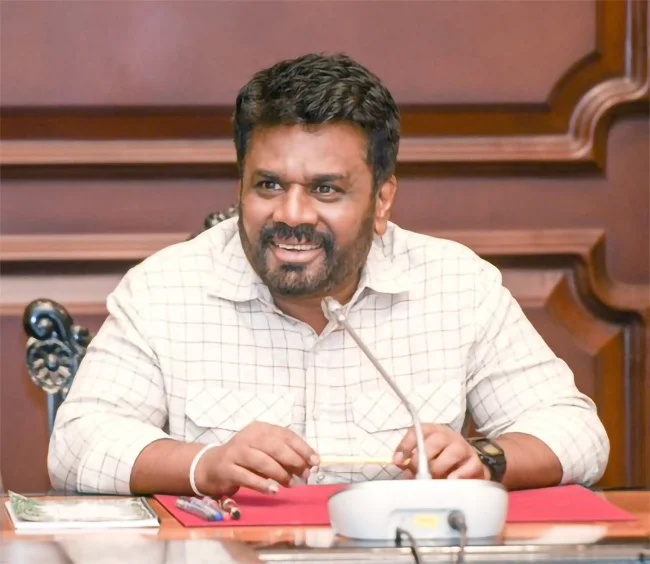
Chief Prelates of the Malwathu, Asgiriya, Amarapura and Ramanna Nikayas, in a joint letter addressed to President Anura Kumara Dissanayake, has expressed concern over the protracted delay in appointing a permanent Auditor General.
The Chief Prelates have said that the appointment of an outsider as the Head of the National Audit Office (NAO) responsible for ensuring transparency and accountability in public finances will be inappropriate.
The Chief Prelates have said that they are of the view that Dharmapala Gammanpila, a senior officer with extensive experience within the Auditor General’s Department, is the ideal candidate for the top post. They have also emphasised that his appointment will strengthen the government’s efforts to promote economic prosperity.
Chulantha Wickramaratne, who served as AG for a period of six years, retired in April 2025. Following his retirement, President Dissanayake nominated H.T.P. Chandana, an audit officer at the Ceylon Petroleum Corporation, as the AG. The CC rejected that nomination. Subsequently, President Dissanayake appointed the next senior-most official at the NAO Dharmapala Gammanpila as Acting Auditor General for a period of six months. Then, the President nominated Senior Deputy Auditor General L.S.I. Jayarathne to serve in an acting capacity, but her nomination, too, was also rejected. Many an eyebrow was raised when the President nominated O.R. Rajasinghe, the Internal Audit Director of the Sri Lanka Army for the top post. That nomination too was rejected. As a result, the vital position remains vacant since 07 December, 2025.

Vintage Markram, clinical Linde headline South Africa’s comfortable win

Cabinet nod for MOU between Sri Lanka and Romania on the cooperation in the Labour Field
New circular to replace Management Services Circular No. 01/2019

The RAPP sheet: Steve Smith, Daryl Mitchell, Umesh Yadav among over 1300 players

U19 World Cup: Pakistan overcome New Zealand by 8 wickets

U19 World Cup: Vihaan Malhotra ton headlines India’s massive win

‘Dates have the highest sugar content to fight Coronavirus’

Sunday Island 27 December – Headlines

#SundayIsland 17th December – Headlines

Sunday Island – 28th March

Sunday Island Headlines – 21 March

Sunday Island – 21st February – Headlines
-
 Business2 days ago
ComBank, UnionPay launch SplendorPlus Card for travelers to China
-
 Business3 days ago
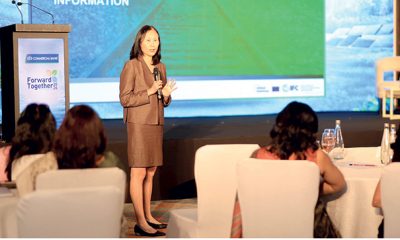
ComBank advances ForwardTogether agenda with event on sustainable business transformation
-
 Opinion6 days ago
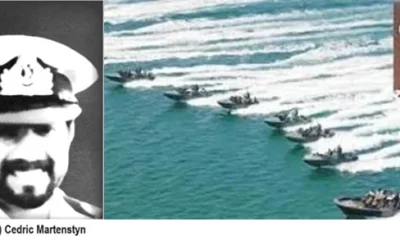
Remembering Cedric, who helped neutralise LTTE terrorism
-
 Business6 days ago
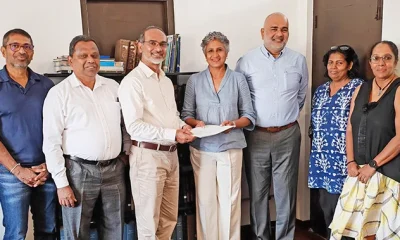
CORALL Conservation Trust Fund – a historic first for SL
-
 Opinion3 days ago
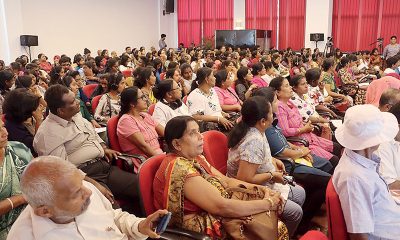
Conference “Microfinance and Credit Regulatory Authority Bill: Neither Here, Nor There”
-

 Opinion5 days ago
A puppet show?
-
 Opinion2 days ago
Luck knocks at your door every day
-
 Features5 days ago
‘Building Blocks’ of early childhood education: Some reflections