
Sports
Rain wrecks game after Ben Duckett’s maiden ODI ton

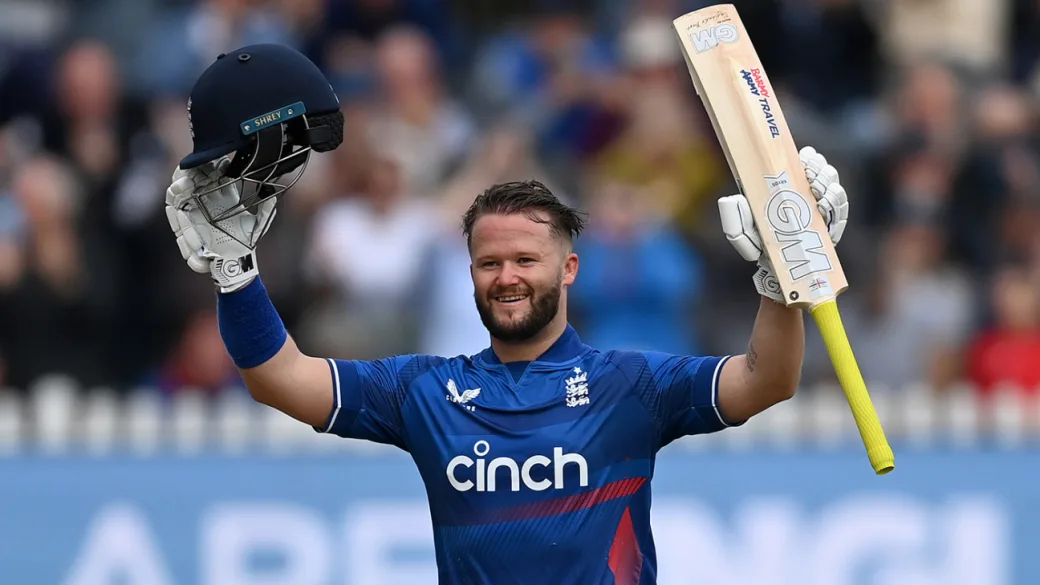
England claimed a 1-0 ODI series win against Ireland in farcical circumstances after the third ODI at Bristol was abandoned 31 overs into the first innings due to rain, with water also getting onto the pitch.
England had reached 280 for 4, with Ben Duckett striking a maiden ODI ton to build on a fast start by Phil Salt, who blitzed 61 off 28 at the top of the order, before the rain arrived during the drinks break at 2.48pm. After a brief pause to see if it would pass, the umpires decided to call on the groundstaff.
There was a further issue when the covers were caught in the wind leaving the pitch exposed, before the three mobile covers came on from Ashley Down Road End. The tractor dragging the covers ended up driving down what would have been just outside off stump for a right-hander batting from the Pavilion End. There was also a delay in closing the gaps between the covers allowing the rain to get onto the playing surface.
Members of the groundstaff then had to squeeze under the covers where they were passed mats to towel down the damaged areas at both ends. Standing umpire Paul Reiffel and third umpire Rod Tucker emerged with reserve umpire David Millns at around 3.15pm to survey the damage. After looking under the covers, and assessing the standing water on the square, the decision was made to call off the match at 3.21pm. The rain relented five minutes later.
An overnight deluge had saturated the outfield, but although play did get underway on time at 12.30pm, fears the ground could not take any more rain were eventually realised.
“It caught everyone by surprise,” Zak Crawley, England’s captain for this series, said. “The ground was already a bit wet this morning after the rain that happened last night, so it didn’t need a lot more rain to get abandoned like that. And obviously a lot of rain fell in not a long space of time.
“I went on the outfield just now and it was soaking wet as well. I think it was all unfit.”
Ireland skipper Paul Stirling echoed those sentiments, having initially hoped the delay would allow his side to turn their fortunes around after a chastening start in the field.
“I think we were all pretty happy when the rain came, but we weren’t quite expecting it to end the game,” he said. “We thought we might get a bit of a break or a bit of a rest and try and regroup and come out there and change it up a little bit. But no, we weren’t expecting the game to be called off.
“We were having a bit of a joke in the dressing room, I think we’re more used to it in Ireland because there is more rain probably. We haven’t really come across that in England where it was so sudden. We wanted to get out there.”
This was the fourth consecutive men’s ODI abandoned at Bristol, following a 2021 no-result against Sri Lanka and two of their three 2019 World Cup matches (Pakistan versus Sri Lanka and Bangladesh versus Sri Lanka) washed out without a ball being bowled. Gloucestershire chief executive Will Brown lamented what he regarded as an unavoidable situation given the volume of rain in the last 24 hours.
“We always had the sense that if we had something similar to last night, 20-30 minutes of rain could be what killed it off. You can see all along the bottom of the square the water is running off in big puddles.
“It is just gutting. We’ve had our fair share of rain offs such as in World Cups and you wonder if we give it a bit longer maybe it can dry out, but it is what it is. The umpires and the match ref know what they are doing, the ground staff are working their backsides off to get it right.”
Brown defended the response from the ground staff, who struggled to fully cover the pitch and surrounding areas in challenging conditions.
“It was hard conditions for them. You could see by how the covers were moving that it was pretty tough for them. It is one thing getting the covers on speedily, but in those conditions it is a different ball game altogether. They were certainly heavy and wet from this morning.
“No one wants to see a match end in that way and we are just collectively gutted for a season-ender for English cricket like that and a season-ender for Gloucestershire in Bristol.
“The conditions last night were shocking. The covers were heavy and wet, and they were trying to move them in tough conditions. It was blowing a hooley, which makes it a lot harder to move. I think they did and admirable job in difficult circumstances.”
In what play was possible, England had been given a bumper start by Salt on his way to his country’s fourth-fastest half-century in the format, from 22 deliveries. He crashed three fours and a six off Mark Adair in the first four balls of the match, with 19 off the first over and, thanks to his 87-run stand with Will Jacks, 100 up after eight overs – both England records in this format.
Duckett had brought up three figures with a six over wide long-off from his 72nd delivery, the penultimate ball of the 30th over. And though Sam Hain fell to Craig Young – the most impressive Irish bowler on show with 3 for 31 – at the end of the next over, Duckett had a shot at becoming England’s first double-centurion and, in turn, the team an outside chance of beating their world-record ODI score of 498 for 8, made against Netherlands last year. Neither got the chance to play out.
It was a tough debut for Ireland’s left-arm spinner Theo van Woerkom, who conceded 47 runs in his four overs. That included having his last four balls hit for 16 by Duckett to bring up England’s 250 after 27 overs. Van Woerkom did at least emerge from the wreckage with a maiden wicket when Crawley scythed a wide delivery to third after bringing up his maiden ODI fifty.
However, for the second time in the series the rain curtailed any prospects of a result. With more than 30 overs of play achieved, spectators were not entitled to a refund.
“It worries me greatly that this is a sign of things to come,” Brown said, looking ahead to next summer with Bristol due to host an ODI between England and Australia on September 29.
“We’ve got a lot of cricket being played in September next year and with climate change we’ve seen heavy rain in June and July, and I think the game needs to be thinking innovatively about how we get games on or prepare pitches and surfaces using different things to get cricket away.”
Brief scores:
England 280 for 4 in 31 overs (Ben Duckett 107*, Phil Salt 61, Zak Crawley 51; Craig Young 3-31) vs Ireland – Match abandoned
(Cricinfo)






Tiger Woods has been charged with driving under the influence after rolling his car in a crash in Florida, police have confirmed.
The Martin County Sheriff’s Office said the 15-time major champion was also charged with property damage and refusal to submit to a lawful test.
Woods, 50, rolled his Land Rover after clipping a pressure cleaner truck while trying to overtake it at “a high rate of speed”, according to Sheriff John Budensiek.
The golfer, who had to crawl out of the passenger door of his vehicle, passed a breathalyser test after the crash but refused a urine test.
No-one sustained any injuries in the incident which took place on Beach Road in Jupiter Island just before 14:00 local time on Friday (about 19:00 GMT).
Sheriff Budensiek told a news conference: “The DUI investigators came to the scene and Mr Woods did exemplify signs of impairment.
“They did several tests on him. He did explain the injuries and surgeries that he’s had and we did take that into account, but they did some in-depth roadside tests.
“When it was determined, he was placed under arrest and taken to the Martin County jail.
“At the Martin County jail, and even on scene, we were really not suspicious of alcohol being involved in this case and that proved to be true.
“Mr Woods did a breathalyser test with triple zeros, but when it came time for us to ask for a urinary analysis test, he refused.”
Budensiek also said Woods had been “co-operative but was trying not to incriminate himself”.
“He has a right to refuse that test,” added the sheriff. “There is a statute which he will be charged with for refusing to take that test, but we will never get definitive results as to what he was impaired on at the time of the crash.”
US president Donald Trump was asked about the crash on Friday, saying: “I feel so badly. [Woods has] got some difficulty. There was an accident. That’s all I know.
“He’s a very close friend of mine, he’s an amazing person, an amazing man.”
Sheriff Budensiek said Woods would remain in jail for eight hours then be released on bond. The charges are misdemeanours, not felonies.
The BBC has contacted the golfer’s representatives for comment.
This is not the first time Woods has been involved in a car accident – he has played a limited schedule since the serious crash in 2021 that left him with extensive injuries and fortunate to be alive.
In 2017 police officers also found him slumped at the wheel of his parked Mercedes-Benz not far from his Florida home.
A toxicology report found Woods had several legal medications in his system and marijuana’s active ingredient, and he was sentenced to a year’s probation after pleading guilty to reckless driving.
In 2009 Woods hit a fire hydrant, a tree, and several hedges in a bizarre collision outside his home.
The incident sparked accusations of extramarital affairs which led to the end of his seven-year marriage and the loss of lucrative sponsorship deals.
[BBC]

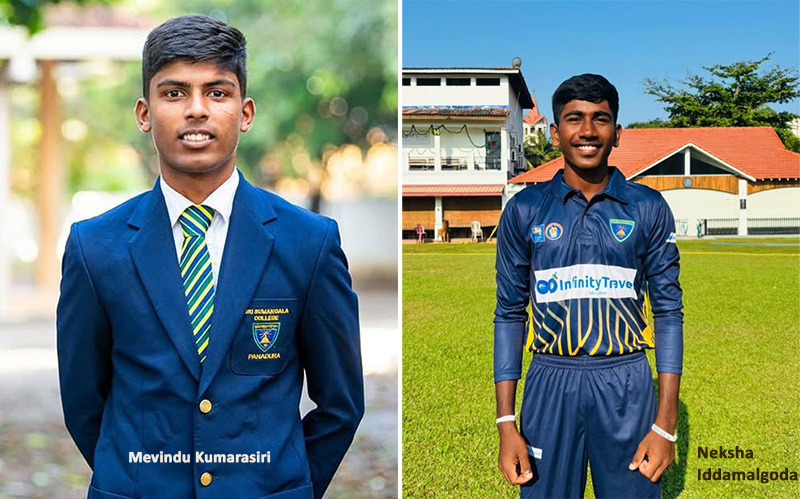
Sri Sumangala College, Panadura secured a convincing five-wicket victory over Sri Dharmaloka College, Kelaniya in their Under-19 Division I Tier ‘B’ cricket quarter-final at Kuruvita on Friday, sealing a place in the semi-finals with two sessions to spare.
All-rounder Mevindu Kumarasiri played a decisive role in the win, following up his outstanding bowling performance with a vital knock of 44 runs to guide his team to the target of 157.
Sri Sumangala’s run chase was anchored by Kumarasiri and Neksha Iddamalgoda, who shared a crucial 85-run partnership for the fourth wicket after the early setbacks. The stand effectively put the Panadura side on course for victory.
Kumarasiri’s brisk 44 came at just under a run-a-ball and included five boundaries, while Iddamalgoda top-scored with 49, striking seven fours in a fluent innings. Although both batsmen were dismissed before the target was reached, their partnership had already taken the sting out of the chase.
Bihanga Silva and Sadika Damyuru then completed the formalities, steering Sri Sumangala past the target to wrap up an impressive victory.
The win was particularly remarkable considering Sri Sumangala had been bowled out for 144 in their first innings. However, Kumarasiri turned the game dramatically in their favour with a superb six-wicket haul that dismantled Sri Dharmaloka for just 89 in the second innings.
His match-winning all-round performance proved to be the turning point as Sri
Sumangala capitalised on the opportunity to book their place in the tournament’s semi-finals.
Scores
Sri Dharmaloka 211 all out in 76.3 overs
(Kaveen Deneth 106, Senuka Pehesara 29, Koshitha Adithya 19; Mevindu Kumarasiri 5/82) and 89 all out in 35 overs (Tharusha Mihiranga 24; Mevindu Kumarasiri 6/41, Methum Fernando 4/42)
Sri Sumangala 144 all out in 48.4 overs
(Neksha Iddamalgoda 47, Bihanga Silva 36, Mavindu Kumarasiri 21; Tishan Nipun 4/43, Sathindu Prabhoda 3/44, Koshitha Adithya 2/27) and 160 for 5 in 34.3 overs (Vidura Basuru 33, Sandeep Wijerathna 19, Neksha Iddamalgoda 49, Mevindu Kumarasiri 44; Koshitha Adithya 4/64) (RF)
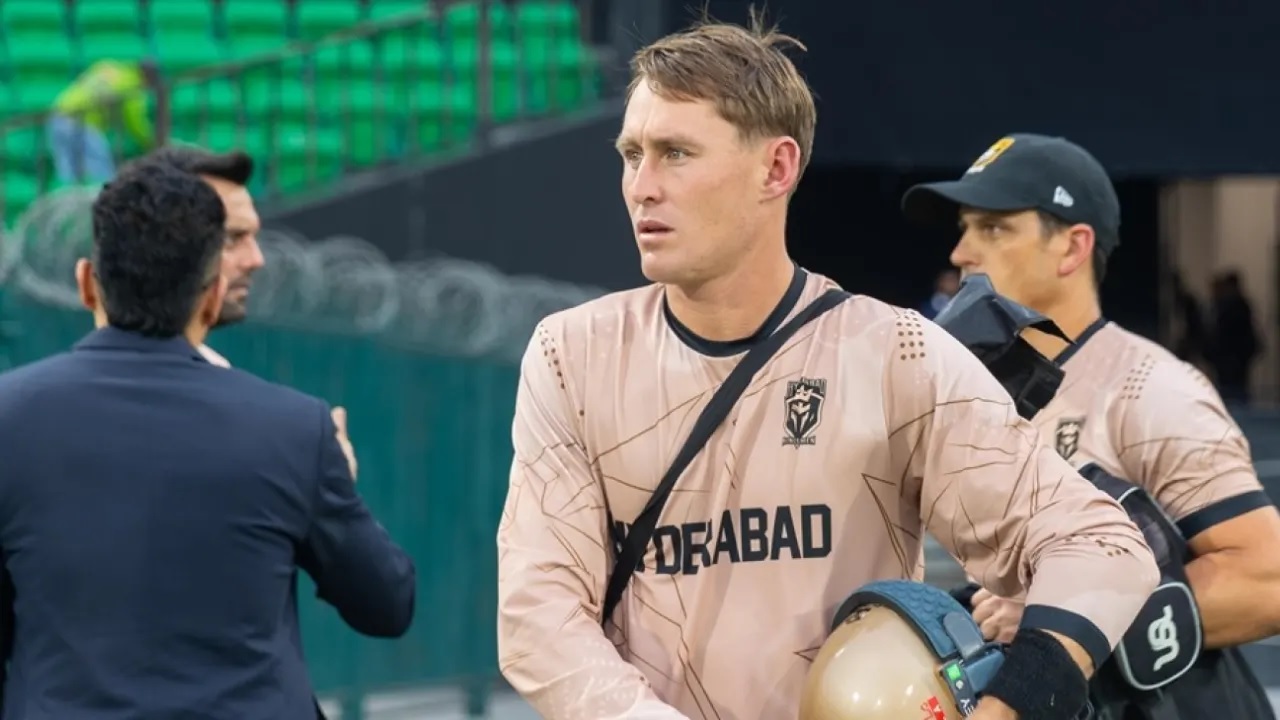
Shaheen Shah Afridi and Marnus Labuschagne, captains of Lahore Qalandars and Hyderabad Kingsmen, walked out with two team sheets each for the toss ahead of the opening matchof PSL 2026 and selected their final XIs based on which way the coin fell.
This was in accordance with a new regulation in the PSL playing conditions, which permits the captains to submit two team sheets to the match referee before the toss and finalise one of the submitted line-ups after the toss.
The clause 1.2.1 in the “Nomination and Replacement of Players” section reads: “Before the toss, each captain may submit two (2) different XI lineups in writing to the PSL Match Referee. Each lineup must include 11 players and a maximum of 4 substitute fielders (subject to Clause 1.2.5). After the toss, each captain must finalise one of the two submitted lineups by signing the selected team sheet. Once the final lineup has been nominated, no player listed in the selected playing eleven may be changed before the start of the match without the consent of the opposing captain.”
Tosses can play a significant role in this part of the world in night matches as a result of dew. The ball often gets wet and difficult to grip for the spinners, making them ineffective in the second innings. This change in the playing conditions is expected to provide a level playing field – a team batting first can add a fast bowler instead of a spinner while a team batting second can look to add depth to their batting.
There were no signs of dew in the first match of the season however because of the wind throughout the day and cloud cover.
[Cricinfo]

Courtesy call by the Heads of Mission- Designate on Prime Minister

Three dead after helicopter crash in Hawaii

Woods charged with driving under influence after crash

Showers may occur at a few places in the Rathnapura, Kaluthara, Galle, and Matara districts during the evening or night

SC finds Keheliya, others, guilty of violating FRs of public through corrupt drug procurement deal

Sajith nudges govt. to follow India’s example in giving relief to consumers by slashing taxes on fuel

‘Dates have the highest sugar content to fight Coronavirus’

Sunday Island 27 December – Headlines

#SundayIsland 17th December – Headlines

Sunday Island – 28th March

Sunday Island Headlines – 21 March

Sunday Island – 21st February – Headlines
-

 News3 days ago
Senior citizens above 70 years to receive March allowances on Thursday (26)
-

 Features5 days ago
Trincomalee oil tank farm: An engineering marvel
-

 News1 day ago
Energy Minister indicted on corruption charges ahead of no-faith motion against him
-

 News2 days ago
US dodges question on AKD’s claim SL denied permission for military aircraft to land
-

 Features5 days ago
The scientist who was finally heard
-

 Business2 days ago
Dialog Unveils Dialog Play Mini with Netflix and Apple TV
-

 Sports1 day ago
SLC to hold EGM in April
-

 News3 days ago
CEB Engineers warn public to be prepared for power cuts after New Year