
Editorial
PUCSL down; EC in crosshairs


Friday 17th February, 2023
The government has succeeded in manipulating the Public Utilities Commission of Sri Lanka (PUCSL) and having a 66% increase in electricity tariff approved amidst widespread protests. It had some PUCSL members loyal to it override their Chairman Janaka Ratnayake’s decision to disallow power price hikes. Two PUCSL members resigned recently, enabling the government to make new appointments, and muster the required numbers to bend the Commission to its will. The government has adopted the same modus operandi to tame the Election Commission (EC) as well but without success.
One EC member has already resigned. Three other commissioners have been threatened with death to resign so that some pliable characters ready to do the government’s bidding can be appointed. The fact that the police are dragging their feet on investigations into the EC members’ complaints of death threats is proof of the involvement of a pro-government group in the incidents at issue. If anyone without links to the government had issued threats to the EC members, the long arm of the law would have swooped on him in next to no time. The three EC members concerned have, to their credit, refused to step down, despite threats, thus foiling the government’s plan to appoint some stooges to the commission, and postpone the scheduled LG polls. So far so good. The government is not likely to give up easily. It knows more than one way to shoe a horse.
The SLPP-UNP regime made no bones about its plans to railroad the PUCSL into rubber-stamping its decision to raise power tariffs, but it wants to delay the mini polls without being seen to be doing so; it knows that there is the possibility of its efforts to disrupt the elections coming a cropper, and in such an eventuality, its abortive attempts, if made openly, will be seen as an admission of defeat ahead of the scheduled electoral contest. They have put their plan B into action while pretending to be getting ready for the mini polls; they are having some public officials such as the Secretary to the Finance Ministry and the Government Printer do their dirty work. President Ranil Wickremesinghe has directed all public officials to adopt zero-based budgeting method so that no balances can be carried forward and no expenses pre-committed.
The government has so far chosen to act with some restraint in dealing with the EC, but a dead man walking is capable of anything, and if push comes to shove the SLPP-UNP combine will not hesitate to go to any extent to prevent an electoral setback, which will reveal that it no longer enjoys public trust and therefore lacks legitimacy to be in power. Nothing is more worrisome for a beleaguered regime than to lose a midterm election and become a lame duck.
The latest round of power tariff hikes is bound to push the general price level up again with the costs of all essential goods and services going through the roof. No government will dare create such a situation and aggravate the woes of the people, who are already resentful to the point of taking to the streets, if it really intends to hold an election in a few weeks.
Having trampled the PUCSL and jacked up power prices, the government is likely to turn on the EC. The UNP has a history of having the houses of Supreme Court judges stoned, sacking tens of thousands of workers to crush strikes, beating, torturing and killing countless Opposition activists to suppress dissent, manipulating public institutions to further its interests, and hounding out upright public officials. The SLPP is no better. Its leaders have sacked a Chief Justice, interfered with the judiciary, reduced the public service to mere putty in their hands, made the Attorney General’s Department an appendage of the government, had its political opponents attacked and killed, and turned public officials into their lackeys. Today, the two parties have come together to protect their own interests. Their joint administration is like an alliance between Deimos and Phobos or ‘Mahasona’ and ‘Riri Yaka’. Needless to say, democracy is in great peril, and has to be defended with might and main lest the Sri Lankan version of the Third Reich should become a reality in the not-too-distant future. The Opposition must stop bellowing rhetoric and take the bull by the horns.


Friday 13th February, 2026
Justice has caught up with those who killed SLPP MP Amarakeerthi Athukorale and his security officer. The Gampaha High Court has sentenced 12 convicts to death for the double murder they committed during the 2022 uprising, popularly known as Aragalaya. This judgement has evoked the dreadful memories of the crimes committed in the name of a people’s protest movement about four years ago.
Aragalaya began as an outpouring of public resentment fuelled by the 2022 economic crisis and the resultant shortages of essentials. It developed into what may be described as a carnival of protests at Galle Face, where a motley crowd of activists championing various causes gathered under the ‘Gota Go Home’ banner. It was subsequently hijacked by some ultra-radical political forces with sinister agendas following an SLPP goon attack on the Galle Face protesters in May 2022. Retaliatory attacks carried out by organised groups among protesters turned Aragalaya into a firenado of violence that swept through many parts of the country. It was during that violent phase of Aragalaya that mobs killed MP Athukorale and his security officer and torched scores of houses belonging to SLPP politicians and their cronies. All SLPP MPs would have suffered the same fate as Athukorale if they had not gone into hiding. The destructive forces responsible for committing crimes in the name of Aragalaya must be brought to justice.
The genuine Aragalaya activists who acted as a pressure group, calling for an end to the Rajapaksa rule, wanted to call off their protest campaign following the resignation of President Gotabaya Rajapaksa; their goal was to see the back of Gotabaya as evident from the catchy hashtag, “GotaGoHome”. But some opportunistic political forces, particularly the JVP, sought to use Aragalaya to capture Parliament. Minister K. D. Lalkantha himself has admitted that the JVP strove to lead the Aragalaya activists to Parliament, but without success. JVP leaders are seen in social media videos urging the people to rush to Colombo and march on Parliament and deliver a coup de grace to a teetering system. If the military had not made a decisive intervention at the eleventh hour, using force, aggressive mobs that surged forward menacingly, pulling down barricades, would have captured Parliament and perhaps set it on fire, plunging the country into anarchy. One may recall that a grenade attack on a UNP parliamentary group meeting chaired by President J. R. Jayewardene, with Prime Minister R. Premadasa seated next to him in 1987 almost made the country descend into anarchy. That bomb attack, which left a minister and a public official dead and 16 others injured, was blamed on the JVP.
A former senior Indian police officer discusses grey-zone warfare in an article we have reproduced today from The Statesman, an Asia News Network member. This doctrine of hybrid conflict has gained currency in diplomatic, defence and intelligence circles the world over. What we witnessed during the final phase of Aragalaya (2022) can be dubbed ‘grey-zone terrorism’. Arson attacks on the houses of prominent SLPP politicians and others were well organised; they could not have been carried out by flash mobs consisting of non-violent protesters. Unfortunately, those crimes have not been probed properly. The then SLPP-UNP government was wary of investigating those serious transgressions; instead, it generously awarded compensation to the victims of arson attacks far in excess of their losses. The incumbent administration has rightly instituted legal action against some of the culprits who helped themselves to public funds by playing the victim card and inflating estimates, but most of the arsonists and the masterminds behind the arson attacks have got off scot-free. They must be traced and made to face the full force of the law.
The welcome judgement in the Athukorale murder case offers a lesson that should not go unlearnt. Those who join mobs and commit crimes must remember that they run the risk of being tried and thrown behind bars. On seeing the instigators of violence during Aragalaya savouring power and going places, the killers of Athukorale and his body guard must be ruing the day they committed that crime.


Thursday 12th February, 2026
President Anura Kumara Dissanayake once spoke of a ‘shadow state’ run by powerful crime syndicates and vowed to dismantle it. The general consensus is that such an unseen, parallel power structure really exists and must be eliminated as a national priority. However, criminals are not alone in running ‘parallel governments’. Extremely powerful business cartels also challenge the writ of the state and exploit the public, with impunity.
Transport Minister Bimal Rathnayake has evinced a keen interest in bringing order out of chaos in the passenger transport sector. He deserves praise and public support for his efforts. He has taken upon himself the onerous task of safeguarding the interests of commuters and ensuring road safety. His attempts to bring the private industry to heel have run into stiff resistance, with the bus mudalalis issuing warnings and even threats.
Minister Rathnayake has warned that the tough measures under consideration to make roads safer include the cancellation of the route permits of the buses whose drivers and conductors are addicted to narcotics. Desperate situations are said to call for desperate measures. In 2021, the then State Minister of Transport Dilum Amunugama made a chilling revelation: about 80% of private bus drivers in Colombo and its suburbs were addicted to drugs. The situation must be more or less the same in other parts of the country as well. A survey conducted by the Lanka Private Bus Owners’ Association (LPBOA) has revealed that 45% of private bus drivers are addicted to narcotics. Their addiction to relatively new drugs such as ICE (crystal methamphetamine) is on the rise, according to the police, who disclosed in 2023 that out of 1,781 drivers subjected to drug tests in the Western Province about 100 had been found to be under the influence of dangerous drugs; most of them were ICE addicts. LPBOA President Gemunu Wijeratne himself has said that about 50% of bus workers are addicted to narcotics.
The severity of drug addiction among bus drivers and conductors may have compelled Minister Rathnayake to consider deterrent measures, such as the cancellation of route permits, as a way out. Private bus owners’ associations have condemned the proposed move and threatened to stage a countrywide strike.
Wijeratne did not mince his words when he tore into the government, at a media briefing, the other day. Insisting that bus owners must not be penalised for what their workers did, he said they had no way of finding out whether drivers and conductors were under the influence of drugs. “Would Minister Rathnayake resign if his driver was found to be using illicit drugs?” Wijeratne rhetorically asked, accusing the government of selectively implementing the law. He cited several instances where NPP politicians and their cronies had got away with serious transgressions.
Wijeratne’s arguments are not without merit. The legal process was blatantly subverted to let former Speaker Asoka Ranwala off the hook following a road accident he caused two months ago, as Wijeratne said. Ranwala was not made to undergo a blood-alcohol test for more than 12 hours, and the police audaciously claimed that they had run out of breathalyser test kits. No legal action has been taken against the questionable release of as many as 323 high-risk containers, without Customs inspection, from the Colombo Port. A mega coal scam has gone uninvestigated. When a cannabis plantation on a plot of land belonging to an NPP MP’s relative was raided, it was the police officers responsible for the raid who had to face disciplinary and legal action. The JVP supporters who parked buses on the Southern Expressway in violation of traffic laws last year have got off scot-free. So, Wijeratne may have struck a responsive chord with the public when he highlighted how the government itself was undermining the rule of law. However, the fact that the incumbent administration shields transgressors within its ranks is no reason why the private bus operators should be allowed to enjoy the freedom of the wild ass. Wijeratne seems to think two wrongs make a right.
The government should not make hasty decisions when handling sensitive issues. It ought to respect the fundamental legal maxim, audi alteram partem, and listen to what the bus operators have to say. However, the imperious private bus associations must not be allowed to intimidate a democratically elected government. Wijeratne has warned that the government’s efforts to cancel the route permits of buses driven by drug addicts will be its undoing, for the bus operators will launch a countrywide strike. He has asked the government not to rouse ‘sleeping tigers’. In saying so, he has made an unintentional allusion to the Liberation Tigers of Tamil Eelam militarily neutralised by a previous government. It remains to be seen whether the incumbent administration with a supermajority is equal to the task of taming the ‘sleeping tigers’, safeguarding the interests of the public and ensuring road safety while redressing the legitimate grievances of the bus operators.
Wednesday 11th February, 2026
Today’s front-page photo in this newspaper shows former President Mahinda Rajapaksa and Foreign Minister and JVP stalwart Vijitha Herath in conversation at a Chinese New Year reception in Colombo on Monday. This picture speaks volumes. Its significance and irony may not have escaped astute political observers familiar with Sri Lanka’s political marriages of convenience during the past several decades.
The JVP made a public show of its antipathy towards the Rajapaksas to win elections in 2024. It vowed to throw them behind bars immediately after forming a government. Some Opposition bigwigs have claimed that it was to settle political scores with Mahinda that the JVP-led NPP government made former Presidents leave their official residences. The JVP leaders continue to inveigh against Mahinda and other members of the Rajapaksa family, much to the glee of their cadres. They pretend that they have had nothing to do with the former ruling family. But the truth is otherwise.
The aforesaid photo may remind political observers of the pivotal role played by Herath and other JVP seniors, including Anura Kumara Dissanayake, in enabling Mahinda to achieve his presidential dream in 2005. The SLFP, which fielded Mahinda as its presidential candidate, did not throw its weight behind him in the presidential race; in fact, the then President Chandrika Kumaratunga did her best to queer the pitch for him, without success. The JVP campaigned extremely hard for him and ensured his victory.
The present-day JVP leaders are seen in some videos of Mahinda’s 2005 presidential election campaign, waving the Mahinda Chinthanaya policy framework at campaign rallies and portraying it as a silver bullet capable of helping Sri Lanka solve all its problems and achieve progress. Herath was among the key speakers at Mahinda’s election rallies. Perhaps, it would have been the end of the road for the Rajapaksas in national politics had Mahinda lost the 2005 presidential election. Thus, it may be seen that the blame for what the JVP accuses Mahinda, his family members and his cronies of having done since 2005 should be apportioned to the JVP leaders who made his elevation to the presidency possible.
The JVP fell out with President Rajapaksa as he did not fulfil some of his key promises, especially his pledge to abolish the executive presidency. It joined forces with the UNP, etc., thereafter and strove to defeat Mahinda in the 2010 presidential election, but in vain. However, it realised that goal by helping Maithripala Sirisena, who promised to scrap the executive presidency, win the 2015 presidential election. He reneged on his pledge.
Ironically, the Rajapaksas created conditions for the JVP’s meteoric rise to power, albeit unwittingly. After their return to power, they indulged in corruption, suppressed the rule of law, and, above all, bankrupted the economy in 2022, when the JVP had only three MPs and its national vote share had shrunk to a meagre 3%. The JVP effectively harnessed public anger over economic hardships to regain lost ground and win elections. It also promised to do away with the executive presidency. This pledge appears on page 109 of the NPP’s policy programme, A Thriving Nation: A Beautiful Life.
Today, the JVP is in a position to do what it pressured Mahinda and Sirisena to do in 2005 and 2015 respectively—abolishing the executive presidency. The NPP government led by the JVP has a two-thirds majority, and the Opposition is also demanding that the executive presidency be scrapped forthwith. So, the question is why the JVP is dragging its feet on its pledge to do so.

Royal Navy of Oman Vessel “SADH” departs island

Muzarabani, Bennett orchestrate famous Zimbabwe win

“We will not make decisions for rural level schools while sitting in Colombo” – PM

USA need to overturn history to beat Netherlands and stay alive

Paul Stirling ruled out of World Cup with knee injury

The silent pace revolution in Sri Lanka

‘Dates have the highest sugar content to fight Coronavirus’

Sunday Island 27 December – Headlines

#SundayIsland 17th December – Headlines

Sunday Island – 28th March

Sunday Island Headlines – 21 March

Sunday Island – 21st February – Headlines
-
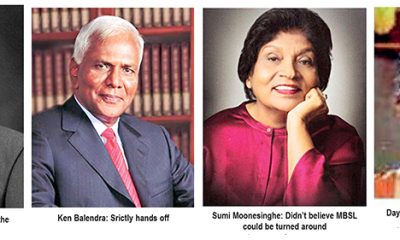
 Features6 days ago
My experience in turning around the Merchant Bank of Sri Lanka (MBSL) – Episode 3
-

 Business7 days ago
Zone24x7 enters 2026 with strong momentum, reinforcing its role as an enterprise AI and automation partner
-
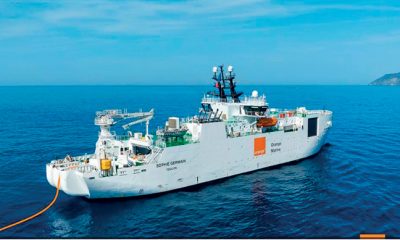
 Business6 days ago
Remotely conducted Business Forum in Paris attracts reputed French companies
-
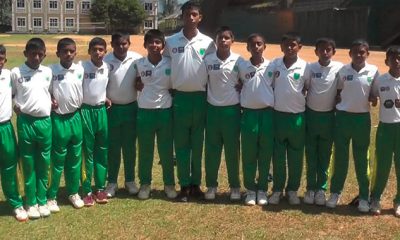
 Business6 days ago
Four runs, a thousand dreams: How a small-town school bowled its way into the record books
-
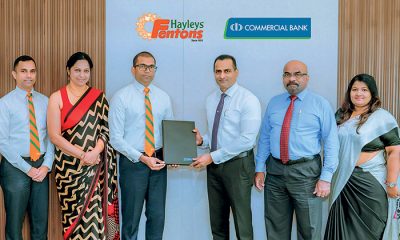
 Business6 days ago
ComBank and Hayleys Mobility redefine sustainable mobility with flexible leasing solutions
-
 Business3 days ago
Autodoc 360 relocates to reinforce commitment to premium auto care
-
 Midweek Review3 days ago
A question of national pride
-
 Business7 days ago
HNB recognized among Top 10 Best Employers of 2025 at the EFC National Best Employer Awards