
News
Public safety minister Gary A recuses himself from files on 2 terrorist groups


The cabinet minister leading Prime Minister Mark Carney’s border security push said Tuesday he was recusing himself from files related to a Sri Lankan terrorist group and its Canadian front organization, Global News, Canada reported.
In a statement sent to Global News on Tuesday (June 10), the office of Public Safety Minister Gary Anandasangaree said he had stepped back from “any matter related to the Liberation Tigers of Tamil Eelam or the World Tamil Movement.”
The minister did not explain why he had done so, except to state that it was “out of an abundance of caution.” He released the statement after Global News asked for a copy of a conflict of interest document he had prepared.
By contrast, his office issued a statement last Thursday (12) saying he had “asked Public Safety Officials to implement a screen on any national security issues relating to the Tamil Community.”
Anandasangaree and his family are members of the Tamil community, it said, and he had asked Public Safety officials to “implement a screen … to ensure that there is no perception of any conflict.”
Global News asked the minister’s office Tuesday why he had recused himself from files on the two terror groups and why he changed his description of the topics deemed off-limits, but he has not responded.
Both groups he cited in his recusal statement have their origins in the conflict in Sri Lanka, where Anandasangaree was born before coming to Canada in 1983 and becoming an activist, realtor, lawyer and MP.
In 2006, Canada placed the LTTE on its list of terrorist entities, citing its “terror attacks against civilian centres, and political assassinations,” such as the 1991 killing of former Indian prime minister Rajiv Gandhi.
The World Tamil Movement, or WTM, was added to the list in 2008. The RCMP raided its offices in Toronto and Montreal, and the government seized its assets on the grounds it was a fundraising arm of the LTTE.
“WTM representatives canvas for donations amongst the Canadian Tamil population, and have been involved in acts of intimidation and extortion to secure funds,” according to the Public Safety Canada website.

News
The Government is taking steps to regulate early childhood education to ensure quality education while enhancing the professionalism of preschool teachers. — PM

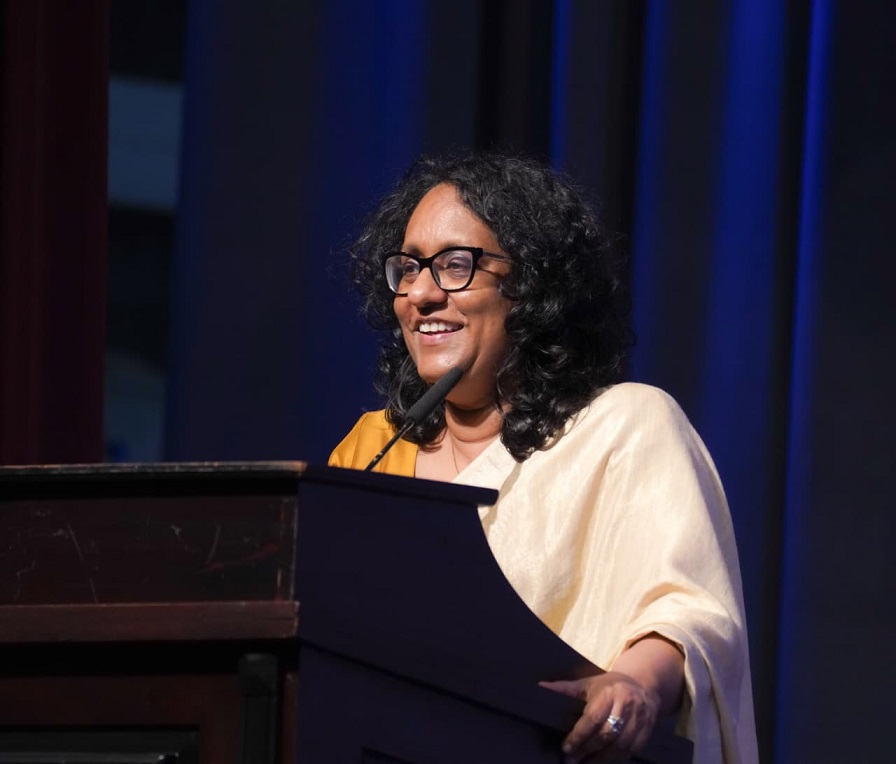
Prime Minister Dr. Harini Amarasuriya stated that the Government is taking steps to maintain early childhood education within an appropriate regulatory framework, while ensuring quality education by enhancing the professionalism of preschool teachers.
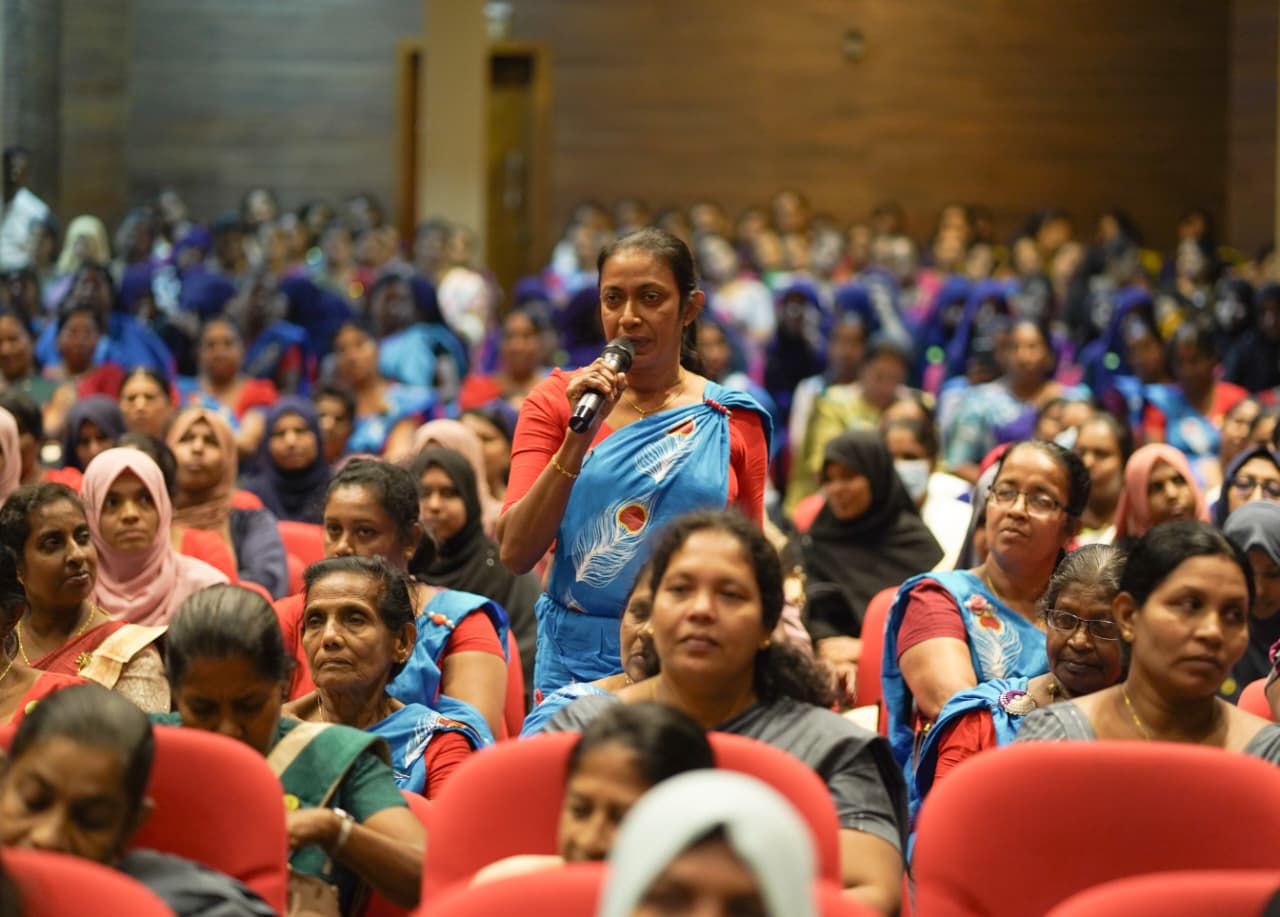
The Prime Minister made these remarks while participating in the awareness programme for preschool teachers of the Puttalam District on the National Early Childhood Education Curriculum Framework, held under the theme “A Safe World for Children, A Creative Future Generation” on Friday [16th of January] at the Sudasuna Hall in Chilaw.
The Prime Minister stated,
“The main objective of our government in 2024 was to bring about a transformative change in this country. We bear a major responsibility in achieving that transformation. When we assumed office, one of our primary responsibilities was to build a stable and resilient economy. However, I believe that with equal responsibility and commitment, our government has prioritized creating a transformative change in the education system of the country. We assumed office with that objective in mind. The discussions within our party and political movement on the necessary changes in education did not begin recently. They are the result of a long-standing process.
This transformation cannot be achieved overnight or within a single year. It is a step-by-step process. When implementing this decisive and qualitative change within the education system, it is essential to consider the system as a whole. We made this intervention by examining every stage of a child’s educational journey. Therefore, we have recognized early childhood education, from age one to age five, as an integral part of education and development.
Thereby, Early childhood development is viewed as the very first step of our education structure. At present, early childhood education exists in an unregulated manner. Our aim is to develop this early childhood education in an organized and systematic way, while enhancing the professionalism of teachers and ensuring quality education within an appropriate regulatory framework.
Accordingly, the Ministry of Women and Child Affairs and the Ministry of Education have jointly appointed a committee and initiated discussions to formulate a policy and curriculum framework for early childhood education. During the past year, we developed the preschool curriculum framework. We are working towards implementing a unified curriculum across all preschools in a structured manner. It is essential to integrate early childhood development with primary, secondary, and university education. Early childhood development is one of the most critical stages of an individual’s life. The responsibility of socializing the child, introducing them to society in a structured manner, and nurturing a disciplined, empathetic individual lies with you. This is not something that can be achieved at the primary level or beyond.
There is a common criticism that children are not taught letters and numbers at preschool. However, early childhood development is not about formal schooling. It is about helping children to develop their social skills.
It is also an objective of our government to ensure that both preschools and schools become places where parents can confidently leave their children, knowing they are safe.
We are aware of the issues relating to your allowances and pensions. Discussions have been held in this regard between the Ministry of Education and the Ministry of Women and Child Affairs. Granting due recognition to preschool certificates during school admissions is also very important, and the government’s attention has been drawn to all these matters”.
The event was attended by Minister of Public Administration, Provincial Councils and Local Government prof. Chandan Abayarathna; Members of Parliament Gayan Janaka, Hiruni Wijesinghe, and Mohamed Faisal; officials of the North Western Province Early Childhood Education Development Authority; and a large number of preschool teachers from the Puttalam District.

[Prime Minister’s Media Division]
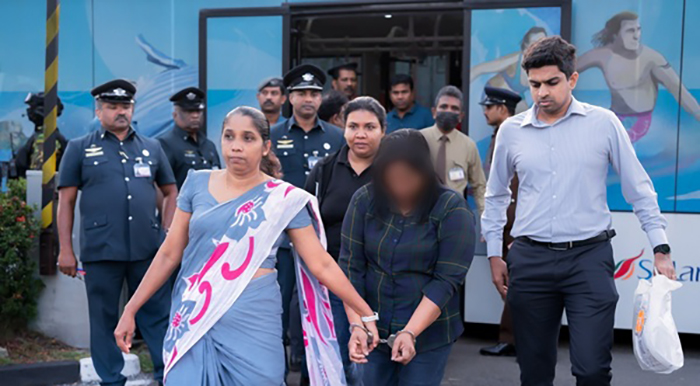
Police have stepped up their crackdown on organised crime, after securing Interpol Red Notices for 95 suspects believed to be hiding overseas.
Police Spokesman SSP F. U. Wootler told a media briefing yesterday that the move marked a major escalation in efforts to track down and extradite high-profile figures linked to organised crime syndicates and online fraud networks.
He said the strategy was already producing results. In 2024, Sri Lanka secured the return of 10 suspects through Interpol channels, while a further 11 were extradited in 2025 to face legal proceedings.
In addition to Red Notices, authorities have relied on formal legal mechanisms to overcome jurisdictional barriers. “During the 2024–2025 period, 21 suspects were extradited under the Extradition Act,” SSP Wootler said.
The briefing coincided with three more fugitives being escorted back to Sri Lanka yesterday following the issuance of Interpol Red Notices.
SSP Wootler said many of the fugitives had continued to coordinate criminal activities here from abroad, including sophisticated online scams, underscoring the importance of international cooperation.
Two male suspects, for whom Red Notices had been issued and who were overseas, and a female suspect wanted in connection with defrauding state funds, were flown back.
Following their arrival yesterday morning at Katunayake Airport, they were taken into custody by a team of officers from the CID.
The arrested suspects are residents of Kandana and Uragasmanhandiya, aged 30 and 52, respectively. The female suspect is a 56-year-old resident of Mount Lavinia.
The suspect residing in Kandana is an individual wanted in connection with an attempted murder. It has been revealed that while overseas, he is connected to a range of crimes, including orchestrating a shooting incident that resulted in a homicide in the Kandana area on 2025.07.03. This suspect has been handed over to the Officer-in-Charge of the Kelaniya Division for further investigations.
The one hailing from Uragasmanhandiya is a suspect wanted in connection with carrying out homicides using sharp weapons and being involved in a series of organised crimes in the Uragasmanhandiya area. This suspect has been handed over to the Officer-in-Charge of the Elpitiya Division for further investigations.
The female suspect, residing in Mount Lavinia, who is reported to have worked at an Embassy in 2014, is an accused in a case where the Criminal Investigations Department is investigating the defrauding of state funds. She has been sentenced to imprisonment, fines, and also ordered to compensate victims by the Colombo High Court.
“These operations were carried out with the strong support of the Government of the United Arab Emirates, including Abu Dhabi International Police, Dubai Police, as well as Sri Lankan diplomatic missions,” he said.
Interpol Red Notices function as international alerts requesting law enforcement agencies worldwide to locate and provisionally arrest individuals pending extradition.
Wootler said efforts would continue to identify and pursue suspects operating from foreign jurisdictions, particularly those involved in organised and cyber-related crimes posing threats to national security.
By Norman Palihawadane and Hemantha Randunu

Leader of the Pivithuru Hela Urumaya (PHU), Udaya Gammanpila, yesterday launched a scathing attack on outgoing United States Ambassador to Sri Lanka Julie Chung, accusing her of interfering in Sri Lanka’s internal affairs and exerting undue influence over recent political developments.
Addressing a press conference in Colombo, Gammanpila said Chung’s departure, after a four-year tenure, marked a “day of national relief,” claiming her presence had been harmful to the country.
He said patriots marked the occasion by sharing kiribath (milk rice), which he described as a symbolic celebration.
Gammanpila alleged that Ambassador Chung had remained in Sri Lanka longer than the customary three-year diplomatic term because of, what he described as, her success in bringing the country under American influence. Drawing comparisons with past foreign diplomats, he claimed that Chung was the most influential envoy since Indian High Commissioner J.N. Dixit in the 1980s. He alleged that successive Sri Lankan governments had failed to challenge what he described as interference by the envoy.
The PHU leader accused Chung of playing a behind-the-scenes role in the 2022 protest movement, commonly known as the Aragalaya, claiming it was orchestrated to destabilise the country. He alleged that young protesters were unknowingly “acting out a foreign script” under the guise of patriotism.
Gammanpila also alleged that Chung played a key role in elevating the National People’s Power (NPP), which he referred to as the “Malimawa” movement, into a governing force in 2024. He claimed the movement had been transformed from its earlier ideological roots into, what he described as, a pro-Western political project, asserting that President Anura Kumara Dissanayake had come to power with foreign backing. He cited a photograph shared on Chung’s social media account of her visit to the NPP headquarters as evidence of what he termed political proximity.
According to Gammanpila, Ambassador Chung’s public criticism of governance issues sharply declined following the change of government. He alleged that while she had frequently commented on incidents under previous administrations, she had remained silent on alleged corruption and governance failures over the past 14 months.
Turning to the future, Gammanpila urged caution regarding the incoming US Ambassador, Eric Meyer, stating that any engagement on religious or cultural matters should be viewed carefully. He called on President Dissanayake to pursue an independent foreign policy, free of external influence.
Gammanpila also criticised the government over, what he described as, repeated “policy blunders,” particularly in relation to issues affecting children and social values. He cited several instances, including proposals to promote Sri Lanka as a destination for same-sex couples, educational material controversies, and a recent People’s Bank advertisement that he claimed subtly promoted same-sex symbolism. While stating that he held no animosity towards the LGBTQ community, Gammanpila said he opposed, what he described as, attempts to influence children through state institutions.
In addition, the PHU leader condemned legal action taken by the Coast Conservation Department against nine individuals, including four Buddhist monks, for installing a Buddha statue within a coastal conservation zone in Trincomalee. He described the arrests as discriminatory, alleging that similar structures belonging to other religions and commercial entities had been overlooked.
Calling the current administration “anti-Buddhist,” Gammanpila urged authorities to apply the law equally and not just in words, and “not to turn legal frameworks into instruments against Buddhism.” He also accused members of the government of ingratitude, alleging that many had once sought refuge in temples during periods of political violence.
By Anuradha Hiripitiyage

Trump names Tony Blair, Jared Kushner to Gaza ‘Board of Peace’

The Government is taking steps to regulate early childhood education to ensure quality education while enhancing the professionalism of preschool teachers. — PM

ICC officials to meet BCB in Bangladesh to solve T20 World Cup impasse

U – 19 World Cup: Hogan’s ton helps Australia brush aside Ireland

U-19 World Cup: England overcome Pakistan by 37 runs

U-19 World Cup: Afghanistan stun South Africa

‘Dates have the highest sugar content to fight Coronavirus’

Sunday Island 27 December – Headlines

#SundayIsland 17th December – Headlines

Sunday Island – 28th March

Sunday Island Headlines – 21 March

Sunday Island – 21st February – Headlines
-

 Business3 days ago
Koaloo.Fi and Stredge forge strategic partnership to offer businesses sustainable supply chain solutions
-

 Business7 days ago
Dialog and UnionPay International Join Forces to Elevate Sri Lanka’s Digital Payment Landscape
-

 Editorial2 days ago
The Chakka Clash
-
 News7 days ago
Sajith: Ashoka Chakra replaces Dharmachakra in Buddhism textbook
-

 Features7 days ago
The Paradox of Trump Power: Contested Authoritarian at Home, Uncontested Bully Abroad
-

 Editorial13 hours ago
Crime and cops
-

 Features7 days ago
Subject:Whatever happened to (my) three million dollars?
-
 Business3 days ago
SLT MOBITEL and Fintelex empower farmers with the launch of Yaya Agro App