
Latest News
Prof. Gananath Obeyesekere passes away aged 95

Emeritus Professor of Anthropology Gananath Obeyesekere has passed away at the age of 95.

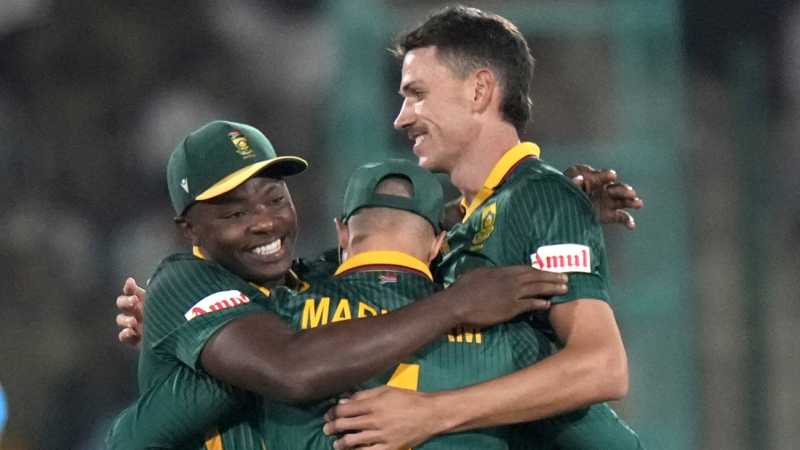
Canada captain Dilpreet Bajwa won the toss and asked South Africa to bat in their World Cup opener in Ahmedabad.
South Africa have opted for a pace-heavy attack. Keshav Maharaj slots in as their only spinner, alongside the speedy quartet of Marco Jansen, Corbin Bosch, Kagiso Rabada and Lungi Ngidi. Tristan Stubbs also begins the tournament at the No. 6 spot – a position Jason Smith had occupied in their last T20I, while Stubbs had slid down to No. 7. Smith is in the World Cup squad but did not find a spot in South Africa’s starting eleven.
South Africa’s pace is expected to get the most out of a characteristically flat Ahmedabad black-soil pitch. But first, their batters will have a hit in a game they begin as overwhelming favourites against Canada, who are their second World Cup.
Canada’s new captain, Bajwa, will lead the side at a global tournament for the first time. He also slots in at the top of the order, alongside Yuvraj Samra, and their batting power will be key to their hopes of causing a massive upset.
Canada have lost both their warm-up games – to Italy and Nepal – but should their batters come off on a friendly pitch, South Africa will look to have the added insurance of a few more runs in the bank before dew takes over when Canada begin their chase at night.
South Africa: Quinton de Kock (wk), Aiden Markram (capt), Ryan Rickelton, Dewald Brevis, David Miller, Tristan Stubbs, Marco Jansen, Corbin Bosch, Kagiso Rabada, Keshav Maharaj, Lungi Ngidi
Canada: Dilpreet Bajwa (capt), Yuvraj Samra, Navneet Dhaliwal, Nicholas Kirton, Shreyas Movva, Harsh Thaker, Saad Bin Zafar, Jaskaran Singh, Dilon Heyliger, Kaleem Sana, Ansh Patel
(Cricinfo)

A Hong Kong court jailed pro democracy tycoon Jimmy Lai for 20 years on Monday after he was found guilty of national security offences last December
This is the harshest sentence under the controversial national security law, which China says is necessary for the city’s stability
Lai, who is a British citizen, was one of the loudest critics of Beijing, often wielding his pro-democracy paper, Apple Daily, as a tool of protest
Six former executives of the paper were also jailed on Monday – from six years and nine months to 10 years
Hailed a hero by the pro-democracy movement, Lai is seen as a traitor by Beijing. He has always denied the charges against him
The UK calls for the Chinese government to release Lai, saying it will “rapidly engage further” with Beijing. But Hong Kong’s chief executive welcomes the sentence, saying Lai used “used Apple Daily to poison the minds of citizens”.
Lai’s son, Sebastien, tells the BBC his father’s punishment is “basically a death sentence”.
(BBC)
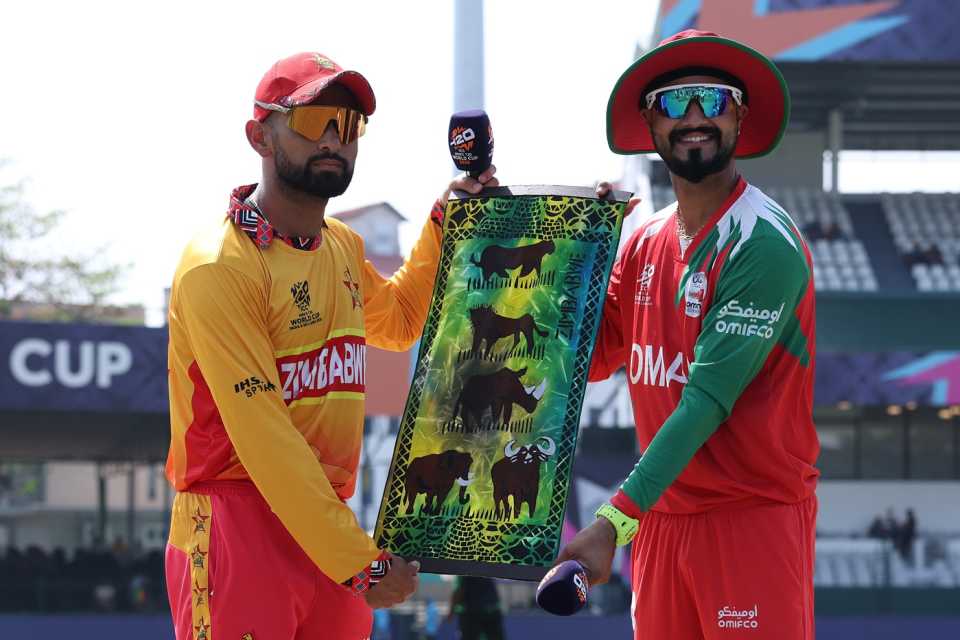
Zimbabwe captain Sikandar Raza decided to field first against Oman in the men’s T20 World Cup match at the SSC in Colombo. Both teams were pleased to arrive in Sri Lanka early to get themselves attuned to the conditions.
Zimbabwe have Blessing Muzarabani back in the squad after he missed the tri-series in Pakistan in November.
Oman, meanwhile, include 44-year-old Aaamir Kaleem the oldest player in the tournament – after he came into the side in place of Hasnain Shah, who was injured after the squad was named.
Zimbabwe return to the tournament after missing out on the previous edition in West Indies and the United States of America. They had made it to the Super 12s of the 2022 T20 World Cup but failed to progress through the qualifiers for the 2024 tournament. They completed qualification alongside Namibia; Brian Bennett was the tournament’s top run-scorer, while Brad Evans and Richard Ngarava were among the leading wicket-takers.
Zimbabwe are bolstered by the return of Graeme Cremer, whose November 2025 comeback marked the longest gap between T20I appearances.
Oman are one of three qualifiers from the Asia-Pacific region, alongside Nepal and the UAE. They have previously appeared in the 2016, 2021, and 2024 editions of the T20 World Cup.
Oman: Jatinder Singh (capt), Aamir Kaleem, Hammad Mirza, Wasim Ali, Karan Sonavale, Jiten Ramanandi, Vinayak Shukla (wk), Sufyan Mehmood, Nadeem Khan, Shah Faisal, Shakeel Ahmad
Zimbabwe: Brian Bennett, Tadiwanashe Marumani, Dion Myers, Brendan Taylor (wk), Sikandar Raza (capt), Ryan Burl, Tashinga Musekiwa, Brad Evans, Wellington Masakadza, Richard Ngarava, Blessing Muzarabani

NPP: Speaker won’t step down, CIABOC can investigate him

Trinco Buddha statue case: All suspects, including 4 monks re-remanded till 11 Feb.

Pakistan HC commemorates Kashmir Solidarity Day

Celebrity Millennium brings in over 2,000 Thai cruise passengers, signals a new growth market

SC upholds prison sentence of ex-DIG Hector Dharmasiri

Misinterpreting President Dissanayake on National Reconciliation

‘Dates have the highest sugar content to fight Coronavirus’

Sunday Island 27 December – Headlines

#SundayIsland 17th December – Headlines

Sunday Island – 28th March

Sunday Island Headlines – 21 March

Sunday Island – 21st February – Headlines
-
 Features2 days ago
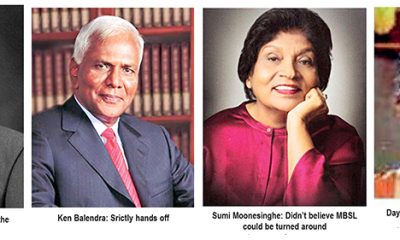
My experience in turning around the Merchant Bank of Sri Lanka (MBSL) – Episode 3
-

 Business3 days ago
Zone24x7 enters 2026 with strong momentum, reinforcing its role as an enterprise AI and automation partner
-

 Business2 days ago
Remotely conducted Business Forum in Paris attracts reputed French companies
-
 Business2 days ago
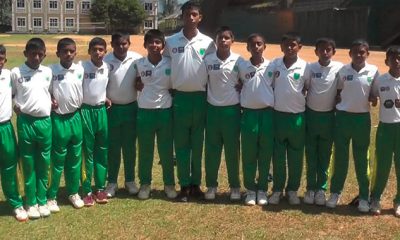
Four runs, a thousand dreams: How a small-town school bowled its way into the record books
-

 Business2 days ago
ComBank and Hayleys Mobility redefine sustainable mobility with flexible leasing solutions
-
 Business3 days ago
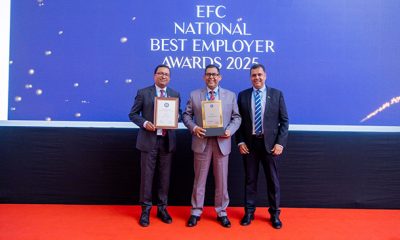
HNB recognized among Top 10 Best Employers of 2025 at the EFC National Best Employer Awards
-

 Business3 days ago
GREAT 2025–2030: Sri Lanka’s Green ambition meets a grid reality check
-

 Editorial5 days ago
All’s not well that ends well?