
Business
Priorities in Focus: Will Budget 2025 address Sri Lanka’s agricultural challenges?

Manoj Thibbotuwawa is a Research Fellow at the Institute of Policy Studies of Sri Lanka (IPS) with
research interests in agriculture, agribusiness value chains, food security, climate change and environmental and natural resource economics. He has more than 19 years of research experience at IPS. . Dr Thibbotuwawa holds a BSc (Agriculture) with Honours from the University of Peradeniya, an MSc (Agricultural Economics) from the Post-Graduate Institute of Agriculture at the University of Peradeniya, and a PhD from the University of Western Australia. He has also obtained a Post-Graduate Diploma in Modelling and Accounting for Sustainable Development from the International Institute of Social Studies (ISS) in The Hague. Dr Thibbotuwawa is a recipient of the prestigious Nuffic Fellowship from the Government of the Netherlands and the Endeavour Award from the Government of Australia.
Lakmini Fernando is a Research Fellow at IPS with primary research interest in Development Economics, Public Finance and Climate Change. She has expertise in econometric data analysis, research design and causal methodologies. Dr Fernando holds a BSc in Agriculture from the University of Peradeniya, a Master of Development Economics (Advanced) from the University of Queensland, Australia and a PhD in Economics from the University of Adelaide, Australia. She was awarded the Dean’s Honour Roll from the University of Queensland for Outstanding Academic Excellence in 2015 and the Dean’s Commendation for Doctoral Thesis Excellence from the University of Adelaide in 2021.

By Dr Manoj Thibbotuwawa and Dr Lakmini Fernando
Public expenditure on agriculture as a share of total government spending has decreased from 6.4% to 2% between 2014 and 2023.
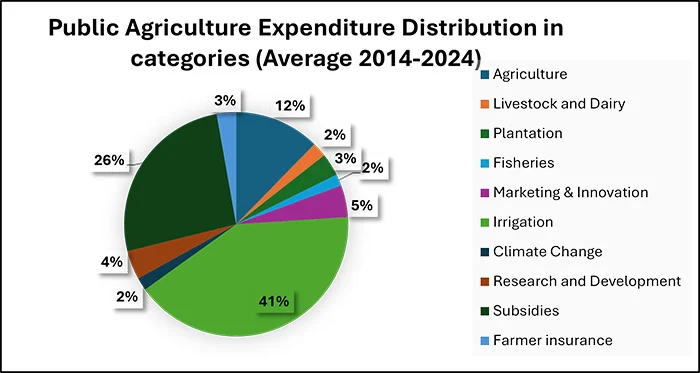
The irrigation subsector receives most of the agricultural spending (41%), with subsidies accounting for a high 26%.
Change to funding priorities necessary to address critical concerns.
 The agricultural sector in Sri Lanka has long been a pillar of the nation’s economy, yet its decline reflects a complex interplay of economic shifts, policy decisions, and underutilised potential. Agriculture’s contribution to the overall economy in Sri Lanka has gradually diminished over time, while the agricultural labour force has shrunk at a slower rate. This disparity between a declining sector and a stagnant workforce, coupled with the failure to address structural changes by improving land and labour productivity, has led to poor sector performance, particularly in terms of food security and farm income.
Additionally, unproductive public spending in the form of inefficient allocation, short-term concentration, and neglect of crucial areas is an important contributory factor. In this context, it is crucial to assess whether public expenditure allocation in Sri Lanka has undergone significant shifts aimed at unlocking the agriculture sector’s potential while advancing food security and fostering rural development.
Tracking the Shift: Trends in Public Spending on Agriculture
Over the last decade, Sri Lanka has struggled to spend adequately on agriculture due to competing fiscal concerns. Before COVID-19, total agricultural investment was around LKR 112 billion in real terms between 2014 and 2020. However, due to the impact of COVID-19, it sharply declined to LKR 88 billion in 2021. Since then, agricultural investment has slightly increased, averaging LKR 97 billion in the past two years (2022-2023). Despite an increase in absolute public expenditure on agriculture (PEA), both the GDP share and the percentage of the total budget allocated to agriculture have been declining.
PEA as a percentage of GDP has fallen from 1.1% in 2014 to 0.8% by 2023. Similarly, PEA as a percentage of total government spending has decreased from 6.4% to 2% throughout the same period. Notably, the balance between capital and recurring expenditures has shifted dramatically in favour of more recurrent expenditures during institutional structure changes linked to changes of government, as shown in 2015, 2019, and 2020.
Guiding the Budget: Who Shapes Agricultural Investments?
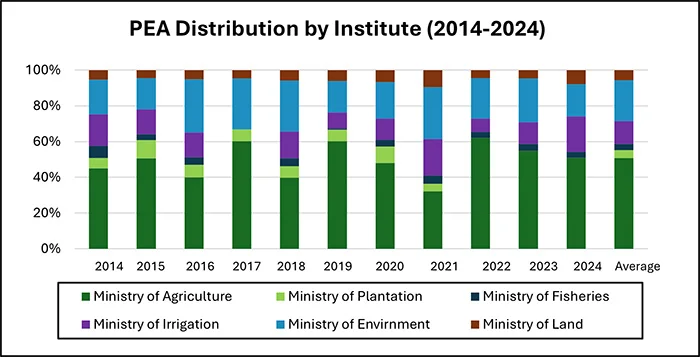 The agriculture sector in Sri Lanka is primarily managed by the Ministry of Agriculture (MOA), the Ministry of Plantation Industries (MOP) and the Ministry of Fisheries (MOF), as outlined in the Public Investment Programme (PIP). While the land and irrigation sectors are closely linked to agriculture, they fall under the jurisdiction of separate ministries: the Ministry of Lands (MOL) and the Ministry of Irrigation (MOI), respectively. In terms of budgetary allocations, MOA historically receives the largest share, accounting for 51% of agriculture-related expenditures.
This is followed by the Ministry of Mahaweli Development and Environment (MOE) with 23%, and MOI with 13%. MOF and MOP receive smaller allocations, at 3% and 4% respectively. While the nominal PEA has been on the rise, real-term PEA has either declined or remained largely unchanged across all ministries.. However, this does not necessarily indicate whether agricultural expenditures are aligned with sectoral policies, making it challenging to evaluate the effectiveness of spending in addressing critical concerns within the sector.

Dialog Axiata PLC announced, Friday 6th February 2026, its consolidated financial results (Reviewed) for the year ended 31st December 2025. Financial results included those of Dialog Axiata PLC (the “Company”) and of the Dialog Axiata Group (the “Group”).
Group Performance
The Group delivered a strong performance across Mobile, Fixed Line and Digital Pay Television businesses recording a positive Core Revenue growth of 16% Year to Date (“YTD”). Group Headline Revenue reached Rs179.6Bn, up 5% YTD, despite the continued strategic scaling down of low-margin international wholesale business. In Q4 2025, Revenue was recorded at Rs46.5Bn up 2% Quarter-on-Quarter (“QoQ”) and 2% Year-on-Year (“YoY”).
The Group Earnings Before Interest, Tax, Depreciation and Amortisation (“EBITDA”) reached Rs86.0Bn up 30% YTD supported by Core Revenue performance and Cost Rescaling Initiatives. On a QoQ basis Group EBITDA demonstrated a modest growth to record at Rs23.0Bn up 2% QoQ with an EBITDA margin of 49.5% in line with the Revenue performance. Group EBITDA margin reached 47.9% for FY 2025, up 9.2pp.
Group Net Profit After Tax (“NPAT”) reached Rs20.8Bn for FY 2025, up 67% YTD mainly resulting from robust EBITDA growth, despite higher tax and net finance costs. Normalized for forex impact, NPAT growth was recorded at +>100% YTD to reach Rs22.1Bn. On a QoQ basis NPAT grew 3% to reach Rs5.9Bn resulting from strong EBITDA performance.
On the back of strong operational performance, the Group recorded Operating Free Cash Flow (“OFCF”)
of Rs49.3Bn for FY 2025 up >100% YTD.
Dividend Payment to Shareholders
In line with the dividend policy and financial performance of the Group and taking into account the forward investment requirements to serve the nation’s demand for Broadband and Digital services, the Board of Directors of Dialog Axiata PLC at its meeting held on 6th February 2026, resolved to propose for consideration by the Shareholders of the Company, a dividend to ordinary shareholders amounting to Rs1.50 per share. The said dividend, if approved by shareholders, would translate to a Dividend Yield of 5.0% based on share closing price for FY 2025. The dividend so proposed will be considered for approval by the shareholders at the Annual General Meeting (AGM) of the Company, the date pertaining to which would be notified in due course.
Company and Subsidiary Performance
At an entity level, Dialog Axiata PLC (the “Company”) continued to be the primary contributor to Group Revenue (76%) and Group EBITDA (74%). Aided by sustained growth in the Data segment and cost-rescaling initiatives, Company revenue was recorded at Rs135.8Bn for FY 2025, up 18% YTD, EBITDA rose 32% YTD to reach Rs63.6Bn. On a QoQ basis, Q4 2025 Revenue was recorded at Rs34.8Bn, down 1% QoQ due to a reclassification of Hubbing Revenue, while EBITDA decline 1% QoQ to record Rs17.0Bn, largely attributable to network restoration costs and donations made in relation to the Cyclone Ditwah relief efforts. Furthermore, NPAT was recorded at Rs15.6Bn for FY 2025, up 41% YTD. Normalised for forex impacts, the company NPAT was up +>100% YTD to reach Rs17.0Bn. On a QoQ basis, Company NPAT was recorded at Rs4.5Bn, down 6% QoQ.
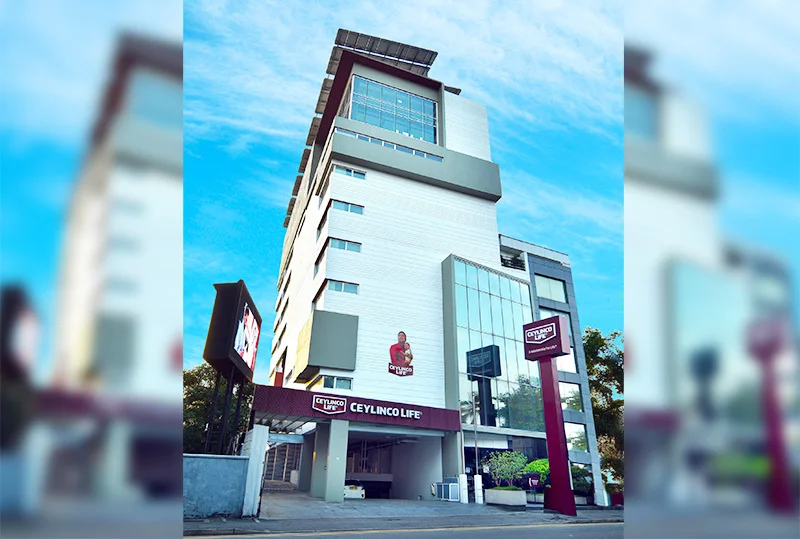
Ceylinco Life has announced the launch of the 25th consecutive edition of its flagship Pranama Scholarships programme, marking a significant milestone in the company’s long-standing commitment to recognising and rewarding excellence among the children of its policyholders.
Under the 2026 programme, the life insurance market leader will present scholarships with a total cumulative value of Rs. 22.7 million, continuing a rewards initiative that has now been conducted without interruption for a quarter of a century. Since its inception, the Ceylinco Life Pranama Scholarships programme has benefitted 3,466 students across the country, representing a total investment of Rs. 240 million in nurturing academic achievement and outstanding performance in sports, arts and other extracurricular pursuits.

The artistic genius of Sri Lankans was amply manifest all over again at ‘Kala Pola ‘26’ which was held on February 8th at Ananda Coomaraswamy Mawatha Colombo 7; the usual, teeming and colourful venue for this annual grand exhibition and celebration of the work of local visual artists.
If there is one thing that has flourished memorably and resplendently in Sri Lanka over the centuries it is the artistic capability or genius of its people. It is something that all Sri Lankans could feel a sense of elation over because from the viewpoint of the arts, Sri Lanka is second to no other nation. With regard to the visual arts a veritable dazzling radiance of this inborn and persisting capability is seen at the annual open air ‘Kala Pola’.
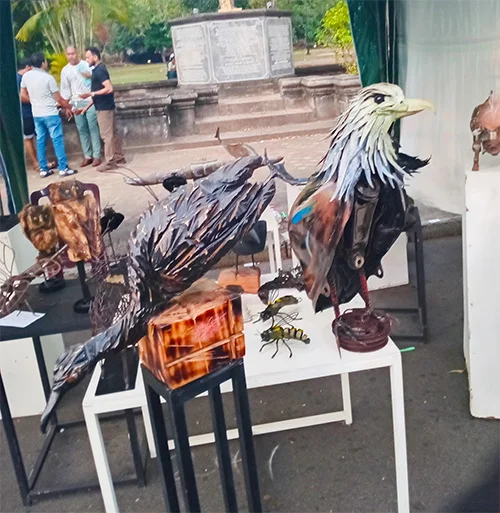
A bird of Sri Lanka created from scraps of iron waste.
All capable visual artists, wherever they hail from in Sri Lanka, enjoy the opportunity of exhibiting their work at the ‘Kala Pola’ and this is a distinctive ‘positive’ of this annual event that draws numberless artists and viewers. There was an abundance of paintings, sketches and sculptures, for instance, and one work was as good as the other. Ample and equal space was afforded each artist. Its widely participatory and open nature enables one to describe the exhibition as exuding a profoundly democratic ethos.
Accordingly, this time around at ‘Kala Pola ‘26’ too Sri Lankans’ creative efforts were there to be viewed, studied and enjoyed in the customary carnival atmosphere where connoisseurs, local and foreign, met in a sprit of camaraderie and good cheer. Many thanks are owed once again to the George Keyt Foundation for the presentation of the event in association with the John Keells Group and the John Keells Foundation, not forgetting the Nations Trust Bank, which was the event’s Official Banking Partner. The exhibition was officially declared open by Chief Guest Marc-Andre Franche, UN Resident Coordinator in Sri Lanka.
By Lynn Ockersz

Namibia begin campaign in crucial game against Netherlands

Markram, Ngidi help South Africa ease past dogged Canada

Pakistan withdraw boycott of India match at T20 World Cup

Mainly dry weather will prevail in the most parts of the island.

NPP: Speaker won’t step down, CIABOC can investigate him

Trinco Buddha statue case: All suspects, including 4 monks re-remanded till 11 Feb.

‘Dates have the highest sugar content to fight Coronavirus’

Sunday Island 27 December – Headlines

#SundayIsland 17th December – Headlines

Sunday Island – 28th March

Sunday Island Headlines – 21 March

Sunday Island – 21st February – Headlines
-

 Features2 days ago
My experience in turning around the Merchant Bank of Sri Lanka (MBSL) – Episode 3
-

 Business3 days ago
Zone24x7 enters 2026 with strong momentum, reinforcing its role as an enterprise AI and automation partner
-

 Business2 days ago
Remotely conducted Business Forum in Paris attracts reputed French companies
-

 Business2 days ago
Four runs, a thousand dreams: How a small-town school bowled its way into the record books
-
 Business2 days ago
ComBank and Hayleys Mobility redefine sustainable mobility with flexible leasing solutions
-
 Business3 days ago
HNB recognized among Top 10 Best Employers of 2025 at the EFC National Best Employer Awards
-

 Business3 days ago
GREAT 2025–2030: Sri Lanka’s Green ambition meets a grid reality check
-

 Editorial5 days ago
All’s not well that ends well?