
News
Presidential pardon sought for Ranjan to contest general election

EC accepts ex-SJB lawmaker nomination pending AKD’s response
By Shamindra Ferdinando
Leader of the United Democratic Voice (UDV) actor Ranjan Ramanayake has requested President Anura Kumara Dissanayake to reduce his seven-year term of civil disability to enable him to contest the forthcoming parliamentary election.
Pending President Dissanayake’s response to his letter dated Oct. 02, 2024, the former Samagi Jana Balawegaya (SJB) lawmaker, who represented the Gampaha District in the last Parliament, has handed over nominations as the leader of the UDV Gampaha District team.
The Elections Commission has accepted the UDV’s nominations list. The election is scheduled for Nov. 14.
A three-member bench of the Supreme Court on January 12, 2021 found Ramanayake guilty on a charge of contempt of court. The SC sentenced the lawmaker who, during the Yahapalana administration served as the State Minister of Highways and Road Development, to four years’ rigorous imprisonment. Ramanayake automatically lost his right to vote or to be elected for period of seven years (Jan 12, 2021 to Jan 12, 2028).
The Bench consisted of Justice Sisira J. de Abrew, Vijith K. Malagoda and Padman Surasena.
“We convict him for the offence of contempt of court punishable under Article 105(3) of the Constitution and sentence him to a term of four years’ rigorous imprisonment,” the Court said in its judgment and directed the Registrar of the Court to issue a warrant committing Ramanayake to a prison to term of four years’ rigorous imprisonment. Ramanayake wants the term of civic disability reduced to two years from the prescribed seven years.
The SC delivered the judgment in respect of a case filed by one Ranawaka Sunil Perera in terms of Article 105(3) of the Constitution alleging the then Deputy Minister of Social Empowerment and Welfare caused contempt of court by declaring the majority of Sri Lanka judges and lawyers were corrupt on Aug 21, 2017.
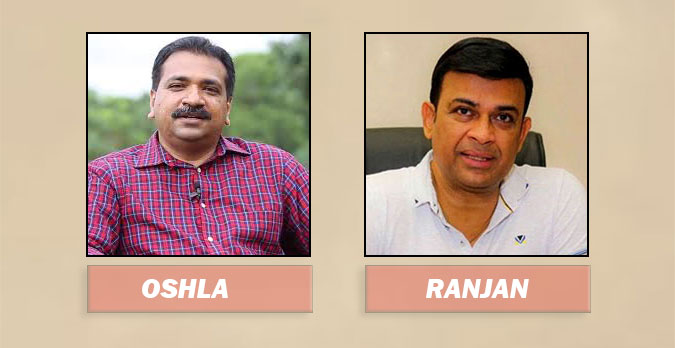
Civil society activist Oshla Herath yesterday told The Island that former President Ranil Wickremesinghe had granted Ramanayake presidential pardon in late August 2022 but his civic rights weren’t restored. Therefore, Ramanayake couldn’t contest the forthcoming parliamentary election under any circumstances, Herath said, declaring he intended to bring this development to the notice of the Supreme Court.
Ramanayake didn’t respond to a call made to his hand phone nor answer the voice message sent to him.
Responding to another query, Herath said that the Election Commission would be made a respondent in case he had to file a case as this situation wouldn’t have happened if the EC removed Ramanayake from the electoral register consequent to the SC ruling given during Mahinda Deshapriya’s tenure as Chairman, EC.
Herath, an unsuccessful candidate at the recently concluded presidential election said that he discussed the issue at hand with the EC and Ramanayake as well. “I asked Ramanayake to declare his intention to pull out of the contest early this week. In case the UDV doesn’t comply with his request, he’ll inform the Registrar of the Supreme Court during the week,” Herath said.
When The Island asked why he sought to deprive Ramanayake of an opportunity to contest, especially against the backdrop of acceptance of his UDV nominations list for Gampaha, Herath said he exercised constitutional rights as a Sri Lankan. “If I didn’t move court against Diana Gamage, the British passport holder would have definitely been in the fray at the parliamentary election or on some National List,” Herath said.
Ramanayake in his letter to President Dissanayake sought relief in terms of Article 34(1) of the Sri Lankan Constitution that empowered the president to pardon an offender convicted of any offence in any court. Herath said that President Dissanayake, having been critical of the way his predecessors granted presidential pardons even for persons sentenced to death by hanging, couldn’t respond favourably to Ramanayake’s request.
According to Herath, Ramanayake has justified his decision to contest the general election as the EC hadn’t removed him from the Gampaha electoral list and he received a polling card. “When I raised the failure on the part of the EC to remove Ramanayake from the electoral list, a senior officer wanted me to move court if necessary,” Herath said.
Herath said that UDV had been previously registered twice under different names and the name changed for a third time ahead of the Nov 14 presidential election. Herath emphasized the need for a total overhaul of the utterly corrupt and illogical election system in place.






The Landslide Early Warning Center of the National Building Research Organisation [NBRO] has issued landslide early warnings to the districts of Kandy and Nuwara Eliya valid from 06:00 hrs on 13.02.2026 to 06:00 hrs on 14.02.2026
Accordingly,
Level II [AMBER] landslide early warnings have been issued to the Divisional Secretaries Divisions and surrounding areas of Walapane and Nildandahinna in the Nuwara Eliya district.
Level I [YELLOW] landslide early warnings have been issued to the Divisional Secretaries Divisions and surrounding areas of Pathahewheta in the Kandy district.
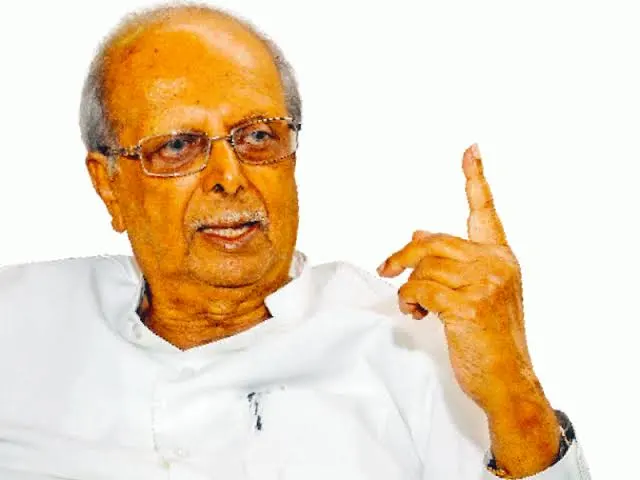
Former Minister Professor Tissa Vitharana has passed away at the age of 91, according to family sources
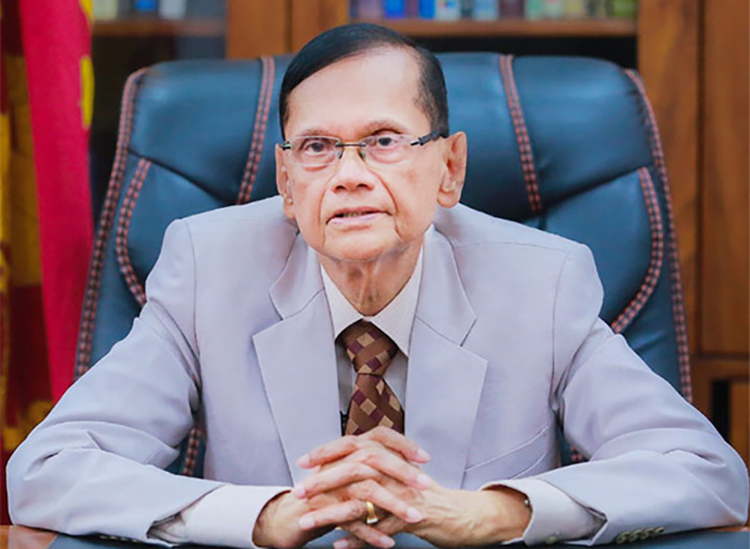
‘Media freedom will be in jeopardy’
Former Minister of Justice, Constitutional Affairs, National Integration and Foreign Affairs Prof. G. L. Peiris has warned that the proposed Protection of the State from Terrorism Act (PSTA) will deal a severe blow to civil liberties and democratic rights, particularly media freedom and the overall freedom of expression.
Addressing a press conference organised by the joint opposition alliance “Maha Jana Handa” (Voice of the People) in Colombo, Prof. Peiris said the proposed legislation at issue had been designed “not to protect people from terrorism but to protect the State.”
Prof. Peiris said that the proposed law would sound the death knell for the rights long enjoyed by citizens, with journalists and media institutions likely to be among those worst affected.
Prof. Peiris took exception to what he described as the generous use of the concept of “recklessness” in the draft, particularly in relation to the publication of statements and dissemination of material. He argued that recklessness was recognised in criminal jurisprudence as a state of mind distinct from intention and its scope was traditionally limited.
“In this draft, it becomes yet another lever for the expansion of liability well beyond the properly designated category of terrorist offences,” Prof. Peiris said, warning that the elasticity of the term could expose individuals to prosecution on tenuous grounds.
Prof. Peiris was particularly critical of a provision enabling a suspect already in judicial custody to be transferred to police custody on the basis of a detention order issued by the Defence Secretary.
According to the proposed laws such a transfer could be justified on the claim that the suspect had committed an offence prior to arrest of which police were previously unaware, he said.
“The desirable direction of movement is from police to judicial custody. Here, the movement is in the opposite direction,” Prof. Peiris said, cautioning that although the authority of a High Court Judge was envisaged, the pressures of an asserted security situation could render judicial oversight ineffective in practice.
Describing the draft as “a travesty rather than a palliative,” Prof. Peiris said the government had reneged on assurances that reform would address longstanding concerns about existing counter-terrorism legislation. Instead of removing objectionable features, he argued, the new bill introduced additional provisions not found in the current Prevention of Terrorism Act (PTA).
Among them is a clause empowering the Defence Secretary to designate “prohibited places”. That was a power not contained in the PTA but previously exercised, if at all, under separate legislation such as the Official Secrets Act of 1955. Entry into such designated places, as well as photographing, video recording, sketching or drawing them, would constitute an offence punishable by up to three years’ imprisonment or a fine of up to Rs. 3 million. Prof. Peiris said. Such provision would have a “particularly chilling effect” on journalists and media personnel, he noted.
The former minister and law professor also criticised the breadth of offences defined under the draft, noting that it sought to create 13 categories of acts carrying the label of terrorism. This, he said, blurred the critical distinction between ordinary criminal offences and acts of terrorism, which require “clear and unambiguous definition with no scope for elasticity of interpretation.”
He cited as examples offences such as serious damage to public property, robbery, extortion, theft, and interference with electronic or computerised systems—acts which, he argued, were already adequately covered under existing penal laws and did not necessarily amount to terrorism.
Ancillary offences, too, had been framed in sweeping terms, Prof. Peiris said. The draft legislation, dealing with acts ‘associated with terrorism,’ imposed liability on persons “concerned in” the commission of a terrorist offence. “This is a vague phrase and catch-all in nature.” he noted.
Similarly, under the subheading ‘Encouragement of Terrorism,’ with its reference to “indirect encouragement,” could potentially encompass a broad spectrum of protest activity, Prof. Peiris maintained, warning that the provision on “Dissemination of Terrorist Publications” could render liable any person who provides a service enabling others to access such material. “The whole range of mainstream and social media is indisputably in jeopardy,” Prof. Peiris said.
Former Minister Anura Priyadarshana Yapa and SLFP Chairman Nimal Siripala de Silva also addressed the media at the briefing.
by Saman Indrajith ✍️

Canada, UAE face each other for only the second time in T20Is

Landslide Early Warnings issued to the Districts of Kandy and Nuwara Eliya

Former Minister Professor Tissa Vitharana has passed away at the age of 91

Buoyant Zimbabwe plot massive upset against depleted Australia

Mexican ships arrive in Cuba with humanitarian cargo amid US oil blockade

Tarique Rahman’s BNP claims majority in Bangladesh election

‘Dates have the highest sugar content to fight Coronavirus’

Sunday Island 27 December – Headlines

#SundayIsland 17th December – Headlines

Sunday Island – 28th March

Sunday Island Headlines – 21 March

Sunday Island – 21st February – Headlines
-
 Features5 days ago
My experience in turning around the Merchant Bank of Sri Lanka (MBSL) – Episode 3
-

 Business6 days ago
Zone24x7 enters 2026 with strong momentum, reinforcing its role as an enterprise AI and automation partner
-

 Business5 days ago
Remotely conducted Business Forum in Paris attracts reputed French companies
-
 Business5 days ago
Four runs, a thousand dreams: How a small-town school bowled its way into the record books
-

 Business5 days ago
ComBank and Hayleys Mobility redefine sustainable mobility with flexible leasing solutions
-
 Business2 days ago
Autodoc 360 relocates to reinforce commitment to premium auto care
-

 Business6 days ago
HNB recognized among Top 10 Best Employers of 2025 at the EFC National Best Employer Awards
-
 Midweek Review2 days ago
A question of national pride