
Foreign News
Powerful cyclone kills at least 31 as it tears through Madagascar port

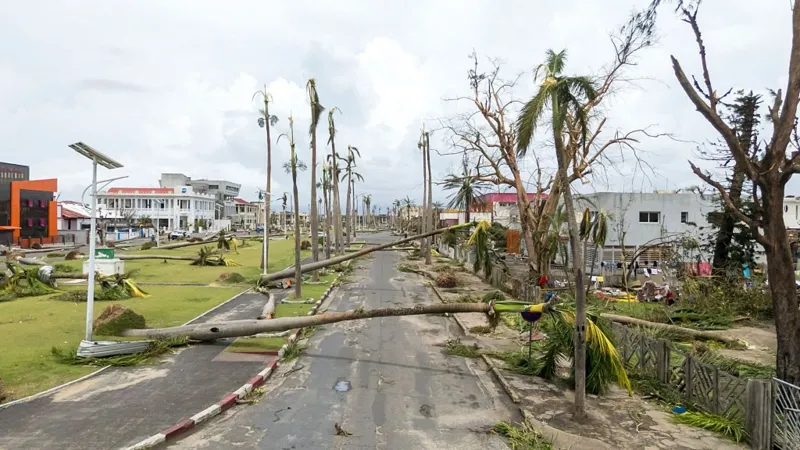
At least 31 people have died after a powerful cyclone struck Madagascar, says the disaster authority in the Indian Ocean island.
Cyclone Gezani made landfall on Tuesday, hitting the island’s main port, Toamasina. Madagascar’s disaster management office said there was “total chaos” – reporting that houses collapsed in the impact zone, where the bodies were found.
Neighbourhoods were plunged into darkness as power lines snapped, while trees were uprooted and roofs ripped off.
“What happened is a disaster, nearly 75% of the city of Toamasina was destroyed,” the country’s military leader Colonel Michael Randrianirina, who seized power in October, told the AFP news agency.
“The current situation exceeds Madagascar’s capabilities alone,” he added.
The cyclone’s landfall is likely to have been one of the most intense recorded around the city in the satellite era, according to the CMRS cyclone forecaster on France’s Reunion island, AFP reports.
The National Office for Risk and Disaster Management said many were killed when houses collapsed. Cyclone Gezani hit Toamasina – the country’s second-largest city – with winds reaching 250 km/hour (155 mph).
“It’s total chaos, 90% of house roofs have been blown off, entirely or in part,” the head of disaster management at the Action Against Hunger aid agency, Rija Randrianarisoa, told AFP.
Madagascar’s disaster management office has evacuated dozens of injured people and hundreds of residents from a district around Toamasina, home to 400,000 people.
Residents in and around Toamasina described scenes of chaos as the cyclone made landfall. “I have never experienced winds this violent… The doors and windows are made of metal, but they are being violently shaken,” Harimanga Ranaivo told the Reuters news agency.
Gezani is the second cyclone to hit Madagascar this year. It comes 10 days after tropical cyclone Fytia killed 14 and displaced over 31,000 people, according to the UN’s humanitarian office.
Ahead of the cyclone’s arrival, officials shuttered schools and rushed to prepare emergency shelters.
Madagascar’s meteorological service said on Wednesday morning that Gezani had weakened to a moderate tropical storm and had moved westward inland, about 100km (60 miles) north of the capital, Antananarivo.
“Gezani will cross the central highlands from east to west today, before moving out to sea into the Mozambique Channel this evening or tonight,” the service said.
Cyclone season in the Indian Ocean around Madagascar normally lasts from November to April and sees around a dozen storms each year, AFP reports.
[BBC]

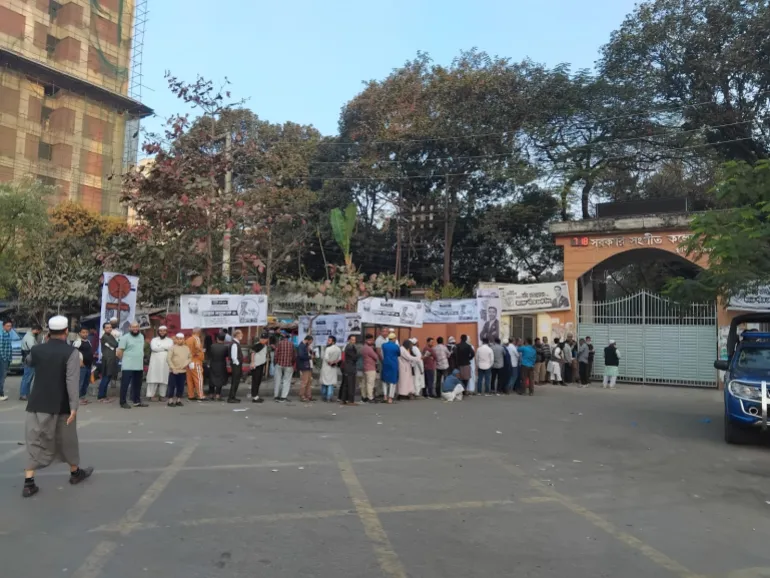
Nearly 127 million eligible voters are heading to the polls in Bangladesh, in a key test of the country’s return to democracy after a student-led uprising toppled longtime leader Sheikh Hasina in August 2024.
The vote is a direct contest between the Bangladesh Nationalist Party (BNP) and a Jamaat-e-Islami led coalition of 11 parties, which includes the National Citizens Party (NCP), formed by youth activists instrumental in ousting Hasina.
Corruption, inflation, employment and economic development are the main issues deciding the election in the world’s eighth most populous nation.
Besides the parliamentary election, the country is holding a referendum on the National Charter 2025 – a document drafted by the interim government led by Muhammad Yunus, setting the foundation for future governance.
[Aljazeera]
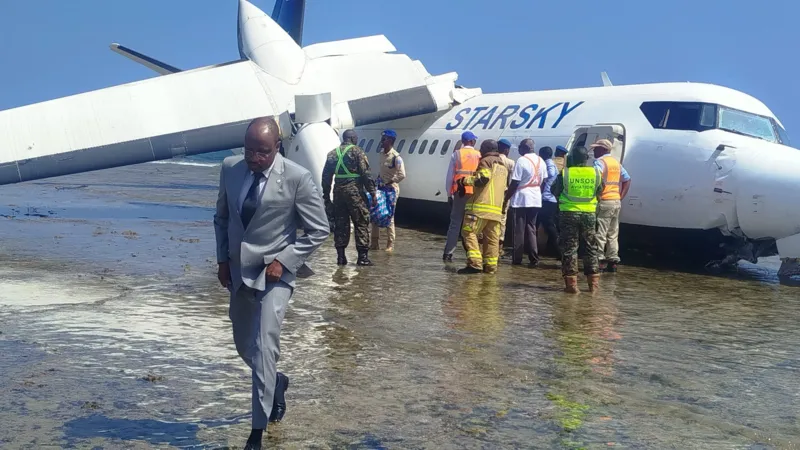
An airline in Somalia has praised one of its pilots after he crash-landed his passenger plane, which had suffered a technical fault, on the shoreline next to the capital’s international airport with all 55 on board surviving.
Starsky Aviation said the pilot’s quick thinking was crucial in saving the 50 passengers and five crew.
The crew of the aircraft, a Fokker 50, reported a problem shortly after take off from Mogadishu on Tuesday morning and requested that the plane return, Somalia’s Civil Aviation Authority (CAA) said.
It then touched down but failed to stop on the runway, overshooting the tarmac before coming to rest in shallow water, the CAA’s director Ahmed Macalin Hassan said.
It is not clear yet exactly what the issue was.
Footage posted on X appeared to show passengers leaving the aircraft and walking away from the wreckage on the shore of the Indian Ocean. No serious injuries have been reported.
The African Union’s mission in Somalia said UN and AU troops were “swiftly deployed” to help with rescue efforts. Somalia’s transport minister was also at the scene, its post on X added.
“We are relieved to confirm that all passengers and crew are safe. Investigations are under way to establish what caused the technical issue that led to the emergency landing,” Starsky spokesman Hassan Mohamed Aden said.
“The pilot’s swift and calm decision-making played a decisive role in ensuring the safety of everyone on board, and we commend him for how he handled the situation,” he added.
[BBC]

Antonio Jose Seguro of the centre-left Socialist Party has secured a landslide victory and a five-year term as Portugal’s president in a run-off vote, beating his far-right, anti-establishment rival, Andre Ventura, according to partial results.
With 95 percent of votes counted, 63-year-old Seguro has garnered 66 percent. Ventura trailed at 34 percent, still likely to secure a much stronger result than the 22.8 percent his anti-immigration Chega party achieved in last year’s general election. Ballots in large cities such as Lisbon and Porto are counted towards the end.
Two exit polls have placed Seguro in the 67-73 percent range, and Ventura at 27-33 percent.
A succession of storms in recent days has failed to deter voters, with turnout at about the same level as in the first round on January 18, even though three municipal councils in southern and central Portugal had to postpone voting by a week due to floods. The postponement affected some 37,000 registered voters, or about 0.3 percent of the total, and is unlikely to influence the overall result.
Portugal’s presidency is a largely ceremonial role, but it holds some key powers, including the ability to dissolve parliament under certain circumstances.
Ventura, 43, who had trailed Seguro in opinion polls, had argued that the government’s response to the fierce gales and floods was “useless” and called for the entire election to be postponed.
However, the authorities rejected the demand.
Seguro, during his last campaign rally on Friday, accused Ventura of “doing everything to keep the Portuguese from turning out to vote”.
Despite his loss on Sunday, Ventura, a charismatic former television sports commentator, can now boast increased support, reflecting the growing influence of the far right in Portugal and much of Europe. He is also the first extreme-right candidate to make it through to a run-off vote in Portugal.
Meanwhile, Seguro has cast himself as the candidate of a “modern and moderate” left, who can actively mediate to avert political crises and defend democratic values. He received backing from prominent conservatives after the first round amid concerns over what many see as Ventura’s populist, hardline tendencies.
But Prime Minister Luis Montenegro – whose minority centre-right government has to rely on support from either the Socialists or the far right to get legislation through parliament – declined to endorse either candidate in the second round.
While the role is largely ceremonial, the head of state has the power to dissolve parliament and call early elections.
The new president will succeed outgoing conservative Marcelo Rebelo de Sousa in early March.
[Aljazeera]

Powerful cyclone kills at least 31 as it tears through Madagascar port

US House votes to overturn Trump’s tariffs on Canada

Buoyed by strong support, Paudel’s Nepal search for two points against Italy

Bangladesh election 2026: Polls to open amid heavy security

Sri Lanka, minus Hasaranga, take on Oman at bogey venue

Showers will occur at times in the Central, Uva, Eastern, Northern and North-central provinces and in Hambantota district

‘Dates have the highest sugar content to fight Coronavirus’

Sunday Island 27 December – Headlines

#SundayIsland 17th December – Headlines

Sunday Island – 28th March

Sunday Island Headlines – 21 March

Sunday Island – 21st February – Headlines
-

 Features4 days ago
My experience in turning around the Merchant Bank of Sri Lanka (MBSL) – Episode 3
-

 Business5 days ago
Zone24x7 enters 2026 with strong momentum, reinforcing its role as an enterprise AI and automation partner
-
 Business4 days ago
Remotely conducted Business Forum in Paris attracts reputed French companies
-

 Business4 days ago
Four runs, a thousand dreams: How a small-town school bowled its way into the record books
-

 Business4 days ago
ComBank and Hayleys Mobility redefine sustainable mobility with flexible leasing solutions
-

 Business1 day ago
Autodoc 360 relocates to reinforce commitment to premium auto care
-

 Business5 days ago
HNB recognized among Top 10 Best Employers of 2025 at the EFC National Best Employer Awards
-

 Business5 days ago
GREAT 2025–2030: Sri Lanka’s Green ambition meets a grid reality check