
News
Post 2019 prez poll ‘reporting, discussions and analysis by a range of sources’ prompt Sri Lanka bashing in Geneva

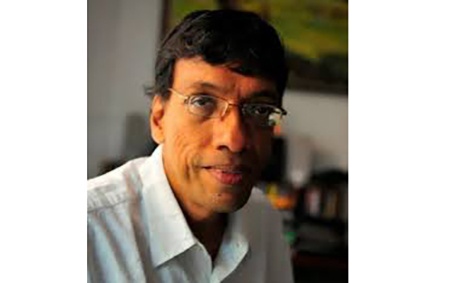
BHC sidesteps query on Lord Naseby’s disclosure
By Shamindra Ferdinando
The British High Commission in Colombo has claimed stepped up harassment, intimidation and surveillance targeting civil society by the government since the change of government in Nov. 2019. A spokesperson for the BHC said so in response to several questions raised by The Island as regards a recent statement by the UK’s International Ambassador for Human Rights, Rita French, at the Geneva-based United Nations Human Rights Council.
The BHC spokesperson has sent The Island the following response, on Sept 26: “The statement from the Core Group in Geneva, agreed among Canada, Germany, North Macedonia, Montenegro and the UK, reflects recent reporting, discussions and analysis by a range of sources on the operating environment for civil society in Sri Lanka. Concerns have been publically raised and documented about increased harassment, intimidation and surveillance by the High Commissioner for Human Rights and several international NGOs. The UK has regular and wide-ranging conversations on these issues with civil society, as well as the Government of Sri Lanka”.
The UK’s International Ambassador for Human Rights, Rita French, in a statement delivered in Geneva early this week on behalf of Canada, Germany, North Macedonia, Montenegro and the UK alleged that civil society and human rights groups in Sri Lanka experienced an increasingly hostile operating environment.
The statement also quoted Ambassador French as having said: “Instances of intimidation, harassment and surveillance continue, including threats to families of disappeared persons. Individuals are detained indefinitely without appearance before court, such as lawyer Hejaaz Hizbullah.”
The Island
submitted the following questions to the BHC on Sept 18 after Media Minister and cabinet spokesperson Keheliya Rambukwella on Thursday (Sept 17) made reference to the Core Group’s statement. The Island asked the BHC (1) Did the UK receive complaints from civil society as regards intimidation, harassment and surveillance and threats to the families of disappeared persons (2) Did Canadian and German embassies in Colombo inform BHC about complaints received by them from Sri Lanka civil society (3) Did BHC get complaints from lawyer Hejaaz Hizbullah’s family or his lawyers (4) Did BHC take up these issues with Foreign Ministry before Geneva statement and finally (5) Did the UK examine Lord Naseby’s disclosure vis-a-vis 30/1 accountability resolution?
The BHC refrained from commenting on Lord Naseby’s Oct 2017 revelation that challenged the very basis of the Geneva Resolution.
Executive Director of the National Peace Council (NPC) Dr. Jehan Perera on Tuesday (29) told The Island that the group appreciated it was able to continue work without hindrance up to now and “the same is true of most other NGOs we partner but with a greater anxiety of being under surveillance”.
Dr. Perera said so in response to The Island query regarding the post-2019 presidential election working environment. Asked for a detailed response, Dr. Perera has sent us the following statement: “NGOs have been placed under the Defence Ministry which has got more active in the area of civilian administration with the government’s district secretariats also coming under its purview. Our staff reported being questioned by telephone, by unidentified men in civvies and by uniformed personnel including from the army. In our case the questioning has been limited. But in the case of other NGOs it has been more serious. This is the case especially with civil society groups in the north and east. Even in the case of our own programmes in the north and east, we have found that the participants have been questioned after the event. In one case, where we held a workshop on democracy, both a uniformed person and another in civvies had come to the venue to investigate. As the area Grama Niladari was present they had accepted his explanation and left. This type of incident creates a climate of intimidation in which those most vulnerable are the activists at the grassroots level who had been directly working for the wellbeing of their local communities.
There is also a significant increase in reporting requirements. We are expected to report our work in every location to the relevant district secretariat. This has meant that each and every activity we carry out in every part of the country has to be notified to the government officials at the district level to get their sign off. This is a cumbersome procedure as these district level officials ask for further information in an ad hoc way that differs from district to district. The information required should not be unnecessarily burdensome or intrusive as the Sri Lanka constitution guarantees the right to Freedom of Association, which is what civil society is about. Some of our partners have informed us that they have been summoned to Colombo to the police headquarters to be questioned. They have to bring with them their books and other records as they are not sure of what level of investigation they will be subjected to. It would be less intimidating and less effortful if they could be questioned in their own offices, if such questioning is deemed to be necessary. They need to be informed of the law under which they are being questioned.

Latest News
Heat Index at Caution Level in the Northern, North-central, North-western, Western, Sabaragamuwa, Eastern and Southern provinces and in Monaragala district


Warm Weather Advisory
Issued by the Natural Hazards Early Warning Centre
Issued at 3.30 p.m. on 15 April 2026, valid for 16 April 2026.
The Heat index, the temperature felt on human body is likely to increase up to ‘Caution level’ at some places in the Northern, North-central, North-western, Western, Sabaragamuwa, Eastern
and Southern provinces and in Monaragala district.
The Heat Index Forecast is calculated by using relative humidity and maximum temperature and this is the condition that is felt on your body. This is not the forecast of maximum temperature. It is generated by the Department of Meteorology for the next day period and prepared by using global numerical weather prediction model data.
Effect of the heat index on human body is mentioned in the above table and it is prepared on the advice of the Ministry of Health and Indigenous Medical Services.
ACTION REQUIRED
Job sites: Stay hydrated and takes breaks in the shade as often as possible.
Indoors: Check up on the elderly and the sick.
Vehicles: Never leave children unattended.
Outdoors: Limit strenuous outdoor activities, find shade and stay hydrated.
Dress: Wear lightweight and white or light-colored clothing.
Note:
In addition, please refer to advisories issued by the Disaster Preparedness & Response Division, Ministry of Health in this regard as well. For further clarifications please contact 011-7446491

The Indonesian Navy Sailing Ship KRI BIMA SUCI – 945 arrived at the Port of Colombo on a goodwill visit on 15 Apr 2026 and was welcomed by the Sri Lanka Navy (SLN) in compliance with time-honoured naval traditions.
The vessel’s arrival is a key highlight of the ASEAN Plus Cadet Sail (APCS) – 2026 programme , accompanying a diverse contingent of Navy cadets from 26 different nations alongside their Indonesian counterparts.
The ship is commanded by Commander SUGENG HARIYANTO. Meanwhile, Officer Under-trainees of the Sri Lanka Navy are expected to participate in various programmes aboard the
ship and naval personnel observe its operational functions during its stay in the island.
Furthermore, the ship’s crew is scheduled to take part in programmes organized by the Sri Lanka Navy to enhance camaraderie between the two navies, as well as visit several tourist attractions in the country.
News
PM initiates children into learning at the auspicious time while observing New Year traditional customs and rituals

The Sinhala and Tamil New Year cultural festival, organized by the Ministry of Buddha Sasana, Religious and Cultural Affairs, was held on Tuesday (14) in Gampaha under the patronage of Prime Minister Dr. Harini Amarasuriya, with the performance of traditional auspicious customs and rituals.
In accordance with tradition, during the Punya Kalaya (inauspicious time), the Prime Minister visited the Medagama Sri Sunandarama Viharaya in Gampaha and participated in religious observances and received blessings from Venerable Thunmodara Samitha Thero, a member of the Karaka Sangha Sabha of the Sri Lanka Ramanna Maha Nikaya and the Chief Incumbent of the Medagama Sri Sunandarama Dharmaduta Piriven Viharaya.
The traditional observances of the Sinhala and Tamil New Year cultural festival were held at the residence of Darshana Weerasinghe in Gampaha. Marking the auspicious time for commencing work, and upon the invitation of the host family, the Prime Minister planted a sapling within the premises. Concurrently, Minister of Buddha Sasana, Religious and Cultural Affairs, Dr. Hiniduma Sunil Senevi, and Minister of Foreign Affairs and Tourism, Vijitha Herath, joined the PM.
Subsequently, the Prime Minister joined children in engaging in traditional folk games.
At the auspicious time for engaging work and educational activities, the PM participated with children in reading and writing, guiding them and symbolically marking the commitment to advancing the educational development of the nation’s children.
Thereafter, the Prime Minister and other distinguished guests observed the traditional customs of exchanging greetings, transactions and gifts with the host family, and joined them to partake in the customary New Year meal.
Extending New Year greetings to all citizens, the Prime Minister expressed her gratitude to all Sri Lankans, both at home and abroad, for their contributions in overcoming and effectively managing the various challenges faced by the country.
Speaking at the occasion, Minister Dr. Hiniduma Sunil Senevi stated that the Sinhala and Tamil New Year festival symbolizes renewal and purity, and reflects the energy of the sun. He also conveyed his wishes for a peaceful and prosperous New Year for all.
The occasion was attended by the Deputy Minister of Finance and Planning and Minister of Labour, Dr. Anil Jayantha; Deputy Minister of Labour, Mahinda Jayasinghe; Member of Parliament for the Gampaha District, Ruwan Mapalagama; along with the Gampaha District Secretary, Mayor, Divisional Secretaries, and a large number of government officials.
(Prime Minister’s Media Division)

Babar Azam 71* helps Peshawar Zalmi extend lead at top

Trump threatens to fire Fed chair Jerome Powell if he doesn’t leave in May

Royal Challengers Bengaluru top the table after bowlers help thump Lucknow Super Giants

Showers expected in the Western, Sabaragamuwa, Southern, Central, Uva and North-western provinces

Heat Index at Caution Level in the Northern, North-central, North-western, Western, Sabaragamuwa, Eastern and Southern provinces and in Monaragala district

Pakistani army chief in Tehran amid bid to restart US talks

‘Dates have the highest sugar content to fight Coronavirus’

Sunday Island 27 December – Headlines

#SundayIsland 17th December – Headlines

Sunday Island – 28th March

Sunday Island Headlines – 21 March

Sunday Island – 21st February – Headlines
-

 News4 days ago
CEB orders temporary shutdown of large rooftop solar systems
-
 Features4 days ago
From Royal College Platoon to National Cadet Corps: 145 years of discipline, leadership, and modern challenges
-

 Business6 days ago
Israeli attack on Lebanon triggers local stock market volatility
-

 Business6 days ago
HNB Assurance marks 25 years with strategic transformation to ‘HNB Life’
-
 Latest News3 days ago
PNS TAIMUR & ASLAT arrive in Colombo
-

 News5 days ago
Anura Solomons passes away
-

 Features4 days ago
CIA’s hidden weapon in Iran
-
 Latest News3 days ago
Prasidh, Buttler set up comfortable win for Gujarat Titans