
News
PM tells bitter truth, proposes how to overcome crisis

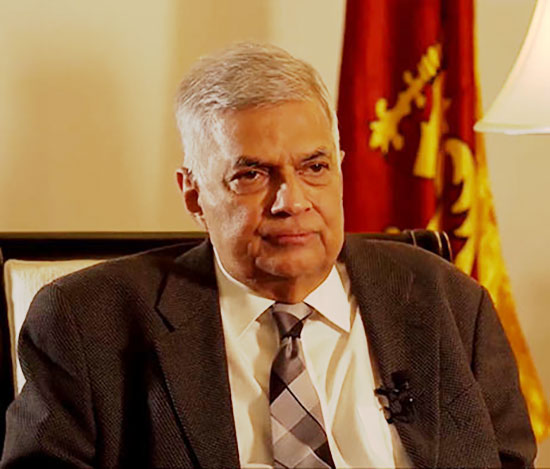
With the country caught in a fiscal crisis, where it is unable to find dollars even to buy lifesaving drugs, Prime Minister Ranil Wickremesinghe yesterday declared some urgent steps that he proposed to take like privatising the money draining national carrier SriLankan Airlines.
The loss suffered by SriLankan for the year 2020-2021 alone amounted to SLR 45 billion. By 31 March 2021, the total loss was at 372 billion. “Even if we privatise Sri Lankan Airlines, this is a loss that we must bear. You must be aware that this is a loss that must be borne even by the poor people of this country who have never stepped on an airplane”, he said.
In his address to the nation, Premier Wickremesinghe said
the coming few months will be the most difficult times that Sri Lankans have experienced in their lives.
He said Sri Lankan economy is in an extremely precarious state and that the budget deficit for 2022 will be 2.4 trillion Sri Lankan Rupees.
“At present, the Sri Lankan economy is extremely precarious. Although the former government’s budget projected a revenue of SLR 2.3 trillion, SLR 1.6 trillion is the realistic projection of this year’s revenue,” he said.
Wickremesinghe said that the estimated government expenditure for 2022 is SLR 3.3 trillion. However, due to the increase in interest rates and additional expenditure of the former government, the total government expenditure is SLR 4 trillion.
He said that the government needs to find 75 million U.S Dollars in the next few days to provide the basic necessities for the people.
“At the moment, we only have petrol stocks for a single day. Due to the diesel shipment that arrived yesterday, the diesel lack of diesel will be resolved to some extent. Two more diesel shipments are due to arrive on the 18th May and 1st June. In addition, two petrol shipments are expected on 18th and 29th May,” he said.
Wickremesinghe said that Sri Lanka produced 25% of electricity through fossil fuels.
Thus, if the country is not able to purchase adequate amounts of diesel soon, there is a possibility that the daily power outages will increase to 15 hours a day.
He added that the government incurs a loss of 84.38 rupees per liter of 92 octane petrol, 71.19 rupees per liter of 95 octane petrol, 131.55 rupees per liter of diesel, 136.31 rupees per liter of super diesel, and 294.50 rupees per liter of kerosene oil.
“The Petroleum Corporation can no longer bear this loss. Similarly, although the Electricity Board charges SLR 17 per unit of electricity the cost of production is at around SLR 48 amounting to a loss of about SLR 30 per unit. This is also a serious problem,” he said.
Given below is the speech in full: “Last Thursday, I accepted office as the Prime Minister. I did not request this position. In face of the challenging situation facing the country, the President invited me to take up this position. I assumed this duty not only as a political leader, but also as national leader who has benefited from free education at the Faculty of Law of the University of Colombo.
“At present, the Sri Lankan economy is extremely precarious. Although the former government’s budget projected a revenue of SLR 2.3 trillion, SLR 1.6 trillion is the realistic projection of this year’s revenue.
“The estimated government expenditure for this year is SLR 3.3 trillion. However, due to the increase in interest rates and additional expenditure of the former government, the total government expenditure is SLR 4 trillion. The budget deficit for the year is SLR 2.4 trillion. This amount equals 13% of the GDP.
“The approved debt ceiling is SLR 3200 billion. By the second week of May, we had spent 1950 billion. Therefore, the remainder is SLR 1250 billion. Yesterday, a cabinet decision was made to present a proposal to parliament to increase the approved limit for issuing treasury bills from 3000 billion to 4000 billion.
“In November 2019, our foreign exchange reserves were at USD 7.5 billion. However, today, it is a challenge for the treasury to find USD 1 million. The Ministry of finance is finding it difficult to raise USD 5 million required to import gas.
“Amidst all these issues we are faced with several grave concerns. To ease the queues, we must obtain approximately USD 75 million within the next couple of days. At the moment, we only have petrol stocks for a single day. Due to the diesel shipment that arrived yesterday, the diesel lack of diesel will be resolved to some extent. Under the Indian credit line, two more diesel shipments are due to arrive on the 18th May and 1st June. In addition, two petrol shipments are expected on 18th and 29th May. For over 40 days 3 ships with crude oil and furnace oil have been anchored within the maritime zone of Sri Lanka. We are working to obtain dollars in the open market to pay for these shipments.
“A quarter of electricity is generated through oil. Therefore, there is a possibility that the daily power outages will increase to 15 hours a day. However, we have already obtained money to avert this crisis. We must also immediately obtain USD 20 million to provide gas to consumers. The situation of kerosene and furnace oil is even more urgent. At present, the Central Bank, local state and private banks, and foreign banks functioning in Sri Lanka are all facing a dollar shortage. As you are already aware, we possess a very low amount of US dollars. Nevertheless, we succeeded in bringing in a diesel shipment yesterday despite these adverse circumstances with Indian assistance. Therefore, you can obtain that diesel from today onwards. We will also work towards making a payment for the gas shipment that arrived on Tuesday. Therefore, you will have some respite from the gas shortage.
“Another grave concern is the lack of medicine. There is a severe shortage of a number of medicines including medicine required for heart disease as well as surgical equipment. Payments have not been made for four months to suppliers of medicine, medical equipment, and food for patients. The payment owed to them amounts to SLR 34 billion. In addition, payments have not been made for four months for medicine imported by the State Pharmaceuticals Corporation. As a result, pharmaceutical companies are taking steps to blacklist the SPC. Unfortunately, our Medical Supplies Division is unable to provide even two critical items of the 14 essential medicines that we currently need. These two are a medicine used in treating heart disease and the anti-rabies vaccine. The latter has no alternative treatment.
“We have planned to present a new alternative budget to the development budget proposed for 2022. Intend to present it as a concessionary budget.
“I further propose to privatise Sri Lankan Airlines which is incurring extensive losses. The loss for the year 2020-2021 alone amounts to SLR 45 billion. By 31st March 2021, the total loss was at 372 billion. Even if we privatise Sri Lankan Airlines, this is a loss that we must bear. You must be aware that this is a loss that must be borne even by the poor people of this country who have never stepped on an airplane.
“In the short term we will have to face an even more difficult time period. There is a possibility that inflation will increase further.
“At present, the government incurs a loss of SLR 84.38 per liter of 92 octane petrol, 71.19 per liter of 95 octane petrol, 131.55 per liter of diesel, 136.31 per liter of super diesel, and 294.50 per liter of kerosene oil. The Petroleum Corporation can no longer bear this loss. Similarly, although the Electricity Board charges SLR 17 per unit of electricity the cost of production is at around SLR 48 amounting to a loss of about SLR 30 per unit. This is also a serious problem.
“Against my own wishes, I am compelled to permit printing money in order to pay state-sector employees and to pay for essential goods and services. However, we must remember that printing money leads to the depreciation of the rupee. Under the current circumstances, even the Petroleum Corporation and the Electricity Board are unable to obtain rupees.
“The next couple of months will be the most difficult ones of our lives. We must prepare ourselves to make some sacrifices and face the challenges of this period.
“I have no desire to hide the truth and to lie to the public. Although these facts are unpleasant and terrifying, this is the true situation. For a short period, our future will be even more difficult than the tough times that we have passed. We will face considerable challenges and adversity. However, this period will not be long. In the coming months, our foreign allies will assist us. They have already pledged their support. Therefore, we will have to patiently bear the next couple of months. However, we can overcome this situation. Doing so will require taking a new path.
“I thank the opposition leader and the leaders of the political parties who replied to the letters that I sent them informing them of the current situation.
“We must immediately establish a national assembly or political body with the participation of all political parties to find solutions for the present crisis. This will enable us to discuss with all parties and to arrive at decisions for short-, medium-, and long-term action plans that will enable us to rebuild our nation within a specified time frame.
“We will build a nation without queues for kerosene, gas, and fuel; a nation free of power outages, a nation with plentiful resources where agriculture can freely flourish; a nation where the future of the youth is secure; a nation where people’s labour need not be wasted in queues and in struggles; a nation where everyone can lead their lives freely with three square meals a day.
“I am undertaking a dangerous challenge. In the Caucasian Chalk Circle, Grusha crossed the broken rope bridge carrying a child that was not her own. This is an even more difficult undertaking. The precipice is deep and its bottom cannot be seen. The bridge is made of thin glass and there is no handrail. I am wearing shoes with sharp nails that cannot be removed. My task is to safely take the child to the other side. I am accepting this challenge for our nation. My goal and dedication is not to save an individual, a family, or a party. My objective is to save all the people of this country and the future of our younger generation. I will undertake this task willingly risking my life if needed and will overcome the challenges facing us. I ask you to extend your support to me in this endeavour.I will fulfill my duty towards our nation.”

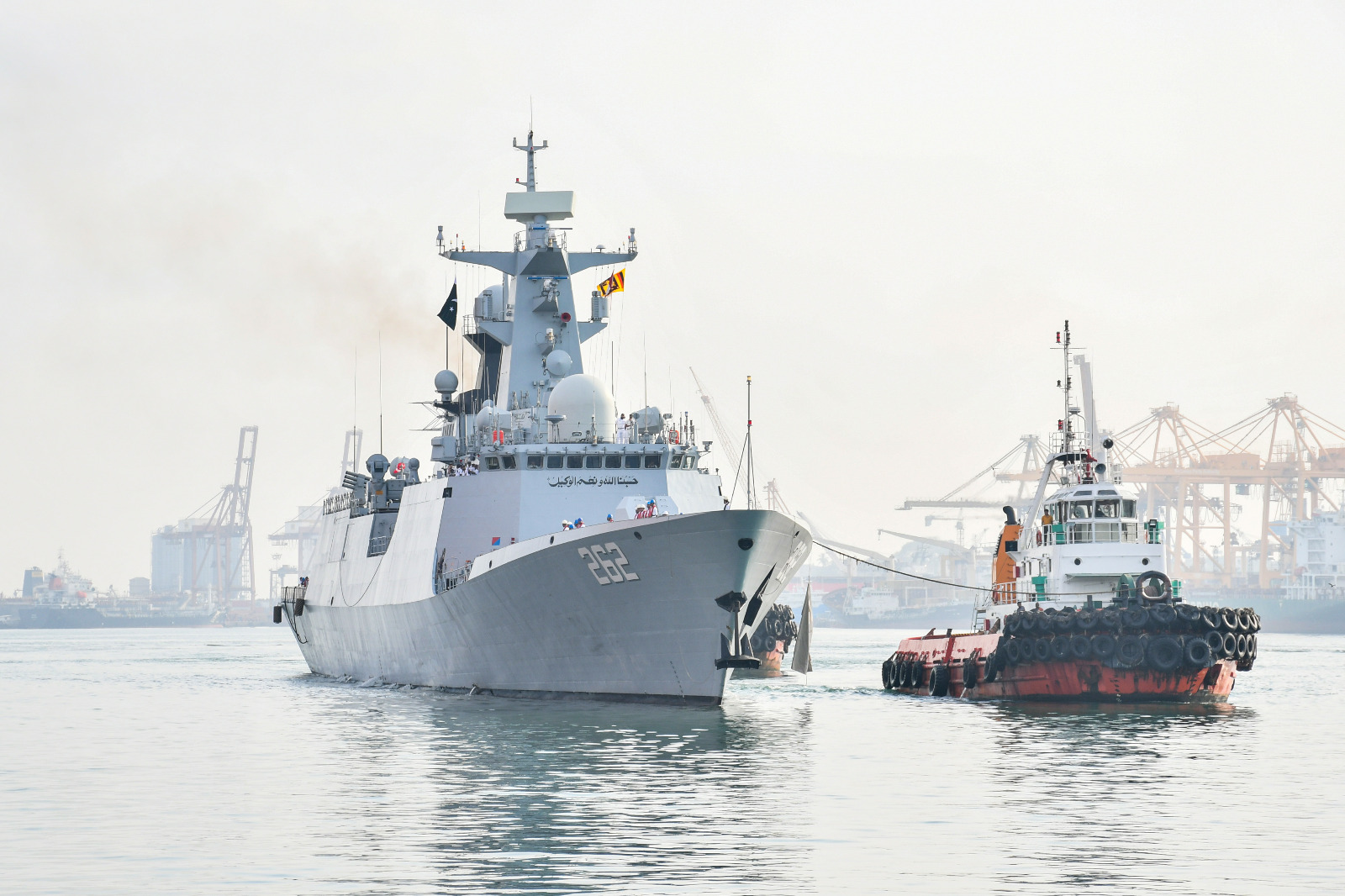
The Pakistan Navy Ship (PNS) TAIMUR and ASLAT arrived at the Port of Colombo on a goodwill visit on 12 Apr 26.
The visiting ships were welcomed by the Sri Lanka Navy in
compliance with naval traditions.
The duo of ships is commanded by Captain NIAMAT SAEED KHAN (PNS TAIMUR) and Captain NADIR MATEEN AFRIDI (PNS ASLAT).
Meanwhile, the ships are expected to conduct a Bilateral Naval Exercise LION STAR V with the Sri Lanka Navy in Colombo seas.
Latest News
Heat index likely to increase up to ‘Caution level’ at some places in the Northern, North-central, North-western, Western, Sabaragamuwa, Southern and Eastern provinces and Monaragala district


Warm Weather Advisory
Issued by the Natural Hazards Early Warning Centre at 3.30 p.m. on 11 April 2026, valid for 12 April 2026
The Heat index, the temperature felt on the human body is likely to increase up to ‘Caution level’ at some places in the Northern, North-central, North-western, Western, Sabaragamuwa, Southern and Eastern provinces and Monaragala district.
The Heat Index Forecast is calculated by using relative humidity and maximum temperature and this is the condition that is felt on your body. This is not the forecast of maximum temperature. It is generated by the Department of Meteorology for the next day period and prepared by using global numerical weather prediction model data.

Effect of the heat index on human body is mentioned in the above table and it is prepared on the advice of the Ministry of Health and Indigenous Medical Services.
ACTION REQUIRED
Job sites: Stay hydrated and takes breaks in the shade as often as possible.
Indoors: Check up on the elderly and the sick.
Vehicles: Never leave children unattended.
Outdoors: Limit strenuous outdoor activities, find shade and stay hydrated.
Dress: Wear lightweight and white or light-colored clothing.
Note: In addition, please refer to advisories issued by the Disaster Preparedness & Response Division, Ministry of Health in this regard as well. For further clarifications please contact 011-7446491.
Latest News
Sun directly overhead Cheddikulam, Kebithigollewa, Gomarankadawala and Nilaveli about 12:11 noon. today [12]

On the apparent northward relative motion of the sun, it is going to be directly over the latitudes of Sri Lanka from 05th to 15th of April in this year.
The nearest areas of Sri Lanka over which the sun is overhead today (12th) are Cheddikulam, Kebithigollewa, Gomarankadawala and Nilaveli about 12:11 noon.

PNS TAIMUR & ASLAT arrive in Colombo

Sanju Samson and Jamie Overton deliver first points for Chennai Super Kings

Arya, Prabhsimran and Shreyas help Punjab Kings ace another 200-plus chase

Beauty of Sri Lanka in focus: Global showcase blends art, diplomacy and conservation

Showers expected in the Western, Sabaragamuwa, Central, Southern, North-western and Uva provinces and in Ampara, Batticaloa and Polonnaruwa districts after 1.00 p.m.

Heat index likely to increase up to ‘Caution level’ at some places in the Northern, North-central, North-western, Western, Sabaragamuwa, Southern and Eastern provinces and Monaragala district

‘Dates have the highest sugar content to fight Coronavirus’

Sunday Island 27 December – Headlines

#SundayIsland 17th December – Headlines

Sunday Island – 28th March

Sunday Island Headlines – 21 March

Sunday Island – 21st February – Headlines
-

 News6 days ago
Lankan-origin actress Subashini found dead in India
-

 News4 days ago
AG: Coal procurement full of irregularities
-

 Business3 days ago
Israeli attack on Lebanon triggers local stock market volatility
-

 News20 hours ago
CEB orders temporary shutdown of large rooftop solar systems
-

 Business4 days ago
Hayleys Mobility introduces Premium OMODA C9 PHEV
-

 Business3 days ago
HNB Assurance marks 25 years with strategic transformation to ‘HNB Life’
-

 Sports4 days ago
DS to face St. Anthony’s in ‘Bridges of Brotherhood’ cricket encounter
-

 News6 days ago
UN Regional Director launches SL’s first Country Gender Equality Profile during official visit