Connect with us

News

PM tables Appropriation Bill for 2025 detailing total expenditure of Rs. 4,616 bn

Published

on

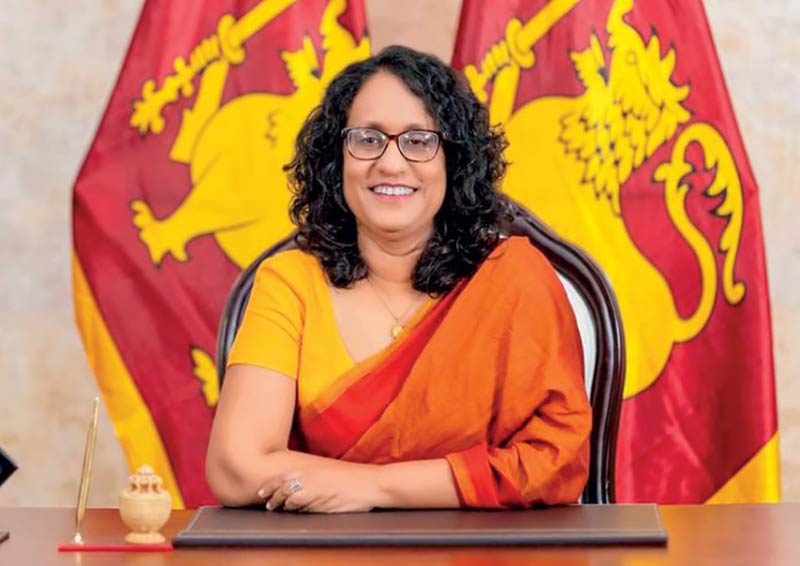
Prime Minister Dr. Harini Amarasuriya

Highest allocation for Finance Ministry

By Saman Indrajith

The Appropriation Bill for the financial year 2025, outlining government expenditure totaling Rs. 4,616 billion, was presented to Parliament yesterday.Prime Minister Dr. Harini Amarasuriya tabled the bill during its first reading, setting the stage for a detailed debate and approval process.

According to the Parliament’s schedule, the second reading of the bill will take place on February 17, 2025, followed by a debate from February 18 to February 25. The second reading vote is slated for the evening of February 25. The Committee Stage Debate, also known as the Third Reading Debate, will run from February 27 to March 21, culminating in the third reading vote on the evening of March 21.

The total expenditure for 2025 has been allocated across various ministries and special spending units, reflecting the government’s fiscal priorities. The highest allocation has been made to the Ministry of Finance, Planning, and Economic Development, which has been allocated Rs. 484 billion for recurring expenses and Rs. 229 billion for capital expenditures, totaling Rs. 713 billion. Similarly, the Ministry of Defence is set to spend Rs. 382 billion on recurring costs and Rs. 60 billion on capital initiatives, while the Ministry of Justice and National Integration has been allocated Rs. 38 billion and Rs. 16 billion for recurring and capital expenditures, respectively.

The Ministry of Buddha Sasana, Religious, and Cultural Affairs has been allocated Rs. 8.3 billion for recurring expenses and Rs. 5.4 billion for capital projects.

The Ministry of Health and Mass Media will manage Rs. 412 billion in recurring costs and Rs. 95 billion for capital development. The Ministry of Foreign Affairs, Foreign Employment, and Tourism will spend Rs. 19.4 billion on recurring expenses and Rs. 2 billion on capital projects. In contrast, the Ministry of Trade, Commerce, Food Security, and Cooperative Development has been assigned Rs. 2.6 billion for recurring expenditures and Rs. 397 million for capital outlays.

The Ministry of Transport, Highways, Ports, and Civil Aviation will handle Rs. 52.4 billion for recurring costs and a significant Rs. 421 billion for capital works. The Ministry of Agriculture, Livestock, Lands, and Irrigation will allocate Rs. 83 billion for recurring expenses and Rs. 124 billion for capital development. The Ministry of Energy has been provided Rs. 1 billion for recurring expenditures and Rs. 20 billion for capital projects, while the Ministry of Urban Development, Construction, and Housing will manage Rs. 3 billion in recurring expenses and Rs. 98 billion in capital investments.

Smaller allocations include Rs. 24 billion and Rs. 5 billion for recurring and capital expenditures, respectively, for the Ministry of Rural Development, Social Security, and Community Empowerment. The Ministry of Education, Higher Education, and Vocational Education will spend Rs. 206 billion on recurring expenses and Rs. 65 billion on capital projects. The Ministry of Public Administration, Provincial Councils, and Local Government will oversee Rs. 463 billion for recurring costs and Rs. 33 billion for capital works.

Other ministries include the Ministry of Plantations and Community Infrastructure, with Rs. 5.4 billion for recurring expenses and Rs. 11 billion for capital projects; the Ministry of Industries and Entrepreneurship Development, with Rs. 4 billion and Rs. 8 billion, respectively; and the Ministry of Fisheries and Aquatic Resources, with Rs. 6.2 billion for recurring costs and Rs. 5.2 billion for capital initiatives.

Additionally, the Ministry of Environment has been allocated Rs. 12 billion for recurring expenses and Rs. 3.5 billion for capital development. The Ministry of Women and Child Affairs will receive Rs. 14 billion for recurring costs and Rs. 392 million for capital projects. The Ministry of Digital will manage Rs. 6.7 billion and Rs. 6.8 billion for recurring and capital expenditures, respectively.

Further allocations include Rs. 159 billion for recurring and Rs. 16 billion for capital expenses for the Ministry of Public Security and Parliamentary Affairs. The Ministry of Labour will handle Rs. 4.3 billion and Rs. 1.7 billion for recurring and capital expenditures, respectively. The Ministry of Youth Affairs and Sports has been allocated Rs. 7.1 billion for recurring expenses and Rs. 5 billion for capital initiatives. Finally, the Ministry of Science and Technology will spend Rs. 2.8 billion on recurring costs and Rs. 2.2 billion on capital projects.

Special spending units also received allocations. The President’s operational activities have been allocated Rs. 2.5 billion recurring and Rs. 354 billion for capital expenditures, with an additional Rs. 20 million recurring and Rs. 100 million for capital development activities. The Office of the Prime Minister will receive Rs. 1 billion for recurring expenses and Rs. 71 billion for capital projects. The Judges of the Superior Courts will manage Rs. 451 million for recurring costs and Rs. 30 million for capital works, while the Office of Cabinet Ministers will handle Rs. 205 million recurring and Rs. 25 million in capital expenditures.



News

Rs 1. 3 bn yahapalana building deal under investigation

Published

on

Jayasinghe building

Several ex-Cabinet ministers questioned; Ranil, Sajith, too likely to be summoned

The Commission to Investigate Allegations of Bribery or Corruption (CIABOC) has initiated an inquiry into the shifting of the Agriculture Ministry situated at Rajamalwatte, to a building belonging to the D. P. Jayasinghe Group of Companies, at Rajagiriya, during the Yahapalana government.

The building was rented for a five-year period at a cost of over Rs 1 bn by the yahapalana government within months after the then President Maithripala Sirisena declared opened the 10-storey building complex.

The CIABOC yesterday morning recorded former yahapalana minister Gayantha Karunatilleke’s statement in connection with the investigation. Later in the day, CIABOC recorded the statement of SJB General Secretary Ranjith Maddumabanadara. Earlier CIABOC summoned former ministers Thalatha Atukorale, Wajira Abeywardena and Lakshman Kiriella. At the time of the finalisation of the deal, KIriella was in the UNP.

Sources said that former PM and President Ranil Wickremesinghe, too, was likely to be questioned in this regard. Responding to The Island queries, sources pointed out even SJB leader Sajith Premadasa was expected to be questioned.

The then Speaker Karu Jayasuriya is on record as having said that the building was rented in keeping with a decision taken by the government and not Parliament.

The UNP-SLFP coalition shifted the Agriculture Ministry to accommodate 16 Sectoral Oversight Committees therein.

Although the government paid as much as Rs. 21.5 mn monthly rent to D.P.A. Jayasinghe Company, the Agriculture Ministry failed to move in for over a year. The then Agriculture Minister Duminda Dissanayake sought Cabinet approval on Dec 1, 2015 to rent the building.

According to inquiries conducted earlier by the Presidential Commission appointed to probe state sector corruption, the Agriculture Ministry sought Cabinet approval for a new building after the then Prime Minister Wickremesinghe submitted a cabinet proposal on 21 September, 2015, to use the Agriculture Ministry building for Parliament’s sectoral oversight committees.

PM Wickremesinghe’s Secretary Saman Ekanayake has told the Commission that public funds could have been saved if the several vacant floors of Suhurupaya belonging to the Defence Ministry had been made available to the Agriculture Ministry.

By Shamindra Ferdinando ✍️

Continue Reading

News

SL Railways suffers staggering losses; more than 2/3 of rail tracks out of service

Published

on

Army personnel engaged in repairing damaged railway tracks in the Boo Oya area. Cyclone Ditwah caused extensive damage to railway tracks in several parts of the country (pic courtesy Army)

Railway sources said that the damages caused to railway tracks could be more than USD 300 mn.

According to UNDP Rapid Crisis Assessment Sri Lanka’s railroad system, over 278 km of railways were exposed to cyclone-related flooding, including 35 railroad bridges nationwide. This figure reflects flooding only, but other hazards (such as localised debris, landslides, or damage to a single bridge) can also disrupt operations, meaning that even relatively small obstructions can render long stretches of railway non-operational. Like road exposure, railway exposure limits mobility and the capacity of affected populations to access key services and infrastructure.

At the level of divisional secretariats, Colombo and Thimbirigasyaya in Colombo District, Ja Ela in Gampaha District, as well as Mannar Town and Nanaddan in Mannar District all registered over 10 km of exposed railways each.

Commissioner-General of Essential Services B.K. Prabath Chandrakeerthi is on record as having said that only 478 kilometers of Sri Lanka’s 1,593-km railway network were currently usable following extensive damage caused by the recent cyclone.

Continue Reading

News

US, SL advancing free, open, and resilient Indo-Pacific region: Embassy

Published

on

Allison Hooker

Under Secretary of State for Political Affairs Allison Hooker arrived in Colombo yesterday (11) to underscore US interest in defence, trade and maritime security in line with their Indo-Pacific strategy.

The US embassy here issued the following statement: “Under Secretary Hooker will meet with Sri Lankan counterparts to discuss a wide range of bilateral issues, focused on deepening economic and commercial ties, strengthening defence cooperation, and supporting Sri Lanka’s economic and maritime sovereignty.

The United States and Sri Lanka share a strong and enduring partnership rooted in our mutual commitment to regional security, economic growth, and prosperity for our peoples. Through close cooperation on defence, trade, and maritime security, we are working together to advance a free, open, and resilient Indo-Pacific region.

As we continue to build on our strategic partnership, the United States also stands with the people of Sri Lanka as they respond to the devastating impacts of Cyclone Ditwah. We remain committed to working together to address both immediate challenges and long-term opportunities for our two nations, reflecting our ongoing commitment to the U.S.-Sri Lanka partnership.”

Continue Reading

Trending