
News
PM opens Prof. Senaka Bandaranaike Archaeological Field Training School

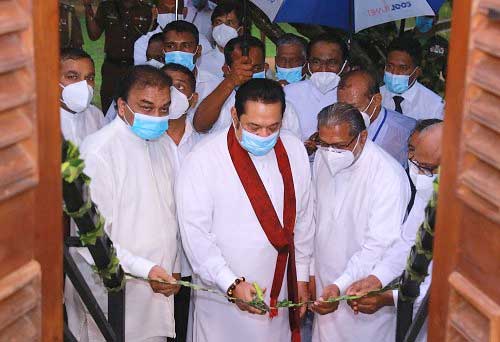
Prime Minister Mahinda Rajapaksa, who is also the Minister of Buddhasasana Religious and Cultural Affairs last Sunday opened Prof. Senaka Bandaranaike Archaeological Field Training School in Sigiriya. Ministers Janaka Bandara Tennakoon and Vidura Wickramanayake joined him in opening the school.
Prime Minister Mahinda Rajapaksa, who is also the Minister of Buddhasasana Religious and Cultural Affairs last Sunday declared open Prof. Senaka Bandaranaike Archaeological Field Training School at Sigiriya.
The Field Training School built by the Central Cultural Fund at a cost of Rs. 50 million within the Sigiriya Archaeological Department premises would be the country’s premier training school for archaeologists to carry out practical and theoretical studies with residential facilities, the Prime Minister said.
The PM said that eminent Sri Lankan Archaeologist Prof. Senaka Bandaranayake had been a pioneer in the field of archeology such as environmental archeology, settlement archeology and ethnography. “He was the first Archaeological Director of the Sigiriya Project of the Cultural Triangle”.
The PM’s Office said that the Field School aimed to study historical archaeological context of Sri Lanka with pure scientific disciplines, provide the knowledge required for the objective function of scientific placement in time and space and to produce disciplined archaeologists.
This training school is also open to local and foreign archaeologists for their archeological work.
As a result of initiating archeological research on a multidisciplinary basis in conjunction with foreign universities, it was possible to identify the royal urban features of Sigiriya, identify the suburbs and factories, identify the settlement patterns of the people who lived there, and thereby study technical expertise, the PM’s Office has said.
Prof. Senaka Bandaranaike Field Training School of Archeology is equipped with lecture halls, laboratories and residential facilities.
Minister Janaka Bandara Tennakoon, State Minister Vidura Wickramanayake, Members of Parliament Pramitha Bandara Tennakoon, Rohana Kumara Dissanayake, Governor of the Central Province Lalith U. Gamage, Dambulla Mayor Jaliya Opatha, Secretary to the Ministry of Buddhasasana Religious and Cultural Affairs Prof. Kapila Gunawardena were present on the occasion.


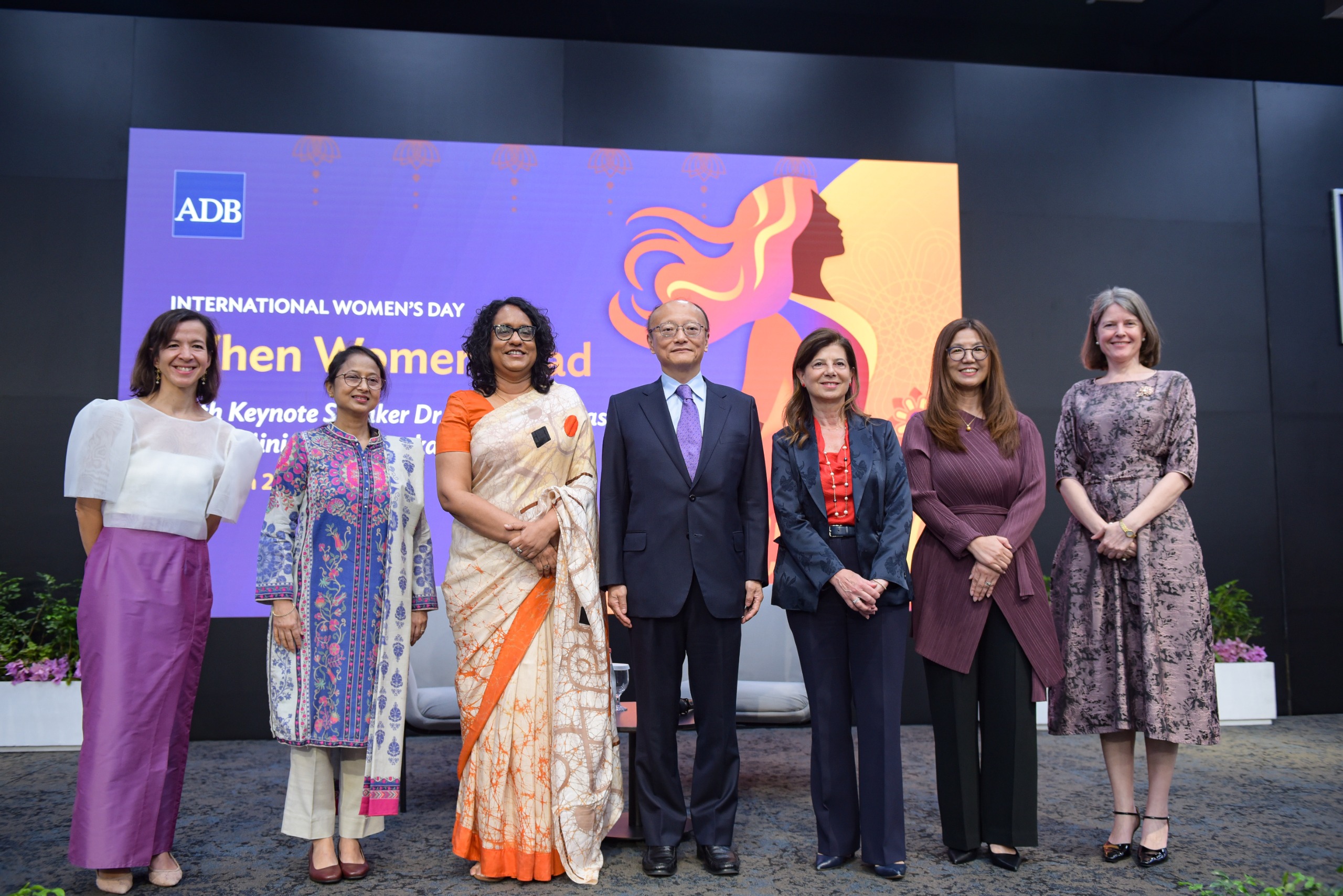
Prime Minister Dr Harini Amarasuriya participated in the International Women’s Day Flagship Event hosted by the Asian Development Bank (ADB) on 10 March at the ADB Headquarters in Manila, Philippines. The event brought together senior ADB leadership, representatives of the diplomatic community, and development partners to mark International Women’s Day and to reaffirm global commitments to gender equality.
Delivering the keynote address, the Prime Minister highlighted the critical role of education in empowering women and girls, emphasising that equitable access to quality education remains one of the most powerful tools for achieving social and economic transformation. She underscored Sri Lanka’s longstanding commitment to education and noted the importance of strengthening inclusive learning systems that enable women to fully participate in national development.
The Prime Minister also drew attention to the significant contribution of women’s unpaid care work, noting that it remains largely unrecognised despite its vital role in sustaining families, communities, and national economies. She emphasised the need for policies and social protection mechanisms that acknowledge and support care work, thereby enabling women to participate more fully in economic life.
Addressing broader structural challenges, the Prime Minister stressed the importance of increasing women’s participation in political decision-making and the labour force, noting that inclusive governance and economic participation are essential for sustainable and equitable development.
She highlighted the need for continued collaboration between governments, international institutions, and development partners to remove barriers that limit women’s opportunities.
During the event, Prime Minister was honoured with the Shireen Lateef Women’s Leadership Award in recognition of her commitment to advancing women’s leadership and empowerment.
The event was opened by the President of the Asian Development Bank and senior ADB leadership, followed by a high-level discussion on advancing gender equality across the region. The Prime Minister’s participation reaffirmed Sri Lanka’s commitment to strengthening partnerships with international institutions to promote women’s empowerment and gender-responsive development policies.
(Prime Minister’s Media Division)

The Ceylon Electricity Board Engineers’ Union (CEBEU) yesterday warned that uncertainty surrounding the ongoing restructuring of the Ceylon Electricity Board (CEB) had forced many employees to refrain from performing their regular duties, raising concerns about potential disruptions to electricity sector operations.
The engineers’ union said the current situation had arisen due to what it described as either deliberate actions or extreme negligence in implementing the restructuring process, which has created significant confusion among staff who previously served under the CEB.
According to the union, although the state power utility has been formally restructured and new companies established, a large majority of former CEB employees have yet to receive official appointment letters, confirming their positions in the newly formed entities.
“The reality is that the institution, previously known as the Ceylon Electricity Board, no longer exists in its earlier form, yet most employees, who served under it, have not been issued proper appointment letters, or related documentation, assigning them to the newly established companies,” the CEBEU said.
The union said that while some workers had been issued “assignation letters”, those documents merely indicate the institution to which an employee has been attached and do not clearly define employment conditions, responsibilities, authority, or reporting structures.
“As a result, employees currently lack the necessary legal framework confirming their employment status, their duties, the authority under which they operate, and who they are accountable to within the new institutions,” the CEBEU said.
The engineers’ union emphasised that the current crisis was not created by employees but was the direct result of, what it called, shortsighted and questionable actions taken by those responsible for implementing the reforms.
It also expressed concern that the relevant Minister, appointed through the National List, had failed to hold meaningful discussions with employees, despite having previously advocated strongly for workers’ rights.
The union said trade union action had been launched only after months of unsuccessful attempts to resolve the issues through verbal requests and written communication with the authorities.
“Despite repeated appeals made over several months, there has been no satisfactory response. Decisions appear to have been taken under the assumption that a government with a strong mandate can proceed without proper consultation,” the union said.
However, the CEBEU stressed that employees engaged in essential operations—including power generation, transmission, and distribution—continue to work in order to ensure electricity supply to the public.
“These staff members are continuing their duties under considerable risk to prevent major disruptions to the electricity supply,” the union noted.
Nevertheless, the union warned that the prevailing uncertainty could affect certain operational activities, and restoration work following breakdowns may take longer than usual.
The CEBEU appealed to the public to understand the situation and expressed regret for any inconvenience that may arise.
“We request the public to understand the situation and cooperate with us during this difficult period. We sincerely regret any inconvenience that may be caused,” the union added.
By Ifham Nizam
News
Remittances up compared to last year before outbreak of war, but the economic picture is not rosy

Sri Lanka Bureau of Foreign Employment (SLBFE) yesterday said that foreign remittances, during January and February this year, had been 32% higher than the corresponding period in the previous year.
According to a press release issued by the SLBFE, Sri Lanka received Rs 1,480.1 mn during January and February this year, whereas in 2025 the country received Rs1,121 mn during the corresponding period. During the first two months of this year, 47,819 Sri Lankans had left the country for employment abroad.
However, Prof. Priyanga Dunusinghe has warned that Sri Lanka could face a catastrophic situation due to a rapid and sharp drop in revenue caused by the escalating Gulf war. Fighting erupted on February 28 following a joint US-Israel attacks on Iran.
Appearing on Derana ‘Big Focus’ on Monday, the Professor in Economics in the Department of Economics, and Head – Department of Information Technology, University of Colombo, Dunusinghe said that that the drop in remittances from the Middle East, as well as exports, should be examined against the backdrop of runaway oil prices.

Prime Minister highlights the importance of recognising Women’s Unpaid Care Work

Australia grants asylum to 2 more members of Iranian women’s football team

Showers are likely in the Northern, Eastern, Sabaragamuwa, Southern and Uva provinces and in Kandy and Nuwara-Eliya districts

CEBEU warns of operational disruptions amid uncertainty over CEB restructuring

Remittances up compared to last year before outbreak of war, but the economic picture is not rosy

The Netherlands alleges Russian Embassy interfering in World Press Photo Exhibition

‘Dates have the highest sugar content to fight Coronavirus’

Sunday Island 27 December – Headlines

#SundayIsland 17th December – Headlines

Sunday Island – 28th March

Sunday Island Headlines – 21 March

Sunday Island – 21st February – Headlines
-
 News6 days ago
University of Wolverhampton confirms Ranil was officially invited
-

 News7 days ago
Legal experts decry move to demolish STC dining hall
-

 News6 days ago
Female lawyer given 12 years RI for preparing forged deeds for Borella land
-

 News5 days ago
Peradeniya Uni issues alert over leopards in its premises
-

 News3 days ago
Repatriation of Iranian naval personnel Sri Lanka’s call: Washington
-
 News6 days ago
Library crisis hits Pera university
-

 News5 days ago
Wife raises alarm over Sallay’s detention under PTA
-

 News6 days ago
‘IRIS Dena was Indian Navy guest, hit without warning’, Iran warns US of bitter regret