
News
Pirivena and Bhikkhu education must be developed – PM


Prime Minister Dr. Harini Amarasuriya stated that there is a contemporary need to develop the Pirivena and Bhikkhu education and that the government is seeking the revered guidance of Maha Sangha in that cause.
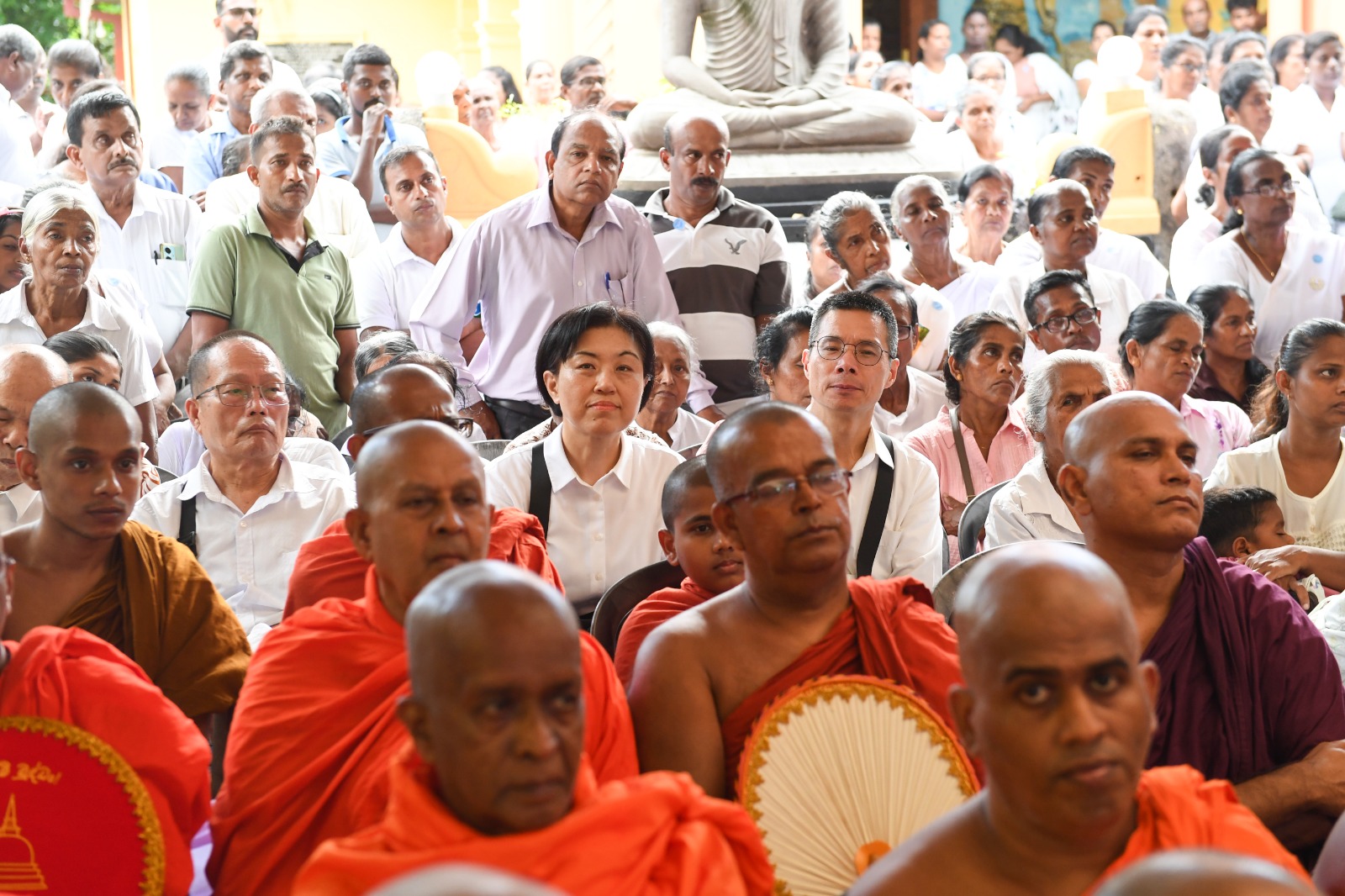
The Prime Minister made these remarks while addressing the 125th anniversary celebrations of the Amarapura Ariyavansa Saddhamma Yukthika Nikaya on Tuesday (29) at the Sri Subodhi Rajarama Mulasthana Maha Vihara in Bombuwala, Kalutara.
During the event, the Prime Minister honored sixty-three venerable members of the Maha Sangha who had rendered their noble service to the Sasana and also conferred awards upon several distinguished lay benefactors in recognition of their contributions.
Delivering the keynote speech, the Prime Minister stated:
“There has always been a strong bond between Buddhism and society throughout history. Culture and social relations have been built alongside the Buddhist philosophy. The society we seek to establish as a nation must embody the Buddhist values of fairness, equality, and compassion. These virtues, as taught in the Buddhist philosophy, are ever relevant and alive.
Piriven and Bhikkhu education are currently facing numerous challenges, and considerable efforts are needed to address them. Thereby a substantial and concerted intervention is required.
A pertinent question arises as whether our Pirivena institutions are adequately preparing for the evolving needs of the world? There was once a belief in Europe that, with scientific advancement, religion would become redundant. Today, this view has been discredited. Along with material progress, spiritual development remains indispensable.
The knowledge, attitudes, and skills of our Bhikkhus must be enhanced to meet the emerging global challenges. A profound discussion on necessary reforms in Piriven and Bhikkhu education is therefore imperative.
Opportunities for Bhikkhus to study subjects such as mathematics, science, and modern languages are currently limited. Without exposure to contemporary disciplines, it is questionable whether one can successfully confront present-day challenges”.
The event, held under the patronage of the Venerable Egodamulle Amaramoli Mahanayake Thera, the Chief incumbent of the Amarapura Ariyavansa Saddhamma Yukthika Nikaya, was attended by members of the Maha Sangha, Minister of Mass Media and Health Mr. Nalinda Jayatissa, several Members of Parliament, and numerous lay devotees.
[Prime Minister’s Media Division]


… first NPPer to face charges under Section 70 of Bribery Act
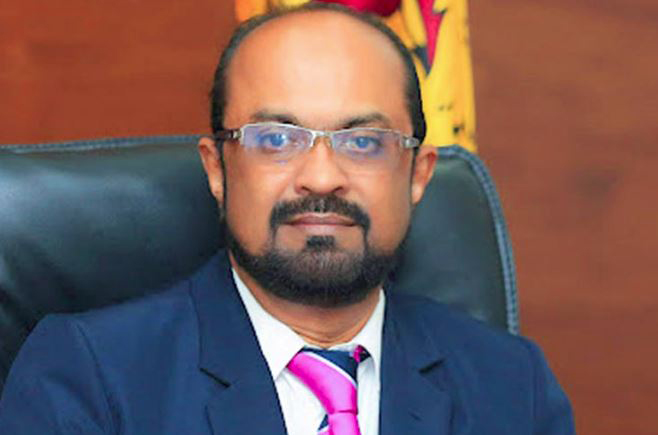
Colombo High Court has issued summons on Energy Minister Kumara Jayakody to appear in court today (27) to serve indictment in a corruption case filed by the Commission to Investigate Allegations of Bribery or Corruption (CIABOC). Action has been taken under Section 70 of the Bribery Act. The losses suffered by the government have been estimated at Rs. 8,859,708.
National List (NL) MP Jayakody is the first NPP minister or politician at any level to be indicted for corruption. The NPP parliamentary group consists of 159 including 18 NL members.
The summons has been issued by High Court judge Rashantha Godawalage.
Although CIABOC previously in many instances arrested those who had been under investigation and produced them before Magistrate courts, Minister Jayakody has been directly summoned by the Colombo High Court.
The investigation into alleged corruption in procurement during the time Jayakody served the Ceylon Fertilizer Corporation (CFC) started after the change of government in 2015.
According to the CIABOC investigation, the alleged instance of corruption took place in early 2014 towards the tail end of Mahinda Rajapaksa’s second term. At that time Jayakody was CFC’s Procurement Manager, and the CIABOC dragged the investigation until its current leadership under overall speeding up of the cases recently completed the inquiry.
Parliament recently announced that the debate on no-faith motion moved against Minister Jayakody over alleged irregularities in the procurement of substandard coal for the country’s only coal-fired power station at Norochcholai.
SJB MP Mujibur Rahman said that the NPP, having campaigned on an anti-corruption platform during presidential and parliamentary polls in 2025 couldn’t under any circumstances shield minister Jayakody. The indictment of Jayakody over a corruption case that had happened in 2014 and the failure on his part to fulfill obligations as Energy Minister under the current dispensation couldn’t be considered separately, the Colombo District MP said.
The issue at hand is whether the NPP would try to protect Jayakody at the expense of the government, MP Rahman said. Once the NPPer is formally charged in a corruption case the government would find it extremely difficult to keep him in the cabinet, the former UNPer said.
SJB lawmaker S.M. Marrikar recently warned Minister Jayakody that he should be prepared to serve a jail term. The warning was issued at a media briefing that primarily dealt with the alleged irregularities in the procurement of coal and their decision to move a no-faith motion against the minister. Marrikar explained how the crisis coupled with the growing diesel shortage could compel the government to increase electricity tariffs by as much as 18 percent next week. MP Marikkar said that they were eagerly waiting to see who backs Jayakody at the expense of the government during the upcoming vote on the no-faith motion.
There had been a previous case of a sitting minister being charged under the Bribery Act in respect of corruption perpetrated as a government servant. MP Rahman said that they intended to intensify the ongoing campaign against the government on the strength of the unprecedented corruption case and the outcome of the no-faith motion. “Of course, they have the numbers to defeat our no-faith motion. But, in doing so, they end up with egg on their face. That is the reality,” Rahman said, adding that those responsible for waste, corruption and irregularities whichever political parties they represented shouldn’t expect special status.
MP Rahman alleged that the CIABOC granted special status to Minister Jayakody. All those who had been indicted previously were first called to the CIABOC, recorded their statements and then arrested, handcuffed and produced in court. The media was afforded the opportunity to cover their humiliation, MP Rahman said, but in this case the powers that be paved the way for the accused to receive indictments directly from the Colombo High Court.
“Let us see whether the Bar Association of Sri Lanka responds to this development,” MP Rahman said.
By Shamindra Ferdinando

The Ministry of Digital Economy says it has received more than 1,000 complaints of fraudulent activities involving the misuse of QR-based fuel quota system.
Ministry Secretary Waruna Sri Dhanapala said investigations had been launched in coordination with the Police, noting that over 150 complaints had already been referred for further action, leading to several arrests.
He added, however, that a number of complaints stemmed from instances where individuals had used others’ QR codes due to a lack of awareness.
Police are also examining security camera footage at fuel stations to identify suspects linked to such incidents, the Secretary said.
by Pradeep Prasanna Samarakoon
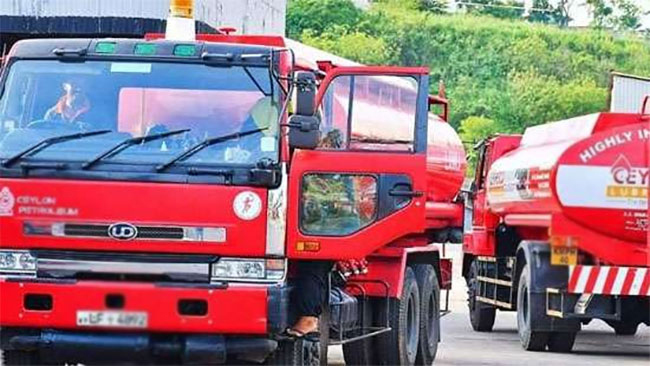
The Lanka Petroleum Private Tanker Owners’ Association has called for a 25% increase in fuel transportation charges, citing rising operational costs following recent fuel price hikes.
Addressing a media briefing in Colombo on Wednesday (25), Co-Secretary Shantha Silva said the association has formally notified the government of its proposal, warning that failure to respond favourably could result in trade union action.
Association President A.M.H. Adhikari said that fuel distribution had continued without interruption despite mounting challenges, but recent price increases have placed a significant burden on tanker operators.
“Fuel prices have risen by Rs. 101 within this month alone, creating serious difficulties for those engaged in distribution, particularly in outstation deliveries,” he said.
Adhikari added that the association’s Executive Committee has unanimously decided to seek a 25% increase in transportation charges for long-distance distribution, with effect from the 21st, expressing hope that the government would respond positively to avoid further disruptions.
by Chaminda Silva

Showers may occur at a few places in the Sabaragamuwa province and in Galle, Matara, Kalutara and Nuwara-Eliya districts in the evening

Energy Minister indicted on corruption charges ahead of no-faith motion against him

Over 1000 complaints of misuse of QR quotas

Fuel bowser operators demand 25% hike in haulage charges

Charge sheet issued against former NIE Director for contempt of court

Sallay sent back to CID after being discharged from National Hospital

‘Dates have the highest sugar content to fight Coronavirus’

Sunday Island 27 December – Headlines

#SundayIsland 17th December – Headlines

Sunday Island – 28th March

Sunday Island Headlines – 21 March

Sunday Island – 21st February – Headlines
-

 News2 days ago
Senior citizens above 70 years to receive March allowances on Thursday (26)
-

 Features4 days ago
Trincomalee oil tank farm: An engineering marvel
-

 Business1 day ago
Dialog Unveils Dialog Play Mini with Netflix and Apple TV
-

 Features4 days ago
The scientist who was finally heard
-
 News2 days ago
Japanese boost to Sri J’pura Hospital, an outright gift from Tokyo during JRJ rule
-

 News2 days ago
CEB Engineers warn public to be prepared for power cuts after New Year
-

 News1 day ago
US dodges question on AKD’s claim SL denied permission for military aircraft to land
-

 News6 days ago
Colombo, Oslo steps up efforts to strengthen bilateral cooperation in key environmental priority areas