
News
PC Minister Weerasekera opposes full implementation of 13 A

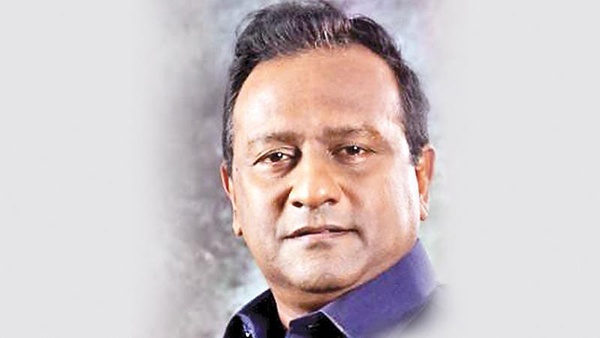
By Saman Indrajith
India had no moral right to ask for the full implementation of the 13th amendment to the Constitution, Local Government and Provincial Councils Minister Sarath Weerasekera told Parliament yesterday.
Participating in a debate at the time of adjournment of the House on foreign agreements of Sri Lanka, the Minister said that the amendment had been interpreted as an outcome of Indo-Lanka Accord, of which the role and commitment of India as a party to the agreement was in question because India did not fulfil its commitments.
“Indian Prime Minister Narendra Modi has asked our Prime Minister to implement the 13th Amendment although the amendment is an internal affair of this country. When foreign governments adversely commented on India’s abrogation of Article 370 from its Constitution, accusing India of scrapping the special status given to people in troubled Jammu and Kashmir region there, our prime minister Mahinda Rajapaksa when asked to comment said that it was an internal matter of India.”
“Knowing that the 13th Amendment is an internal matter of Sri Lanka, Prime Minister Modi is asking for its implementation does not show the same reciprocation. Some interpret that PM Modi is asking so on the mandate of Indo-Lanka Accord. But the question is whether India has adhered to its own commitments specified in the Indo-Lanka Accord. The 13A is not even mentioned in the Accord. The Accord is something forced down on us by India.
“I have my reservations about the Accord. As per the agreement India is to enable the return of the Sinhalese and Muslims to vote. Thousands of Sinhala and Muslim Lankans are still unable to return.
“India also promised in the agreement to ensure within 48 hours cessation of violence and all arms of the terrorist groups in Lanka would be surrendered to authorities. We know that it had been done only as a token because the LTTE handed over few firearms but there were no cessation of hostilities. Even the Indian army, one of the largest armies in the world, had to withdraw after suffering heavy casualties at the hands of the LTTE.
“It was the Lankan forces under proper political leadership who defeated the LTTE. So, India did not fulfill her commitments in the agreement.
“It should also be asked whether the agreement was signed under duress, or whether contents of the agreement compromised Sri Lanka’s sovereignty. When our forces were about to crush the LTTE and capture LTTE leader Prabhakaran at Vadamarachchi, India violated our airspace and dropped food and medicine in Jaffna famously known as dhal dropping operation of India.
“Also it mentions Trincomalee Harbour and Oil Tank Farm. The Sri Lankan courts have nullified the merger of the northern and eastern provinces which was one of the clauses of the Accord.
“So, there is a serious concern about the validity of the agreement and if it is not valid, India has no moral right to interfere in our internal affairs.
“Let India be reminded that soon after its Independence there was a separatist movement by the Dravidians. EVR Periyar advocated Nazi style anti Brahmanism. That is why Jawahar Lal Nehru broke India into 28 linguistic states.
“Ambedkar expressed that ‘linguistic states and political entities will become a stepping stone for creation of separate states’. He further said that the road between an independent nationality and independent state is very narrow. If this happens, modern India will cease to exist.
“Here, we talk about devolution of power with the province as the unit with provisions for mergering two provinces.
“So India should be cognizant of the fact that granting self-determination to the North or the merged North and East could be utilised as a stepping stone for a Dravidistan or if not they could link up with Tamil Nadu. So Balkanization of Sri Lanka into provincial governments through 13 A will invariably affects the existing unity of India. The promoter will then become the victim.
In the North, Tamil account for 99% of the population. The LTTE resorted to ethnic cleansing and all Sinhala and Muslim people who lived in the North were either massacred or chased out. Now, the separatist politicians seek self-determination.
“That is why the experts say power should never be devolved on the basis of ethnicity. The 13 Amendment provides for ethnic enclaves. We know the devolution of power as opposed to decentralisation and result in the division of our nation.
“So, we do not believe in the devolution of power but of course in decentralisation up to the lowest levels. The centre must retain the power. Our culture of governance was centered with the ruling king. It has not fundamentally changed. Raja Bhavatu Dhammiko is the theme of governance by a virtuous ruler that we recognise, respect and expect.
“India and Sri Lanka have a very long history of friendship and we recognize the importance of nurturing that friendship.”


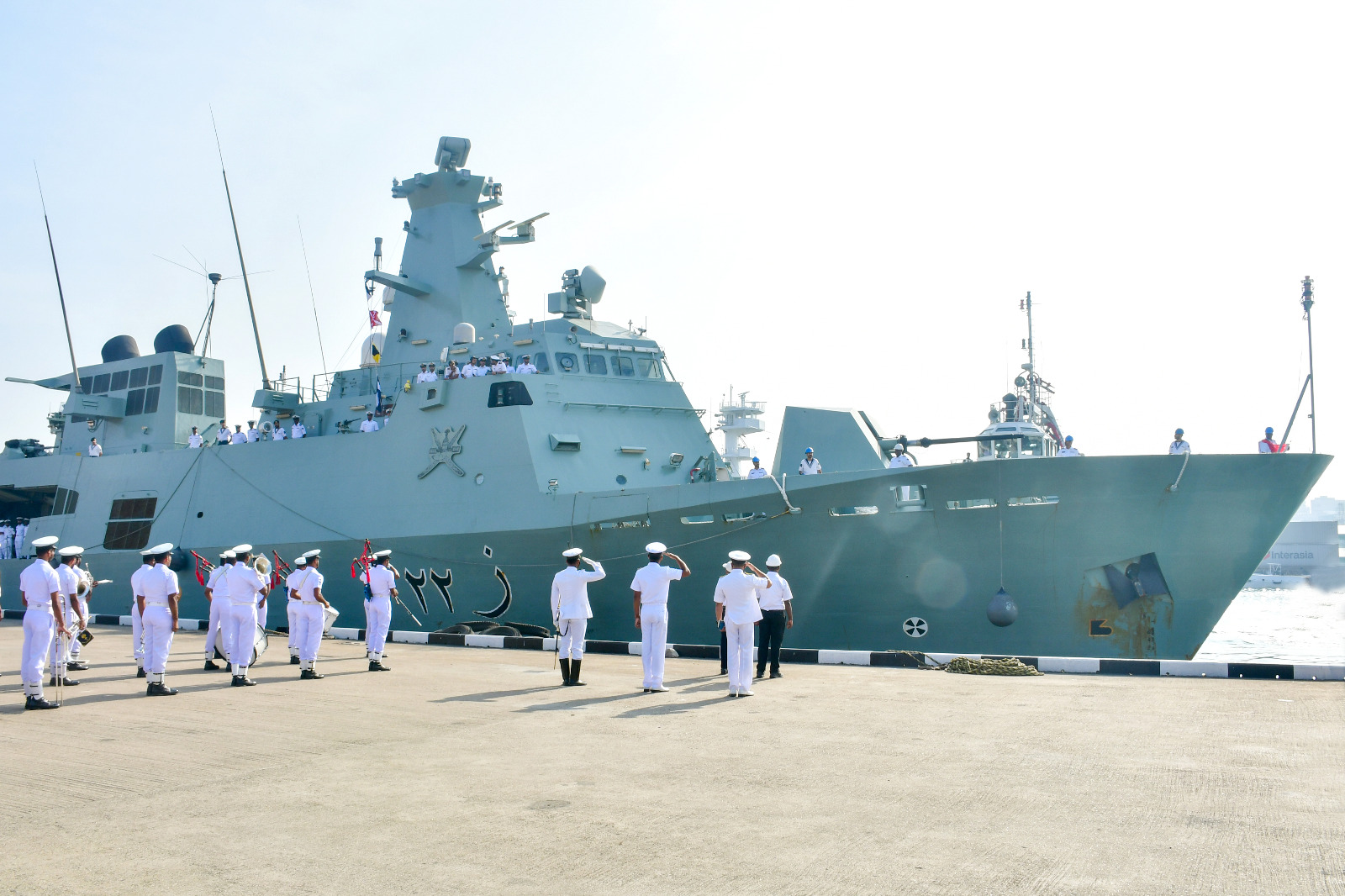
The Royal Navy of Oman Vessel “SADH” arrived at the Port of Colombo on a logistics replenishment visit on Tuesday (10 Feb 26). The Sri Lanka Navy welcomed the visiting ship in
compliance with naval traditions.
The 75m – long ship is commanded by Lieutenant Commander Shaheen Saud Abdul Rahman AI Balushi.
The port call will facilitate professional interaction and goodwill exchanges between the two navies.
During the stay in Colombo, crew members of the ship are expected to visit some tourist attractions in the city of Colombo.
* New Auditor General should not have been sworn in before Speaker – Opp.
* Suspended House Dy. Sec. Gen. Chaminda Kularatne takes his case to CA today
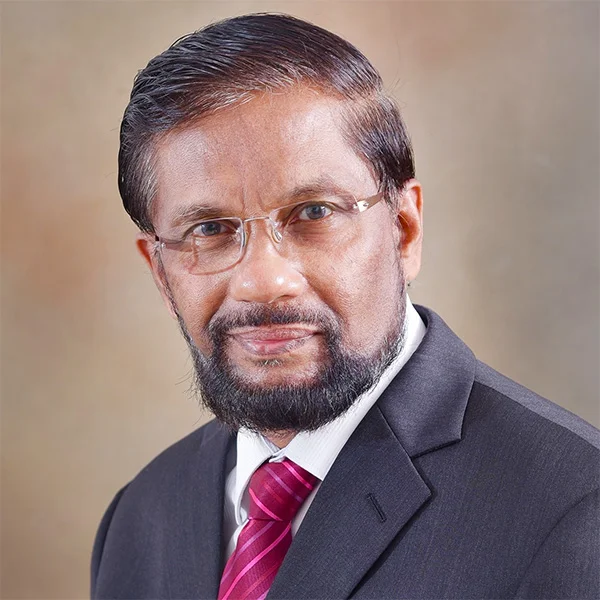
General Secretary of the National People’s Power (NPP) Dr. Nihal Abeysinghe yesterday said that there was no need for Speaker Dr. Jagath Wickramaratne to step down in view of the complaint lodged against him with the CIABOC (Commission to Investigate Allegations of Bribery or Corruption).
NPP General Secretary said so in response to The Island query whether the parliamentary group of the ruling party discussed the growing Opposition calls for the Speaker, who is also the Chairman of the Constitutional Council, to step down to facilitate the investigation.
The NPP parliamentary group consists of 159 MPs, including 18 National List (NL) members.
NL member Dr. Abeysinghe asked whether any other person, who had been investigated by the CIABOC, stepped down from his or her position to facilitate the inquiry.
The top official emphasised that the CIABOC could go ahead with its investigation without any hindrance.

Chamindra and Dr. Jagath
Opposition sources said that there hadn’t been a similar situation before and the CIABOC investigation into Speaker Dr. Wickramaratne is unprecedented as he heads the 10-member CC responsible and directly involved in all key appointments, including that of members to the CIABOC.
Sources pointed out that the newly appointed Auditor General, Ms. Samudrika Jayaratne, took the oath of secrecy before the Speaker on 5 February in Parliament after suspended Deputy General Secretary of Parliament Chaminda Kularatne complained to CIABOC.
In accordance with Section 9 of the National Audit Act, No. 19 of 2018, Jayaratne took the oath of secrecy in her capacity as the Auditor General of the National Audit Office and Chairperson of the Audit Service Commission.
Sources said that Kularatne would move the Court of Appeal today (10) against his removal at the behest of the Staff Advisory Committee, headed by the Speaker.
By Shamindra Ferdinando

The Trincomalee Magistrate’s Court yesterday (09) further remanded 10 persons, including four Buddhist monks, arrested on 19 January, 2026, for allegedly placing a Buddha statue in the coastal reservation, on 16 January.
The Buddhist monks, including Ven. Balangoda Kassapa Thera, and six other individuals, were further remanded until 11 February.
They have been accused of violating the Coast Conservation Act by placing a Buddha statue on a block of land belonging to the Trincomalee Bodhiraja Temple.
Of the four monks, Ven Balangoda Kassapa Thera and Ven Trincomalee Kalyanawansa Tissa Thera moved the Court of Appeal against the Magistrate’s Court decision. The case was heard on 22 January before a Bench comprising the President of the Court of Appeal, Justice Rohantha Abeysuriya, and Justice K. Priyantha Fernando.
Manohara de Silva, PC, and President’s Counsel Uditha Igalahewa, PC, appearing for the petitioners, urged the Court to take up the matter urgently, describing it as a case of exceptional importance.
However, the Court of Appeal on 3 February dismissed the petitions against the remanding of Ven Balangoda Kassapa Thera and Ven Trincomalee Kalyanawansa Tissa Thera.
The order was issued by the Court of Appeal bench consisting of the President of the Court of Appeal, Justice Rohantha Abesuriya and Justice Priyantha Fernando.

Seifert, Allen fifties help New Zealand gallop to record-breaking win against UAE
All-round de Leede leads Netherlands to thumping win over Namibia

Wanindu Hasaranga ruled out of T20 World Cup with injury

Royal Navy of Oman Vessel “SADH” arrives at Port of Colombo

Spirited USA seek Pakistan scalp after opening day heartbreak

New Zealand brace for unfamiliar opponents UAE

‘Dates have the highest sugar content to fight Coronavirus’

Sunday Island 27 December – Headlines

#SundayIsland 17th December – Headlines

Sunday Island – 28th March

Sunday Island Headlines – 21 March

Sunday Island – 21st February – Headlines
-
 Features3 days ago
My experience in turning around the Merchant Bank of Sri Lanka (MBSL) – Episode 3
-

 Business4 days ago
Zone24x7 enters 2026 with strong momentum, reinforcing its role as an enterprise AI and automation partner
-
 Business3 days ago
Remotely conducted Business Forum in Paris attracts reputed French companies
-
 Business3 days ago
Four runs, a thousand dreams: How a small-town school bowled its way into the record books
-

 Business3 days ago
ComBank and Hayleys Mobility redefine sustainable mobility with flexible leasing solutions
-
 Business4 days ago
HNB recognized among Top 10 Best Employers of 2025 at the EFC National Best Employer Awards
-

 Business4 days ago
GREAT 2025–2030: Sri Lanka’s Green ambition meets a grid reality check
-

 Editorial6 days ago
All’s not well that ends well?