
Sports
Pay disputes aren’t new but are they reasonable?

by Rex Clementine
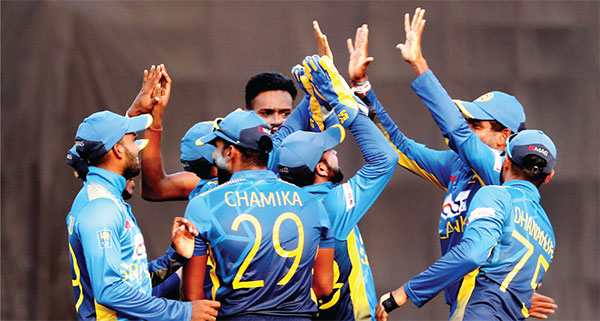
Pay disputes go back to the times of Bandula Warnapura, our first Test captain. But he was an absolute beauty. He is more of a working-class hero. There was a bit of Ian Chappell in him. He fought for his players. Not for seniority payment or anything.
Sri Lanka Cricket at times have cut down pay for players significantly just to rein them in. There have been Sri Lankan teams in the past that have refused to sign contracts, but gone on tour, won the championship and then demanded the pound of flesh, which in a way is fair enough.
So if Kusal Perera’s side beats England, the world’s number one ranked team, in the upcoming series, the cricket-loving public will not mind even if the players are paid triple the bonus they have been promised.
But what is happening right now is bizarre. The players have said that they are willing to play free as long as their employers show them the formula with which the annual contracts were formulated. Surely, there has to be a better reason than that for you to go on war path with your employers. Mind you players have been warned with three years suspension from all forms of cricket which is quite serious.
Past greats have taken on the board for reasons other than pay. There have been instances when some players have pulled out of tours when their colleagues have been unceremoniously axed from the side. Can’t remember anyone from the current side standing moral high ground when cricket’s beauty was butchered. Then, why suddenly show yourself as a paragon of virtue wanting to know the mechanism the contracts were formed on.
Of course, the seniors have been made to go through pay cuts. Some of them will lose at least US$ 50,000. But that seems their least concern. If the mechanism is indeed your issue, did you have to put through such a drama where you even refused to sign a tour declaration? So virtually, there’s more to it than players wanting clarity about how players were categorized into contracts.
We aren’t saying that the contracts offered to the players are without loopholes. Take the case of Niroshan Dickwella for example. He had not featured in an ODI for more than two years but ended up on a topmost contract. Then there is Kasun Rajitha who played just two games across all formats of the game and ends up with a C1 contract.
SLC has said that the pandemic has forced it to suffer major financial losses and pay cuts are inevitable. However, none of the top executives of the board have taken pay cuts.
As Director of Cricket Tom Moody tried to explain it is far better to stick to a performance-based payment structure than doling out money on a seniority basis. It is certainly unfair on some of the players who have represented the country for over a decade now but sadly, the team’s performance has been so poor that our global rankings have hit rock bottom in recent times.
The system needed a shake-up and the players a huge wake-up call to get their act together. Cricket is something that we Sri Lankans love so dearly and the game can not suffer more setbacks. Professional sportsmen cannot finish two kilometers in eight and half minutes while others can’t give up chocolates. True that someone like Arjuna Ranatunga would have never survived the current fitness regime. But do keep in mind that he never let his performances drop. He was one of the fiercest competitors on the cricket field.
Also, there’s a hue and cry about the salary of Tom Moody. It is said that the Director of Cricket is paid a princely sum of US$ 1900 daily. People have little clue that Bangladesh’s spin bowling coach is paid US$ 1500 daily. The common man on the streets just wants one thing now that is to fix the current cricket mess. Hopefully, we will come out of it sooner.





Latest News
Jemimah Rodrigues, Harmanpreet Kaur, Mitchell Starc and Kuldeep Yadav among ESPNcricinfo award winners for 2025


India’s players swept all the women’s categories in ESPNcricinfo’s annual awards for individual performances in 2025, reflecting a year in which the team won their first World Cup title.
While Jemimah Rodrigues won the women’s ODI batting honours for her awe-inspiring, cramp-battling century that knocked Australia out of the World Cup. Deepti Sharma grabbed the ODI bowling award for her match turning five for in the final against South Africa. And Harmanpreet Kaur took the captain’s award for winning the world title and for sealing white-ball series (ODIs and T20Is) in England and winning her second WPL title with Mumbai Indians. Her title clinching 66in the WPL final against Delhi Capitals took the women’s T20 leagues batting award.
South Africa Women had to deal with the bitter heartbreak of losing yet another World Cup final, but the men, who for long fell agonizingly short of the big prizes, took home the World Test Championship, eating Australia by five wickets in the final at Lord’s. They were rewarded by our jurors too:Aiden Markram won the Test batting award for his epic fourth-innings hundred in that final, while Temba Bavuma, who made a vital 66 while nursing a hamstring injury during that chase, was picked as the men’s captain of the year for leading his side to the WTC mace, to a sweep of India in Tests in India, and for ODI series wins in Australia and England.
Fast bowler Marco Jansen, one of the bowling architects of South Africa’s 2-0 win in India, narrowly lost the Test bowling award to the incandescent Mitchell Starc, who decimated England with 7 for 58 in Perth on the opening day of the Ashes.
Another seven-for took the men’s T20 leagues bowling award: Taskin Ahmed’s 7 for 19 fro Durbar Rajshahi against Dhakar Capital in the BPL. The batting prize in that category went to Hobart Hurricanes opener Mitchell Owen, whose 39 ball century against Sydney Thunder – which equalled the tournament record for the fastest hundred – took his side to their maiden BBL title.
The women’s T20 leagues bowling award, like the one for batting, also came against Delhi Capitals in the WPL: 21-year-old UP Warriorz fast bowler Kranti Gaud, in her first season, took 4 for 25, including the wickets of Rodrigues, Meg Lanning and Shafali Verma.
The Champions Trophy was the headline event in men’s cricket in 2025 and the winning ODI performances came from that tournament: in Lahore, Ibrahim Zadran broke records for the highest individual score for Afghanistan in ODIs and for the highest score in the Champions Trophy overall with his majestic 177, which knocked England out of the tournament. The ODI bowling award was picked up by India legspinner Varun Chakravarthy who took 5 for 42 against New Zealand in Dubai, where a week later India won the Champions Trophy.
Six months later, at the same ground, India also won the T20 Asia Cup. In the final against Pakistan, the dismantler-in-chief was our men’s T20I bowling award winner, another legspinner, Kuldeep Yadav, who took 4 for 30, including three wickets in his final over.
The men’s T20I batting award went to England’s Phil Salt, whose 141 not out off 60 balls against South Africa at Old Trafford was not only England’s fastest T20I hundred, but also their highest individual score in the format; and it took them to their highest team total – 304.
Australian allrounder Beau Webster, who scored four half-centuries, including a series-sealing one in his first Test, in Sydney against India, and took eight wickets in seven Tests, was named the men’s debutant of the year. The women’s debutant award went to India fast bowler N Shree Charani who showed remarkable temperament at the age of 20 to pick up a four for on T20I debut in England. She went on to take 14 wickets in the ODI World Cup, second highest for India after Deepti.
Charani, like Harmanpreet, won two awards. Her other one, for women’s T20I bowling, came for her four wickets against England at Trent Bridge, in a match where opener Smriti Mandhana’s maiden T20I hundred played a vital role in setting up India’s win. Mandhana won the women’s T20I batting award for that performance.
The men’s Associate batting award went to Max O’Dowd for masterminding Netherlands’ 370-run chase – the third-highest successful one in all ODIs -against Scotland in Dundee. His 158 not out came off only 130 balls and trumped George Munsey’s 191 in the same match. The men’s Associate bowling award was picked up by seamer Harry Manenti, whose 5 for 31 against Scotland in the qualifier in The Hague, played a big role in Italy qualifying for the 2026 T20 World Cup.
THE JURY : Ian Bishop, Sambit Bal, Shane Bond, Aakash Chopra, Andrew Fernando, Andy Flower, Nagraj Gollapudi, Mohammad Isam, Isobel Joyce, Raunak Kapoor, Nick Knight, Farveez Maharoof, Andrew McGlashan, Andrew Miller, Sidharth Monga, Tom Moody, Firdose Moonda, Urooj Mumtaz, Vernon Philander, Matt Roller, Osman Samiuddin, Dale Steyn
[Cricinfo]

All eyes will be on two outstanding batsmen — Rehan Peiris and Reshon Soloman — when arch rivals Royal College Colombo and S. Thomas’ College Mount Lavinia clash in the historic Battle of the Blues which begins at the Sinhalese Sports Club Ground today.
Royal will be out all guns blazing in a determined bid to regain the shield they lost to their traditional rivals last year. The Reid Avenue boys enter the contest with confidence that their batting unit, led by skipper Rehan Peiris, can provide them with a strong foundation.
 Rehan was the standout performer for Royal in the previous encounter, scoring a memorable century to spearhead their batting effort. In that match Royal boldly declared in the second innings to set their opponents a realistic target, adding further excitement to the contest.
This season too Rehan has been in exceptional form, amassing more than 900 runs at an average close to 50 — one of the most impressive batting tallies in the ongoing school cricket season. He will receive solid support from Sri Lanka Under-19 captain Vimath Dinsara and the promising Ramiru Perera as Royal look to dominate with the bat.
Royal have also strengthened their bowling attack by recruiting spinner Himaru Deshan from Holy Cross College Kalutara, adding variety and depth to their bowling resources.
Meanwhile, the Thomians will largely depend on the batting prowess of Reshon Soloman. He made a strong impression in the last edition of the big match and carries even greater responsibility this year.

Reshon Soloman
Reshon has been among the most consistent performers this season, scoring close to 800 runs which include centuries against St. Anthony’s College Katugastota and Mahinda College Galle. Interestingly, not many speak about his earlier move from St. Peter’s College Colombo, but his performances have certainly made him one of the key players to watch in this encounter.
With two prolific run-scorers set to take centre stage, an absorbing contest is on the cards as Royal and S. Thomas’ renew one of Sri Lanka’s most celebrated school cricket rivalries.

There can be no auspicious moment to celebrate life, foster humanity and work towards peace or prosperity. Sadly, we live in times where the energies of violence unleashed have sent tremors of anxiety and foreboding to all corners of the world even as they maim, kill and destroy.
One can only hope that sanity will soon prevail and that there will be a cessation of hostilities before more innocent lives are lost. In moments such as this the world would do well to remember that the preservation of human life needs to be the foremost objective. Sri Lanka itself recently reminded the world of this simple but powerful truth when lives were saved during the incidents involving Iranian vessels off our shores. One hopes that the global community will learn from such acts of humanity and choose compassion over conflict.
Such against-the-grain acts are sadly little more than a drop in an enormous ocean of discontent. We applaud and then slip into despair. At such times, in particular, we take refuge in what might have been and indeed what has transpired — those happy carefree moments where the only weapons sanctioned was friendly if caustic banter between friendly rivals. That’s what the Royal-Thomian cricket encounter is all about.
Royal College, Colombo, and S. Thomas’ College, Mount Lavinia will do battle for three days, from the 12th to the 14th of March, for the 147th consecutive year. And every year something quite remarkable happens to thousands of otherwise sensible men. They begin discussing school cricket with the seriousness normally reserved for matters of state, diplomacy and occasionally national elections. This year’s encounter is extra special for the present and past students of S. Thomas’ College, that inimitable ‘School by the Sea,’ because it coincides with the institution’s 175th anniversary.
Royalists would be quick to raise objections, but it is abundantly clear to me that S. Thomas’ is the more distinguished and refined of the two schools. It is my conviction that many honest Royalists quietly accept this incontrovertible truth, although they may do so only after the second drink at the Royal Thomian!
A good example of the deep respect Royalists have for S. Thomas’ can be seen in our good friend Rajind Ranatunga, an Old Royalist, who wisely sent both his sons to Mount Lavinia. One of them went on to become Head Prefect of S. Thomas’, which is no small achievement for the Ranatunga family. It demonstrates, if nothing else, that Royalists recognise quality when they see it. Indeed, I have long harboured the suspicion that former president, Ranil Wickremesinghe, who now wears the colours of Royal College, blue and gold, quite proudly, would have preferred to attend S. Thomas’ if it were up to him. His parents decided otherwise and so he had to settle for a school whose main claim to glory was playing a cricket match against S. Thomas’!
But jokes aside, the Royal–Thomian is one of the greatest events in our social calendar. It is not merely a cricket match. It is a reunion, a carnival, a festival of friendship and nostalgia. A spectacle unmatched.
The camaraderie of the Royal–Thomian is something difficult to explain to outsiders. It is something that must be experienced. Over the years I have spoken about this match so often that several of my foreign friends have eventually decided they must come and see what this mysterious event is all about. Some have travelled all the way from overseas simply to witness the spectacle of thousands of otherwise respectable adults behaving like carefree, unruly and even crude schoolboys again. This year two close Malaysian friends will join me; I am sure they will return home slightly puzzled but thoroughly entertained.
For three days the match becomes a carnival. Families gather, friendships are renewed, stories are told for the hundredth time and still raise loud guffaws. Royalists and Thomians sit side by side, arguing passionately about cricket while secretly enjoying each other’s company.
For me personally, the Royal–Thomian also carries memories of dear friends who are no longer with us. I will once again miss my friends Johann Wijesinghe and Suresh Gunasekera who enjoyed the Royal–Thomian like few others could or have and with whom I attended the match many times. These are the friendships that make the Royal–Thomian special.
Some people enjoy the Royal–Thomian with extraordinary enthusiasm, particularly the third-generation Thomians who approach the match with the seriousness of military strategists and the enthusiasm of schoolboys who have just discovered freedom. But this year there is another reason for reflection. Yes, S. Thomas’ College celebrates its 175th year.
Now the Royal Thomian has all kinds of tents for spectators. There are the ‘boys’ tents’ for school boys. The ‘Mustangs’ is the oldest of the tents and is essentially for the older of the old boys. An exclusive club, one might say. At some point some younger and yet ‘old’ old boys formed the ‘Colts.’ Then came the Stallions. Now it’s full of horses: Thoroughbreds, Broncos, Warmbloods etc., and there’s even ‘The Stables!’ I am now a member of the Mustangs. When I joined my good friend Varuna Botejue told me, “Now this is your last tent: the next tent you can get membership for will be the Borella Kanatte Tent.’ That’s the biggest cemetery in Colombo! That’s the Royal-Thomian for you: we can even laugh at impending death! I found it absolutely amusing but it also gave me flashbacks about how much we used to enjoy the Royal Thomian from school days and how time has passed in a remarkable way. It refreshed my mind about how excited we were and how one of the finest friendships developed.
For those of us who were fortunate enough to attend the school by the sea, the lessons we learned there have remained with us throughout our lives. S. Thomas’ did not simply teach us mathematics, history or cricket. It taught us something far more important. It taught us friendship, loyalty and the courage to stand by what is right, even when doing so is not easy and even when it may be unpopular. Those lessons have helped many of us face some rather difficult moments in life.
Looking back now, the times we spent at Mount Lavinia were among the finest of our lives. Friendships birthed and nurtured in school have a special quality. School friends know you at your best and occasionally at your worst. They know your strengths, your weaknesses and most importantly your stories. Of course, life also brings other friendships, wonderful friendships formed later in life that become part of our journey. But school friendships have a foundation that is difficult to replicate elsewhere.
And that, perhaps, is what the Royal–Thomian ultimately celebrates. Not just cricket. Not just rivalry. But friendship. After 147 years, the Royal–Thomian remains one of the most remarkable traditions in Sri Lankan life; a celebration of youth, camaraderie and the enduring bond between Royalists and Thomians. In fact, in my experience, it’s only Royalists and Thomians who virtually beat each other up to settle bills. ‘Friendly rivalry’ just doesn’t do justice to the bonds between the schools and those who walk through the respective portals. Ours exude grandeur, theirs do not, but we don’t hold the fact against any Royalist.
And as for the result of the match this year, we Thomians remain cautiously optimistic. After all, we are a generous school. We occasionally allow Royal to win, simply to keep the rivalry interesting.
By Krishantha Prasad Cooray

Advisory for Severe Lightning issued to the Western and Sabaragamuwa provinces and Galle and Matara districts

Jemimah Rodrigues, Harmanpreet Kaur, Mitchell Starc and Kuldeep Yadav among ESPNcricinfo award winners for 2025

China approves ‘ethnic unity’ law requiring minorities to learn Mandarin

Nasa spacecraft weighing 1,300lb due to re-enter Earth’s atmosphere

Chinese national arrested over attempt to smuggle 2,000 queen ants from Kenya

Attacks reported on three more cargo ships in Gulf, with oil price back near $100

‘Dates have the highest sugar content to fight Coronavirus’

Sunday Island 27 December – Headlines

#SundayIsland 17th December – Headlines

Sunday Island – 28th March

Sunday Island Headlines – 21 March

Sunday Island – 21st February – Headlines
-

 News7 days ago
University of Wolverhampton confirms Ranil was officially invited
-

 News6 days ago
Peradeniya Uni issues alert over leopards in its premises
-

 News7 days ago
Female lawyer given 12 years RI for preparing forged deeds for Borella land
-

 News4 days ago
Repatriation of Iranian naval personnel Sri Lanka’s call: Washington
-

 News7 days ago
Library crisis hits Pera university
-

 News6 days ago
Wife raises alarm over Sallay’s detention under PTA
-

 News7 days ago
‘IRIS Dena was Indian Navy guest, hit without warning’, Iran warns US of bitter regret
-
 Latest News7 days ago
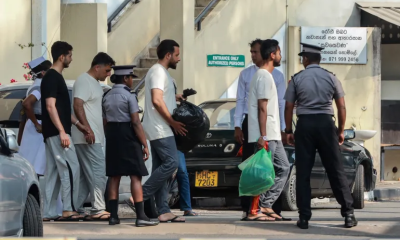
Sri Lanka evacuates crew of second Iranian vessel after US sunk IRIS Dena