
News
Pakistan PM names Lt Gen Asim Munir as new army chief: Minister

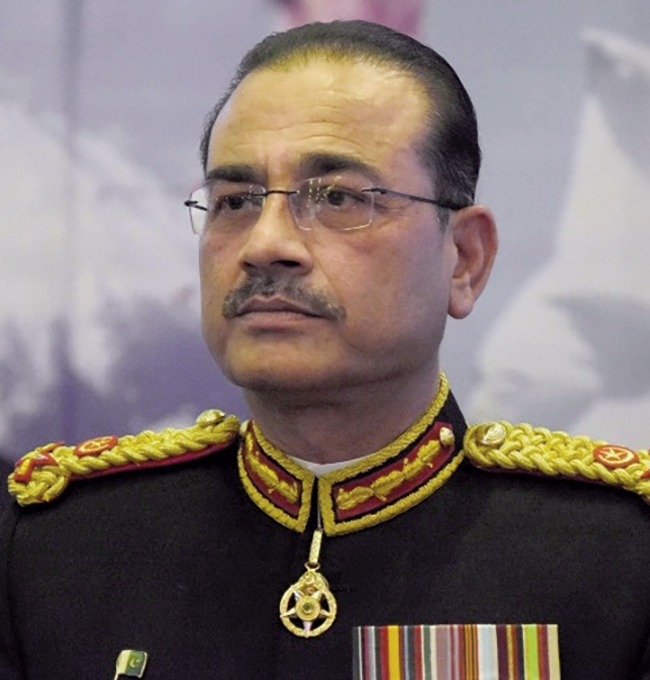
Islamabad, Pakistan – Pakistan’s Prime Minister Shehbaz Sharif has named Lieutenant General Asim Munir as the new army chief.Information minister Marriyum Aurangzeb announced the appointment on Twitter on Thursday, ending weeks of speculation over what some call the most powerful position in the South Asian nation.
Pakistan’s military has directly ruled the country of 220 million people for nearly half of its 75-year history.Lieutenant General Sahir Shamshad will take charge as the chairman of the Joint Chiefs of Staff Committee, Aurangzeb added in her tweet.
Munir will replace General Qamar Javed Bajwa who will end his six-year tenure as army chief on November 29.PM Sharif held a cabinet meeting earlier on Thursday where he selected Munir from a list of six nominees for the top military post.
Munir is currently posted at the army headquarters in Rawalpindi. He has served briefly as chief of the country’s premier intelligence agency, the Inter-Services Intelligence (ISI).In a tweet earlier, Defence Minister Khawaja Asif wondered if Alvi “will pay heed to political advice or to the constitutional and legal advice”.
“Now this is Imran Khan’s test if he wants to strengthen the institution which defends the country or make it controversial. It is also a test for President Alvi,” Asif wrote.
Soon after Information Minister Aurangzeb’s announcement on Twitter, the official handle of Khan’s PTI quoted its chief as saying both him and Alvi “will act according to constitution and law”.
The government has accused Khan of making the appointment of the new army chief controversial for political gains.Former defence secretary and retired army officer, Asif Yasin Malik, told Al Jazeera Munir has an “impeccable reputation” in the military.
“In the military, your reputation matters a great deal and Asim Munir is very well regarded for his competence and capabilities. So far, his career has been without any controversy and I think he can be a very good chief,” he said, hoping the presidential approval of the nomination goes smoothly.
Islamabad-based security analyst Muhammed Faisal said the new army chief will take charge at a time when the country is in crisis.
“The new chief has to navigate complex political, internal and external challenges, with the economic crisis being the most urgent, as was acknowledged even by the outgoing army chief,” he told Al Jazeera.



The Cabinet of Ministers approved the resolution furnished bys the Minister of Public Security and Parliamentary Affairs to extend Visas of those unable to leave Sri Lanka due to the
cancellation of flights to the Middle East from 28.02.2026 for another 14 days without any payments and re-extend the extended Visas for another 14 days without payments if the flights cancellations continue.
Taking into consideration the resolution furnished by the Minister of Public Administration, Provincial Council, and Local Government, the Cabinet of Ministers has decided to appoint Sunil Galagama, a Special Grade Officer of the Sri Lanka Administrative Service, who is currently serving as an Additional Secretary in the Ministry of Health and Mass Media, as the District Secretary to Badulla Administrative District with immediate effect.

The Cabinet of Ministers, taking into consideration the resolution furnished by the Minister of Public Administration, Provincial Council, and Local Government, have decided to appoint Anupama Mangala Wickramaarachchi, a special grade officer of the Sri Lanka Administrative Service, who is serving as the Additional Commissioner General of Agrarian Development of the Department of the Agrarian Development at present, as the District Secretary , Ampara Administrative district with immediate effect.

Cabinet approves 14 day Visa extension
Sunil Galagama appointed as District Secretary Badulla

Anupama Mangala Wickramaarachchi appointed District Secretary Ampara
Committee on Economic Surveillance to be established
Cabinet nod to include the National Savings Bank for the Interest-Free Loan Scheme for Students

Nepal election 2026: Counting continues with rapper Balendra Shah’s party close to super-majority

‘Dates have the highest sugar content to fight Coronavirus’

Sunday Island 27 December – Headlines

#SundayIsland 17th December – Headlines

Sunday Island – 28th March

Sunday Island Headlines – 21 March

Sunday Island – 21st February – Headlines
-

 News5 days ago
University of Wolverhampton confirms Ranil was officially invited
-

 News6 days ago
Legal experts decry move to demolish STC dining hall
-

 News5 days ago
Female lawyer given 12 years RI for preparing forged deeds for Borella land
-

 News4 days ago
Peradeniya Uni issues alert over leopards in its premises
-

 Business6 days ago
Cabinet nod for the removal of Cess tax imposed on imported good
-

 News2 days ago
Repatriation of Iranian naval personnel Sri Lanka’s call: Washington
-

 News5 days ago
Library crisis hits Pera university
-

 Business7 days ago
Dialog partners with Ratmalana Audiology Centre for World Hearing Day 2026