
News
OUSL complets annual research sessions online

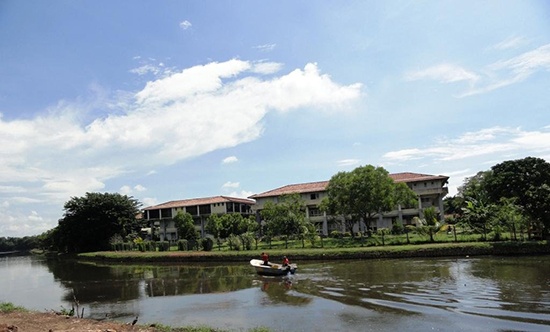
The Open University of Sri Lanka (OUSL) successfully completed its Annual Research Sessions (OURS 2020) on 12th and 13th November as a fully online event.
The OUSL said in a media statement:
“OURS 2020 was initially planned as an ‘in-person’ event. However, when the public health situation in the country again became critical in October, the organizing committee of OURS 2020, deftly transferred the entire event online – in a short span of time – underscoring the university’s unique ability to deliver academic programs remotely. In addition to being the only university in Sri Lanka with a dedicated Centre for Education Technology and Media, the university’s academic and support staff are specifically trained in remote delivery of academic programs using a range of methods – online, television, radio and print. This combination of technical infrastructure and skilled human resources allows the institution to adapt to challenging circumstances like the current one posed by the Corona Virus pandemic.
“This year’s research sessions were conducted under the themes of: Open and Distance Learning, Humanities and Social Sciences, Engineering and Technology, Health Sciences, Education, Law, Management, Biological Sciences, Agriculture and English Language Teaching. A total of 165 submissions were received and 114 papers were selected for presentation following a process of rigorous peer review. The different thematic strands were conducted as parallel online sessions using Zoom technology which led to vibrant scholarly discussions on a range of topics. A special feature of this year’s research was the significant focus of how the pandemic has impacted education. Such research ranged from critical discussions on online and remote education to the significant inequities in education access and delivery caused by the pandemic. This emphasis on the pandemic demonstrated the commitment of academics in the Sri Lankan higher education system to address contextually significant social issues and deploy research to understand and resolve such issues. Papers were presented by Open University staff as well as staff from other state and non-state universities and higher education institutions from across the country.
“The research sessions were inaugurated with a welcome address by the Research Director of the University, Prof. Shyama Weerakoon who underscored the importance of fostering a research culture. She also appreciated the university-wide team effort that facilitated the online delivery of the research sessions. Prof. Anbahan Ariyadurai, the Vice Chancellor of the university, addressing the event, emphasized the resilience and adaptability of the institution in this challenging time.
“The Chief Guest of the research sessions was Dr. Priyanie Amarasinghe, Emeritus Scientist at the International Water Management Institute (IWMI) and the keynote speech on the first day was delivered by Dr. Panduka Karunanayake of the Faculty of Medicine, University of Colombo. The day-two keynote was delivered by Dr. Prathapasinghe Dharmawansa of the Faculty of Engineering, University of Moratuwa. The event was live cast for the students of the university and the general public through the Open University’s YouTube channel and an electronic version of the proceedings of the research sessions will be soon available for free download from the university website.”


The Sri Lanka Navy has seized a local multi- day fishing trawler, it’s four man crew together with a consignment suspected to be narcotics off the Southern Coast of the island.
The vessel is presently being escorted to the Dikowita fisheries harbour for further investigations and legal proceedings.
Latest News
Heat Index at Caution Level in the Northern, North-central, North-western, Western, Sabaragamuwa, Eastern and Southern provinces and in Monaragala district


Warm Weather Advisory
Issued by the Natural Hazards Early Warning Centre
Issued at 3.30 p.m. on 15 April 2026, valid for 16 April 2026.
The Heat index, the temperature felt on human body is likely to increase up to ‘Caution level’ at some places in the Northern, North-central, North-western, Western, Sabaragamuwa, Eastern
and Southern provinces and in Monaragala district.
The Heat Index Forecast is calculated by using relative humidity and maximum temperature and this is the condition that is felt on your body. This is not the forecast of maximum temperature. It is generated by the Department of Meteorology for the next day period and prepared by using global numerical weather prediction model data.
Effect of the heat index on human body is mentioned in the above table and it is prepared on the advice of the Ministry of Health and Indigenous Medical Services.
ACTION REQUIRED
Job sites: Stay hydrated and takes breaks in the shade as often as possible.
Indoors: Check up on the elderly and the sick.
Vehicles: Never leave children unattended.
Outdoors: Limit strenuous outdoor activities, find shade and stay hydrated.
Dress: Wear lightweight and white or light-colored clothing.
Note:
In addition, please refer to advisories issued by the Disaster Preparedness & Response Division, Ministry of Health in this regard as well. For further clarifications please contact 011-7446491

The Indonesian Navy Sailing Ship KRI BIMA SUCI – 945 arrived at the Port of Colombo on a goodwill visit on 15 Apr 2026 and was welcomed by the Sri Lanka Navy (SLN) in compliance with time-honoured naval traditions.
The vessel’s arrival is a key highlight of the ASEAN Plus Cadet Sail (APCS) – 2026 programme , accompanying a diverse contingent of Navy cadets from 26 different nations alongside their Indonesian counterparts.
The ship is commanded by Commander SUGENG HARIYANTO. Meanwhile, Officer Under-trainees of the Sri Lanka Navy are expected to participate in various programmes aboard the
ship and naval personnel observe its operational functions during its stay in the island.
Furthermore, the ship’s crew is scheduled to take part in programmes organized by the Sri Lanka Navy to enhance camaraderie between the two navies, as well as visit several tourist attractions in the country.

Sri Lanka Navy seize multi day fishing craft suspected of smuggling narcotics

‘Sent to be killed’: How Russia forces migrants to fight in Ukraine

Babar Azam 71* helps Peshawar Zalmi extend lead at top

Trump threatens to fire Fed chair Jerome Powell if he doesn’t leave in May

Royal Challengers Bengaluru top the table after bowlers help thump Lucknow Super Giants

Showers expected in the Western, Sabaragamuwa, Southern, Central, Uva and North-western provinces

‘Dates have the highest sugar content to fight Coronavirus’

Sunday Island 27 December – Headlines

#SundayIsland 17th December – Headlines

Sunday Island – 28th March

Sunday Island Headlines – 21 March

Sunday Island – 21st February – Headlines
-

 News5 days ago
CEB orders temporary shutdown of large rooftop solar systems
-
 Features5 days ago
From Royal College Platoon to National Cadet Corps: 145 years of discipline, leadership, and modern challenges
-

 Business7 days ago
Israeli attack on Lebanon triggers local stock market volatility
-

 Business7 days ago
HNB Assurance marks 25 years with strategic transformation to ‘HNB Life’
-
 Latest News4 days ago
PNS TAIMUR & ASLAT arrive in Colombo
-

 News6 days ago
Anura Solomons passes away
-

 Features5 days ago
CIA’s hidden weapon in Iran
-
 Latest News3 days ago
Prasidh, Buttler set up comfortable win for Gujarat Titans