
Opinion
Open letter to US

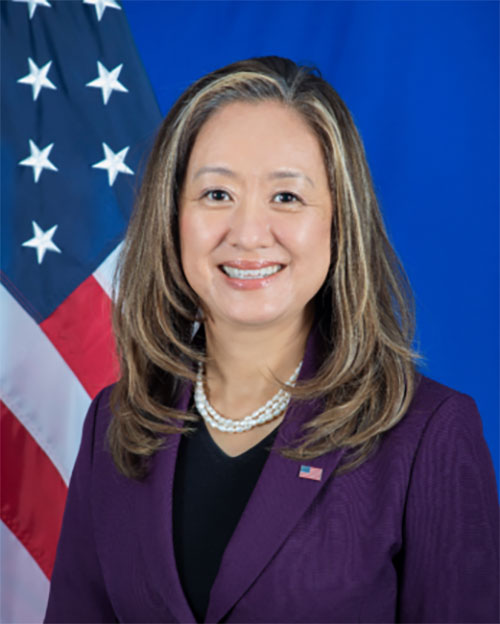
I know quite well that Americans do not like too much formality, and let me address you by your first name, Julie.
So, dear Julie,
Let me introduce myself first. I am a Fulbright Scholar (1998-2000), and I am extremely proud that I am one. After my Fulbright period, I was awarded a series of other fellowships by the University of Wisconsin to finish my PhD. Before joining the University of Peradeniya, I taught for four years at Cornell University. All those 10 years in the US and the education I received there enriched my vision of life and the world. After my education in the US, I was able to develop as a relatively influential public intellectual and a literary writer. While always appreciating the opportunities given to me by the US, I have always opposed imperialisms of all kinds.
As a scholar in Comparative Literature, I have been a cosmopolitan person all through my adult life, teaching literary works from nearly all the countries of Europe, the US, Russia, Japan, India and so on. In that sense, I am familiar with some of the ‘best thoughts’ happened in those countries, and I have worked hard to familiarise my students with those thoughts. I believe that no single culture can provide everything needed for human flourishing within that culture.
Having established the fact that I am not a parochial nationalist with a heart full of xenophobia, I must tell you this: I am quite active in the on-going protests against our ruling family. With thousands of other Sri Lankans, I too believe that the entire Rajapaksa family and its close relatives, have to vacate their posts in the country’s power structure. You know that more than seventy five percent (75%) of the country budget is controlled by them. The ministerial portfolios they hold are the most powerful ones. That is what they are right now. Or course, a slight change has happened as of today.
You must have seen that there is increasing pressure from people to the ruling family and its cronies to step down. They have no legitimate reasons to hold on to power. People from all walks of life, women, children, even infants, have taken to the streets to send a message to a single greedy family. And some of the key members of that family are US citizens. I do not want to claim that they are your puppets political or otherwise. Real US citizens resist being the puppets of the government; and it is in both democratic and republican tradition. But here in our country, there are growing concerns that the US and other powerful countries will eventually ensure that the Rajapaksas get safe havens, and their loot will also be safe. Speaking of the loot, it is already in such countries in the form of money and property. Given the strength of your intelligence services, you must already know where the Rajapaksa assets are. Some WikiLeaks communiques revealed that the US mission in Colombo always knew that the Rajapakasas were disgustingly corrupt. You must have inherited that knowledge of your predecessors.
I am writing to you to request that you must not, by any means, help this family to escape with their stolen money because that money belongs to the people of Sri Lanka. Perhaps, you can begin right now the process of freezing their accounts in your countries.
What you are witnessing is something historic. Please, do not interpret these as a ‘communist riots’ or something. It has been one of your old cold-war mistakes to see ‘communism’ in all our protests. You, Julie in particular, must give up the perennial habit of hating even a mild form of ‘socialist economic policies.’ With or without that phrase, what we are trying to create is an economic system whose achievements are shared by everyone with relative equality and a sense of justice.
Neoliberal economic programme carried out with your blessings for many decades in Sri Lanka has created a huge gap between the haves and have-nots. The majority of the population has no access to quality education and healthcare. On top of that failure, in the neoliberal ideology, corrupt political families such as the Rajapakasas have robbed the country so bad that we can no longer tolerate this crime. As of today, many people do not have access to the basic needs of everyday life. If neoliberalism was so good, how come it collapsed here within a few difficult months?
When people demand social justice, economic democracy, free education, and free healthcare, and the like, you tend to be alarmed. Here, I am speaking especially to you, Julie. Please stop interpreting those as communist demands; you have all those ideas of justice and democracy built into the US public life and public virtue. Yes. You do not have free health care in the US; but you cannot be proud of that fact. There is significant demand for such things in the US, too. And you have a host of programmes for giving an initial support to underprivileged people to take a shot at a decent life.
Please allow us begin working towards establishing a new form of government formed on the principles of economic justice and democracy. If you cannot help us do that, because of your ideological commitment in the global scene, please do not at least disrupt our efforts.
Julie, your country has an inglorious history of supporting corrupt politicians such as Pinochet, Marcos and so on, as long as they stood with you in the theater of the cold war. Many such enemies of the people ended up living peacefully in the US. In our case, today you are especially obligated to be responsible and considerate because some members of our ruling family are American citizens. You must be considerate of our people, not with a family that happened to have blue passports.
What prompted for me to write this urgently is a slogan in the ongoing mass struggle: “Gota go home!” The ‘home’ in this case is the US.
The family might have already communicated to you that some ‘extremist communists’ are threatening them to step down. They know that a term like ‘communist’ can open up the diplomatic hearts of the West. I am sure you know enough of the corruption of the family. If you want to see social justice, lasting peace, and true democracy in the country, let us see what people can come up with through these struggles. I hope you, Julie, and others in powerful diplomatic circles, will not intervene to save a family of crooks and the failed economic programme they oversee.
Once this is over, and, hopefully, a new structure for the Sri Lankan state is created, you all can help us reimagining Sri Lanka. As an activist related to the National People’s Power (NPP), I like to see significant structural change in our economic system and the state. But by writing this letter, I am not representing the NPP, and let’s see what will really emerge at the end. We do all we can to assure that people will not turn violent no matter how much they are provoked.
If you are interested in justice and democracy in the country, please let the ruling clan know that they must not use violence to stay in power. I hope you do not want to see military rulers in South Asia. We certainly do not want dictators here.
Thank you for your time and attention.
Sincerely yours
Liyanage Amarakeerthi
Professor
University of Peradeniya

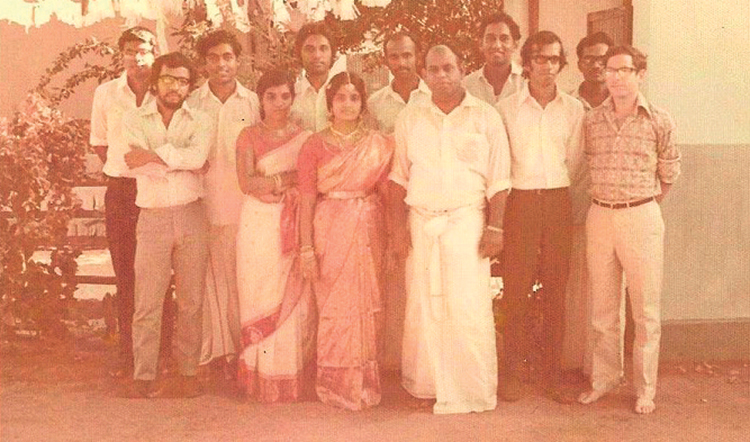
Quiet flows another don. The aging fraternity of Peradeniya Engineering alumni has lost another one of its beloved teachers. V. Shanmuganayagam, an exceptionally affable and popular lecturer for nearly two decades at the Peradeniya Engineering Faculty, passed away on 15 January 2026, in Markham, Toronto, Canada. Shan, as he was universally known, graduated with First Class Honours in Civil Engineering, in 1962, when the Faculty was located in Colombo. He taught at Peradeniya from 1967 to 1984, and later at the Nanyang Technological University in Singapore, before retiring to live in Canada.
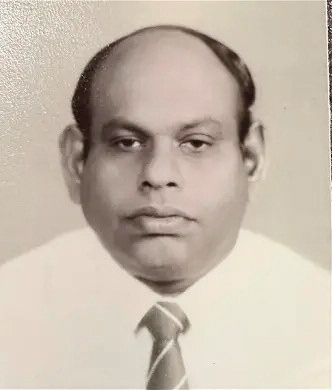
V. Shanmuganayagam
In October last year, one of our colleagues, Engineer P. Balasundram, organized a lunch in Toronto to felicitate Shan. It was very well attended and Shan was in good spirits. At 85 he was looking as young as any of us, except for using a wheelchair to facilitate his movement. The gathering was remarkable for the outpouring of warmth and gratitude by nearly 40 or 50 Engineers, who had graduated in the early 1970s and now in their own seventies. One by one every one who was there spoke and thanked Shan for making a difference in their lives as a teacher and a mentor, not only in their professional lives but by extension in their personal lives as well.
As we were leaving the luncheon gathering there were suggestions to have more such events and to have Shan with us for more reminiscing. That was not to be. Within three months, a sudden turn for the worse in his condition proved to be irreversible. He passed away peacefully, far away across the world from the little corner of little Sri Lanka where he was born and raised, and raised in a manner to make a mark in his life and to make a difference in the lives of others who were his family, friends and several hundreds of engineering professionals whom he taught.
V. Shanmuganayagam was born on May 30, 1940, in Point Pedro, to Culanthavel and Sellam Venayagampillai. His family touchingly noted in the obituary that he was raised in humble beginnings, but more consequentially his values were cast in the finest of moulds. He studied at Hartley College, Point Pedro, and was one of the four outstanding Hartleyites to study engineering, get their first class and join the academia. Shan was preceded by Prof. A. Thurairajah, easily Sri Lanka’s most gifted academic engineering mind, and was followed by David Guanaratnam and A.S. Rajendra. All of them did Civil Engineering, and years later Hartley would send a new pair of outstanding students, M. Sritharan and K. Ramathas who would go on to become highly accomplished Electrical Engineers.
Shan graduated in 1962 with First Class Honours and may have been one of a very few if not the only first class that year. Shan worked for a short while at the Ceylon Electricity Board before proceeding to Cambridge for postgraduate studies specializing in Structures. His dissertation on the Ultimate Strength of Encased Beams is listed in the publications of the Cambridge Structures Group. He returned to his job at CEB and then joined the Faculty in 1967. At that time, Shan may have been one of the more senior lecturers in Structures after Milton Amaratunga who too passed away late last year in Southampton, England.
When we were students in the early 1970s, there was an academic debate at the Faculty as to whether a university or specific faculties should give greater priority to teaching or research. Shan was on the side of teaching and he was quite open about it in his classes. He would supplement his lectures with cyclostyled sheets of notes and the students naturally loved it. It was also a time when Shan and many of his colleagues were young bachelors at Peradeniya, and their lives as academic bachelors have been delightfully recounted in a number of online circulations.
by Rajan Philips
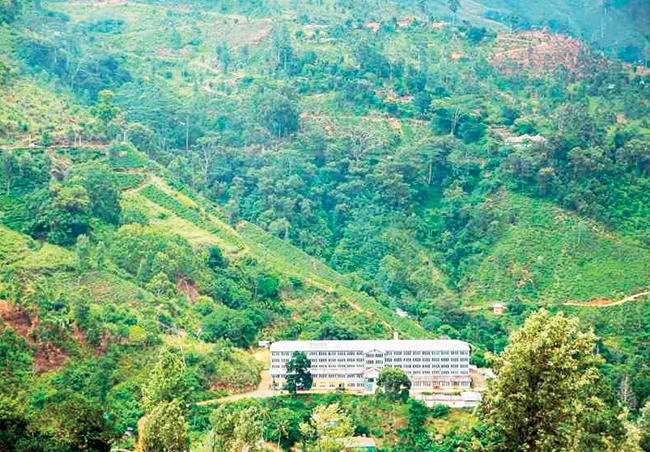
Established in 1880, Cannavarella Estate stands among the most historically significant plantations in Sri Lanka, carrying a legacy that intertwines agricultural heritage, colonial transitions and modern development. Its story begins with the cultivation of cinchona, a medicinal bark used to produce quinine, which is a vital treatment for malaria at the time, introduced when coffee estates across the island were failing.
Under the ownership of Messrs Macfarlane, Cannavarella rapidly gained a reputation for producing cinchona at ideal elevations between 4,000 and 5,000 feet above sea level. At that time, the estate spanned around 750 acres and played a pivotal role in the island’s shift from coffee to alternative plantation crops during the late 19th century.
A transformative chapter began when Christopher B. Smith purchased the property and unified several surrounding estates- Moussagolla, Cannavarella, East Gowerakelle, and Naminacooly- into what became known as the Cannavarella Group. This amalgamation created a vast holding of approximately 1,800 acres. By 1915, nearly 1,512 acres of this extent were cultivated in tea, marking the estate’s full transition from cinchona to the crop that would define its identity for generations.
The Group was managed by the Eastern Produce and Estates Company from 1915 until 1964, after which stewardship passed successively to Walker & Sons Company Ltd, and then to George Steuart Company Ltd by 1969.
A defining moment in the estate’s history arrived in 1971 when Sir Oliver Goonetilleke, former Governor General of Ceylon, acquired the estate. Under his ownership, it came under the London-based company Ceyover Ltd., a name derived from “Cey” for Ceylon and “Over” for Oliver.
The estate remained under private ownership until the nationalization wave of 1975, during which Cannavarella was brought under the Janatha Estates Development Board (JEDB). For nearly two decades it was managed under government purview until the plantation sector was re-privatised in 1992.
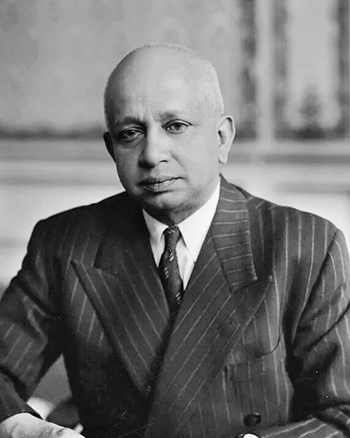
Sir Oliver Goonetilleke
Thereafter, Cannavarella Estate moved under the management of Namunukula Plantations Limited, first through BC Plantation Services, then under John Keells Holdings’ Keells Plantation Management Services and eventually under the ownership of Richard Pieris & Company PLC, where it continues today as part of the Arpico Plantations portfolio.
Blending heritage, landscape and community
Situated along the northeastern slopes of the scenic Kabralla-Moussagolla range and bordering the Namunukula mountain range, Cannavarella Estate spans a total extent of 800 hectares. Its six divisions rise across elevations from 910 to 1,320 metres above sea level, creating a landscape ideal for cultivating premium high-grown tea. Of the total land area, 351 hectares are dedicated to mature tea, while 54 hectares consist of VP tea, representing 16 % of the estate.
Among its most remarkable features are fields containing seedling tea bushes more than a century old, living symbols of Sri Lanka’s plantation legacy that continue to thrive across the slopes. The estate is also home to the origin of the Menik River, which begins its journey in the Moussagolla Division, adding an ecological richness to Cannavarella’s natural environment.
Cannavarella’s history of leadership reflects broader transformations within the plantation industry. The last English superintendent, Mr. Charles Edwards, oversaw the estate during the final phase of British management. In 1972, he was succeeded by Franklin Jacob, who became the first Sri Lankan superintendent of the Cannavarella Group, marking a shift toward local leadership and expertise in plantation management.
Development within Cannavarella Estate has never been confined to agriculture alone. Over the past decade, the estate has strengthened its emphasis on community care, diversification and improving living conditions for its workers. In 2022, coffee planting was initiated in Fields 7 and 8 of the NKU Division, covering 2.5 hectares as part of a broader effort to introduce alternative revenue streams while complementing tea cultivation.
The estate’s commitment to early childhood development is reflected in the initiation of a morning meal programme across all Child Development Centres from 2025, ensuring that children receive nutritious meals each day. A newly constructed Child Development Centre in the EGK Division, completed in 2020, now offers modern facilities including a play area, study room and kitchen, symbolizing the estate’s dedication to nurturing the next generation. In 2015, a housing scheme consisting of 23 new homes was completed and handed over to workers in the CVE Division, significantly improving quality of life and providing families with safer, more stable living environments.
A future built on stability and renewal
Cannavarella Estate is preparing to undertake one of its most important social development initiatives. A major housing programme has been proposed to relocate 69 families currently residing in landslide-prone areas of the Moussagolla Division. Supported by the Indian Housing Programme, this effort aims to provide secure, sustainable housing in safer terrain, ensuring long-term stability for vulnerable families and reducing disaster risk in the region.
Across its history, Cannavarella Estate has remained a landscape shaped both by the land and the people who call it home. Cannavarella continues to honour its roots while building a modern legacy that uplifts both the estate and its people. (Planters Association news release)
Opinion
From the Lecture Hall to the Global Market: How Sri Lankan students are mastering the “Gig Economy”


Have you ever wondered how a university student, between heavy textbooks and late-night study sessions, manages to earn a professional income in US dollars? It sounds like a dream, but for thousands of Sri Lankans, it’s becoming a daily reality through online freelancing.
A recent study published in the Ianna Journal of Interdisciplinary Studies has pulled back the curtain on this digital revolution. By interviewing 21 successful student freelancers across Sri Lanka, researchers have mapped out exactly what it takes to turn a laptop and an internet connection into a thriving career.
The Rise of the “Earn-as-you-learn” Era
In Sri Lanka, the number of online freelancers has exploded from about 20,000 in 2016 to over 150,000 today. While our traditional education system often focuses on preparing students for 9-to-5 office jobs , these students are diving into the “Gig Economy” a digital marketplace where they sell specific skills, like graphic design or programming, to clients all over the world.
The Secret Sauce for Success
So, what makes some students succeed while others struggle? The research found that it isn’t just about being good at coding or design. Success comes down to six “Core Pillars”:
· A Growth Mindset: The digital world moves fast. Successful students don’t just learn one skill; they are constantly updating themselves to ensure they don’t become “outdated”
· The Balancing Act:
How do they handle exams and clients? They don’t use a magic wand; they use strict time management. Many work late into the night (from 6 p.m. to midnight) to accommodate international time zones.
· The Power of “Hello”:
Since most clients are in the USA or UK, strong English and clear communication are vital. It’s about more than just talking; it’s about negotiating prices and building trust.
· Proactive Problem Solving:
Successful freelancers don’t wait for things to go wrong. They update their clients regularly and fix issues before they become headaches.
Why This Matters for Sri Lanka
Right now, our universities don’t always teach “how to be a freelancer”. This study suggests that if we integrate freelancing modules and mentorship into our degree programs, we could significantly reduce graduate unemployment. It’s a way for students to gain financial independence and bring much-needed foreign currency into our economy while still in school.
You Can Do It Too
If you’re a student (or the parent of one), the message is clear: the global market is open for business. You don’t need to wait for graduation to start your career. With a bit of flexibility, a willingness to keep learning, and a proactive attitude, you can transition from a learner to an earner.
The Research Team Behind the Study
This groundbreaking research was conducted by a dedicated team from the Department of Business Management at the SLIIT Business School (Sri Lanka Institute of Information Technology). The authors of the study include:
· Lihini Niranjana Dasanayaka
· Thuvindu Bimsara Madanayake
· Kalana Gimantha Jayasekara
· Thilina Dinidu Illepperuma
· Ruwanthika Chandrasiri
· Gayan Bandara
by Ruwanthika Chandrasiri

King Charles to host Nigeria’s first UK state visit in 37 years

Health authorities on high alert over Nipah Virus threat

Free Media Movement demands govt. accountability on free speech issues

Opposition alleges Govt deliberately delaying PC polls

After stormy build up, Sri Lanka look for calm waters

Rebuilding Sri Lanka: 78 Years of Independence and 78 Modules of Reform

‘Dates have the highest sugar content to fight Coronavirus’

Sunday Island 27 December – Headlines

#SundayIsland 17th December – Headlines

Sunday Island – 28th March

Sunday Island Headlines – 21 March

Sunday Island – 21st February – Headlines
-
 Business1 day ago
Zone24x7 enters 2026 with strong momentum, reinforcing its role as an enterprise AI and automation partner
-

 Business5 days ago
SLIM-Kantar People’s Awards 2026 to recognise Sri Lanka’s most trusted brands and personalities
-

 Business6 days ago
All set for Global Synergy Awards 2026 at Waters Edge
-
 Business1 day ago
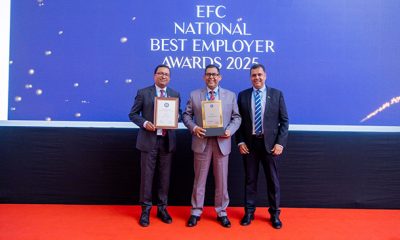
HNB recognized among Top 10 Best Employers of 2025 at the EFC National Best Employer Awards
-
 Business5 days ago
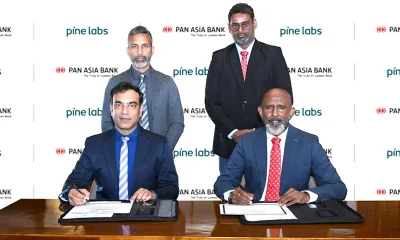
API-first card issuing and processing platform for Pan Asia Bank
-

 Editorial3 days ago
All’s not well that ends well?
-

 Business1 day ago
GREAT 2025–2030: Sri Lanka’s Green ambition meets a grid reality check
-

 Features3 days ago
Phew! The heat …