
Opinion
Omens


A few weeks back, there were interesting letters on evil eyes. In the olden days, people believed in omens, forewarning of what is to come. I remember, my mother, seeing a crow perched on a dead branch, and facing my home, said we will hear of a death and sure enough there was a death of a distant relative. Then another, when the hearth makes a noise – Lipa Buranawa- sure there will be an unexpected visitor for lunch. Gecko – HOONA is another harbinger of news – Hoonu Sasthare.
Here is one of my experiences. I was sitting the Senior School Certificate examination from my school St. Mary’s College, Nawalapitiya, in 1942. My class had only six students and after the withdrawal test, only two were selected and I was one. The examination centre was in Kandy, a distance of nearly 25 miles. My father was not happy to send me from home as I would be tired after taking either the train or bus, and, therefore, he decided to take me to Peradeniya, where a relative was living, and travel from there to the examination centre, which was the Government Tamil School at Suduhumpola. About a week before the examination, Hendirick, a person who had done odd jobs, as a boy, for our family, and whom my father had helped to gain employment in the Telegraph Department, came home with presents for us as a gesture of gratitude. He had now been about 15 years in service and had been promoted as a supervisor. When my father told him of my examination and that I had to go to Kandy, Hendrick promptly said that I could stay with him and that the examination hall was only a walking distance from his house.
He said that he was married and had a child of about three years and that his father-in- law lives with them. He requested my father to visit his place and decide. Not wanting to displease Hendirik, my father went to his place, and was warmly received by his wife. The house had two rooms with a garden and my father was impressed as the examination centre was close by, and decided to take me there. I was taken there the previous morning. It was Sunday. Hendrick had prepared the room, occupied by his father-in-law, for me. That evening, his wife suggested that we worship at the Dalada Maligawa and receive the blessings for me to be successful at the examination. That done, we came back, had dinner, and went through some old question papers and slept soundly. The following day, after breakfast, as I was getting ready to go with Hendrick,who was also going to his workplace, his wife called me and asked me to worship at the shrine, placing a tray of flowers and lighting a pahana or lamp.
When I stepped out with Hendrick, a rooster, fluttered its wings and crowed ‘Cock-a-doodle do’. The old father-in-law, with a broad toothless smile said – Podi Mahaththaya, Jayasikurui, Bayawenna epa’- (Do not fear, victory is assured). I must admit, that gave me some sort of confidence and courage. The first paper was mathematics, which I was not good at. However, when I browsed the question paper, I knew I could score high marks. After the examination, I stayed with Hendirick and his family for about 10 days and was sad to leave them.
Those days, the results of the examination were published in the newspapers and we, who had sat the exam, waited eagerly for the evening Times newspaper. That day, when we were waiting at Salgado Bakery, my father came and told me to organise a treat for all my friends, and requested the hotel owner, to send the bill to him. I was puzzled and so were my friends, although this unusual gesture could be good news. At last, the van bringing the Times newspaper arrived and we rushed to the Carvalio shop. I had passed the examination, while my classmate had been referred in one subject. All that over, I went home, to see all in cheers. My father had received a telegram from R. E. Jayatilaka, then a Member of State Council, congratulating me. That is how he had got the information early.
G. A. D. SIRIMAL
Boralesgamuwa

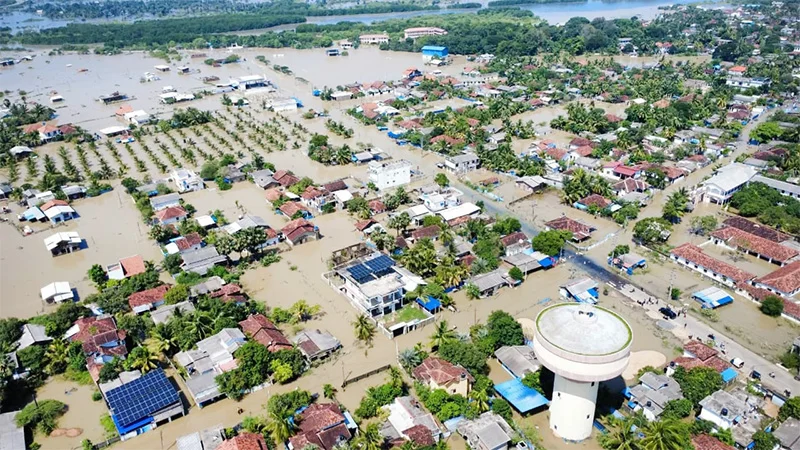
Cyclone Ditwah:
Cyclone Ditwah, which swept across Sri Lanka at the end of November, caused massive damage to the country, the extent of which need not be mentioned here, as all are aware of it by now. Heated arguments went on among many parties with regard to how this destruction could have been mitigated and who should take responsibility. Although there may have been shortcomings in several aspects of how we responded to Ditwah, this article highlights a critical area that urgently requires attention if we are to protect ourselves from similar hazards in the future.
As is common in many situations, it has once again showcased a concerning weakness in the country’s disaster-management cycle, the gap between issuing early warnings and the expected public response. The Meteorological Department, the Irrigation Department, the National Building Research Organization, and other authorities issued continuous warnings to evacuate well in advance of imminent threats of flooding, landslides, and water hazards. However, the level of preparedness and community reaction fell short, leading to far greater personal property damage, including loss of a few hundred lives.
Sri Lanka is not unfamiliar with natural disasters. One of the most devastating disasters in our history could be considered the 2004 Tsunami event, which resulted in over 35,000 deaths and over $1 billion in property damage in the coastal belt. After the event, the concepts of disaster management were introduced to the country, which we have been adhering to since then. Again in 2016, the country faced massive river flooding, especially in western and southern regions, and until recently experienced repeated floods and landslides due to rains caused by atmospheric disturbances, though less in scale. Each of these events paved the way for relevant authorities to discuss and take appropriate measures on institutional readiness, infrastructure resilience, and public awareness. Yet, Cyclone Ditwah has demonstrated that despite improvements in forecasting and communication, well supported by technological advancements, the translation of warnings into action remains critically weak.
The success of early-warning systems depends on how quickly and effectively the public and relevant institutions respond. In the case of Ditwah, the Department of Meteorology issued warnings several days beforehand, supported by regional cyclone forecasting of neighbouring countries. Other organisations previously mentioned circulated advisories with regard to expected flood risk and possible landslide threats on television, radio, and social media, with continuous updates. All the flood warnings were more than accurate, as low-lying areas were affected by floods with anticipated heights and times. Landslide risks, too, were well-informed for many areas on a larger spatial scale, presumably due to the practical difficulties of identifying such areas on a minor scale, given that micro-topography in hill country is susceptible to localised failures. Hence, the technical side of the early-warning system worked as it should have. However, it is pathetic that the response from the public did not align with the risk communicated in most areas.
In many affected areas, people may have underestimated the severity of the hazard based on their past experiences. In a country where weather hazards are common, some may have treated the warnings as routine messages they hear day by day. As all the warnings do not end up in severe outcomes, some may have disregarded them as futile. In the meantime, there can be yet another segment of the population that did not have adequate knowledge and guidance on what specific actions to take after receiving a warning. This could especially happen if the responsible authorities lack necessary preparedness plans. Whatever the case may be, lapses in response to early warnings magnified the cyclone’s impact.
Enforcing preventive actions by authorities has certain limitations. In some areas, even the police struggled to move people from vulnerable areas owing to community resistance. This could be partly due to a lack of temporary accommodation prepared in advance. In some cases, communities were reluctant to relocate due to concerns over safety, privacy, and the status quo. However, it should be noted that people living in low-lying areas of the Kelani River and Attanagalu Oya had ample time to evacuate with their valuable belongings.
Hazard warnings are technical outputs of various models. For them to be effective, the public must understand them, trust them, and take appropriate action as instructed. This requires continuous community engagement, education, and preparedness training. Sri Lanka must therefore take more actions on community-level disaster preparedness programs. A culture of preparedness is the need of the day, and schools, religious institutions, and community-based organisations can play an important role in making it a reality. Risk communication must be further simplified so that people can easily understand what they should do at different alert levels.
Cyclone Ditwah has left, giving us a strong message. Even an accurate weather forecast and associated hazard warnings cannot save lives or property unless the public responds appropriately. As it is beyond doubt that climate change intensifies the frequency and severity of extreme weather events, people in Sri Lanka have to consider preparedness as a routine part of life and respond to warnings promptly to mitigate damage from future disasters.
(The writer is a chartered Civil Engineer)
by Eng. Thushara Dissanayake

Here is what you can do!
Comedy and the ability to have a good laugh are what keep us sane. The good news to announce is that there are many British and American comedy shows posted up and available on the internet.
They will bring a few hours of welcome relief from our present doldrums.
Firstly, and in a class of its own, are the many Benny Hill shows. Benny is a British comedian who comes from a circus family, and was brought up in an atmosphere of circus clowning. Each show is carefully polished and rehearsed to get the comedy across and understood successfully. These clips have the most beautiful stage props and settings with suitable, amusing costumes. This is really good comedy for the mature, older viewer.
Benny Hill has produced shows that are “Master-Class” in quality adult entertainment. All his shows are good.
Then comes the “Not the Nine o’clock news” with Rowan Atkinson and his comedy team producing good entertainment suitable for all.
And then comes the “Two Ronnies” – Ronnie Barker and Ronnie Corbett, with their dry sense of humour and wit. Search and you will find other uplifting shows such as Dave Allen, with his monologues and humour.
All these shows have been broadcast in Britain over the last 50 years and are well worth viewing on the Internet.
Similarly, in The USA of America. There are some really great entertainment shows. And never forget Fats Waller in the film “Stormy Weather,” where he was the pianist in the unforgettable, epic, comedy song “Ain’t Misbehavin”. And then there is “Bewitched” with young and glamorous Samantha Stevens and her mother, Endora who can perform magic. It is amazing entertainment! This show, although from the 1970s was a milestone in US light entertainment, along with many more.
And do not overlook Charlie Chaplin and Laurel and Hardy, and all the Disney films. Donald Duck gives us a great wealth of simple comedy.
The US offers you a mountain of comedy and good humour on Youtube. All these shows await you, just by accessing the Internet! The internet channel, ‘You tube’ itself, comes from America! The Americans reach out to you with good, happy things right into your own living room!
Those few people with the ability to understand English have the key to a great- great storehouse of uplifting humour and entertainment. They are rich indeed!
Priyantha Hettige

After the recent disaster, a great deal of information has been circulating on WhatsApp and YouTube regarding our reservoirs, highways, etc.
In many of these discussions, people have analysed what went wrong and how the damage could have been prevented. My question is this: why do all these knowledgeable voices emerge only after disaster strikes? One simple reason may be that our self-proclaimed, all-knowing governing messiahs refuse to listen to anyone outside their circles. It is never too late to learn, but has any government decision-maker read or listened to these suggestions?
When the whole world is offering help to overcome this tragedy, has the government even considered seeking modern forecasting equipment and the essential resources currently not available to our armed forces, police, and disaster-management centres?
B Perera

Pramodya Wickramasinghe to head Sri Lanka’s new selection committee

Ramakrishnan Sridhar appointed Sri Lanka’s fielding coach until T20 World Cup

Carey century keeps Australia afloat as Ashes refuses to find slower gear

Ambidextrous spinner Gimhani named in Sri Lanka’s new-look squad for India T20Is

“The future needs leaders who can adapt, learn, and respond to change without losing ethical direction” – Prime Minister

PM’s attention draws attention to the Salary Issue of the Government Translators’ Service

‘Dates have the highest sugar content to fight Coronavirus’

Sunday Island 27 December – Headlines

#SundayIsland 17th December – Headlines

Sunday Island – 28th March

Sunday Island Headlines – 21 March

Sunday Island – 21st February – Headlines
-
 Business6 days ago
Cabinet approves establishment of two 50 MW wind power stations in Mullikulum, Mannar region
-
 News7 days ago
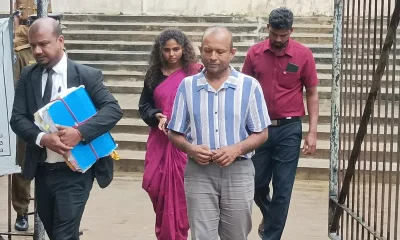
Gota ordered to give court evidence of life threats
-

 Features7 days ago
Cliff and Hank recreate golden era of ‘The Young Ones’
-
 Features7 days ago
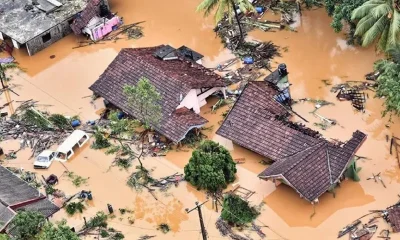
Sri Lanka and Global Climate Emergency: Lessons of Cyclone Ditwah
-

 Editorial7 days ago
Experience vs. Inexperience
-
 News7 days ago
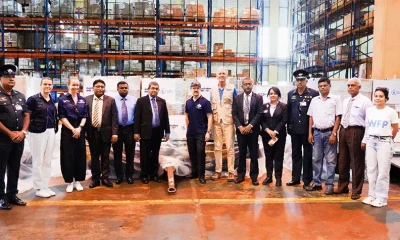
WFP scales up its emergency response in Sri Lanka
-

 Features4 days ago
Why Sri Lanka Still Has No Doppler Radar – and Who Should Be Held Accountable
-

 Features6 days ago
Ditwah: A Country Tested, A People United