
News
No plans to lock down Sri Lanka but authorities may reconsider if cases spike

ECONOMYNEXT – Sri Lanka has no plans to go for a lockdown or movement restrictions, but health authorities would have to rethink this if COVID-19 continues to spread, an official said after the country recorded over 900 COVID-19 cases for a second day running on Thursday (27).
With Thursday’s 942 infections, total cases in Sri Lanka have reached 607,104, with 14,705 patients receiving treatment in hospitals or at home.
Deputy Director of Health Services Dr Hemantha Herath told reporters on Friday (28) that, despite the rising cases, the authorities have no intention to put the public under COVID-19 restrictions again.
“But if it increases beyond a certain limit, and the spreading doesn’t stop, the authorities may have to rethink it,” he said.
“But at the moment there is no need to go for any restrictions. We have not even thought about going for a lockdown and we don’t think we will need to in the future.”
The daily cases curve that was on the decline in December 2021 gradually started to increase by mid January with restrictions being relaxed and travel increased over the Christmas holidays and the January 14-17 long weekend.
Herath complained that, in the absence of restrictions, the public has started to flout COVID-19 protocols.
“We see the public is increasingly neglecting to follow the guidelines. Relaxing restrictions doesn’t mean the protocols no longer apply,” he said.
Meanwhile, the Government Medical Officers Association (GMOA) called for legal action against those who do not wear masks or follow other COVID-19 protocols.
“If the guidelines aren’t followed, history may repeat itself and we will again find ourselves in a very bad situation,” GMOA member Dr Prasad Colombage told reporters on Friday, calling for legal action to be instituted against violators under Sri Lanka’s quarantine law.
With another 23 deaths confirmed on Thursday, the country’s COVID-19 death toll has increased to 15,369.
The recent increase in daily cases has been attributed to a surprising hesitance to get the booster dose of the COVID-19 vaccine. Urging the public to get the Pfizer-BioNTech jab, Dr Hearth a higher immunity level can prevent transmission.
“It is scientifically proven that a person that has been fully vaccinated has a lower chance of having symptoms, severe conditions and death compared to an unvaccinated person,” Herath said.
“And having a high immunity results in having less symptoms which reduces the risk of transmitting or spreading the virus to another person,” he said.
Fully vaccinated close contacts of confirmed patients can go about their day without being quarantine if they don’t show symptoms, said Herath.
Meanwhile, Senior Consultant in Obstetrics and Gynaecology at Castle Street hospital for Women, Dr Sanath Lanerolle urged pregnant women to get the vaccine and the booster as infections among pregnant women have increased over the past few weeks.
“It is important that a medical checkup is done if you have any fever or other COVID symptoms,” he said.
There is no scientific evidence that the booster dose affects the child in the womb, said Lanerolle.
“There are misconceptions that the booster dose will affect the child in the womb. But so far there is no scientific evidence to say it will affect the baby, so I kindly request all pregnant women who are eligible get the booster dose to go and get it without any further delay,” he said.
So far, 16.5 million Sri Lankans have received at least a single dose of a vaccine while 13.5 million people have received the first two doses. Friday also marked exactly after a year since the island nation began its vaccine rollout.
However, only five million have been jabbed with the booster dose so far.

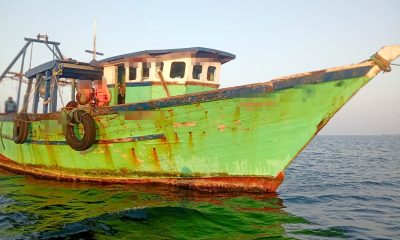



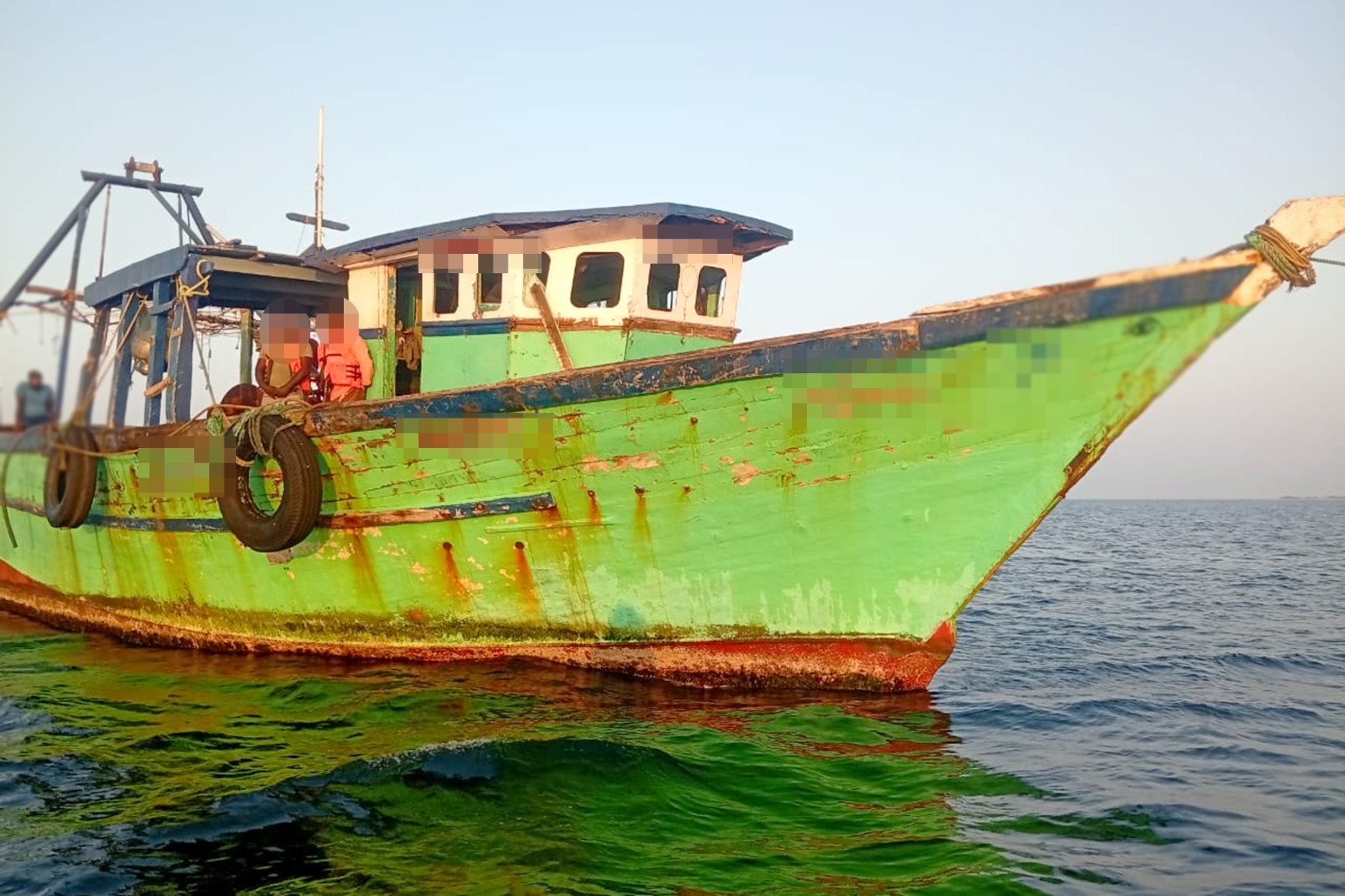
During an operation conducted in the dark hours of 11 Mar 26, the Sri Lanka Navy seized an Indian fishing boat and apprehended 02 Indian fishermen while they were poaching in Sri Lankan waters, in the sea area North of Mannar.
The North Central Naval Command spotted a group of Indian fishing boats engaging in illegal fishing, trespassing into Sri Lankan waters. In response, naval craft of the North Central Naval Command were deployed to drive away those Indian fishing boats from island waters off Mannar.
The seized boat (01) and Indian fishermen (02) were handed over to the Fisheries Inspector of Kilinochchi for onward legal proceedings.

The bodies of 84 Iranian sailors killed in a torpedo attack by a US submarine last week in the Indian Ocean are due to be flown home on Friday, Sri Lanka’s defence ministry has said.
The seamen were among 130 thought to be aboard the Iranian warship, the Iris Dena, when it was sunk on 4 March about 40km (25 miles) from Sri Lanka’s southern coastline.
A police escort transferred bodies to Mattala Rajapaksa International Airport on Friday morning for the repatriation to Iran, after they were stored in two freezers at Galle National Hospital.
Sri Lanka said 32 sailors rescued by its navy after the torpedo attack “will remain in Sri Lanka”, according to news agency AFP.
A magistrate in the Sri Lankan city of Galle ordered that the 84 bodies should be released to the Iranian embassy.
US Defense Secretary Pete Hegseth said shortly after the sinking that the Iranian warship had died a “quiet death”.
Iran’s Foreign Minister Abbas Araghchi said the US had “perpetrated an atrocity at sea, 2,000 miles away from Iran’s shores”, adding that “the US will come to bitterly regret precedent it has set”.
Video released by the US Department of Defense after the incident showed a ship being struck, causing the stern to rise up before exploding.
The Iris Dena had been returning from a military exercise hosted by India when it was attacked.
Its sinking in international waters came during the current US-Israeli war with Iran and marked a dramatic widening of the conflict.
Iran has since launched retaliatory strikes across the Middle East – targeting Gulf countries allied with the US.
Latest News
Safeguarding linguistic heritage is not only a cultural responsibility, but also a shared commitment to preserving the diversity of our world – PM

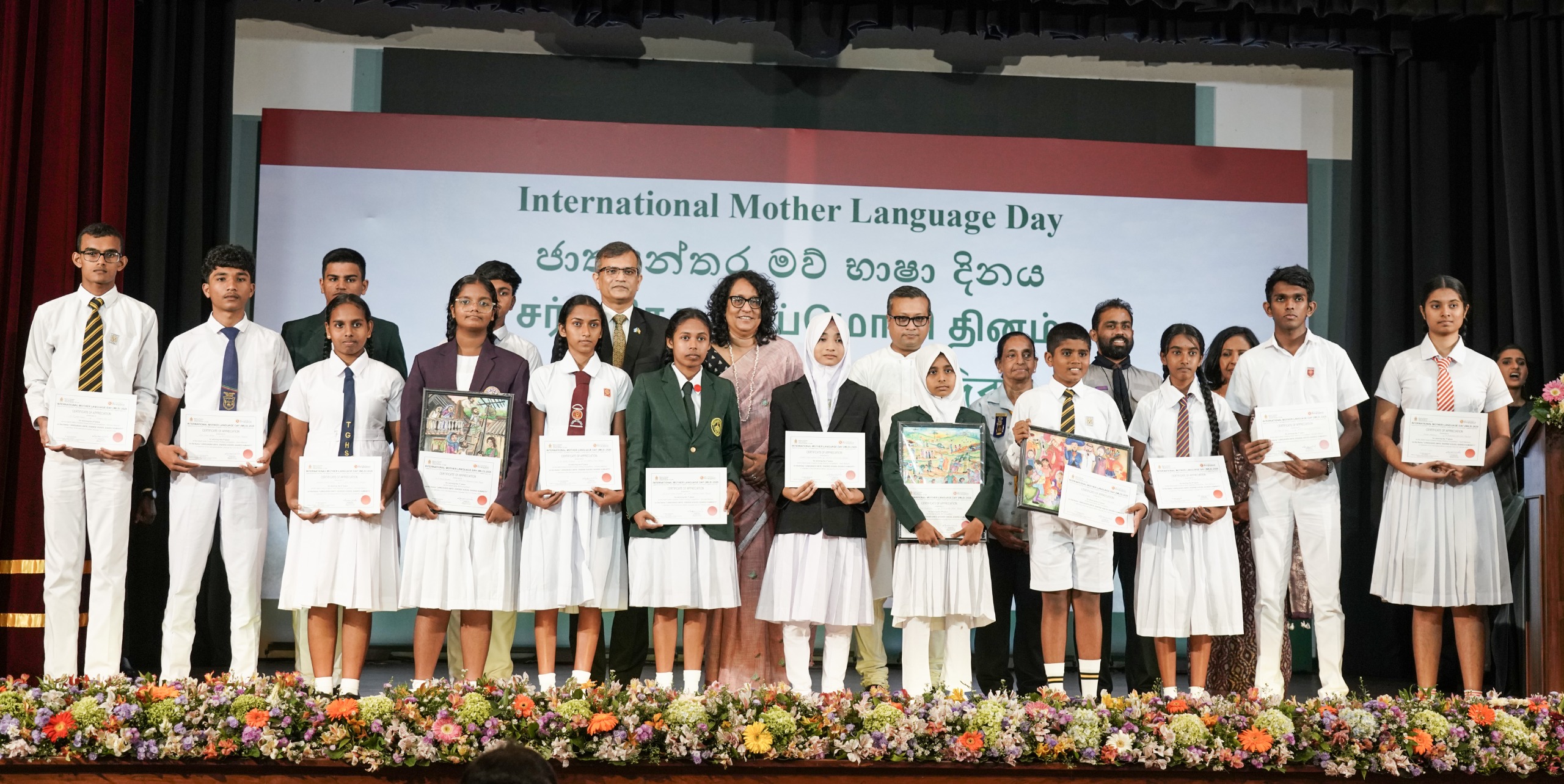
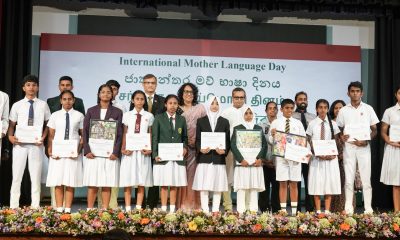
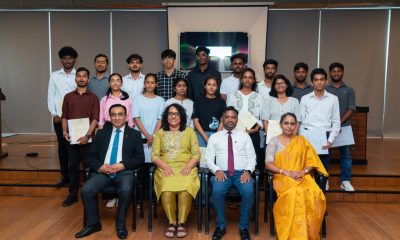
Minister of Education, Higher Education and Vocational Education Prime Minister Dr. Harini Amarasuriya participated as the Chief Guest in the special event organized to commemorate International Mother Languages Day 2026 on 13 March 2026 at the New Arts Theatre of the University of Colombo. The event was held under the theme ’Languages Unite: Diverse Voices, Shared Humanity’.
The event was jointly organized by the High Commission of Bangladesh and the Ministry of Education of Sri Lanka with the support of the United Nations, the Sri Lanka Scout Association, and the Sri Lanka Girl Guides Association.
Certificates and awards were presented to school winners of the painting, essay, and short video creation competitions organized in conjunction with the celebration of International Mother Language Day 2026.
Addressing the occasion, the Prime Minister Dr. Harini Amarasuriya stated:
“International Mother Language Day stands as a powerful reminder of the profound connection between language, identity, and dignity.
This global observance owes its origins to the visionary initiative of the People’s Republic of Bangladesh. Bangladesh’s advocacy transformed a national commemoration into a global movement one that celebrates the rich mosaic of humanity’s linguistic heritage.
Sri Lanka’s language diversity reflects the richness of our pluralistic heritage. This diversity should not be seen as a challenge to be managed, but as a strength to be valued and cherished.
When we protect language rights, we nurture social harmony. When we promote multilingual education, we empower future generations. And when we listen to one another in our own languages, we affirm each other’s humanity. At a time when divisions can easily take root, respect for linguistic diversity can instead serve as a bridge of empathy and cooperation.
In an increasingly digital age, we must also reflect on the importance of preserving linguistic diversity in cyberspace. Thousands of languages around the world remain vulnerable. Without conscious efforts in education, technology, and policy, many risk fading into silence. Safeguarding linguistic heritage is therefore not only a cultural responsibility, but also a shared commitment to preserving the diversity of our world”.
The Prime Minister remarked that the partnership between Sri Lanka and Bangladesh continues to grow in friendship and cooperation with the shared commitment to multilateralism, cultural understanding, and people-to-people engagement strengthens the bonds between the two nations.
The event was attended by the Bangladesh High Commissioner, Andalib Elias, Deputy Speaker Dr. Rizvie Salih, Secretary to the Prime Minister Pradeep Saputhanthri, FAO Country Representative for Sri Lanka and Maldives Vimlendra Sharan, Chief Commissioner of the Sri Lanka Girl Guides Association Dr. Kushantha Herath, diplomatic crops, members of the Sri Lanka Scout Association, and the Sri Lanka Girl Guides Association and students.
[Prime Minister’s media division]

Navy seizes an Indian fishing boat poaching in Mannar seas

Bodies of 84 Iranian sailors killed in US torpedo strike to be repatriated

Four crew members killed after US refuelling plane crashes in Iraq

Safeguarding linguistic heritage is not only a cultural responsibility, but also a shared commitment to preserving the diversity of our world – PM

This is not an ordinary scholarship programme. It defines the future vision of our country – PM

West Indies name unchanged squad for home T20Is against Australia

‘Dates have the highest sugar content to fight Coronavirus’

Sunday Island 27 December – Headlines

#SundayIsland 17th December – Headlines

Sunday Island – 28th March

Sunday Island Headlines – 21 March

Sunday Island – 21st February – Headlines
-

 News7 days ago
Peradeniya Uni issues alert over leopards in its premises
-

 News5 days ago
Repatriation of Iranian naval personnel Sri Lanka’s call: Washington
-

 News7 days ago
Wife raises alarm over Sallay’s detention under PTA
-
 Features5 days ago
Winds of Change:Geopolitics at the crossroads of South and Southeast Asia
-

 News4 days ago
Prof. Dunusinghe warns Lanka at serious risk due to ME war
-

 Sports3 days ago
Royal start favourites in historic Battle of the Blues
-

 Latest News7 days ago
Heat Index at ‘Caution Level’ in the Sabaragamuwa province and, Colombo, Gampaha, Kurunegala, Anuradhapura, Vavuniya, Hambanthota and Monaragala districts
-

 Features7 days ago
The final voyage of the Iranian warship sunk by the US