
Business
‘No one owns Huawei but its employees’

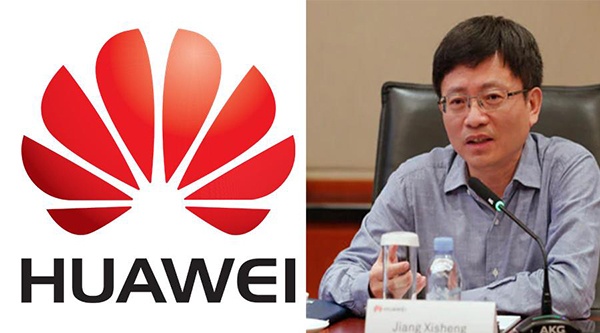
By Jiang Xisheng
Sweden’s telecom regulator, PTS, recently excluded the country’s operators from using Huawei equipment in their 5G networks, justifying the action by saying that any vendor based in China posed an automatic threat to Swedish national security.
Such misconceptions could prevent Swedish households and businesses from enjoying the benefits of Huawei’s innovation. Unfortunately, they are reinforced by the press. For example, an editorial column published in Dagens Industri on November 10 suggests, “China should open Huawei for foreign ownership” . This recommendation, while undoubtedly well-intentioned, displays a profound misunderstanding of how our company is structured and managed.
Huawei was founded in 1987, and I joined in Huawei in 1989. Back then banks were reluctant to lend money to small start-up companies. Huawei had to raise capital by selling shares to employees, an arrangement that continues to this day. Employees buy shares with their own money, and receive annual dividends based on the number of shares they hold. They also elect members to form a Representatives’ Commission on a one-vote-per-share basis. The Commission elects the company’s Board of Directors. Such a profit- and risk-sharing system provides Huawei with the funds it needs for long-term growth and lays the foundations for its governance and management.
Being privately held frees Huawei from the short-term pressures faced by publicly listed companies, whose shareholders expect them to meet quarterly earnings targets. Liberated from such external pressures, Huawei can maintain its long-term focus on research and development, while shareholding employees can reap higher rewards.
Currently, Huawei founder and CEO Ren Zhengfei holds about 1% stake of Huawei; the rest is held by Huawei’s union, the platform through which employees own the company. It is common and legitimate for companies in China to set up trade unions to serve as their shareholding platforms. Although the media likes to describe this arrangement as opaque, it is actually not so different from what one finds at employee-owned companies elsewhere in the world, including John Lewis Partnership (a department store group in the UK) and Essilor (a French-based international ophthalmic optics company).
In fact, our ownership structure is embraced by many Swedish companies today. Last year’s European company Survey, shows 11% of all companies in Sweden’s private sector have employee share ownership schemes – more than double the European average. Perhaps the model appeals to Sweden’s egalitarian sensibilities: Employees are paid differently based on the work they do, but there is a transparent profit-sharing mechanism in place. People feel empowered, care about the quality of their work, and continually think about ways to improve the business. Some European experts have concluded that Huawei is implementing “employee capitalism.”
Detractors allege that we became a global leader through government support. In fact, the company has succeeded for the opposite reason: we operate independently and follow the logic of business, not politics. From its inception in 1987 until the early 2000s, Huawei competed with Chinese state-owned enterprises, many of which later shrank to insignificance or disappeared completely. This result should not surprise capitalists, who understand that in most cases, state-owned or -controlled companies tend to lose their competitiveness due to bureaucracy and low efficiency. This is particularly true in the high-tech industry. Why has China’s tech industry developed so fast and so well? Perhaps in part because, since the 1980s, China has opened its market to, and provided a level playing field for, companies such as Ericsson, Nokia, Motorola, Siemens, and other foreign companies.
The PTS statement reminded me of China’s period of political turmoil in the 1960s and 1970s. Because my family were classified as landowners, I almost missed the chance to attend university. I hope the PTS can perform an objective, fair, and fact-based assessment, and make decisions that will benefit the whole of Sweden. Huawei’s door is always open for Swedish politicians, researchers, journalists, and others to visit company facilities and its Employee Stock Ownership Plan (ESOP) Room, and exchange ideas about the system the company has built over the past three decades.
In the meantime, the facts remain unchanged: No government entity dictates Huawei’s business or investment decisions, and no one owns Huawei but Huawei’s employees.
Jiang Xisheng is Chief Secretary of the Board at Huawei.

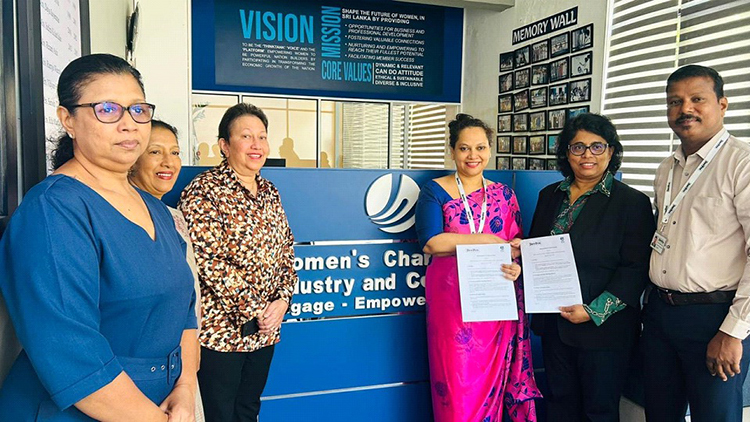
DevPro and Women’s Chamber of Industry and Commerce (WCIC) signed a formal partnership on Wednesday, 28th January to collaborate in promoting women’s economic empowerment and inclusion in Sri Lanka.
DevPro builds on 30 years of OXFAMs legacy in Sri Lanka and works towards Inclusive Economic Development leveraging expertise in inclusive and climate-resilient market systems and enterprise development and innovation. DevPro’s work is guided by the core values of gender justice, inclusivity and community-led development. Through its recent projects, DevPro has supported over 270 women-led MSMEs, across agriculture, handloom, and tourism-related value chains in five provinces in Sri Lanka through a mix of interventions combining skills development, enterprise strengthening, market linkages, and gender-sensitive community engagement to improve income, resilience, and economic participation.
WCIC is the first women-only trade chamber in the world, dedicated to empowering women entrepreneurs and women-led MSMEs in Sri Lanka through skills-building, business advisory services, networking etc. Among its many initiatives, WCIC’s flagship annual event, “Prathibhabhisheka” – Women’s Entrepreneurs Awards has empowered many women owned and women-led businesses in Sri Lanka to enhance their business resilience and competitiveness through improved governance processes, financial health, market recognition and global expansion.
Through this partnership, both DevPro and WCIC, will leverage their collective expertise, networks and resources to advance women’s economic empowerment and inclusion through projects, capacity building, research and policy advocacy focused on women entrepreneurship development, innovative business models, sustainability certification and credentials, export readiness and market integration and financial literacy and inclusion.
The MoU was signed by Gayani de Alwis, Chairperson of WCIC and Chamindry Saparamadu, Executive Director of DevPro in the presence of senior members of both teams.
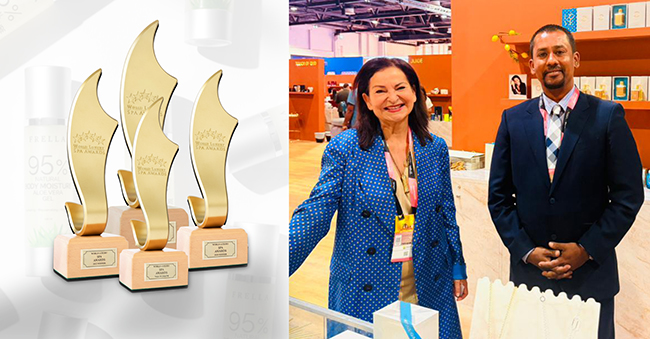
FRELLA, Sri Lankan-born and internationally-respected natural beauty and wellness brand, is setting the stage to expand operations by entering the Sri Lankan retail market. As the country’s only dedicated wellness company operating at an international scale, this move marks a new chapter for a brand with a growing global presence that has already earned the trust of luxury hotels and international customers.
For over seven years, FRELLA has emerged as Sri Lanka’s leading wellness brand, serving clients and partners across more than 15 international markets. The brand’s entry into the Sri Lankan retail market marks a significant milestone, allowing local consumers to access globally respected wellness products developed from the island’s own healing traditions. This retail expansion is supported through a strategic partnership with Baurs, a trusted 170-year-old Swedish multinational company, ensuring sophisticated distribution and access aligned with international retail standards.
FRELLA is rooted in Sri Lanka’s ancient healing traditions and inspired by centuries-old Ayurvedic wisdom. All FRELLA products are specially designed as holistic wellness solutions for the body, skin, hair, and soul, and focuses on providing nourishment, balance, and healthy aging through refined, modern wellness systems.
Business
Writer Business Services enters Sri Lanka to partner with institutions to provide information management and payments solutions


Writer Corporation, one of India’s leading business groups, announced the launch of its subsidiary, Writer Business Services Pvt. Ltd., and the commencement of its operations in Sri Lanka. The expansion reflects Sri Lanka’s strategic importance in Writer’s regional growth plans and its role in supporting a highly regulated digital and financial services market which is currently undergoing digital transformation.
Sri Lanka’s continued focus on strengthening regulatory frameworks, digital platforms, and financial systems is shaping how institutions across banking, government, and enterprise sectors approach their business operations. There is a clear emphasis on secure, compliant, and resilient information and transaction environments that can scale with regulatory and business needs. Writer’s entry into Sri Lanka aligns with this direction, bringing global experience and a partnership-led approach to the market.
As part of its launch, Writer will establish a secure records and information storage facility in Seeduwa, Colombo. Designed to meet global standards for security, compliance, and disaster resilience, the facility will support banks, financial institutions, government bodies, and large enterprises in managing physical and digital information across its lifecycle.
Alongside information management, Writer brings established expertise in integrated payment services to support the modernization of transaction infrastructure across the banking and financial services sector. Its payments capabilities focus on strengthening availability, transaction continuity, and transparency across critical payment channels that underpin institutional reliability and customer confidence.
Writer’s digital payments offerings in Sri Lanka include end-to-end ATM and self-service terminal outsourcing, integrated channel ownership and managed services, field management applications, payment and reconciliation platforms, and remote monitoring with near real-time reporting. These solutions support financial institutions in improving uptime, strengthening governance, and enhancing operational efficiency across payment networks, in line with the continued evolution of electronic and automated payment systems.
Across information management and payments, Writer operates with an integrated portfolio spanning records and information management, business process outsourcing, cloud and digital services, data privacy, cybersecurity and enterprise payments infrastructure. These capabilities support institutions in addressing evolving regulatory requirements, digitization of legacy environments, and rising operational and cyber risks.
Writer’s local presence enables closer collaboration with clients and on-ground delivery, while supporting the development of Centres of Excellence across cybersecurity operations, SOC and NOC services, AI-led solutions, and payments operations and monitoring.
Writer’s Sri Lanka operations will be built, led, and run by Sri Lankan professionals, reflecting a long-term commitment to local talent growth and development.
Commenting on this development, Satyamohan Yanambaka, CEO, Writer Global Services Pvt. Ltd., assured Writer’s long-term commitment to the country’s digital ambitions. He said, “Writer’s entry into Sri Lanka reflects our belief that digital ambition in regulated environments must be supported by trust, sound governance, and strong execution. As institutions scale digital services, the reliability of information and payment systems, channel operations, and governance frameworks becomes increasingly important to public and institutional confidence. Our experience across information management, digital transformation, and enterprise payments enables us to support secure, large-scale financial ecosystems, with a clear commitment to building and leading these capabilities locally.”
Sri Lanka’s Digital Personal Data Protection framework raises expectations around how personal and sensitive information is secured and governed.

Jofra Archer back as England and Sri Lanka begin World Cup countdown

Showers will occur at times in the Eastern, Northern, North-Central and Uva provinces and in Matale and Nuwara-Eliya districts

DevPro and WCIC come together to accelerate women’s economic empowerment in Sri Lanka

Tobacco and alcohol claim 22,000 lives annually

Development Officers hunger strike drags on for fourth day

IMF urges Lanka to diversify trade amidst global tariff risks

‘Dates have the highest sugar content to fight Coronavirus’

Sunday Island 27 December – Headlines

#SundayIsland 17th December – Headlines

Sunday Island – 28th March

Sunday Island Headlines – 21 March

Sunday Island – 21st February – Headlines
-
 Business4 days ago
ComBank, UnionPay launch SplendorPlus Card for travelers to China
-
 Business5 days ago
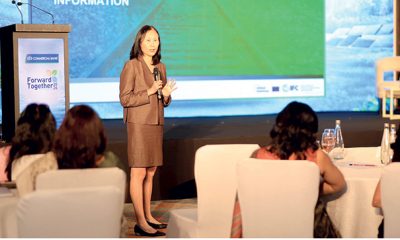
ComBank advances ForwardTogether agenda with event on sustainable business transformation
-
 Opinion5 days ago
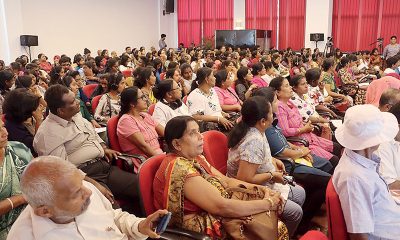
Conference “Microfinance and Credit Regulatory Authority Bill: Neither Here, Nor There”
-
 Business1 day ago
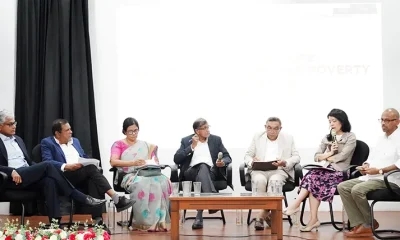
Climate risks, poverty, and recovery financing in focus at CEPA policy panel
-

 Opinion4 days ago
Luck knocks at your door every day
-
 Business6 days ago
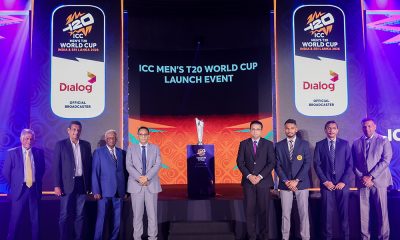
Dialog Brings the ICC Men’s T20 Cricket World Cup 2026 Closer to Sri Lankans
-

 News5 days ago
Rising climate risks and poverty in focus at CEPA policy panel tomorrow at Open University
-

 Business1 day ago
Bourse positively impacted by CBSL policy rate stance