
News
New anti-terror law opposed by social media collective


Collective for Social Media Declaration (CSMD) has strongly opposed the proposed Protection of the State from Terrorism Act, No. of 2026 (PSTA).
The following is the text of the statement issued by Sampath Samarakoon on behalf of CSMD: “The Protection of the State from Terrorism Act, No. of 2026 (PSTA) presents itself as an improvement on the existing Prevention of Terrorism Act (PTA). This framing obscures the reality that its core architecture, including administrative detention, military powers, proscription regimes, and broad speech offences, replicates the essential features that made the PTA objectionable for over four decades.
The Bill replicates the fundamental architecture that made the PTA objectionable. Rather than using the ordinary criminal law regime for terrorism offences alongside emergency powers when genuinely required, the PSTA creates parallel criminal jurisdictions with reduced safeguards and expanded executive authority. Its scheme maintains extraordinary arrest and detention powers, grants the Attorney General potentially coercive mechanisms to compel admissions without trial, and empowers the President, senior police officers, and the Defence Secretary to issue proscription orders, restriction orders, curfews, and prohibited place declarations with limited judicial oversight. As the title suggests, the Bill’s fundamental purpose is to protect the state rather than to protect civilians from violence, a framing that offers little resistance to treating public dissent, political disruption, and threats to political power as terrorism in themselves. Though the Bill includes carve-outs for protest and industrial action, these sit in tension with other provisions and may prove ineffective in practice.
Section 78 defines “confidential information” so broadly that it could capture online content, and social media posts documenting military checkpoints, photographs of army deployments during civilian protests, or tweets noting the presence of intelligence personnel at public events. Tamil civil society organisations, and activists documenting enduring militarisation in their communities face particular exposure. Section 15 criminalises failure to report information about terrorism offences with penalties of up to seven years imprisonment, placing journalists, lawyers, doctors, and religious figures in impossible positions where professional ethics conflict with criminal liability. This provision effectively conscripts recipients of information as state informants, creating a chilling effect on communication without requiring any technical interception.
Journalists, civil society activists, and ordinary social media users face particular exposure under this Bill. The predictable consequence is self-censorship driven by fear rather than any genuine security benefit. The Bill’s extended detention provisions, which permit up to two years of combined remand and detention without charge, provide a repressive mechanism for silencing dissent. Meanwhile, the surveillance and decryption powers granted under sections 53 and 55 threaten to eliminate private digital communication entirely, depriving citizens of secure channels for democratic dialogue and exposing them to monitoring that bears no reasonable relationship to legitimate counter-terrorism objectives.
We want to particularly stress the Bill’s impact on privileged, and encrypted communications, that go far beyond the PTA. Section 55 grants magistrates authority to order the unlocking of encrypted communications, yet assumes technical capability that simply does not exist with genuine end-to-end encryption (E2EE) systems. The extension of police powers to military personnel under section 19 creates a 24-hour window before handover to civilian authorities during which device contents could be accessed without procedural safeguards. Given documented patterns of abuse during military detention, including custodial torture, particularly affecting Tamil communities, the risk of coerced access to encrypted communications is not theoretical.
National security cannot serve as a blank cheque to erode democratic values. We urge the government to withdraw this Bill, engage in meaningful consultation with civil society, and affected communities, and develop fit-for-purpose legislation that meets international human rights standards while addressing legitimate national, and human security concerns.”


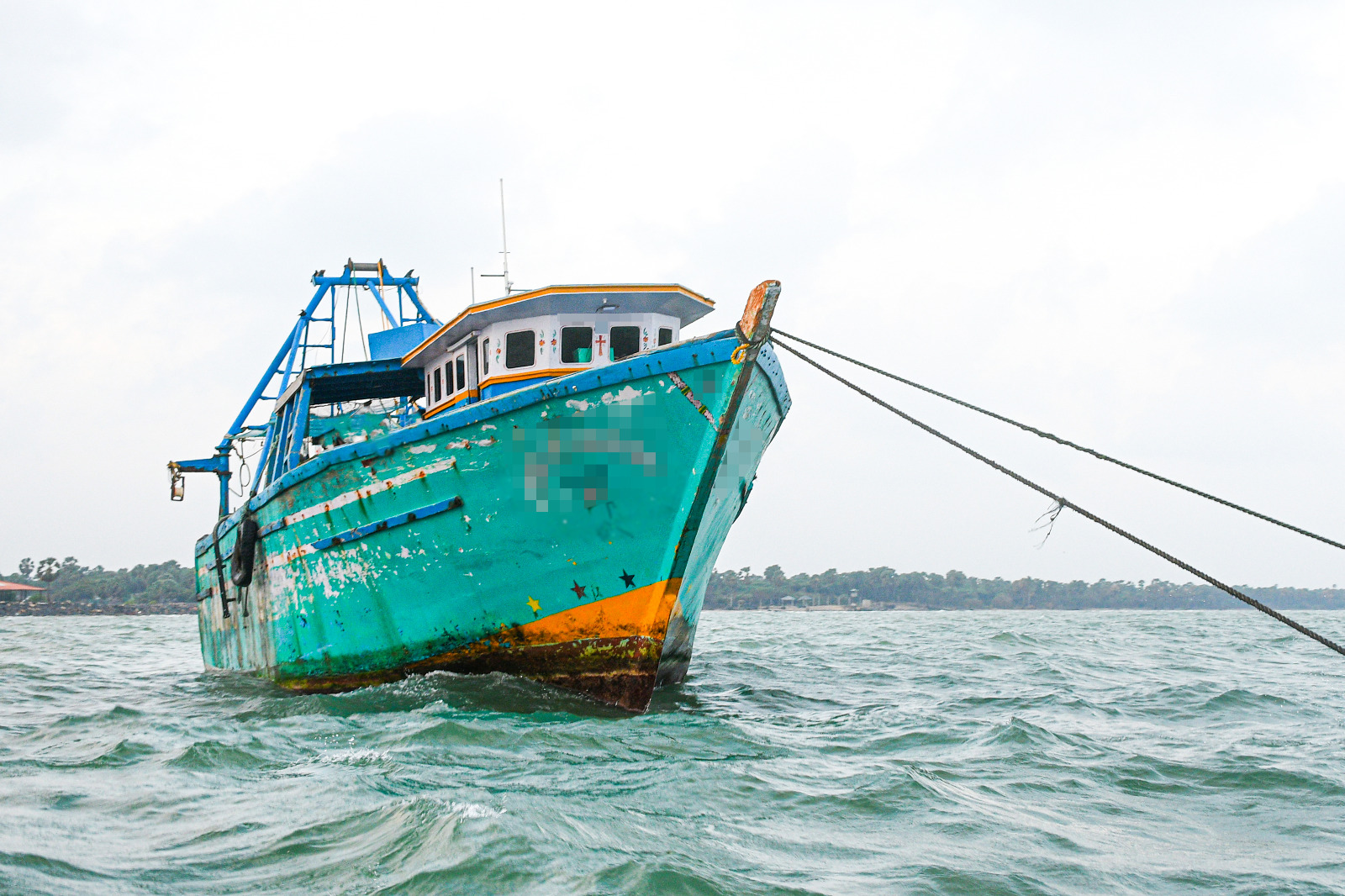
During an operation conducted in the wee hours of Tuesday (23 Dec 25), the Sri Lanka Navy seized an Indian fishing trawler and apprehended 12 Indian fishermen, while they were poaching in Sri Lankan waters north of Talaimannar.
Recognizing the detrimental effects of poaching on marine resources and the livelihoods of local fishing communities, the Sri Lanka Navy continues to conduct regular operations as
proactive measures to deter such activities. These efforts underscore the collective robust approach steadfast commitment to safeguarding the nation’s marine ecosystems while ensuring the economic security and wellbeing of its citizens.
The fishing trawler along with the fishermen held in this operation was handed over to the Fisheries Inspector of Mannar for onward legal proceedings.


India’s External Affairs Minister, Dr. Subramaniam Jaishankar, met with the Prime Minister of Sri Lanka, Dr. Harini Amarasuriya, on 23 December at Temple Trees, during his visit to Sri Lanka as the Special Envoy of Indian Prime Minister Shri Narendra Modi.
The meeting took place as part of the official visit aimed at holding discussions with Sri Lanka’s top leadership, at a time when the nation commenced reconstruction efforts following the devastation caused by Cyclone Ditwah.
During the discussions, the Minister of External Affairs of India reaffirmed readiness to extend support for Sri Lanka, including assistance in rebuilding railways, bridges, and strengthening of the agricultural sector in the country. He also highlighted the importance of having effective systems in place to respond to disaster situations, supported by strong legislative, administrative, and institutional frameworks. Both sides reviewed ongoing relief efforts and explored avenues to further strengthen bilateral cooperation in disaster response and recovery.
The Prime Minister commended the Government of India for the continued support, noting that the recovery process following the devastation caused by Cyclone Ditwah include beyond immediate relief efforts to long-term measures such as resettlement, and reconstruction of habilitation and infrastructure.
The Prime Minister further stated that steps have been taken to reopen schools as part of the process of restoring normalcy, with close monitoring in place. The Prime Minister emphasized the need to ensure stability, reduce vulnerability, and strengthen protection mechanisms highlighting the solidarity of the people, their strong spirit of volunteerism, and collective action demonstrated during the emergency situation.
The event was attended by the High Commissioner of India Santosh Jha, Additional Secretary (IOR), MEA Puneet Agrawal, Joint Secretary (EAMO), MEA Sandeep Kumar Bayyapu, Deputy High Commissioner Dr. Satyanjal Pandey, and representing Sri Lankan delegation, Secretary to the Prime Minister Pradeep Saputhanthri, Additional Secretary to the Prime minister Ms.Sagarika Bogahawatta, Director General (South Asia), Ministry of Foreign Affairs Samantha Pathirana, Deputy Director, South Asia Division, Ministry of Foreign Affairs Ms.Diana Perera.
[Prime minister’s media division]

Sri Lanka is standing on the edge of a coastal catastrophe, with the nation’s lifeline rapidly eroding under the combined assault of climate change, reckless development and weak compliance, Director General of the Department of Coast Conservation and Coastal Resource Management (DCC&CRM) Dr. Terney Pradeep Kumara has warned.
“This is no longer an environmental warning we can afford to ignore. The crisis is already unfolding before our eyes,” Dr. Kumara told The Island, cautioning that the degradation of Sri Lanka’s 1,620-kilometre coastline has reached a point where delayed action could trigger irreversible damage to ecosystems, livelihoods and national security.
He said accelerating coastal erosion, rising sea levels, saltwater intrusion and the collapse of natural barriers, such as coral reefs and mangroves, are placing entire coastal communities at risk. “When mangroves disappear and reefs are destroyed, villages lose their first line of defence. What follows are floods, loss of homes, declining fisheries and forced displacement,” he said.
Dr. Kumara stressed that the coastline is not merely a development frontier but the backbone of Sri Lanka’s economy and cultural identity. “More than half of our tourism assets, fisheries and key infrastructure are concentrated along the coast.
If the coast fails, the economy will feel the shock immediately,” he warned.
Condemning unregulated construction, illegal sand mining and environmentally blind infrastructure projects, he said short-term economic interests are pushing the coastline towards collapse. “We cannot keep fixing one eroding beach while creating three new erosion sites elsewhere. That is not management—it is destruction,” he said, calling for science-driven, ecosystem-based solutions instead of politically convenient quick fixes.
The Director General said the Department is intensifying enforcement and shifting towards integrated coastal zone management, but warned that laws alone will not save the coast. “This is a shared responsibility. Policymakers, developers, local authorities and the public must understand that every illegal structure, every destroyed mangrove, weakens the island’s natural shield,” he added.
With climate change intensifying storms and sea surges, Dr. Kumara warned that Sri Lanka’s vulnerability will only worsen without urgent, coordinated national action. “The sea has shaped this nation’s history and protected it for centuries. If we fail to protect the coast today, we will be remembered as the generation that allowed the island itself to be slowly eaten away,” he went on to say.
By Ifham Nizam

Navy seizes an Indian fishing trawler poaching in Sri Lankan waters north of Talaimannar

Several spells of showers may occur in Central, Uva and Eastern provinces and in Polonnaruwa and Mullaittivu districts

India’s External Affairs Minister meets Sri Lanka PM

Shafali 69 not out , spinners lead India’s rout of Sri Lanka

Sri Lanka’s coastline faces unfolding catastrophe: Expert

SOC examines proposed amendments to the Microfinance and Credit Regulatory Authority Bill

‘Dates have the highest sugar content to fight Coronavirus’

Sunday Island 27 December – Headlines

#SundayIsland 17th December – Headlines

Sunday Island – 28th March

Sunday Island Headlines – 21 March

Sunday Island – 21st February – Headlines
-

 News2 days ago
Members of Lankan Community in Washington D.C. donates to ‘Rebuilding Sri Lanka’ Flood Relief Fund
-

 News7 days ago
Pope fires broadside: ‘The Holy See won’t be a silent bystander to the grave disparities, injustices, and fundamental human rights violations’
-

 News7 days ago
Pakistan hands over 200 tonnes of humanitarian aid to Lanka
-

 Business6 days ago
Unlocking Sri Lanka’s hidden wealth: A $2 billion mineral opportunity awaits
-

 News6 days ago
Army engineers set up new Nayaru emergency bridge
-

 News7 days ago
Officials of NMRA, SPC, and Health Minister under pressure to resign as drug safety concerns mount
-

 News7 days ago
Expert: Lanka destroying its own food security by depending on imported seeds, chemical-intensive agriculture
-

 Editorial7 days ago
Flawed drug regulation endangers lives