
News
New alliance emerges claiming credit for change of govt., promises to achieve ‘missed objectives’


…promises self-determination
By Shamindra Ferdinando
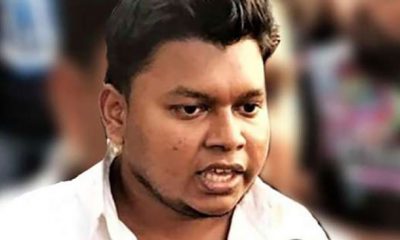
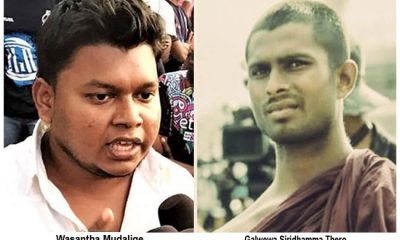
Wasantha Mudalige on behalf of the Frontline Socialist Party (FSP) said that though Aragalaya managed to compel Gotabaya Rajapaksa to give up his presidency and flee the country in July 2022 it couldn’t achieve what he called system change, hence the decision to form an alliance ‘Jana Aragala Balaya’ to contest future elections.
Addressing the media at Lions Club centre at Wijerama Mawatha, Mudalige said that instead of changing the course of Sri Lanka’s direction, UNP leader Ranil Wickremesinghe, with the backing of the SLPP was pursuing the same disastrous policies that caused bankruptcy.
The former student leader cited the increasing of external debt to a staggering USD 100 bn from USD 84 in July 2022 when Wickremesinghe took over to prove further deterioration of the economy. The FSP is one of the breakaway factions of the JVP with the other led by Wimal Weerawansa ending up with ‘Sarvajana Balaya.’
Having caused further deterioration and irreparable damage, a foolish attempt was being made to deceive the public with regard to the status of the economy, the student activist said.
Mudalige warned that political and economic stability couldn’t be restored through Wickremesinghe-SLPP policies that were intended to promote their own interests and those of the likes of Adanis.
Pointing out another disastrous IMF remedy charging taxes on owner occupied and vacant residential houses on imputed rents from April 2025, Mudalige emphasised the need for a total overhauling of the system. The FSP frontliner called for immediate withdrawal from the IMF deal worth USD 2.9 bn and end to Indian expansionist drive here.
Declaring the pivotal importance of giving an opportunity to the electorate to take political decisions, Mudalige called for the enactment of a new Constitution.
Assuring the public of a pragmatic plan to save them from an utterly corrupt and despotic system, Mudalige declared their determination to build up political power both in and outside parliament.
Among those who called for complete overhauling of the existing system were V. Mahendran of Marxist Leninist New Democracy party, Attorney-at-Law Swasthika Arulingam, journalist Tharindu Uduwaragedara, Dr. Kalpa Rajapaksha, Dharmasiri Lankapeli of Samajawadi Janatha Sansadhaya, Duminda Nagamuwa of FSP, aragalaya activist Wire Wirasingham, Surekha Amarasena of Sthiriwadi Sanvidhanaya, aragalaya activist Raj Kumar Rajiv Khan, Hude Namal of Fisheries sector grouping, Ven. Wakandawela Rahula representing environmental organizations, lawyer Nuwan Bopage, Nirosha Guruge representing the interest of micro finance scams, Lahiru Weerasekera, actor Jehan Appuhamy , estate sector representative Marcus Prabhakar, Aragalaya activist Nur Morieen and economic analyst Danusha Gihan.
Urging the electorate to recognise the role played by those who made Gotabaya Rajapaksa’s ouster possible, Duminda Nagamuwa warned President Wickremesinghe not to seek postponement of presidential and parliamentary polls scheduled for later this year and next year, respectively. Nagamuwa said that they would contest both national polls.
The FSPer said that ‘Jana Aragala Balaya’ would take stand on contentious issues without hesitation. In respect of economic policy, Nagamuwa declared that the country should terminate the deal with the IMF. The new grouping declared that self-determination was the answer to the national question.
Uduwaragedara said that while all other political parties hesitated to state their stand with regard to the national question, ‘Jana Aragala Balaya’ declared a formula based on self-determination. The civil society activist emphasized that they wouldn’t allow the return of the Rajapaksas.
Danusha Pathirana alleged that the IMF remedies were not meant to help Sri Lanka recover but to manipulate the country in a manner advantageous to external investors at all levels. Pathirana explained how the IMF manipulated the country with ease as the powers that be blindly cooperated with them.





Only one Member of Parliament has chosen not to receive the salaries and allowances entitled to MPs, Prime Minister Dr. Harini Amarasuriya revealed in Parliament last Thursday, shedding light on the financial perks enjoyed by members of the Tenth Parliament.
Speaking on Thursday (Feb. 19) in response to a question from SJB Badulla District MP Chaminda Wijesiri, the Prime Minister outlined the full range of pay and allowances provided to parliamentarians.
According to Dr. Amarasuriya, MPs receive a monthly allowance of Rs. 54,285, an entertainment allowance of Rs. 1,000, and a driver’s allowance of Rs. 3,500—though MPs provided with a driver through the Ministry of Public Security and Parliamentary Affairs are not eligible for the driver’s allowance.
Additional benefits include a telephone allowance of Rs. 50,000, a transport allowance of Rs. 15,000, and an office allowance of Rs. 100,000. MPs are also paid a daily sitting allowance of Rs. 2,500 for attending parliamentary sessions, with an additional Rs. 2,500 per day for participation in parliamentary sittings and Rs. 2,500 per day as a committee allowance.
Committee meetings held on non-parliament sitting days also attract Rs. 2,500 per day.
Fuel allowances are provided based on the distance between an MP’s electoral district and Parliament. National List MPs are entitled to a monthly allocation equivalent to 419.76 litres of diesel at the market price on the first day of each month.
Despite the comprehensive benefits, only SJB Badulla District MP Nayana Wasalathilaka has opted not to draw a salary or allowances. Dr. Amarasuriya said that in accordance with a written notification submitted by MP Wasalathilaka on August 20, 2025, payments have been suspended since that date.
The Prime Minister also confirmed that she, along with the Speaker, Deputy Speaker, committee chairs, ministers, deputy ministers, the Opposition Leader, and senior opposition whips, have all informed the Secretary-General of Parliament in writing that they will not claim the fuel allowance.
Challenging the ruling party’s voluntary pledge to forgo salaries, MP Wijesiri pointed out that all MPs except Wasalathilaka continue to receive their salaries and allowances. “On one hand you speak about the people’s mandate, which is good. But the mandate also included people who said they would voluntarily serve in this Parliament without salaries. Today we have been able to prove, Hon. Speaker, that except for one SJB MP, the other 224 Members are drawing parliamentary salaries,” he said.
The Prime Minister responded by defending the political culture and practice of allocating portions of MPs’ salaries to party funds. Referring to previous practices by the JVP and NPP, she said: “It is no secret to the country that the JVP has for a long time not personally taken MPs’ salaries or any allowances. I think the entire country knows that these go to a party fund. That is not new, nor is it something special to mention. The NPP operates in the same way. That too is not new; it is the culture of our political movement.”
When MP Wijesiri posed a supplementary question asking whether diverting salaries to party funds was an indirect method of taking care of MPs, Dr. Amarasuriya said: “There is no issue there. No question was raised; the Member made a statement. What we have seen throughout this week is an inability to understand our political culture and practice, and a clash with decisions taken by political movements that misused public funds. What is coming out is a certain mindset. That is why there is such an effort to find fault with the 159. None of these facts are new to people. He did not ask a question, so I have nothing to answer.”
The disclosures come days after the Government moved to abolish the parliamentary pension, a measure that has sparked renewed debate over MP compensation and the transparency of funds allocation.
Public Security and Parliamentary Affairs Minister Ananda Wijepala on Friday (20) disclosed in Parliament details of properties and assets allegedly acquired through illegal activities by suspects arrested in raids carried out since September last year.
The Minister made the disclosure in response to a question raised by MP Ravindra Bandara, stating that the identified assets have been frozen pending further investigations.
He said the assets include properties belonging to several alleged organised crime figures, among them Mandinu Padmasiri, alias ‘Kehelbaddara Padme’, who was arrested last year.
Listing the assets in the House, the Minister said Hapugoda Arachchige Kankanamge Duminda Dilruk has assets worth Rs. 23 million frozen, including a van, a motorcycle, a house and a roller gate.
In the case of Kandaiya Kalamogan, two motorboats have been identified, although their value has not yet been assessed.
Dilum Tharaka Balasuriya is reported to own a two-storey house situated on 15 perches of land with a face value of Rs. 800,000.
Assets belonging to Mohammad Harish Mohammad and Mohammad Shiyam were frozen on January 21, 2026. While the total value has not yet been assessed, five vehicles were confiscated from the former and a car from the latter.
Wijesuriya Mahaduruge Uditha Iroshan Wijesiri has assets valued at Rs. 5 million, including a lorry, while Indika Pathmakumara’s assets include a cab worth Rs. 2.5 million and a bank account containing Rs. 1 million.
Lahiru Sampath is reported to own a three-wheeler valued at Rs. 1.8 million.
According to the Minister, Hettiarachchige Dona Sriyani Chandralatha possesses a four-storey house and 14.7 perches of land valued at Rs. 60 million.
Mandinu Padmasiri, alias ‘Kehelbaddara Padme’, owns 20 perches of land with partially constructed buildings valued at Rs. 30 million and a half-finished six-room building worth Rs. 20 million, the Minister said.
Patabendi Maddumage Shehan Sathsara, alias ‘Dehi Bale Malli’, has five multi-day fishing trawlers valued at Rs. 200 million and a two-storey house with 15.8 perches of land worth Rs. 50 million.
The Minister further disclosed that Jayasinghege Maduranga Sampath owns a cab worth Rs. 5.4 million, a van valued at Rs. 14.5 million, five bank accounts containing Rs. 73.03 million, another account with Rs. 160,328.88 and USD 544, and Rs. 283 million in cash.
Adhikari Samantha Perera is reported to own 10.10 perches of land valued at Rs. 5 million and one acre and 1.5 perches of land worth Rs. 13 million.The Minister said investigations are continuing in respect of the suspects and the frozen assets.
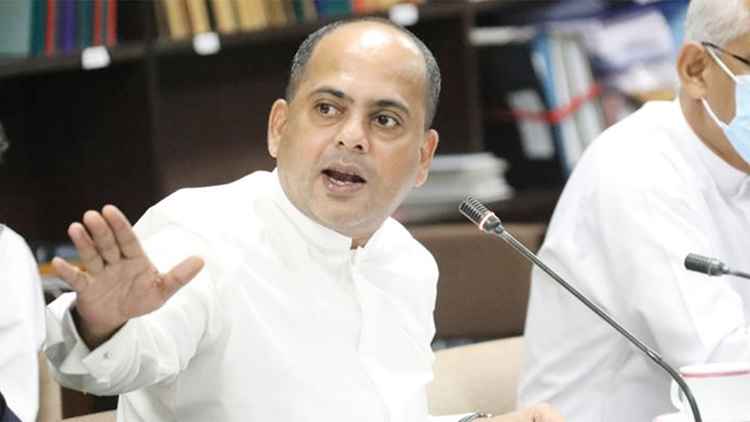
The entire coal procurement process was rigged, the main Opposition SJB alleged in Parliament on Friday, accusing Energy Minister Eng. Kumara Jayakody of misleading the Cabinet and the National Procurement Committee to favour a supplier of substandard coal for the Lakvijaya Coal Power Plant in Norochcholai.
Moving an adjournment debate on the energy crisis, SJB Colombo District MP S.M. Marikkar charged that the losses incurred from the importation of inferior coal must be fully computed and recovered from those responsible, including damage caused to machinery, additional power generation costs and environmental harm.
He said the SJB had exposed the issue both inside and outside Parliament, alleging that the Government was attempting to cover up large-scale irregularities in the 2026 coal procurement process.
Marikkar claimed that serious fraud, corruption and procedural violations had taken place from the outset. He pointed out that the standard 42-day procurement period had been curtailed to 21 days, thereby restricting competition and preventing many qualified companies from participating.
He further alleged that key eligibility criteria had been diluted, including the requirement that a supplier must have imported 500,000 metric tonnes of coal over the past three years. This threshold, he said, had been reduced to 100,000 metric tonnes to enable smaller firms to qualify.
According to the MP, despite instructions issued by the Committee on Public Finance and the Auditor General regarding the procurement process, the Minister had misled the Cabinet and the National Procurement Committee to deviate from the approved procedure in order to favour a particular company that subsequently supplied substandard coal.
Marikkar alleged that the first, third and fourth shipments had contained inferior coal, which had been mixed with existing higher-quality stocks and used at the Norochcholai plant. He said the resulting losses to the power generation system would far exceed the reported US$ 2 million fine imposed on the importer.
He also highlighted alleged irregularities in the tender process, claiming that the chairman of the tender board had withdrawn after decisions were taken and had failed to attend subsequent meetings.The MP further charged that the Government was attempting to justify impending power cuts by citing a purported shortage of coal.

Showers or thundershowers will occur at most part of the Island after 1.00 p.m.

Only single MP refuses salary as Parliament details pays and allowances

Illegal assets of underworld figures frozen since September, Minister tells parliament

Entire coal procurement rigged, SJB charges minister over substandard fuel

WNPS demands immediate ban on illegal construction

CID probes suspect lawyer’s multi-million-rupee money trail in Sanjeewa murder case

‘Dates have the highest sugar content to fight Coronavirus’

Sunday Island 27 December – Headlines

#SundayIsland 17th December – Headlines

Sunday Island – 28th March

Sunday Island Headlines – 21 March

Sunday Island – 21st February – Headlines
-

 Business6 days ago
Ministry of Brands to launch Sri Lanka’s first off-price retail destination
-

 Latest News1 day ago
New Zealand meet familiar opponents Pakistan at spin-friendly Premadasa
-

 Latest News1 day ago
Tariffs ruling is major blow to Trump’s second-term agenda
-

 Latest News2 days ago
ECB push back at Pakistan ‘shadow-ban’ reports ahead of Hundred auction
-

 Features6 days ago
Giants in our backyard: Why Sri Lanka’s Blue Whales matter to the world
-
 Sports3 days ago
Old and new at the SSC, just like Pakistan
-
 News5 days ago
IMF MD here
-
 Business5 days ago
Green Minds: A new platform to rethink environmental governance in Sri Lanka