
News
Multiple crises halt progress as 9 out of 10 countries fall backwards in human development, UNDP report warns


The world must jolt itself out of its global paralysis to secure the future of people and planet by re-booting its development trajectory 8 September 2022 – New York: The world is lurching from crisis to crisis, trapped in a cycle of firefighting and unable to tackle the roots of the troubles that confront us. Without a sharp change of course, we may be heading towards even more deprivations and injustices, warns the United Nations Development Programme (UNDP).
The latest Human Development Report, “Uncertain Times, Unsettled Lives: Shaping our Future in a Transforming World”, launched on Thursday by UNDP, argues that layers of uncertainty are stacking up and interacting to unsettle life in unprecedented ways. The last two years have had a devastating impact for billions of people around the world, when crises like COVID-19 and the war in Ukraine hit back-to-back, and interacted with sweeping social and economic shifts, dangerous planetary changes, and massive increases in polarization.
For the first time in the 32 years that UNDP have been calculating it, the Human Development Index, which measures a nation’s health, education, and standard of living, has declined globally for two years in a row. Human development has fallen back to its 2016 levels, reversing much of the progress towards the Sustainable Development Goals.
The reversal is nearly universal as over 90 percent of countries registered a decline in their HDI score in either 2020 or 2021 and more than 40 percent declined in both years, signaling that the crisis is still deepening for many. While some countries are beginning to get back on their feet, recovery is uneven and partial, further widening inequalities in human development. Latin America, the Caribbean, Sub-Saharan Africa and South Asia have been hit particularly hard.
“The world is scrambling to respond to back-to-back crises. We have seen with the cost of living and energy crises that, while it is tempting to focus on quick fixes like subsidizing fossil fuels, immediate relief tactics are delaying the long-term systemic changes we must make,” says Achim Steiner, UNDP Administrator. “We are collectively paralyzed in making these changes. In a world defined by uncertainty, we need a renewed sense of global solidarity to tackle our interconnected, common challenges.”
The report explores why the change needed isn’t happening and suggests there are many reasons, including how insecurity and polarization are feeding off each other today to prevent the solidarity and collective action we need to tackle crises at all levels. New calculations show, for instance, that those feeling most insecure are also more likely to hold extreme political views.
“Even before COVID-19 hit, we were seeing the twin paradoxes of progress with insecurity and polarisation. Today, with one-third of people worldwide feeling stressed and fewer than a third of people worldwide trusting others, we face major roadblocks to adopting policies that work for people and planet,” says Achim Steiner. “This thought-provoking new analysis aims to help us break this impasse and chart a new course out of our current global uncertainty. We have a narrow window to re-boot our systems and secure a future built on decisive climate action and new opportunities for all.”
To chart a new course, the report recommends implementing policies that focus on investment — from renewable energy to preparedness for pandemics, and insurance—including social protection— to prepare our societies for the ups and downs of an uncertain world. While innovation in its many forms—technological, economic, cultural—can also build capacities to respond to whatever challenges come next.
“To navigate uncertainty, we need to double down on human development and look beyond improving people’s wealth or health,” says UNDP’s Pedro Conceição, the report’s lead author. “These remain important. But we also need to protect the planet and provide people with the tools they need to feel more secure, regain a sense of control over their lives and have hope for the future.”

Latest News
Heat Index at Caution Level in the Western, Sabaragamuwa, Southern, Eastern, North-western, Northern and North-central provinces and in Monaragala district


Warm Weather Advisory
Issued by the Natural Hazards Early Warning Centre
Issued at 3.30 p.m. on 31 March 2026, valid for 01 April 2026.
The Heat index, the temperature felt on human body is likely to increase up to ‘Caution level’ at some places in the Western, Sabaragamuwa, Southern, Eastern, North-western, Northern and North-central provinces and in Monaragala district.
The Heat Index Forecast is calculated by using relative humidity and maximum temperature and this is the condition that is felt on your body. This is not the forecast of maximum temperature. It is generated by the Department of Meteorology for the next day period and prepared by using global numerical weather prediction model data.

Effect of the heat index on human body is mentioned in the above table and it is prepared on the advice of the Ministry of Health and Indigenous Medical Services.
ACTION REQUIRED
Job sites: Stay hydrated and takes breaks in the shade as often as possible.
Indoors: Check up on the elderly and the sick.
Vehicles: Never leave children unattended.
Outdoors: Limit strenuous outdoor activities, find shade and stay hydrated.
Dress: Wear lightweight and white or light-colored clothing.
Note:
In addition, please refer to advisories issued by the Disaster Preparedness & Response Division, Ministry of Health in this regard as well. For further clarifications please contact 011-7446491.


Govt. rations stocks as imports falter
By Ifham Nizam
The government faces a looming fertiliser crisis ahead of the 2026 Yala season, with a sharp shortfall in urea threatening paddy yields and food security.
Experts have warned that the fertiliser shortage will take its toll on the yala harvest.
With just over 100,000 tonnes of fertiliser in stock by early March—barely enough for paddy cultivation alone—and more than half of expected imports either cancelled or delayed, the government has moved to ration supplies through Agrarian Service Centres, based on last year’s consumption.
Leading crop scientist Professor Buddhi Marambe has warned that while rationing is unavoidable, it will reduce productivity. “Even last season we applied below recommended levels. This year, the gap will be worse,” he said.
Authorities are prioritising paddy, followed by maize and tea, as limited stocks are stretched across crops.
However, experts estimate yields could fall by 15–20% if nutrient shortages persist—raising the risk of higher food prices in the months ahead.
The crisis has been worsened by global disruptions, including Gulf conflict affecting fertiliser shipments and precautionary export restrictions by key suppliers, such as China.
Although the Government is pursuing deals with countries like Russia, supplies remain uncertain.
With global urea prices surging and production costs rising, smallholder farmers are expected to be the hardest hit.
“This is a wake-up call,” Prof. Marambe said, urging urgent steps to build buffer stocks and strengthen Sri Lanka’s long-term food security strategy.

By Shamindra Ferdinando
Frontline Socialist Party (FSP) spokesman Pubudu Jayagoda says the Gampaha Magistrate’s Court order that the ruling JVP hand back the FSP’s Kirindiwela office, grabbed by a group of JVP politicians on 02 September, 2025, has shown that the government cannot undermine the law.
Jayagoda said that the FSP had been compelled to move the court against the JVP as the Gampaha police refused to intervene due to political pressure. “They probably thought we were going to give up that office. Perhaps, the ruling party felt they could forcibly occupy other FSP offices,” Jayagoda said.
FSP’s Administrative Secretary Chamira Koswatta and trade unions, which operated from the Salmal Garden office, sought the court intervention to confirm the ownership of that building in the FSP. The court initially transferred the building to the police and issued a directive to law enforcement authorities to remove the JVP/NPP from that building.
Among the 20 respondents was Tilvin Silva, General Secretary of the JVP. Those now identified themselves as FSP quit the JVP in 2011 and later formed their own party.
Gampaha Additional Magistrate Shilani Perera on Monday ruled that the legitimate owner was the FSP. The Magistrate ruled that the FSPers had been forced out of that office, illegally.
Jayagoda said that the FSP considered the court ruling a victory for democracy and a devastating blow to the increasingly authoritarian JVP/NPP rule.

Amelia Kerr hits 139-ball 179* as New Zealand pull off record chase to level series

Punjab Kings fined for slow over-rate

Ice-cool Connolly leads nervy Punjab Kings home on IPL debut

Showers expected in the Western, Sabaragamuwa and Southern provinces in the evening or night

Heat Index at Caution Level in the Western, Sabaragamuwa, Southern, Eastern, North-western, Northern and North-central provinces and in Monaragala district

Urea shortage threatens Yala harvest: Experts

‘Dates have the highest sugar content to fight Coronavirus’

Sunday Island 27 December – Headlines

#SundayIsland 17th December – Headlines

Sunday Island – 28th March

Sunday Island Headlines – 21 March

Sunday Island – 21st February – Headlines
-

 Features5 days ago
A World Order in Crisis: War, Power, and Resistance
-

 News6 days ago
Energy Minister indicted on corruption charges ahead of no-faith motion against him
-

 News7 days ago
US dodges question on AKD’s claim SL denied permission for military aircraft to land
-

 Business7 days ago
Dialog Unveils Dialog Play Mini with Netflix and Apple TV
-

 Sports6 days ago
SLC to hold EGM in April
-

 Opinion6 days ago
When elephants fight, it is the grass that suffers
-
 Latest News6 days ago
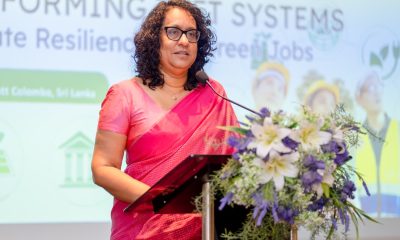
A strong Technical and Vocational Education and Training (TVET) system equips individuals with practical, relevant, and future-oriented skills helping to innovate responsibly towards a greener and sustainable future – PM
-

 Features6 days ago
Lest we forget