
News
Monetary Board increases interest rates drastically to tackle runaway inflation; highest levels in 21 years


The Monetary Board on Wednesday (06) increased the Standing Deposit Facility Rate (SDFR) and the Standing Lending Facility Rate (SLFR) of the Central Bank by 100 basis points to 14.50 per cent and 15.50 per cent, respectively.That had been done to tackle rising domestic inflation, the Central Bank of Sri Lanka (CBSL) said, explaining the reasons for the Monetary Board decision, adding that these rates are at the highest in 21 years.
he Bank said it had noted a higher-than-expected increase of headline inflation recently.The high inflation is expected to remain in the period ahead, thus the Monetary Board was of the view that a further monetary policy tightening would be necessary to contain any build-up of adverse inflation expectations.The CBSL said that the policy adjustments would help Sri Lanka stabilise its inflation to between 4 and 6 percent in the medium term.
The Bank said that they considered the impact of tighter monetary conditions on overall economic activity, including the micro, small, and medium scale businesses, and the financial sector performance, among others, against far reaching adverse consequences of any escalation of price pressures across all sectors of the economy in the near term.
The Bank raised rates by 700 basis points in April but made no further moves at its previous policy meeting in May.
Excerpts of the CBSL statement: “Central banks have become increasingly hawkish across the globe Central banks from around the world continue to tighten their monetary policies to counter sustained inflationary pressures, exacerbated by high petroleum and food prices arising from geopolitical tensions, and destabilising inflation expectations.
“Nevertheless, the outlook for the global economy has deteriorated recently amidst the global spread of inflation, substantial interest rate hikes, and escalation of geopolitical tensions. The unfolding of these events could have large negative spillover effects on emerging markets and developing economies in the period ahead.
“Domestic economic activity is expected to record a notable downturn in the near term As per the GDP estimates published by the Department of Census and Statistics (DCS), the Sri Lankan economy is estimated to have recorded a contraction of 1.6 per cent, year-on-year, in the first quarter of 2022. Domestic economic activity during the second quarter of 2022 is expected to have been severely affected by the continued supply side disruptions, primarily due to the shortages of power and energy.
“Amidst adverse developments on the domestic front, geopolitical tensions in Eastern Europe that have affected global commodity markets and supply chains could pose further risks to domestic economic growth in the near term.
“The trade deficit narrowed significantly in May 2022 over the corresponding period of last year, largely supported by the policy measures that were aimed at discouraging non urgent imports, alongside the constrained foreign exchange liquidity in the domestic foreign exchange market.
“Foreign exchange inflows in the form of workers’ remittances and tourism earnings remain lower than expected, impacted by unfavourable conditions both domestically and globally. The exchange rate, which underwent a severe bout of depreciation in March 2022, remains broadly stable with the introduction of market guidance from mid-May 2022.
“Gross official reserves, as at end June 2022, are estimated at US dollars 1.9 billion, including the swap facility from the People’s Bank of China equivalent to around US dollars 1.5 billion, which is subject to conditionalities on usability. Significant progress has been made with respect to negotiations with the International Monetary Fund (IMF) towards reaching a staff-level agreement on the Extended Fund Facility (EFF) arrangement in the near term, while negotiations with several bilateral and multilateral partners are ongoing to secure bridging financing. Moreover, expeditious arrangements are being made with regard to the external debt restructuring process.
“Ensuring external sector stability and overall macroeconomic stability requires commitment from all stakeholders of the economy, given the unprecedented balance of payments pressures and severe stresses experienced at present across all sectors of the economy.
The measures introduced by the Central Bank to ensure domestic monetary stability and external stability of the Sri Lanka rupee, need to be supported by coherent and consistent actions on the part of the Government, state-owned enterprises, private sector corporates, and banking and non-banking financial institutions, among others. Such co-ordinated response to crisis management would ensure public support and eventually help bring about normalcy to economic activity in the period ahead.”


* New Auditor General should not have been sworn in before Speaker – Opp.
* Suspended House Dy. Sec. Gen. Chaminda Kularatne takes his case to CA today
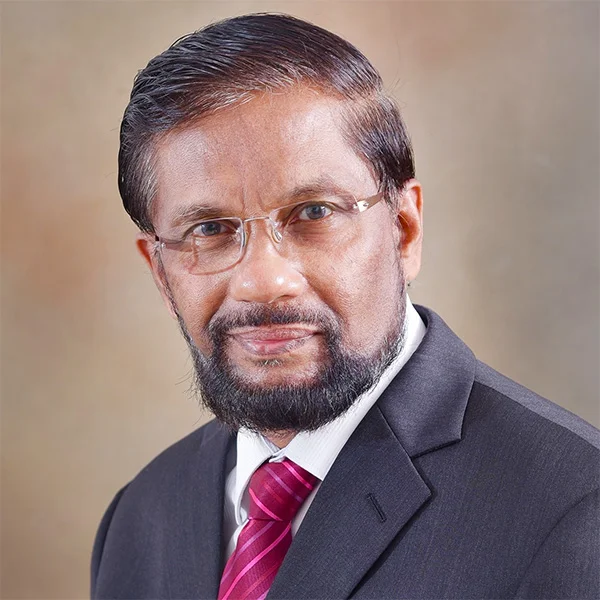
General Secretary of the National People’s Power (NPP) Dr. Nihal Abeysinghe yesterday said that there was no need for Speaker Dr. Jagath Wickramaratne to step down in view of the complaint lodged against him with the CIABOC (Commission to Investigate Allegations of Bribery or Corruption).
NPP General Secretary said so in response to The Island query whether the parliamentary group of the ruling party discussed the growing Opposition calls for the Speaker, who is also the Chairman of the Constitutional Council, to step down to facilitate the investigation.
The NPP parliamentary group consists of 159 MPs, including 18 National List (NL) members.
NL member Dr. Abeysinghe asked whether any other person, who had been investigated by the CIABOC, stepped down from his or her position to facilitate the inquiry.
The top official emphasised that the CIABOC could go ahead with its investigation without any hindrance.

Chamindra and Dr. Jagath
Opposition sources said that there hadn’t been a similar situation before and the CIABOC investigation into Speaker Dr. Wickramaratne is unprecedented as he heads the 10-member CC responsible and directly involved in all key appointments, including that of members to the CIABOC.
Sources pointed out that the newly appointed Auditor General, Ms. Samudrika Jayaratne, took the oath of secrecy before the Speaker on 5 February in Parliament after suspended Deputy General Secretary of Parliament Chaminda Kularatne complained to CIABOC.
In accordance with Section 9 of the National Audit Act, No. 19 of 2018, Jayaratne took the oath of secrecy in her capacity as the Auditor General of the National Audit Office and Chairperson of the Audit Service Commission.
Sources said that Kularatne would move the Court of Appeal today (10) against his removal at the behest of the Staff Advisory Committee, headed by the Speaker.
By Shamindra Ferdinando

The Trincomalee Magistrate’s Court yesterday (09) further remanded 10 persons, including four Buddhist monks, arrested on 19 January, 2026, for allegedly placing a Buddha statue in the coastal reservation, on 16 January.
The Buddhist monks, including Ven. Balangoda Kassapa Thera, and six other individuals, were further remanded until 11 February.
They have been accused of violating the Coast Conservation Act by placing a Buddha statue on a block of land belonging to the Trincomalee Bodhiraja Temple.
Of the four monks, Ven Balangoda Kassapa Thera and Ven Trincomalee Kalyanawansa Tissa Thera moved the Court of Appeal against the Magistrate’s Court decision. The case was heard on 22 January before a Bench comprising the President of the Court of Appeal, Justice Rohantha Abeysuriya, and Justice K. Priyantha Fernando.
Manohara de Silva, PC, and President’s Counsel Uditha Igalahewa, PC, appearing for the petitioners, urged the Court to take up the matter urgently, describing it as a case of exceptional importance.
However, the Court of Appeal on 3 February dismissed the petitions against the remanding of Ven Balangoda Kassapa Thera and Ven Trincomalee Kalyanawansa Tissa Thera.
The order was issued by the Court of Appeal bench consisting of the President of the Court of Appeal, Justice Rohantha Abesuriya and Justice Priyantha Fernando.
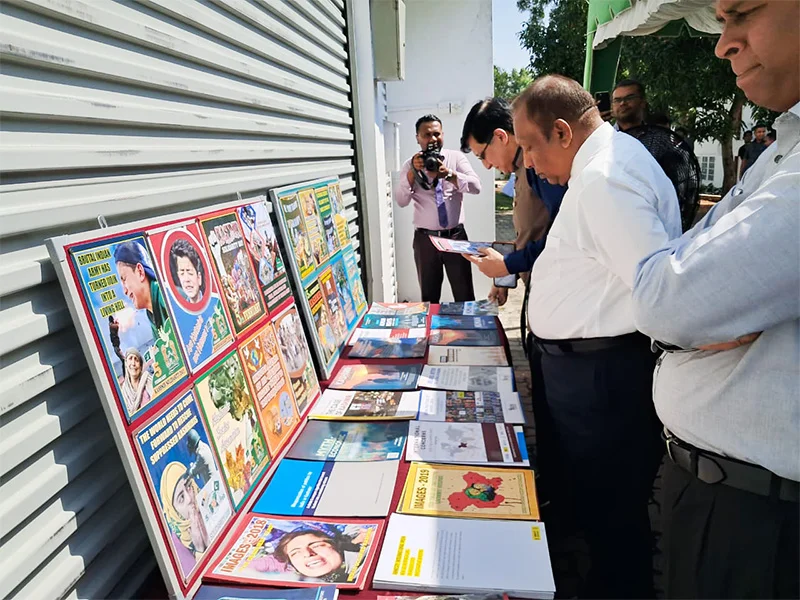
The Pakistan High Commission in Colombo recently organised a seminar and photo exhibition at the HC premises to commemorate Kashmir Solidarity Day. The following is the text of the statement issued by the PHC: “The event highlighted Pakistan’s continued support for the Kashmiri people and emphasised the importance of a peaceful and just resolution of the Jammu and Kashmir dispute. Members of the Pakistani community, friends of Kashmir, and local journalists attended the event.
The seminar concluded with remarks by the High Commissioner of the Islamic Republic of Pakistan, Major General (R) Faheem-ul-Aziz, HI (M). He reaffirmed Pakistan’s principled stance on the Jammu & Kashmir issue and underscored the need for sustained international engagement. He noted that the situation in Indian Illegally Occupied Jammu & Kashmir (IIOJK) has remained a matter of concern for decades and called upon the international community, particularly the United Nations, to play its role in promoting peace, stability, and respect for human rights.
The High Commissioner emphasised that the Jammu and Kashmir dispute should be resolved in accordance with international law and relevant UN Security Council resolutions, cautioning that prolonged tensions could have broader implications for regional peace and security.
The event featured keynote addresses by Shiraz Yunus and Ms. Suriya Rizvi, who highlighted the importance of dialogue, interfaith harmony, and peaceful coexistence. They also drew attention to humanitarian concerns and stressed the need for safeguarding fundamental rights in the region.
Earlier, messages from the President and the Prime Minister of Pakistan, issued on the occasion of Kashmir Solidarity Day, were read out by the Press Attaché and the Trade & Investment Attaché, respectively.
As part of the Photo Exhibition, photographs and digital presentations, depicting the humanitarian situation in IIOJK, were displayed during the seminar.”

Namibia begin campaign in crucial game against Netherlands

Markram, Ngidi help South Africa ease past dogged Canada

Pakistan withdraw boycott of India match at T20 World Cup

Mainly dry weather will prevail in the most parts of the island.

NPP: Speaker won’t step down, CIABOC can investigate him

Trinco Buddha statue case: All suspects, including 4 monks re-remanded till 11 Feb.

‘Dates have the highest sugar content to fight Coronavirus’

Sunday Island 27 December – Headlines

#SundayIsland 17th December – Headlines

Sunday Island – 28th March

Sunday Island Headlines – 21 March

Sunday Island – 21st February – Headlines
-

 Features2 days ago
My experience in turning around the Merchant Bank of Sri Lanka (MBSL) – Episode 3
-

 Business3 days ago
Zone24x7 enters 2026 with strong momentum, reinforcing its role as an enterprise AI and automation partner
-

 Business2 days ago
Remotely conducted Business Forum in Paris attracts reputed French companies
-

 Business2 days ago
Four runs, a thousand dreams: How a small-town school bowled its way into the record books
-

 Business2 days ago
ComBank and Hayleys Mobility redefine sustainable mobility with flexible leasing solutions
-

 Business3 days ago
HNB recognized among Top 10 Best Employers of 2025 at the EFC National Best Employer Awards
-

 Business3 days ago
GREAT 2025–2030: Sri Lanka’s Green ambition meets a grid reality check
-

 Editorial5 days ago
All’s not well that ends well?