
Business
Metro Leisure carving out a niche for itself in tea tourism with Theme Resorts

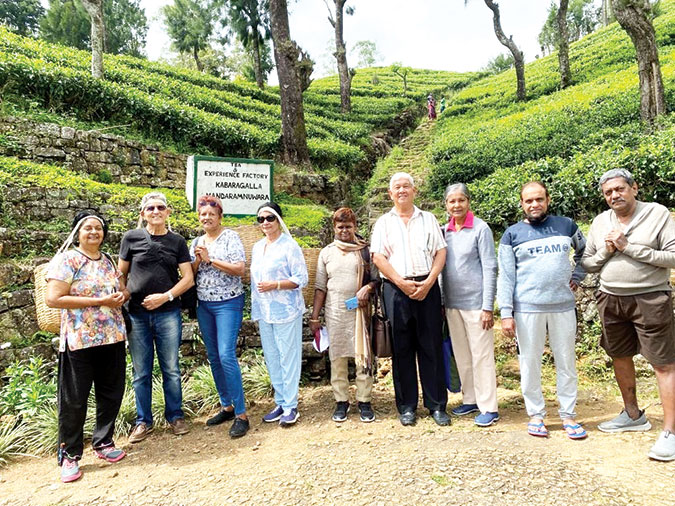
Metro Leisure, the travel arm of Metro Group of Companies of Colombo-06 recently ventured on another tour with a group of domestic travellers to the hills.The holidaymakers enjoyed a well-earned holiday at one of the newest concept hotels in the country, the salubrious ‘ Tea and Experience Factory’ operated by Theme Resorts Ltd in misty Mandaramnuwara in the Nuwara Eliya district, in a lush tea garden.
An abandoned tea factory, one of the oldest in the country has now been converted into an exotic holiday facility. The Manager Travels of Metro Leisure, Bandula de Silva says that such theme hotels have gained immense popularity amongst both overseas and domestic holidaymakers.
“Discerning holidaymakers perceive it as experiencing Sri Lanka’s authentic Tea Culture, and it has become a much sought-after recreational experience for them. Besides, they warmly embrace it because it is nature-based eco-friendly, sustainable tourism.
We think that this is the right time to pivot and go beyond scenic beauty, and highlight tea tourism in our unique tourism product portfolio. Metro Leisure is carving out a niche for itself as a leader in this segment,” he said.


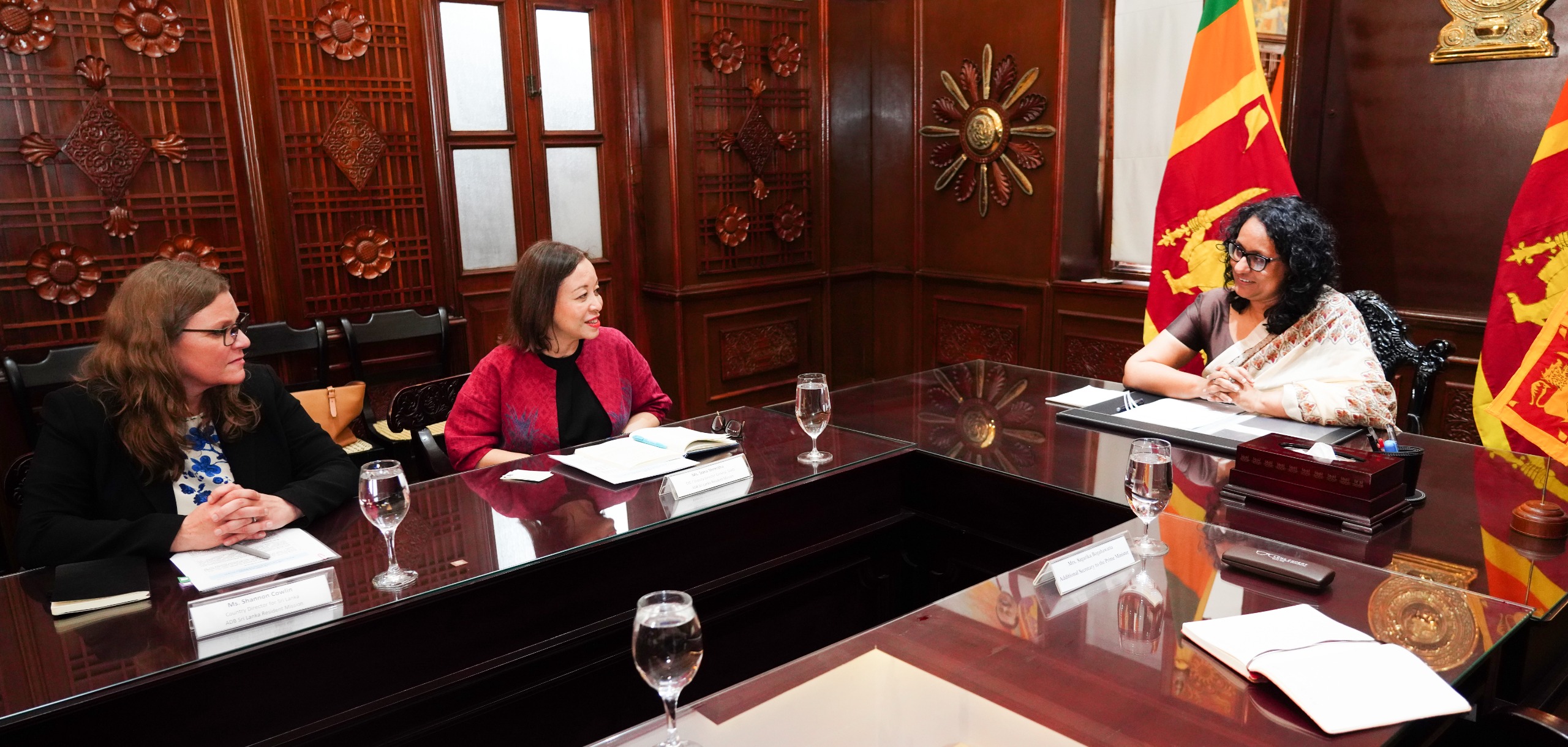
The newly appointed Country Director of the Asian Development Bank for Sri Lanka Ms Shannon Cowlin and the accompanying delegation met with Prime Minister Dr. Harini Amarasuriya on Tuesday [0th of February] at the Prime Minister’s office.
Welcoming the delegation, the Prime Minister extended congratulations to the newly appointed Country Director and acknowledged the long-standing partnership with the Asian Development Bank. The Prime Minister also expressed appreciation for ADB Bank’s continued engagement and support aligned with Sri Lanka’s national development priorities.
The Prime Minister also conveyed gratitude for the timely assistance extended by the ADB in response to Cyclone Ditwah, noting the importance of such support in mitigating the immediate impacts of natural disasters.
The ADB delegation reiterated its readiness to further assist Sri Lanka during the post-cyclone recovery phase, including rebuilding and reconstruction efforts, and emphasized its commitment to the supporting the education sector.
The meeting was attended by OIC / Deputy Director General, SARD Ms. Sona Shrestha, Ms. Cholpon Mambetova Country Operations Head of ADB Sri Lanka Mission Resident, Additional Secretary to the Prime Minister Ms. Sagarika Bogahawatta, Director General of the External Resource Department, Ministry of Finance Samantha Bandara, Director for ADB Division in External Resource Department, Ministry of Finance Ranjith Gurusinghe.
[Prime Minister’s Media Division]

Sri Lanka’s small and medium enterprise (SME) sector—responsible for 52 percent of GDP and employing nearly half the national workforce—has become the next decisive test of the country’s fragile economic recovery.
A proposal to establish a Rs. 300 billion “Bad Bank” to absorb distressed SME loans now places policymakers at a crossroads: act boldly to revive credit and growth, or risk entrenching stagnation in the real economy.
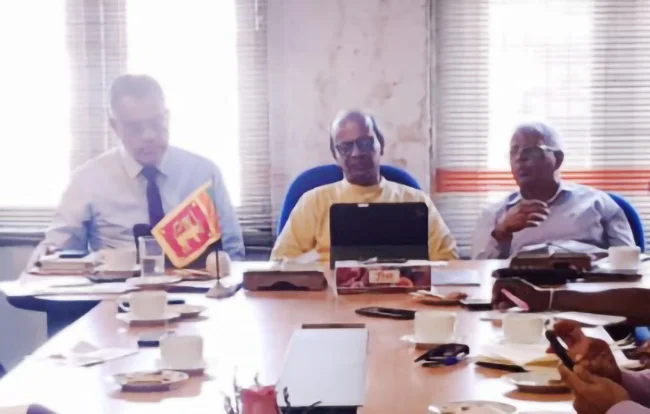
The Sri Lanka Chamber of Small and Medium Industries (SLCSMI) on Tuesday told journalists that they had unveiled a detailed blueprint aimed at restructuring an estimated Rs. 460 billion in non-performing loans (NPLs), much of it concentrated among SMEs battered by successive shocks—from the Easter Sunday attacks and the pandemic to sovereign default and climate-related disruptions such as Cyclone Ditwah.
While headline indicators suggest macroeconomic stabilisation, including lower inflation, improved reserves and a profitable banking sector, credit transmission to smaller enterprises remains severely constrained, Chambers think tank pointed out.
“This is not about rewarding defaulters,” said SLCSMI President Prof. Rohan De Silva. “It is about protecting the productive backbone of the economy. If SMEs collapse, the consequences will extend far beyond individual balance sheets.”
Despite strong liquidity and a return to profitability in the banking system, thousands of SMEs remain blacklisted at the Credit Information Bureau (CRIB), unable to access fresh working capital.
The Chamber argues that unless distressed assets are separated from viable enterprises, banks will remain structurally risk-averse, prolonging the paralysis in private sector credit growth.
The proposed “Bad Bank” would function as a specialised rehabilitation vehicle, purchasing or warehousing toxic SME loans and granting viable firms a five-to-ten-year restructuring window, shielded from parate execution, to rebuild cash flows. Senior Vice President Colvin Fernando described the initiative as an economic circuit-breaker rather than a bailout. “These are not failed enterprises,” Fernando said.
He added:”They are businesses hit by extraordinary external shocks. Unless we ring-fence these distressed loans, credit transmission will remain paralysed.”
The concept draws on international precedents where asset management companies were deployed after systemic crises. Yet such mechanisms succeed only when governed by strict asset valuation discipline, professional management and insulation from political interference. Without these safeguards, they risk becoming vehicles for concealed subsidies or fiscal leakage.
The most contentious element of the Chamber’s proposal lies in its funding model. It calls for a hybrid structure combining low-cost international financing, a levy on commercial bank profits and the utilisation of unutilised balances from the Employees’ Provident Fund (EPF) and Employees’ Trust Fund (ETF).
Prof. De Silva argues that the banking sector, having restored profitability partly through elevated interest margins during the crisis years, has both the capacity and systemic responsibility to contribute. “The banking system has returned to strong profitability,” he said. “A structured contribution toward SME rehabilitation is not punitive—it is an investment in systemic stability.”
The suggested mobilisation of pension fund balances, however, is likely to provoke scrutiny over governance and fiduciary safeguards, while a levy on bank profits may raise investor sensitivity in a sector that has only recently regained confidence.
Fernando acknowledged the risks, emphasising that transparency and strict eligibility criteria would be essential. “This must be professionally managed, transparent and focused strictly on viable enterprises. Without discipline and accountability, the entire purpose would be defeated,” he cautioned.
Adding urgency to the debate is the Government’s decision to lower the VAT registration threshold to Rs. 36 million annually from April 1, 2026, drawing more small firms into the tax net. The Chamber warns that tightening tax compliance while credit remains restricted could create a double squeeze. “You cannot increase tax burdens and restrict financing simultaneously without economic consequences,” Prof. De Silva observed, describing the timing as highly sensitive.
Immediate Past President Mohideen Cader underscored the scale of the stakes. With SMEs contributing 52 percent to GDP and already under severe strain, he warned that inaction would result in irreversible economic scarring.
The macroeconomic logic is clear: without restoring SME balance sheets, private investment and employment growth are unlikely to regain momentum. Yet the countervailing risk is equally apparent. A poorly designed vehicle could create moral hazard, transfer private losses onto public shoulders and introduce new contingent liabilities into an economy still emerging from sovereign default.
Sri Lanka’s IMF-backed reform programme has so far focused on fiscal consolidation and debt sustainability. The SME “Bad Bank” proposal introduces a more complex phase in the recovery narrative—one that shifts attention from stabilisation to growth. The question confronting policymakers is whether the economy can sustain recovery without unclogging the credit arteries that feed its most labour-intensive sector.
The Rs. 300 billion proposal is, in essence, a calculated gamble that repairing SME balance sheets will unlock lending, revive investment and restore economic momentum. If executed with rigour, transparency and independence, it could serve as a bridge from crisis management to expansion. If mishandled, it risks deepening vulnerabilities in a system that has only recently regained its footing. For an economy seeking to move beyond stabilisation, the stakes could hardly be higher.
By Ifham Nizam
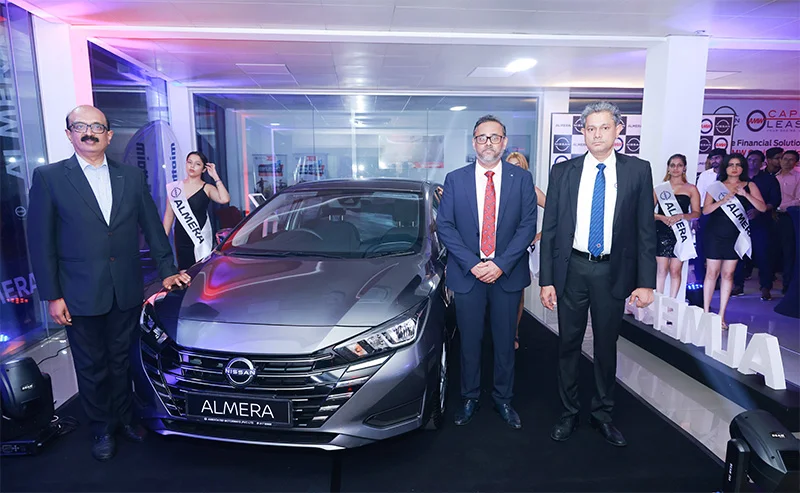
Associated Motorways (Private) Limited (AMW), a stalwart of Sri Lanka’s automotive industry, officially unveiled the all-new Nissan Almera on February 7th, 2026. The launch, held at the Nissan Showroom in Union Place, signaled a bold step forward in providing ‘market-relevant mobility solutions’ to a dicerning local audience.
Addressing the gathering, Jawahar Ganesh, Group Managing Director of AMW, highlighted the strategic engineering behind the new model.
“The all-new Nissan Almera has been thoughtfully engineered to deliver what today’s Sri Lankan customer truly values: efficiency, safety, comfort, and intelligent design,” Ganesh stated.
He further emphasised that AMW’s leadership, backed by the global expertise of the Al-Futtaim Group, remains committed to bringing world-class standards to the local market.
Echoing this sentiment, Atul Aggarwal, Director Aftersales and South Asia Business Unit for Nissan Motor Corporation, noted that the Almera is designed to offer the ‘Nissan Peace of Mind.’ He expressed confidence that the sedan would replicate the massive market success recently seen by the Nissan Magnite.
The Almera is powered by the unique HRA0 1.0-litre Turbo engine, producing 100 hp and 152 Nm of torque. This ‘flat torque’ setup ensures responsive acceleration for city driving and confident overtaking on highways. To bolster fuel economy, it features an Idling Stop system.
Inside, the cabin prioritises the “human element” with:
Quole Modure Seats: Innovative materials that reflect heat, keeping the cabin cool in the tropical sun.
Zero Gravity Seats: Ergonomically designed to reduce fatigue during long commutes.
360-degree Safety Shield: A comprehensive suite including an Around View Monitor, Blind Spot Warning, and Lane Departure Warning.
With immediate stock availability and flexible financing via AMW Capital Leasing, the Almera is positioned as the premier choice for professionals and families seeking a smart, refined, and safe driving experience.
Although AMW did not announce pricing at the event, sources told The Island Financial Review that the new sedan will retail in the LKR 12.5–13 million range. Early birds are in for a win, too, with an encouraging discount reserved for the first 100 buyers.
Notably, the event was a departure from typically lengthy automotive launches, the Almera ceremony was a masterclass in simplicity. The entire event concluded in just twenty minutes – comprising a 15-minute preamble and speeches, followed by a five-minute ceremonial reveal as the Almera glided into the auditorium.
Participants described the event as ‘short and sweet,’ a sentiment that aligned perfectly with the ‘C-word’ emphasised by Jawahar Ganesh, Group Managing Director of AMW about the Nissan brand: Credibility.
By Sanath Nanayakkare

Prime Minister meets delegation from the European External Action Service

Moscas star as Italy dismantle Nepal for first World Cup win

Kim Jong Un chooses teen daughter as heir, says Seoul

Newly appointed ADB Country Director to Sri Lanka and delegation meet PM

School student transport services are being regulated

Shanaka and Rathnayake blow Oman away with frenetic half-centuries

‘Dates have the highest sugar content to fight Coronavirus’

Sunday Island 27 December – Headlines

#SundayIsland 17th December – Headlines

Sunday Island – 28th March

Sunday Island Headlines – 21 March

Sunday Island – 21st February – Headlines
-

 Features5 days ago
My experience in turning around the Merchant Bank of Sri Lanka (MBSL) – Episode 3
-

 Business6 days ago
Zone24x7 enters 2026 with strong momentum, reinforcing its role as an enterprise AI and automation partner
-
 Business5 days ago
Remotely conducted Business Forum in Paris attracts reputed French companies
-

 Business5 days ago
Four runs, a thousand dreams: How a small-town school bowled its way into the record books
-
 Business5 days ago
ComBank and Hayleys Mobility redefine sustainable mobility with flexible leasing solutions
-

 Business2 days ago
Autodoc 360 relocates to reinforce commitment to premium auto care
-
 Business6 days ago
HNB recognized among Top 10 Best Employers of 2025 at the EFC National Best Employer Awards
-

 Midweek Review2 days ago
A question of national pride