
Business
Mediation Boards and youth: the role, need, and implementation of conflict resolution in Sri Lankan school systems


Conflicts are understood differently by young people depending on their experiences in society. As opposed to what society typically perceives as a conflict, it encompasses a much broader spectrum than mere disagreements.
Conflicts often arise as a result of differences in perception in the youth community. Even though individuality is a personal characteristic, it is likely to differ from person to person depending on their social background and environment. These differences are also influenced by nature and the environment, with individuals also having the potential to change in response to factors such as education, experience, religion, and culture, as well as inherited traits from past societies.
Having a better understanding of conflict situations can have a positive effect on a person’s ability to resolve the same while also broadening their perspective.
The role of education in
emotion management
The raising of a well-balanced, responsible personality is neglected in Sri Lanka’s education system, where instead the sole focus is on obtaining employment and maintaining a livelihood. The unreasonable expectations placed on children to become professionals such as engineers or doctors limit their opportunities to grow and discover their own individual talents and interests.
In order to handle conflicts effectively during their school years and throughout their adult lives, students need to be educated about emotional management at school. It is disheartening to observe the behavior of young people in relation to conflict resolution while in college. It reflects the lack of emotional management skills among young people, who are unable to deal with their own problems; instead focusing on fulfilling the agendas of influential individuals.
The tolerance of diversity among youth
First encounters with diversity occur in the school environment. The discipline and lessons from school prepare them for diversity and individuality as adults. Indeed, having sympathy and empathy for other peoples’ sadness, pain, and happiness, can reduce social conflicts.
Often, long-standing conflicts are the result of misinformation, misperceptions, and incorrect attitudes. The conflict becomes more serious as a result of resentment that has developed over time toward the individual, rather than as a result of the incident itself.
The concept of mediation
(Samathakaranya) has been around throughout history as a method of resolving disputes. A mediation process has the ultimate purpose of resolving disagreements by taking ownership of both the problem and the solution that can be agreed upon by both parties. A Mediation Board empowers the parties involved by fostering their sense of self-assurance, confidence, and ability to openly discuss disputes and reach an agreement. Similarly, the mediators remain impartial and do not exhibit any bias towards any of the parties involved in the dispute. Additionally, they avoid coming to predetermined conclusions and ensure that the process is handled humanely and sensitively without harming anyone or creating conflict within the community.
Do Mediation Boards work well to resolve conflict between young people?
Currently, in Sri Lanka, there are 329 Conciliation Boards in operation, each consisting of a minimum of 12 members. A 40-hour course in mediation and communication techniques is required of Mediation Officers, and the final scores after a one-hour exam determine their selection.
Mediation Boards can settle disputes for youth of all ages despite their limited scope, and is the appropriate forum for anyone wanting to represent themselves in their own disputes.
The individual or party responsible for causing a dispute should not be viewed as an adversary during mediation. The principles of mediation teach that the most effective solutions to problems often result from engaging with those who might initially appear to be opponents. Communicating and solving problems in this manner leads to greater success.
An organization that respects the privacy of youth
First and foremost, the Mediation Board is responsible for maintaining the confidentiality of the problem you present. An adult may be able to assist you in discussing the issue freely, even if it is related to a romantic relationship. Following that, they provide the necessary guidance for resolving the dispute.
As a participant in mediation, you have the opportunity to analyze your problem according to your own preferences. The Mediation Board offers young people an excellent opportunity to seek guidance and support for their problems in a safe and open environment. In order to ensure the country’s future health and well-being, the Board is dedicated to listening and providing assistance to individuals while also maintaining their right to privacy.
The integration of mediation into school and university systems
The importance of mediation education in schools and universities cannot be overstated. With the assistance of the British Council, the Mediation Board Commission and the Ministry of Justice developed and launched a program in 2004 to address this need. A Mediation Unit was to be established in schools as part of the program. Essentially, this process involves referring certain disputes among school students to the school’s Mediation Unit which comprises senior students. Consequently, the school will establish a Mediation Unit comprising 25 students and five teachers. The Conciliation Unit consists of senior students who mediate disputes between parties.
It is not sufficient to implement a Mediation Unit at the school level alone. The need for its implementation at the university level has also emerged. University education should not only impart subject knowledge, but also cultivate a well-rounded student body that is acquainted with social issues, exposed to diverse forms of art and culture, and has an appreciation for literature. In addition to academic objectives, this is also a societal responsibility.

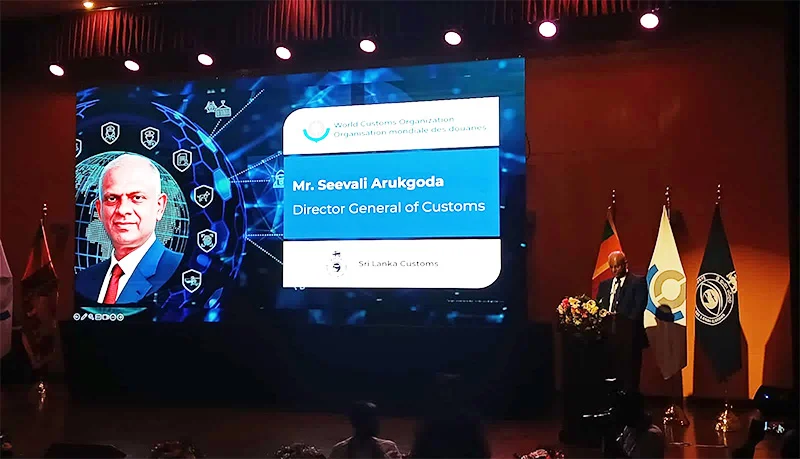
Sri Lanka Customs delivered its strongest performance in institutional history in 2025, exceeding national revenue targets while fast-tracking deep structural reforms to protect revenue, secure borders and lower trade friction, Customs Director General Seevali Arukgoda said at the International Customs Day celebrations 2026 in Colombo.
Addressing officials, diplomats and private-sector stakeholders under the global theme “Customs Protecting Society through Vigilance and Commitment,” Arukgoda said Customs collected Rs. 2,257 billion, surpassing the Rs. 2,231 billion target, and demonstrating the Department’s expanding role as both a revenue authority and trade facilitator.
“This is not a one-off outcome. It is the result of sustained reforms, disciplined enforcement and a clear strategic focus on protecting revenue while facilitating legitimate trade,” Arukgoda said.
While motor vehicles remained the single largest contributor, general cargo revenue rose 18 percent, signalling improved compliance and higher trade throughput. Enforcement-driven revenue reached Rs. 32 billion, up 10 percent year-on-year, underscoring the growing impact of intelligence-led controls.
“Every rupee secured through enforcement represents revenue protected for the State and confidence restored in the system,” the Director General said.
Beyond revenue, Arukgoda stressed Customs’ frontline role in protecting society, citing interdictions of narcotics, gold, foreign currency, substandard imports and illegal wildlife movements, coupled with firm penalties on non-compliant traders.
A major institutional breakthrough was the data-sharing MoU signed this month with the Inland Revenue Department, enabling parallel audits and coordinated investigations.
“Undervaluation and overvaluation will no longer be low-risk options. This integration closes a long-standing gap in revenue protection,” Arukgoda said.
On trade facilitation, he said Customs has moved decisively toward digital, rules-based clearance, expanding the Authorized Economic Operator (AEO) programme to MSMEs and rolling out platforms such as ‘Track My CusDec’ and Motor Vehicle Verification.
Advance Rulings have also been expanded to cover classification, valuation and rules of origin, fully aligning Sri Lanka with WTO Trade Facilitation Agreement obligations.
Looking ahead, Arukgoda said Sri Lanka Customs has been assigned a Rs. 2,207 billion revenue target for 2026, which the Department is confident of delivering amid continued reform momentum.
He added:”Our priority for 2026 is total digitalisation of remaining manual processes. This is about speed, transparency and eliminating discretion where it does not belong.”
Among the flagship projects is a state-of-the-art cargo examination yard at Kerawalapitiya, scheduled for completion by 2027, expected to reduce physical examinations from 40 percent to 10 percent, easing congestion and supporting higher trade volumes.
Other 2026 initiatives include Pre-Arrival Clearance, fully paperless cargo processing, an Automated Risk Management System, an Electronic Cargo Tracking System, and an electronic auction platform for goods disposal.
Customs will also expand AEO status to SMEs, freight forwarders and Customs House Agents, reducing compliance costs for trusted operators.
Arukgoda also announced the release of Time Release Study 2025, conducted in line with World Customs Organization guidelines, providing data-driven insights to remove bottlenecks across the clearance chain.
In a major governance reform, Sri Lanka Customs will issue a Code of Ethics and Conduct this week, developed with technical assistance from the IMF, WCO, World Bank, UNDP, Presidential Secretariat and CIABOC, and cleared by the Attorney General.
“Integrity is not optional. This Code institutionalises accountability and sets clear standards for every officer,” Arukgoda said.
The event was attended by Minister of Labour and Deputy Minister of Finance Dr. Anil Jayantha Fernando, Deputy Minister of Economic Development Nishantha Jayaweera, senior government officials, diplomats, development partners and retired senior Customs officers.
By Ifham Nizam

Sri Lanka’s most ambitious urban development project reached a critical execution milestone, as construction officially commenced on the first residential development within Port City Colombo. The milestone marks the transition of the country’s flagship Special Economic Zone (SEZ) from regulatory readiness to active private-sector delivery.
The project, Bay One Residences Colombo, is being developed by ICC Port City (Private) Limited, an entity established by International Construction Consortium (Private) Ltd. (ICC), one of Sri Lanka’s most established and experienced construction companies with a long track record of delivering complex, large-scale developments to international standards. The development represents one of the earliest major Sri Lankan private-sector residential investments within Port City Colombo and plays a foundational role in activating the city’s mixed-use urban ecosystem.
“Developed on 269 hectares of reclaimed land, Port City Colombo is now transitioning into a modern urban destination, with its first phase of infrastructure successfully completed. At the forefront of this evolution, Bay One Residences presents a rare first-mover opportunity, thoughtfully designed to enable residents to live, work, and unwind in a truly integrated environment, and backed by ICC’s 45 years of trusted expertise in delivering landmark, large-scale developments,” said Namal Peiris, Managing Director/Chief Executive Officer, International Construction Consortium (Pvt) Ltd.
Situated on a 13,945 square metre prime waterfront plot, Bay One Residences Colombo represents a total investment of approximately US$112 million, inclusive of land and development costs. The development will comprise 231 luxury apartment units, designed to international standards and targeted at both local and international buyers seeking premium urban living within a globally benchmarked city environment.
The commencement of the first residential development also marks an important step in the broader evolution of Port City Colombo, which has been purpose-built as a multi-services SEZ with a transparent, rules-based regulatory framework, world-class infrastructure, and a long-term vision to position Sri Lanka as a competitive destination for global capital, talent, and services. (Port City Colombo)
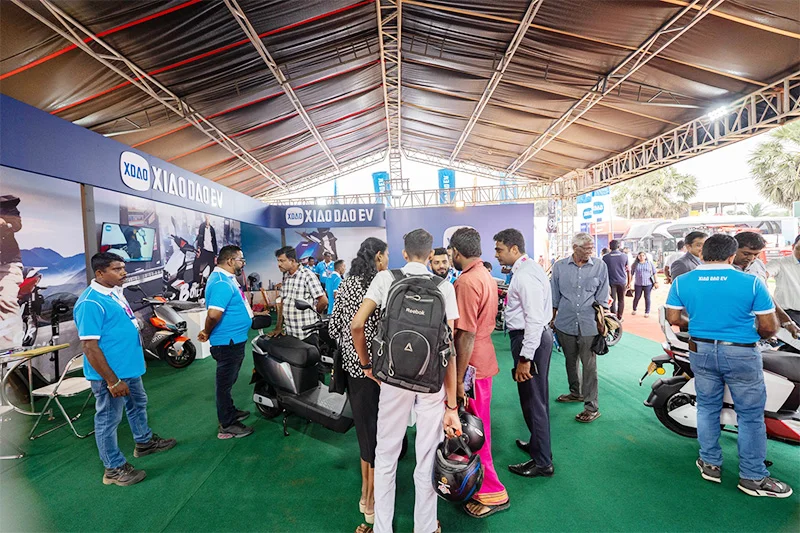
The Jaffna International Trade Fair (JITF) concluded successfully on January 25, marking its 16th consecutive year at the Muttraweli Grounds, Jaffna. Organised by Lanka Exhibition and Conference Services (LECS) in association with the Chamber of Commerce and Industries of Yarlpanam (CCIY), JITF once again reinforced its position as Northern Sri Lanka’s most influential multi-trade exhibition.
The three-day event attracted over 75,000 visitors, including business leaders, importers, exporters, SMEs, investors, financial institutions, technical professionals, and development agencies. With strong national visibility and extensive promotional outreach, JITF continues to serve as a vital platform for trade, investment, and economic integration in the Northern Province.
This year’s exhibition featured a diverse range of sectors, showcasing innovative products, services, and business opportunities, while facilitating meaningful networking and B2B engagement. Exhibitors reported strong visitor engagement and positive business prospects, reflecting growing confidence in the region’s economic potential.
JITF 2026 once again demonstrated its role as a catalyst for long-term development, fostering partnerships and opening new pathways for sustainable growth in Northern Sri Lanka.

Cabinet nod for MOU between Sri Lanka and Romania on the cooperation in the Labour Field
New circular to replace Management Services Circular No. 01/2019

The RAPP sheet: Steve Smith, Daryl Mitchell, Umesh Yadav among over 1300 players

U19 World Cup: Pakistan overcome New Zealand by 8 wickets

U19 World Cup: Vihaan Malhotra ton headlines India’s massive win

Dry weather will prevail in most parts of the island

‘Dates have the highest sugar content to fight Coronavirus’

Sunday Island 27 December – Headlines

#SundayIsland 17th December – Headlines

Sunday Island – 28th March

Sunday Island Headlines – 21 March

Sunday Island – 21st February – Headlines
-
 Business2 days ago
ComBank, UnionPay launch SplendorPlus Card for travelers to China
-

 Business3 days ago
ComBank advances ForwardTogether agenda with event on sustainable business transformation
-

 Opinion6 days ago
Remembering Cedric, who helped neutralise LTTE terrorism
-

 Business6 days ago
CORALL Conservation Trust Fund – a historic first for SL
-
 Opinion3 days ago
Conference “Microfinance and Credit Regulatory Authority Bill: Neither Here, Nor There”
-

 Opinion5 days ago
A puppet show?
-

 Opinion2 days ago
Luck knocks at your door every day
-

 Features5 days ago
‘Building Blocks’ of early childhood education: Some reflections