
Sports
Man United boss Ten Hag must learn from Mourinho to ensure Carabao Cup win is just the start


“We want more. My contract is long, so hopefully I can win something more.”
These words sound a lot like something Erik ten Hag could have said in the aftermath of Manchester United’s Carabao Cup final victory against Newcastle on Sunday, but they belong to Jose Mourinho, who had been sat in the same seat in the Wembley news conference exactly six years earlier.
Like Ten Hag, Mourinho lifted the League Cup in his first season as manager at Old Trafford and then spoke about wanting more. There was more to come from Mourinho in the elongated vase of the UEFA Europa League three months later, but a little over a year after that, Mourinho was gone, sacked in December 2018 following a series of disagreements with the board over transfers and a run of miserable results.
The 2017 League Cup, secured with a 3-2 win over Southampton, wasn’t the platform it was supposed to be, and it has since been consigned to history as a rare good day during the post-Sir Alex Ferguson slump. Ferguson used the cup competitions — particularly success in the FA Cup in 1990 and the League Cup in 2006 — to trigger periods of sustained success. The question for Ten Hag is simple: how will his 2023 League Cup triumph be remembered?
It’s easy with the benefit of hindsight but there were signs, even during the celebrations at Wembley in 2017, that all was not well with Mourinho at United. In fact, the second question in his winners’ news conference suggested as much.
“Jose,” it started, “for someone who has just won a trophy, you don’t seem hugely exuberant or happy.”
“I am very happy,” came Mourinho’s reply, delivered while wearing the face of a man who was anything but. “I am very happy. It’s important for the fans and for the players. I always try to put myself in a secondary position, but the reality is that it’s also important for me. It’s a relief.”
The difference in Ten Hag’s demeanour on Sunday could not have been more different. After dancing on the pitch with Antony and Lisandro Martinez, he sat down for his news conference wearing a wide grin. He said broadly similar things to what Mourinho had said six years before — “If we keep going and working then we can win even more” — but he was in a buoyant-enough mood to make a joke, as he left having nearly forgotten to take the trophy with him.
Ten Hag has cracked down on squad discipline since taking over last summer, but he has also ensured he has built a bond with his players and the fans, something it seemed Mourinho always struggled to do.
In line with Carabao Cup rules, clubs do not have to hold prematch news conferences for any round prior to the semifinals and for the first time this season, United used the time to invite supporters to come to the training base at Carrington and put their own questions to Ten Hag. Fans from all over the world took up the opportunity and each time, it went down well.
Mourinho might have understood his task at Old Trafford, but Ten Hag, it seems, understands the club.After winning the League Cup and the Europa League in his first season, Mourinho finished second in the Premier League in his second year and lost in the FA Cup final to Chelsea. It was at that point, however, that his reign began to unravel. He had already lost patience with star player Paul Pogba and during the summer of 2018, he became increasingly frustrated by the club’s transfer business.
Having decided he wanted to move on Anthony Martial, Mourinho was convinced the idea was blocked because the French forward was club co-chairman Joel Glazer’s favourite player. Mourinho also asked to sign a new centre-back, but was told that targets Harry Maguire and Jerome Boateng were too expensive and too old and injury-prone, respectively. Transfers can be contentious for any manager and Ten Hag will have to be careful in the way he navigates the summer window so as not to fall into the same trap as Mourinho.
After making such a huge step forward in his first season, there will be an expectation for United to make a genuine title challenge and the Dutchman will quite rightly want a squad capable of delivering. Ten Hag has not been shy in pushing for more players — winger Antony last summer, forward Wout Weghorst and midfielder Marcel Sabitzer in January — and will do so again, but as Mourinho learned to his cost, there can be danger when you overstep the mark.
Because of financial fair play concerns, United are planning a summer spend of between £100m and £200m, and it will be football director John Murtough’s job to balance Ten Hag’s demands with the club’s financial constraints. A new striker, in particular, is vital if United are going to reach the next level.
Mourinho thought the League Cup would provide a first taste of success for a team destined for bigger and better things and the fans at Wembley that day probably thought the same. That it didn’t provides an apt reminder for Ten Hag — not that he needs one — that there’s work to do to complete his Old Trafford revolution and get United back to the top table in both England and Europe.
Mourinho’s League Cup turned out to be nothing more than a brief highlight. Ten Hag wants his to be the start of a series of them. (ESPN)

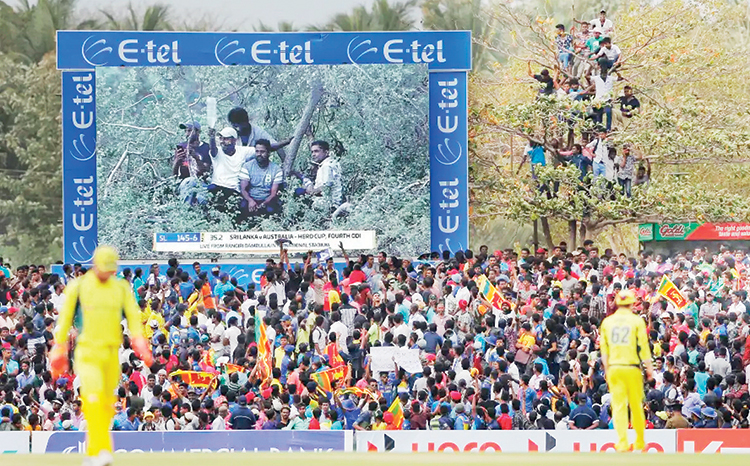
Today is a red-letter day for Rangiri Dambulla International Cricket Stadium. Exactly 25 years ago, to this very day, the venue hosted its maiden international, Sri Lanka locking horns with England and in the quarter-century since, the ground has grown from a bold gamble into one of the country’s prized cricketing possessions.
From Sachin Tendulkar’s silken drives to Dale Steyn’s thunderbolts, the game’s greats have left their imprint here. Dambulla has seen it all, high-octane contests, spin clinics and finishes that have gone down to the wire.
The brainchild of former SLC President Thilanga Sumathipala, Dambulla was not built on a whim but on a clear game plan. Sri Lanka, weary of rain playing spoilsport and washing games down the drain, needed a venue in the dry zone. A study into the country’s driest regions pointed squarely to Dambulla, centrally located, easily accessible and, crucially, less at the mercy of the weather gods.
If location was the first box ticked, aesthetics were the icing on the cake. Perched along the Colombo – Sigiriya road, the ground offers a view that can take your breath away. Climb up to the main stand and you are greeted by a sea of green, with the serene Ibbankatuwa Tank glistening in one corner. Sunsets here are straight out of a postcard. In another corner looms the historic Dambulla Rock, where King Valagamba, in exile, regrouped before marching back to reclaim his kingdom from south Indian invaders. Cricket here, quite literally, is played in the shadow of history.
Dambulla isn’t just a cricket ground. This is part of Thilanga’s visionary thinking. He wanted the game to trickle down to the grassroots, to take cricket out of Colombo’s comfort zone and into the heartland. The response has been overwhelming. Whenever the big boys roll into town, the stands are packed to the rafters and when space runs out, fans perch on nearby trees just to catch a glimpse, a reminder that cricket, in this part of the country, is more than a game; it is a way of life.
The stadium itself was built in double-quick time, a project fast-tracked with military precision. Former captains Bandula Warnapura and Duleep Mendis, then part of the SLC set-up, oversaw the construction, ensuring the ground was ready to host top-flight cricket without missing a beat. Sujeewa Godaliyadda, now SLC Treasurer, has been part of the furniture here from day one, guarding the venue like the apple of his eye.
Back in 2001, the surrounding area was little more than a quiet outpost. Fast forward to today and the landscape has changed beyond recognition, hotels, restaurants and supermarkets have sprung up, proof that cricket has been a catalyst for economic growth. The ripple effect has been unmistakable; livelihoods have improved and the region has been put firmly on the map.
Of course, the journey has not always been smooth sailing. At times, Dambulla was left out in the cold, sidelined due to petty politics while other venues were given the nod. Hambantota’s Suriyawewa had its moment in the sun, but when rain threatens to play havoc, Dambulla remains the trump card. Unlike some white elephants, this ground delivers when it matters.
In recent years, the venue has come back into its own. Floodlights have been upgraded, state-of-the-art training facilities have been added and Dambulla is now being groomed as a Centre of Excellence. A new media centre is in the pipeline, while expansion plans are on the drawing board to meet the ever-growing demand from fans eager to soak in cricket in this picturesque setting.
by Rex Clementine
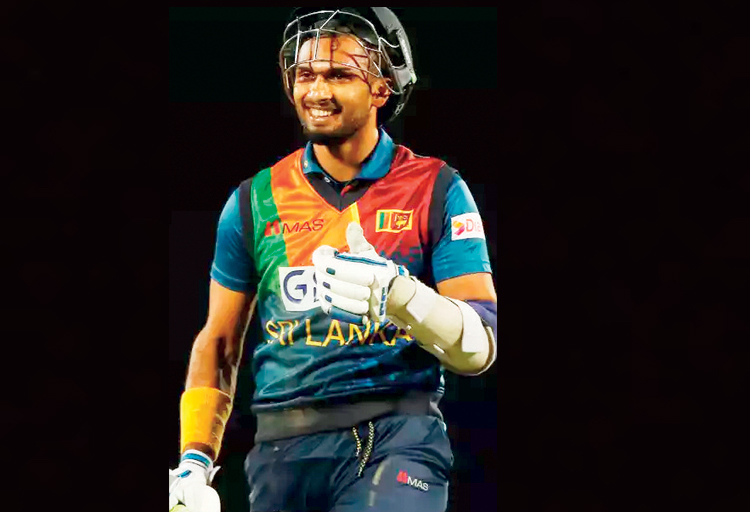
There is another defection from the Pakistan Super League (PSL), with Dasun Shanaka moving to the Indian Premier League (IPL). Shanaka is set to be signed by the Rajasthan Royals for the upcoming season, coming in as a replacement for the injured Sam Curran, who was earlier ruled out of IPL 2026.
A top Royals official confirmed the signing to Cricbuzz. “Yes, we’re close to signing him,” an official of the franchise told this website. “A few formalities are pending. He has to complete some paperwork with Sri Lankan Cricket (SLC)”
Shanaka had remained unsold at the Abu Dhabi mini-auction last December following which he enrolled for the PSL auction, where he was bought by Lahore Qalandars for PKR 75 lakh.
Shanaka is the second player in recent times to shift to the IPL from the PSL. Blessing Muzarabani of Zimbabwe pulled out of his contract with Islamabad United to join Kolkata Knight Riders, who signed him in place of Mustafizur Rahman. The famous case of PSL to IPL jump, of course, was of South Africa’s Corbin Bosch last year, when he had spurned a Peshawar Zalmi gig to join Mumbai Indians last year.
The PSL reacted strongly, banning him for a year. However, its policy of scheduling the league concurrently with the IPL – ostensibly to ensure the availability of overseas players – appears to be backfiring, with foreign players opting to withdraw from the PSL when an IPL opportunity came their way. Cricbuzz reached out to the Lahore Qalandars for a comment.
The choice of Dasun Shanaka by the Rajasthan Royals is hardly surprising. Head coach Kumar Sangakkara is a Sri Lankan, while assistant coach Vikram Rathour worked with Sri Lanka as batting coach during the T20 World Cup, where Shanaka was the country’s captain. Though the co-hosts failed to reach semifinals, Shanaka impressed with two half-centuries in the tournament.
Meanwhile, Pakistan Cricket Board chairman Mohsin Naqvi addressed the media in Lahore on Sunday regarding changes to the PSL operations and venues and hinted that the board may initiate legal action against players who have breached their PSL contracts. (Cricbuzz)
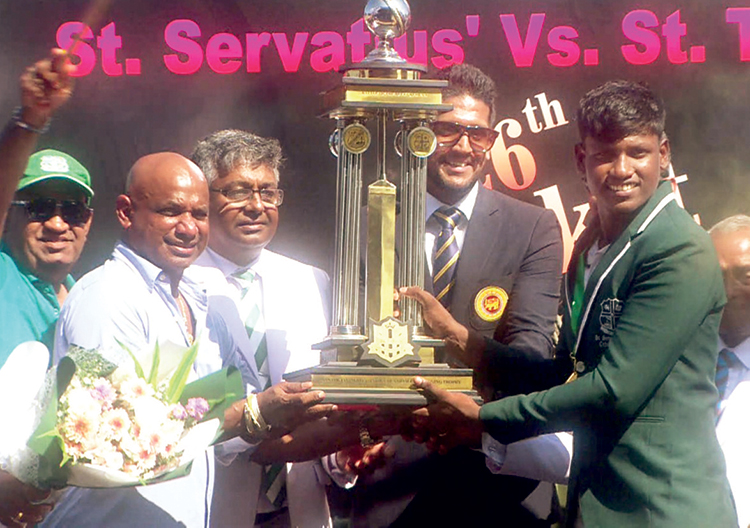
St. Servatius’ College ended more than five decades of frustration when they defeated arch rivals St. Thomas’ College by five wickets in the annual Battle of the Blues encounter concluded at the Uyanwatta Stadium on Sunday.The victory marked a historic moment for the Servatians as they recorded their first big match win in 55 years, the previous triumph coming in 1971 under the captaincy of Nimal Munaweera.
Sri Lanka Under-19 player Viran Chamuditha played a decisive role in the thrilling run chase, producing a superb knock of 81 runs to guide his team towards the target of 178. His innings laid the foundation before an unbroken sixth wicket partnership of 64 runs between Thathsilu Bandara and skipper Chamarindu Nethsara sealed the memorable victory.
Despite entering the encounter as favourites, St. Servatius’ struggled in their first innings and were bowled out for 118 runs in reply to St. Thomas’ total of 158.
However, the Servatian bowlers turned the game in the second innings. Lasindu Ramanayake ripped through the Thomian batting line-up with a brilliant seven-wicket haul, while Chamuditha supported well with three wickets as St. Thomas’ were dismissed setting a target of 178.
The run chase began shakily for St. Servatius’ as they lost wickets at regular intervals and were reduced to 29 for four at one stage. Chamuditha then steadied the innings with a crucial fifth-wicket stand of 87 runs with Bandara.
Chamuditha’s fighting knock of 81 came off 92 balls and includeeven boundaries before he was eventually dismissed. Bandara held firm at the other end and remained unbeaten on 42 off 149 deliveries, while skipper Nethsara contributed an unbeaten 34 as the pair calmly guided their side to a famous win.
The victory sparked jubilant scenes among Servatian supporters as the team finally broke a 55-year deadlock in the prestigious Matara big match. (RF)

Two killed when Air Canada jet hits fire truck at NYC’s LaGuardia Airport

Bus fares increased by 12.19% from midnight today [23]
Public will not be served as Computer system failure at Department of Registration of Persons

Trump says he is postponing strikes on Iran power plants after ‘productive’ talks on ending war

Asia stocks slide as US and Iran threaten to escalate war

Heat Index at Caution Level in the Western, Sabaragamuwa, Southern and North-western provinces and in Anuradhapura, Mannar and Vavuniya districts

‘Dates have the highest sugar content to fight Coronavirus’

Sunday Island 27 December – Headlines

#SundayIsland 17th December – Headlines

Sunday Island – 28th March

Sunday Island Headlines – 21 March

Sunday Island – 21st February – Headlines
-

 News6 days ago
CIABOC questions Ex-President GR on house for CJ’s maid
-

 News7 days ago
Sri Lankan marine scientist Asha de Vos honoured at UNGA opening
-

 News7 days ago
Australian HC debunks misleading travel risk claims for Sri Lanka
-

 News5 days ago
Bailey Bridge inaugurated at Chilaw
-

 News5 days ago
Pay hike demand: CEB workers climb down from 40 % to 15–20%
-

 News4 days ago
CIABOC tells court Kapila gave Rs 60 mn to MR and Rs. 20 mn to Priyankara
-

 Editorial6 days ago
Couple QR-based quota with odd-even rationing
-

 News3 days ago
Colombo, Oslo steps up efforts to strengthen bilateral cooperation in key environmental priority areas