
Business
Making mobile more affordable with abolition of interconnect fees


Key reforms that Sri Lanka’s Telco sector needs are lagging behind
by Sanath Nanayakkare
As the nation’s economy continues to experience a state of unprecedented turmoil, most Sri Lankans are tightening their wallets wherever they can. While it may be possible to cut down on extravagances, when it comes to the essentials Sri Lankans are faced with a stark lack of choice. Meanwhile, in an increasingly digital world, the definition of ‘essential’ has also expanded to include telecommunications.
While the island-wide expansion of telecom coverage has resulted in explosive growth in the consumption of mobile data, Sri Lanka’s lowest income segments still tend to rely less on mobile data and more on direct voice calls in order to stay connected.
However, speaking to The Island yesterday, a knowledgeable source in the Telco sector noted that structural issues in the sector – from the lagging implementation of Mobile Number Portability (MNP) to regressive fee structures such as the currently prevailing Interconnection Usage Charges (IUC) – place a disproportionate burden on Sri Lanka’s low income population.
IUC is the price charged by a particular network owner when they receive a call from outside of their network for the purpose of interconnecting a voice call to their network. Typically, telcos with the largest user bases earn the most from these IUCs. But it is always the user who gets charged with this fee. The source noted that these fees effectively function as a ‘proxy tax’ on the very segments that rely on it the most, while the benefits of this ‘tax’ are almost exclusively enjoyed by industry incumbents with the largest user bases.
Abolishment of such fees would bring Sri Lanka’s mobile industry into closer alignment with established global best practices by lowering standard call rates for all Sri Lankans for voice calls. After significant delays, IUCs were abolished in India in January 2021, in a move which has been widely credited with considerably easing the financial burden on consumers. Similar measures are also currently rolled out in Bangladesh, Nepal, and Israel.
Following the introduction and popularity of unlimited monthly plans for voice and social media for pre and postpaid customers by Airtel Lanka over the last quarter, the Sri Lankan market has shifted into mirroring their products with unlimited deals now appearing across all networks. However, even with such unlimited offers now available, abolishment of IUC will make unlimited call packages more affordable.
“Data has become the core business of all telco service providers. At the same time, voice calls are no longer the privilege they once were in previous decades. Given these historic trends, and especially in light of the current economic pain felt by all Sri Lankans, it is high time that IUCs were abolished, and initiatives like MNP be implemented in order to pass the maximum benefit possible to low-income groups who are the heaviest consumers for voice calls.” he said.
Such measures will even the telco playing field, resulting in increased competition between operators, and most importantly, lower prices for consumers. However, it appears that without pressure from both consumers and regulators, these reforms are unlikely to move forward, and therefore, will remain stagnant.

Business
HNB Assurance Elevates ‘Liya Harasara’ 2026 with Unmatched Benefits to Honor the Spirit of Womanhood
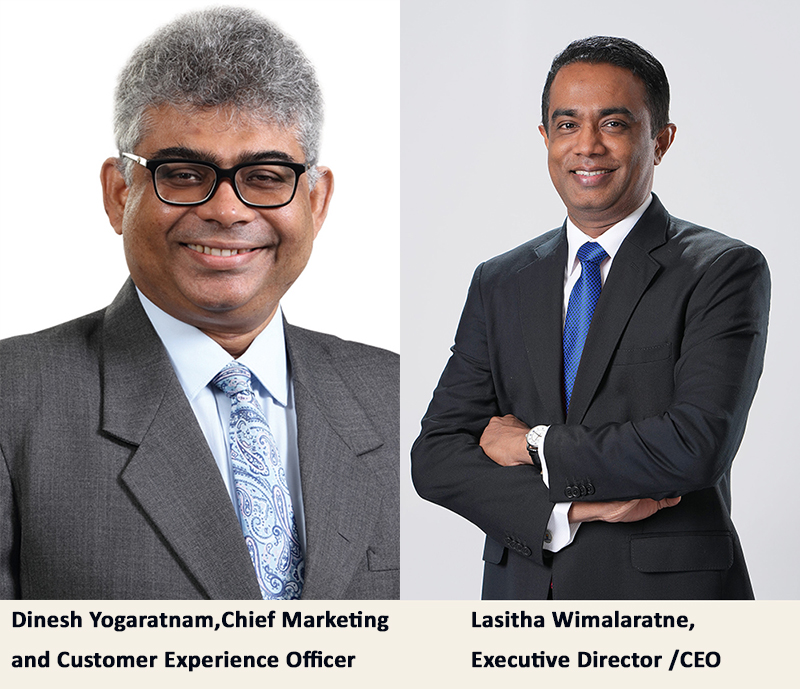
HNB Assurance PLC launched the 2026 edition of Liya Harasara, its flagship annual initiative dedicated to celebrating and empowering women in line with International Women’s Day. Recognized as one of the most anticipated campaigns of the year, Liya Harasara continues to evolve, delivering meaningful protection and exclusive privileges designed to support women in every stage of life.
This year’s edition introduces the most rewarding benefits in the history of the initiative. Women who sign up for eligible Regular Premium Life Insurance policies will receive a Free Life Cover of up to Rs. 2 Million for one year, along with a Free Critical Illness Benefit of up to Rs. 500,000, providing enhanced financial security and reassurance when it matters most. Additionally, female policyholders are also entitled to pregnancy related hospitalization cash benefit for Life Insurance Policies with in-force Hospitalization Benefit, for a maximum of three days per annum.
Commenting on the significance of this year’s campaign, Lasitha Wimalarathne, Executive Director / CEO of HNB Assurance, stated: “As we mark our 25th year as a trusted life insurer, we wanted Liya Harasara 2026 to reflect the strength of the journey that brought us here. For 25 years, women have been at the heart of our story, as leaders, advisors, customers and changemakers. This special edition is our way of honoring that partnership and reaffirming our commitment to protecting their aspirations for the future. When women progress, families prosper and communities thrive and we are proud to stand by them with meaningful protection and lasting assurance.”
Sharing his thoughts, Dinesh Yogaratnam, Chief Marketing and Customer Experience Officer of HNB Assurance, added, “Liya Harasara has grown into more than just an annual campaign, it is a tribute to the Spirit of Womanhood, to resilience, ambition and strength. The 2026 edition has been thoughtfully enhanced to deliver greater value and deeper impact, ensuring women receive protection that truly supports their ambitions and wellbeing. We remain committed to creating solutions that empower confidence and provide peace of mind, enabling women to focus on achieving their goals without compromise.”
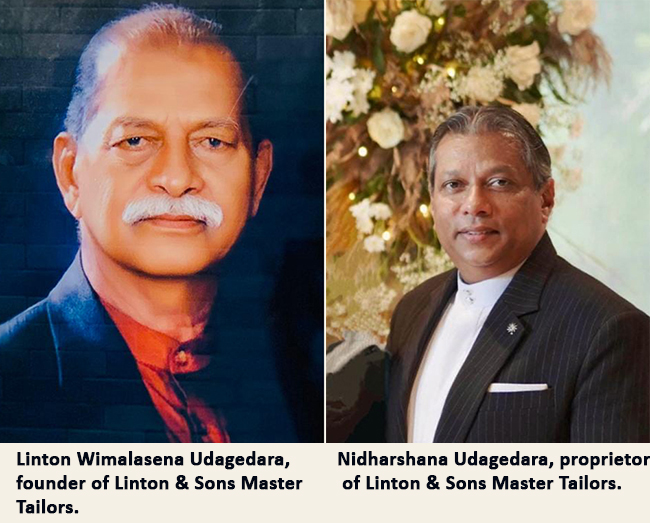
In the 1950s, Linton Wimalasena Udagagedara served as the tailoring instructor at the rehabilitation unit of the Bogambara Prison. Known affectionately by all as “Linton Master,” he laid the foundation for a legacy that would eventually redefine men’s fashion in the hill capital.
In 1958, Linton Master ventured into private business by renting a small shop in Trincomalee Street, Kandy, under the name “Linton Master Tailors.”
Supported by a handful of employees and the unwavering strength of his wife, Srima Alwala, the business began its humble journey. In those early days, Linton Master would travel from Kandy to Pettah, Colombo, walking miles to handpick high-quality fabrics at affordable prices. Though the initial years were a struggle, he never compromised on quality.
Due to his commitment to superior craftsmanship and impeccable finishing, “Linton Master’s Shop” in Trincomalee Street soon became a household name across the Kandy region. By the 1970s, the thriving business moved to Yatinuwara Veediya. As the enterprise grew, Linton Master eventually purchased the rented building and the adjacent premises. In the 1990s, the brand reached its zenith, becoming a hallmark of excellence.
Following the passing of Linton Master in 2009, the business transitioned into a new era. Today, it stands proud at the same familiar location in Yatinuwara Veediya, rebranded as “Linton & Sons Master Tailors.” His legacy is carried forward by his children; while one son manages a printing press and a daughter runs a bridal wear brand under the Linton name, his son Nidarshana Udagagedara has significantly expanded the core tailoring business.
Today, Kandy is home to three main institutions bearing the prestigious Linton brand. Linton & Sons Master Tailors, now employing around 20 skilled professionals, is a nationally recognized name. Known for their international standards, it is said that anyone who gets a full suit tailored at Linton & Sons invariably returns for their second.
The business that once started with fabric handpicked from Pettah now utilizes world-renowned international brands. Linton & Sons is currently the only tailor shop in Kandy that creates garments using prestigious fabrics such as Raymonds, Pacific Gold, Medici, and Macone.
Current Chairman Nidarshana Udagagedara notes that they serve a loyal customer base, with complete groom’s suit packages ranging from Rs. 30,000 to Rs. 90,000. With a highly experienced team, they now offer an exclusive one-day service, allowing customers to have bespoke designs created to their exact specifications in record time.
Spanning seven decades, the Linton lineage, which has brought fame to Kandy, has now successfully expanded from the second generation to the third, ensuring that the master’s stitch continues to define elegance for years to come.
By S.K. Samaranayake
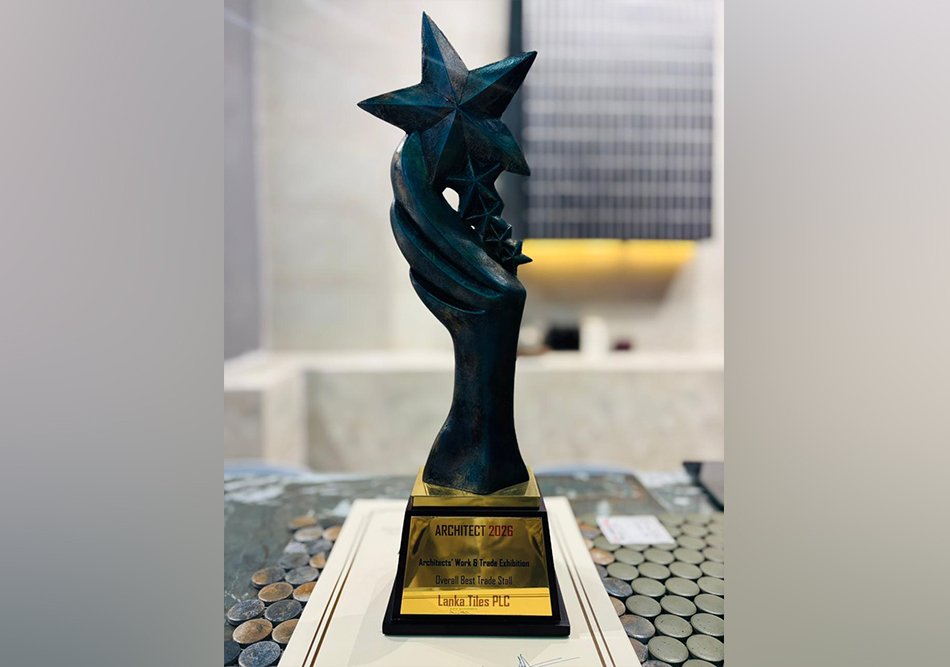
At the prestigious Architect 2026 Exhibition, LANKATILES unveiled an immersive Concept Studio of contemporary design, where every surface spoke in allusive ways of exquisite craftsmanship and architectural vision.
Among a host of outstanding participants, the Concept Studio was recognized with two of the exhibition’s highest accolades: Overall Best Stall and Best Trade Stall Displaying Local Products. This is a resounding testament to five decades of trust, quality, and innovation.
The Concept Studio was thoughtfully zoned to evoke the ambiance of curated interiors and sophisticated entryways, unveiling the latest designs introduced to the market. Visitors were guided through a seamless spatial journey, beginning with the Living Zone, where expansive surfaces harmonized durability with refined design to elevate everyday living. The Kitchen Ambience Zone presented a contemporary culinary environment enriched with elegant finishes, demonstrating how functionality and elevated aesthetics coexist in modern homes.
The experience continued into the Bedroom Zone, an intimate and serene setting curated with soothing palettes and luxurious surfaces to create a tranquil retreat defined by comfort and understated elegance. Complementing this was the Bathware Zone — a sanctuary of calm showcasing precision-crafted porcelain surfaces that seamlessly blended purity of form with superior performance, redefining modern bathroom sophistication.
Extending beyond interiors, the Poolside Zone highlighted elegant outdoor settings framed by resilient, high-performance tiles, where aesthetic excellence met enduring strength in expressive interpretations of contemporary luxury. Featuring the latest Mosaic designs alongside the grand large-format tile series, Majestica, each zone illustrated how LANKATILES transforms raw materials into architectural poetry, reinforcing its leadership in innovation and design excellence.
Another defining feature of the Concept Studio was the AI-powered Tile Visualizer; an advanced digital interface designed to offer architects and homeowners an intelligent and immersive visualization experience that redefines the way interiors are selected and conceptualized. Within minutes, users can upload an image of their dream space and instantly explore precisely matched tile designs and colour palettes tailored to their aesthetic preferences.

Rapper-politician Balendra Shah unseats Nepal’s ex-PM as he heads for victory

Triumph and disaster: India, New Zealand and a trophy for one

Sutherland’s sublime century and Hamilton’s night-time burst flatten India

Trump says US does not need UK aircraft carriers for Iran war

Our goal is to build a “Thriving Nation” where a woman can walk without fear or doubt, where her talents are duly recognized, and where she can lead a life of dignity – PM

Dry weather will prevail except for a few showers in the Southern province and Rathnapura district

‘Dates have the highest sugar content to fight Coronavirus’

Sunday Island 27 December – Headlines

#SundayIsland 17th December – Headlines

Sunday Island – 28th March

Sunday Island Headlines – 21 March

Sunday Island – 21st February – Headlines
-
 Features6 days ago
Brilliant Navy officer no more
-

 News2 days ago
University of Wolverhampton confirms Ranil was officially invited
-
 Opinion6 days ago
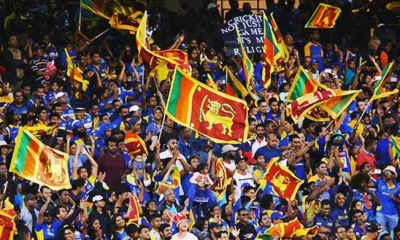
Sri Lanka – world’s worst facilities for cricket fans
-

 News3 days ago
Legal experts decry move to demolish STC dining hall
-

 Features6 days ago
A life in colour and song: Rajika Gamage’s new bird guide captures Sri Lanka’s avian soul
-

 News2 days ago
Female lawyer given 12 years RI for preparing forged deeds for Borella land
-

 Business4 days ago
Cabinet nod for the removal of Cess tax imposed on imported good
-

 News1 day ago
Wife raises alarm over Sallay’s detention under PTA