
Editorial
Lucky crooks


Monday 4th September, 2023
Sri Lankans with a predilection for gratuitous violence or wanton brutality no longer have to spend money to watch western gangster movies. Local television news bulletins are full of actual scenes of violence; they are in fact scarier than taut Hollywood thrillers such as Tarantino’s Reservoir Dogs. Sicarios of local gangsters come riding motorcycles, kill their targets with ease and ride away calmly.
Hardly a day passes without such incidents, and underworld characters have amply demonstrated their ability to strike at will, but the government insists that the rule of law has not collapsed! The police are busy doing political work and carrying out operations to keep the unruly anti-government protesters at bay, and perhaps they are too overstretched to concentrate on crime prevention, much less crack down on the underworld.
Criminals, however, are not the only ones who are brazenly flouting the law of the land and getting away. Some members of the business community are also doing likewise, short of shedding blood. They enjoy unbridled freedom to fleece the public and maximise their profits. It is said that ‘in times of war, the law falls silent’, but, in this country, it looks as if the laws were perpetually silent as regards the violation of consumers’ rights.
There have been many complaints of a cooking gas shortage during the past few days although the state-owned Litro Gas insists that it has enough stocks. It is obvious that most of the Litro agents/dealers have stored away gas, expecting a substantial gas price increase. They have done so on numerous occasions in the past with impunity. This unfortunate situation comes about because Litro makes the mistake of announcing gas price revisions days in advance, and whenever it indicates the possibility of a price increase, its agents/dealers promptly hoard LPG, and make a killing.
A couple of months ago, the Ceylon Petroleum Corporation (CPC) blundered by increasing the QR-based fuel quota and making known its intention to reduce fuel prices almost simultaneously. Most filling station owners did not replenish fuel supplies in a bid to minimise losses, and the demand for petrol and diesel went up due to the increase in the fuel ration, causing a petroleum shortage, which lasted for several days.
Motorists waited in long queues, gnashing their teeth and cursing the government. The CPC has since taken action to cancel the licences of the fuel stations that do not maintain sufficient stocks. This is the language that crooked businesses bent on exploiting the public, understand.
Litro is expected to announce a price increase tonight, and from tomorrow LPG will be freely available at revised prices even at the sales points which remain closed, claiming that they have run out of stocks. Consumers have no one to turn to. No wonder the public is so resentful and anarchical forces are gaining traction.
The Consumer Affairs Authority (CAA) does precious little to safeguard the interests of consumers. Its raids are few and far between. It has been in a slumber during the past several days while the people were trying to buy cooking gas without success. It is required by the law to take action against businesses that refuse to sell goods in their possession. Why should the public be made to pay through the nose to maintain the institutions which are of little use to them?
Let Litro be urged to refrain from making prior announcements of price revisions, and take action against its unscrupulous agents/dealers who store away gas to maximise profits. In this day and age, technology provides answers to most problems which were considered intractable in the past.
Litro ought to adopt a method similar to the CPC’s QR-based quota system, which helped tackle fuel crisis, to monitor the availability of LPG countrywide, entertain complaints from consumers and take remedial action in case of shortages, etc. The licences of the errant gas agents/dealers must be cancelled forthwith and the CAA made to prosecute them. A government that cannot ensure that they do so is not worth its salt.








Tuesday 10th March, 2026
US President Donald Trump’s Epic Fury has left the world gnashing, with a global fuel shortage looming large. Oil prices have already surged past USD 100 a barrel amidst rising tensions in the Middle East. They are set to climb higher. The US-Israeli air strikes on Iran and retaliatory attacks are not likely to end any time soon. Both sides are targeting oil fields and storage facilities, sending shockwaves across the world.
Trump’s re-election led to euphoria in business circles, which mistakenly thought that he would not resort to anything that would adversely impact the global economy. But he has proved that he is not worried about the world economy at all. When Reuters recently asked him about the surging oil prices, he audaciously claimed: “They’ll drop very rapidly when this [the war on Iran] is over, and if they rise, they rise, but this is far more important than having gasoline prices go up a little bit.” Contrary to his prognosis, gasoline prices in the US rose from USD 2.92 a gallon, the lowest since 2020 to USD 3.40 a gallon. Trump’s plan to make short work of Iran has gone awry for all intents and purposes, and all signs are that the war will drag on indefinitely. It will be a huge gamble for the US to deploy ground troops in Iran. The Republican thinking, according to the likes of
hawkish Senator Lindsey Graham is now that Venezuela has fallen in line, the US may be able to gain control over about 30 percent of the global oil production if it defeats Iran and installs a puppet regime in Tehran. Hope is said to spring eternal.
Iran is apparently shifting the war to the economic front by closing the Strait of Hormuz, and doing everything possible to cause disruptions to the global oil supply. Worse, the intensifying conflict in the Middle East has raised significant concerns about a potential global recession due to energy supply shocks and crippled shipping routes. The region is a critical chokepoint, accounting for roughly 20% of global oil and liquefied natural gas shipments, and supply disruptions threaten to spike inflation and slow global growth.
Managing Director of the International Monetary Fund, Kristalina Georgieva, has warned about worldwide inflation risks arising from the conflict in the Middle East, pointing out that every 10% increase in oil prices, if sustained for most of the year, could lead to a 40-basis point rise in global inflation. This is an unnerving proposition, especially for vulnerable economies, such as Sri Lanka, which is emerging from a crippling economic crisis. The developing nations are without sufficient foreign currency reserves to withstand long-term shocks from a protracted Middle East conflict.
Bangladesh has reportedly been compelled to close its universities as part of a strategy to weather energy supply disruptions due to the Middle East conflagration and the closure of the Hormuz Strait. Other countries in this region and elsewhere may have to adopt such drastic measures to overcome possible fuel supply shortfalls. Bangladesh is reported to have posed daily limits on fuel sales due to panic buying and hoarding.
A trade unionist representing the Opposition in this country has warned of a possible fuel shortage despite the government’s assurances that there are sufficient petroleum stocks. He has urged the government to keep the public informed of fuel availability regularly. He may have issued that warning in good faith, but it is fraught with the danger of triggering another panic buying spree. It was with the greatest difficulty that the government brought fuel panic buying and hoarding under control a few days ago. Everyone ought to act responsibly at this juncture.
There is no need to hit the panic button yet, but urgent action is called for to prevent a possible fuel crisis. The available fuel stocks must be properly managed as the possibility of suppliers invoking the force majeure clause in agreements due to the worsening Middle East crisis and the resultant supply disruptions cannot be ruled out. It will be extremely difficult to replenish fuel supplies in such an eventuality. Prudence demands that the QR-based fuel distribution be reintroduced at the first sign of trouble. There’s no shame in rationing fuel during a global crisis.
Monday 9th March, 2026
The JVP-NPP government came to power, promising to play a messianic role and cleanse Sri Lankan politics, but a dirty coal procurement deal has blackened its reputation. Its leaders and propagandists are unashamedly trying to obfuscate the issue of procuring low-quality coal and causing huge losses to the ailing economy. They have made a fresh attempt to muddy the water by asking for further testing of the low-grade coal, which has already caused a loss of about Rs. 9 billion to the state coffers. It has now been proved beyond any doubt that the South African coal procured from an Indian supplier, Trident Chemphar Ltd., is substandard, and the government manipulated and delayed the tender process to enable Trident to secure the coal tender. But no heads have rolled.
The Commission to Investigate Allegations of Bribery or Corruption has recently indicted Energy Minister Kumara Jayakody before the Colombo High Court for corruption, accusing him of having caused a loss of over Rs 8.8 million to the state by allowing a private company to make undue financial profits, when he was in the Fertiliser Company. The Opposition has told Parliament that there are allegations of money laundering against a top official of the coal supplying company, and the local agent of the outfit is facing an International Cricket Council ban for malpractices. It has therefore blamed the coal racket on an unholy alliance.
The Public Utilities Commission of Sri Lanka (PUCSL), in a report on the Lakvijaya Power Plant (LVPP) performance and financial impact of the use of the newly procured coal, has revealed that the plant cannot produce power at its full generation capacity using the coal supplied by Trident. A graph in the PUCSL report shows that LVPP output rose to 300 MW when the Russian coal procured from the previous supplier was used, but it dropped significantly when the South African coal supplied by Trident was burnt. It is not possible to use more coal per hour to meet the generation shortfall as the limit set by the plant manufacturer is 110MT per hour, the PUCSL has said.
The PUCSL has confirmed excessive steam temperature levels, several times higher than the prescribed limits, due to the burning of coal procured from Trident. It has also revealed that the coal supplied by Trident has caused the fly ash discharge to increase by 102 percent. If the problem persists, it could damage the LVPP turbine besides resulting in excessive corrosive wear and overheating of the equipment in the boiler system, according to the PUCSL.
Warning of possible power cuts due to the use of inferior quality coal affecting generation capacity of LVPP, the PUCSL has said the risk to the continuous electricity supply was assessed based on the peak demand forecast submitted by the Ceylon Electricity Board for 2026. According to the PUCSL report, the analysis assumed that hydropower plants could contribute up to 1,300 MW to meet the night peak demand while LVPP could contribute only up to 690 MW due to a capacity shortfall, assuming about a 40 MW generation capacity reduction from each unit.
The SLPP-UNP government earned notoriety for bribery, corruption and waste. The JVP/NPP used that corrupt regime as a foil to market what it made out to be its commitment to upholding accountability and ushering in good governance to secure a popular mandate to rule the country. The least the JVP-NPP government can do to salvage its good governance credentials, if at all, is to remove Minister Jayakody from the Cabinet forthwith, cancel the coal tender, and institute legal action against the culprits. If it continues to defend him and keeps on trying to cover up the coal scandal, it will only bolster its critics’ claim that the JVP and the NPP have benefited from the mega coal racket, the way the UNP gained from the Treasury bond scams in 2015.
The SLPP-UNP government defended its Health Minister Keheliya Rambukwella when he was exposed for a pharmaceutical scandal. But it allowed him to be arrested and remanded when it became too embarrassing for it to shield him. But the JVP-NPP government continues to defend Jayakody, making a mockery of its much-advertised commitment to good governance.

The Sri Lanka Navy, on Thursday night, brought ashore 204 crew members of the IRIS Bushehr, another Iranian naval vessel facing the danger of a possible US torpedo attack. They were rushed to the Navy’s Welisara camp, and the ship was taken to the Trincomalee Harbour. The crew of the ship consists of 53 officers, 54 cadet officers, 48 senior ratings, and 23 junior sailors. President Anura Kumara Dissanayake hurriedly summoned a media briefing, on Thursday night itself, to announce the successful completion of the rescue mission. He and his government deserve praise for their intervention to save the Iranian ship and its crew. Kudos to them.
However, it is being argued in some quarters that if the Sri Lankan government had stopped dilly-dallying and plucked up the courage to grasp the nettle on Wednesday, when the Iranian frigate, IRIS Dena, sought refuge in Sri Lankan waters while being pursued by a US submarine, the distressed vessel and the lives of all its crew members could have been saved. The US attack killed more than 100 sailors; there were only about 35 survivors, who were rescued by the Sri Lanka Navy and Air Force. The Opposition told Parliament on Thursday that the ill-fated vessel had been kept waiting for 11 hours since it first asked for permission to enter Sri Lankan waters.
There are numerous claims and counterclaims about the sinking of the IRIS Dena, and a probe must be conducted into the incident and the allegations that its request for permission to reach the Galle Harbour had gone unheeded. Much is now known about the tragic incident as well as its aftermath, but the circumstances that led to it lack clarity. Hence, we repeat, the need for a thorough investigation to get to the bottom of it.
The general consensus is that it was India’s responsibility to ensure the safety of the IRIS Dena, which had taken part in a naval exercise, as one of its guests. Instead, the vessel found itself in a situation where it was left with no alternative but to set sail, endangering itself and its crew. There is reason to believe that India could have leveraged its influence over Washington, as a Quad member, to prevent a submarine attack in the Indian Ocean, and that Colombo should have actively sought India’s intervention to save the ship and its crew.
The US torpedo attack has left India red-faced as a self-appointed guardian of the Indian Ocean. The thinking in regional defence circles is that the US nuclear sub that carried out Wednesday’s attack, blindsided India, which takes pride in being a strategic partner of Washington. India, which jealously guards its maritime backyard and even pressures Sri Lanka to deny permission for Chinese research vessels to operate there, could not save its Iranian guest in the same zone. Nothing could be more ironic than the fact that, according to media reports, anti-submarine warfare drills were part of the recent naval exercise hosted by India with Iran, the US and others as guests.
It is possible that the diplomatic fallout from Wednesday’s cowardly torpedo attack, international opprobrium over the massacre at sea, India’s humiliation as one of the strategic allies of the US, etc., compelled the Pentagon to spare the second Iranian vessel in its crosshairs in India’s backyard and let Sri Lanka carry out Thursday night’s rescue operation, which the NPP government is crowing about.
It is incumbent upon India and other nations in the region to join forces to preserve peace in the Indian Ocean vis-à-vis emerging threats. Sri Lanka’s policy ought to be that all vessels, including naval ships on non-combat missions, which are either in distress or seeking port calls for other reasons, can enter its territorial waters with permission. The need for competent political leaders and diplomats, capable of helping the country navigate sensitive issues, avoiding torpedoes, cannot be overstated.

Heat Index at Caution Level in the Western, Sabaragamuwa, Southern and North-western provinces and Monaragala district

Large parts of Dresden to be evacuated after 250kg WW2 bomb found

Cabinet approves 14 day Visa extension
Sunil Galagama appointed as District Secretary Badulla

Anupama Mangala Wickramaarachchi appointed District Secretary Ampara
Committee on Economic Surveillance to be established

‘Dates have the highest sugar content to fight Coronavirus’

Sunday Island 27 December – Headlines

#SundayIsland 17th December – Headlines

Sunday Island – 28th March

Sunday Island Headlines – 21 March

Sunday Island – 21st February – Headlines
-

 News5 days ago
University of Wolverhampton confirms Ranil was officially invited
-

 News6 days ago
Legal experts decry move to demolish STC dining hall
-

 News5 days ago
Female lawyer given 12 years RI for preparing forged deeds for Borella land
-

 News4 days ago
Peradeniya Uni issues alert over leopards in its premises
-

 News2 days ago
Repatriation of Iranian naval personnel Sri Lanka’s call: Washington
-

 Business6 days ago
Cabinet nod for the removal of Cess tax imposed on imported good
-
 News5 days ago
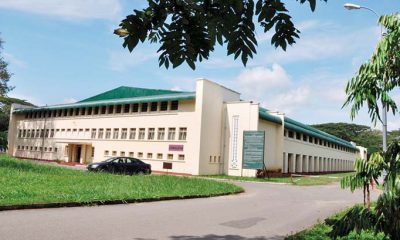
Library crisis hits Pera university
-

 Business7 days ago
Dialog partners with Ratmalana Audiology Centre for World Hearing Day 2026