
News
Love, unadulterated: Some thoughts on Mother’s Day


by Krishantha Prasad Cooray
There is no day in the calendar that can be called ‘Mother’s Day,’ not as far as mothers themselves are concerned. They don’t cease to be mothers on days that are not called ‘Mother’s Day.’ And yet, May 12 or rather the second Sunday in the month of May, as originally designated by Woodrow Wilson, then US President, is important, not so much for mothers as it is for their children. Children, who soak in the love and affection and are protected from anxiety and harm day in and day out, are reminded of all that when Mother’s Day comes around.
All of us have seen mothers. We have seen the mothers of our parents and the mothers of our own children. We have known the mothers of our friends and the mothers of their children. It occurred to me, however, that today, as mothers the worldover are celebrated, it is not a collective or the idea of ‘motherhood’ that is important. We remember our own mothers. I remember mine, my Amma.
Mothers make enormous sacrifices for their families. So did mine, Christobel Cooray, and indeed so she does to this day. She taught her three sons many things, but most importantly the non-negotiable characteristics of friendship and loyalty. We were taught from a very young age to stand by our friends through thick and thin. What I remember most, however, is her insistence that we look out for the weakest and poorest among us.
She was the kind of mother whose affection was not limited to her children. She was a mother to all our friends as well. Since we lived close to my school, St Thomas’ College, Mount Lavinia, we would bring our friends home almost everyday. She delighted in having them around and cooking for them. She has been a mother to all of them, literally hundreds in fact.
They remember her well. Some of them made it a point to buy her some gift from the very first salary they received. Even today, decades after our school days were done, whenever I run into old friends or talk to them over the phone, there are many times when my mother would come up in the conversation. They would inquire after her and tell me how special and kind she was.
It doesn’t end. Today I see her shower her grandchildren with love and it’s no different from what I remember of my childhood. Amma would sacrifice anything for her children and today she would do anything for her grandchildren.
Her concern was not limited to her children, grandchildren, close relatives and their friends. She is in fact the most generous person I know. There are countless times when she would be distraught over the plight of some helpless person. If she read about it or saw it in news telecasts she would call me and ask me whether I knew and what I was going to do about it. She never failed to follow up if I said I would try to help. She believed in doing the right thing. If it was about entertaining people or helping someone in trouble, she would put aside all notions of thrift. Yes, she went overboard at times, but this is because she always wanted to do things with class.
Her empathy, kindness and generosity does not imply that she is some kind of benign saint. She is tough and could lose her cool on occasion, but she quickly recovered her composure. She would argue with her siblings, for instance, but they all know that her love and loyalty are absolute, even though her bad temper made her loathe to ever admit a mistake.
Amma has a strong personality. Recently our family doc spoke to me after visiting Amma at home and then reported to me thus: ‘you know Krishantha your mother is a very resilient lady; she is a tough character, and she has a remarkable ability to face things bravely’.
She never tolerated any nonsense and encouraged us to follow suit. So we learned from a very young age that we should not back off from a fight. More importantly, she insisted that we should never initiate a fight. We have by and large tried to affirm these principles and I am convinced that if we are good citizens, we owe much of that decency to her. We are what our parents made us to be and the way we react to any issue largely depends on how they faced similar situations. I don’t tell myself ‘this is how Amma went about it,’ but I know that if I put my mind to it, I would have to conclude, ‘these are things she etched on my mind and that’s why I responded in this particular way.’
She knows I love her and that I appreciate all that she’s done for me, but Amma would probably tell me, ‘that’s how all mothers are,’ and she would be right.
It doesn’t sound right to talk of debts owed when it comes to children and parents. All I know is that we can never compensate for the love and affection our mothers have given us. We can and should never shy away from being there for them, especially as they grow older and infirm. This is why I feel that there can be no bigger crime than creating a rift between a mother and child for this is a bond that is so unique and made purely of love. And this is why, I feel, if a person is unkind to his or her mother then you can never expect any kindness from that person for anything or anyone. I believe if you don’t know how to treat your mother then you can never be a person who will treat anyone well. Basically, you can judge a friend by the way he or she treats his or her mother.
Our mother’s play the most crucial role in shaping our characteristics. Our mother and father are our gods who we are fortunate to touch and feel. They are the only people on this earth who love you more than they love themselves. Whether you are happy, sad, disturbed or facing a crisis it’s your mother who will know or feel first. That is something you cannot logically explain. Whoever you are, whether you are an unbelievably successful person or an absolute failure, your mother is the one who will stand by you even if the entire world is against you. Amma stood by me. She stands by me. It’s love, unadulterated.











* New Auditor General should not have been sworn in before Speaker – Opp.
* Suspended House Dy. Sec. Gen. Chaminda Kularatne takes his case to CA today
General Secretary of the National People’s Power (NPP) Dr. Nihal Abeysinghe yesterday said that there was no need for Speaker Dr. Jagath Wickramaratne to step down in view of the complaint lodged against him with the CIABOC (Commission to Investigate Allegations of Bribery or Corruption).
NPP General Secretary said so in response to The Island query whether the parliamentary group of the ruling party discussed the growing Opposition calls for the Speaker, who is also the Chairman of the Constitutional Council, to step down to facilitate the investigation.
The NPP parliamentary group consists of 159 MPs, including 18 National List (NL) members.
NL member Dr. Abeysinghe asked whether any other person, who had been investigated by the CIABOC, stepped down from his or her position to facilitate the inquiry.
The top official emphasised that the CIABOC could go ahead with its investigation without any hindrance.

Chamindra and Dr. Jagath
Opposition sources said that there hadn’t been a similar situation before and the CIABOC investigation into Speaker Dr. Wickramaratne is unprecedented as he heads the 10-member CC responsible and directly involved in all key appointments, including that of members to the CIABOC.
Sources pointed out that the newly appointed Auditor General, Ms. Samudrika Jayaratne, took the oath of secrecy before the Speaker on 5 February in Parliament after suspended Deputy General Secretary of Parliament Chaminda Kularatne complained to CIABOC.
In accordance with Section 9 of the National Audit Act, No. 19 of 2018, Jayaratne took the oath of secrecy in her capacity as the Auditor General of the National Audit Office and Chairperson of the Audit Service Commission.
Sources said that Kularatne would move the Court of Appeal today (10) against his removal at the behest of the Staff Advisory Committee, headed by the Speaker.
By Shamindra Ferdinando

The Trincomalee Magistrate’s Court yesterday (09) further remanded 10 persons, including four Buddhist monks, arrested on 19 January, 2026, for allegedly placing a Buddha statue in the coastal reservation, on 16 January.
The Buddhist monks, including Ven. Balangoda Kassapa Thera, and six other individuals, were further remanded until 11 February.
They have been accused of violating the Coast Conservation Act by placing a Buddha statue on a block of land belonging to the Trincomalee Bodhiraja Temple.
Of the four monks, Ven Balangoda Kassapa Thera and Ven Trincomalee Kalyanawansa Tissa Thera moved the Court of Appeal against the Magistrate’s Court decision. The case was heard on 22 January before a Bench comprising the President of the Court of Appeal, Justice Rohantha Abeysuriya, and Justice K. Priyantha Fernando.
Manohara de Silva, PC, and President’s Counsel Uditha Igalahewa, PC, appearing for the petitioners, urged the Court to take up the matter urgently, describing it as a case of exceptional importance.
However, the Court of Appeal on 3 February dismissed the petitions against the remanding of Ven Balangoda Kassapa Thera and Ven Trincomalee Kalyanawansa Tissa Thera.
The order was issued by the Court of Appeal bench consisting of the President of the Court of Appeal, Justice Rohantha Abesuriya and Justice Priyantha Fernando.
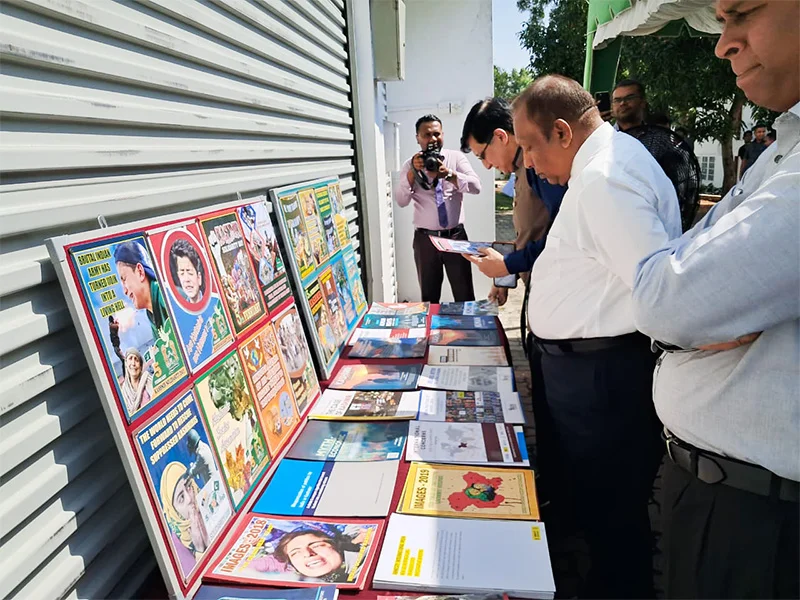
The Pakistan High Commission in Colombo recently organised a seminar and photo exhibition at the HC premises to commemorate Kashmir Solidarity Day. The following is the text of the statement issued by the PHC: “The event highlighted Pakistan’s continued support for the Kashmiri people and emphasised the importance of a peaceful and just resolution of the Jammu and Kashmir dispute. Members of the Pakistani community, friends of Kashmir, and local journalists attended the event.
The seminar concluded with remarks by the High Commissioner of the Islamic Republic of Pakistan, Major General (R) Faheem-ul-Aziz, HI (M). He reaffirmed Pakistan’s principled stance on the Jammu & Kashmir issue and underscored the need for sustained international engagement. He noted that the situation in Indian Illegally Occupied Jammu & Kashmir (IIOJK) has remained a matter of concern for decades and called upon the international community, particularly the United Nations, to play its role in promoting peace, stability, and respect for human rights.
The High Commissioner emphasised that the Jammu and Kashmir dispute should be resolved in accordance with international law and relevant UN Security Council resolutions, cautioning that prolonged tensions could have broader implications for regional peace and security.
The event featured keynote addresses by Shiraz Yunus and Ms. Suriya Rizvi, who highlighted the importance of dialogue, interfaith harmony, and peaceful coexistence. They also drew attention to humanitarian concerns and stressed the need for safeguarding fundamental rights in the region.
Earlier, messages from the President and the Prime Minister of Pakistan, issued on the occasion of Kashmir Solidarity Day, were read out by the Press Attaché and the Trade & Investment Attaché, respectively.
As part of the Photo Exhibition, photographs and digital presentations, depicting the humanitarian situation in IIOJK, were displayed during the seminar.”

Namibia begin campaign in crucial game against Netherlands

Markram, Ngidi help South Africa ease past dogged Canada

Pakistan withdraw boycott of India match at T20 World Cup

Mainly dry weather will prevail in the most parts of the island.

NPP: Speaker won’t step down, CIABOC can investigate him

Trinco Buddha statue case: All suspects, including 4 monks re-remanded till 11 Feb.

‘Dates have the highest sugar content to fight Coronavirus’

Sunday Island 27 December – Headlines

#SundayIsland 17th December – Headlines

Sunday Island – 28th March

Sunday Island Headlines – 21 March

Sunday Island – 21st February – Headlines
-
 Features2 days ago
My experience in turning around the Merchant Bank of Sri Lanka (MBSL) – Episode 3
-

 Business3 days ago
Zone24x7 enters 2026 with strong momentum, reinforcing its role as an enterprise AI and automation partner
-

 Business2 days ago
Remotely conducted Business Forum in Paris attracts reputed French companies
-

 Business2 days ago
Four runs, a thousand dreams: How a small-town school bowled its way into the record books
-

 Business2 days ago
ComBank and Hayleys Mobility redefine sustainable mobility with flexible leasing solutions
-

 Business3 days ago
HNB recognized among Top 10 Best Employers of 2025 at the EFC National Best Employer Awards
-

 Business3 days ago
GREAT 2025–2030: Sri Lanka’s Green ambition meets a grid reality check
-

 Editorial5 days ago
All’s not well that ends well?