
Life style
Lawyers for a larger cause


Sisters-at-Law, the free legal service supporting survivors of domestic and gender-based violence marks three years of yeoman silent service this month. Its founder Marini de Livera recaps its journey while urging more women lawyers to become change-makers.
by Randima Attygalle
“I have realized more and more that the right to access justice is a privilege enjoyed by the rich and the affluent of our society. Law is something that is discussed by the elite in air-conditioned offices and never reaches out to the communities. The poor and the down-trodden have no one to advise them when facing oppression and injustice. The Law is beyond their reach,” observes human rights lawyer Marini de Livera, the founder and the Chairperson of Sisters-at-Law, a free legal service supporting survivors of domestic and gender-based violence. De Livera’s efforts have been honoured with Commonwealth Points of Light Award in 2020 and Women of  Courage (2019) from the US Department of State.
This former Chairperson of the National Child Protection Authority (NCPA) remarks that to bring about change, social justice and make the country and the world a happier place, there is no need to hold a top Government position or be highly connected. All that’s needed is “imagination, a vast amount of energy and unlimited passion.” As a legal academic De Livera saw the futility of Human Rights education within the confines of a classroom. “Without actually experiencing and listening to the stories of survivors, it is impossible to be an instrument of change and find solutions to problems that plague society, especially Human Rights violations. Thus, Sisters-at-Law (SAL) was born in August, 2018 to create awareness about the laws and policies relating to Human Rights and to promote activism through forms of art,” says the human rights trainer (for the army, police, public officials, and grassroots level leaders) who has also been a member of the Steering Committee on the Rehabilitation of Child Soldiers, the Prisons Reform Committee, and the National Committee on Women. De Livera also chaired the committee that drafted the amendments to the Prevention of Domestic Violence Act.
During the three years since its inception, SAL had represented survivors of violence in a number of pro bono cases from the Magistrate’s Court to the Supreme Court says its founder. Referrals are made by the courts and the Police to SAL which not only provides free legal representation but also empowers survivors. Located in Battaramulla within her legal chambers, D
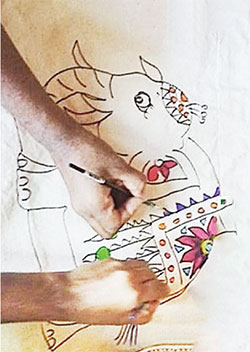
e Livera has provided SAL with an inviting atmosphere where victims of violence can unwind, have a hot drink or a warm meal and decide on how they should proceed.
Filling the need for long term support for survivors, SAL has expanded to offer educational programmes, skills training and income generating activities beyond lodging facilities. Guided by people-centric and strength-focused principles, once a girl or a woman is admitted to a SAL’s shelter, she is asked what her dream is and a ‘Care Plan’ is prepared for each to realize her dream aligned with SAL’s belief that all girls and women deserve an opportunity to find their voice and potential while being able to live a dignified, peaceful and a happy life. “Based on the Care Plan we allocate funding by raising our own funds and also appoint a ‘Care Manager’ who ensures that all steps in the Care Plan are adhered to and the Senior Management reviews the Care Plan,” explains De Livera.
Largely self-funded, SAL finds it challenging to sustain its activities. “Initially we had two shelters, one in Colombo and the other in Galle. Due to lack of funds, we were forced to close down the Galle shelter,” says De Livera. A woman whose road has never been easy, she calls herself ‘unstoppable’ and is in the process of setting up SAL’s own dress making business to help more women and girls in need. A gifted artist and a Licentiate teacher in Speech and Drama from Trinity College London, De Livera uses art as a therapeutic means of healing and empowering survivors. She has her own street theatre group, with her own bird mascot Bindoo that travels around the country performing plays related to human rights issues.
Although the Prevention of the Domestic Violence Act of 2005 speaks of the need for shelters for victims of violence, there is still a dearth of them in the country, notes De Livera. Such shelters should not however be ‘prison-like’ unhappy places but ‘peaceful and safe heavens’ where survivors could take informed decisions relating to their future and train and empower themselves to function on their own, contribute to society and become productive citizen, she adds. Networking with members from the medical profession, religious leaders, psychologists and clinicians, educators, business sector etc. is imperative to build a support system for the survivors, observes SAL’s founder.
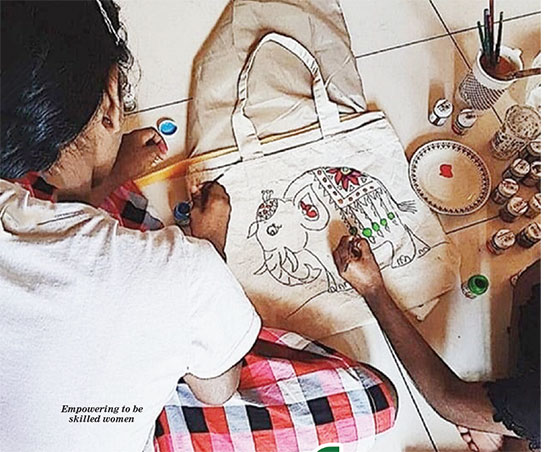
Urging young women lawyers to be change-makers, De Livera also says that they need more role models. “They also need to be sensitized and at SAL we make it happen in our own little way. We hope to train a pool of legal experts in all fields who can also represent the marginalized in court.” She reiterates that women lawyers need to be proactive to ensure that the concept ‘Women’s Rights are Human Rights’ become a reality. “Sri Lanka signed the CEDAW Convention in 1981. Yet to date no domestic law has been passed by our Parliament incorporating Women’s Human Rights enshrined in CEDAW into Sri Lankan Law. Women lawyers should advocate and lobby for law reform.” The Assistance to and Protection of Victims of Crime and Witnesses Act which was passed in 2015 provides for compensation to victims of a crime. However, the Victims’ Authority does not have a Fund to be used for this purpose, charges De Livera who goes on to remark that women lawyers should be trained to identify these issues and agitate for their realization.

Making a case for girls and women whose abuse is rampant and whose only option should not be to become a domestic worker, the activist lawyer calls fellow women to rally around to empower them at grassroot level. “There are graduates employed at every Divisional Secretariat. They function as representatives of all Cabinet Ministers in the capacity of Child Protection Officers, Women Development Officers and Probation Officers. In certain parts of the country these officers have prepare a document known as a ‘child vulnerability card’ that assesses the danger every child is exposed to.”

She also maintains that schools should work with the NCPA and the Probation Department and detect and track if school drop-outs are trafficked to Colombo and other cities by unscrupulous agents to earn money out of them. “Systems are already in place – it is only a matter of implementing them. Women lawyers in this country can be the driving force to advocate for the implementation of policies and laws,” concludes De Livera.
If you wish to support or rally around
Sisters-at-Law, write to helpsistersatlaw@gmail.com


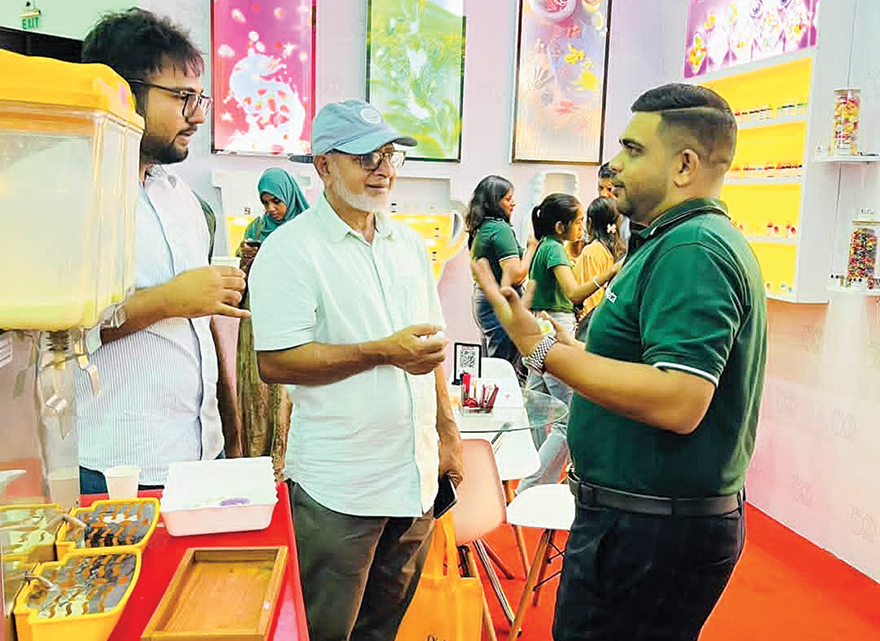
Salman Faiz has turned his family legacy into a modern sensory empire. Educated in London, he returned to Sri Lanka with a global perspective and a refined vision, transforming the family legacy into a modern sensory powerhouse blending flavours,colours and fragrances to craft immersive sensory experiences from elegant fine fragrances to natural essential oils and offering brand offerings in Sri Lanka. Growing up in a world perfumed with possibility, Aromatic Laboratories (Pvt) Limited founded by his father he has immersed himself from an early age in the delicate alchemy of fragrances, flavours and essential oils.
 Salman Faiz did not step into Aromatic Laboratories Pvt Limited, he stepped into a world already alive with fragrance, precision and quiet ambition. Long before he became the Chairman of this large enterprise, founded by his father M. A. Faiz and uncle M.R. Mansoor his inheritance was being shaped in laboratories perfumed with possibility and in conversations that stretched from Colombo to outside the shores of Sri Lanka, where his father forged early international ties, with the world of fine fragrance.
Growing up amidst raw materials sourced from the world’s most respected fragrance houses, Salman Faiz absorbed the discipline of formulation and the poetry of aroma almost by instinct. When Salman stepped into the role of Chairman, he expanded the company’s scope from a trusted supplier into a fully integrated sensory solution provider. The scope of operations included manufacturing of flavours, fragrances, food colours and ingredients, essential oils and bespoke formulations including cosmetic ingredients. They are also leading supplier of premium fragrances for the cosmetic,personal care and wellness sectors Soon the business boomed, and the company strengthened its international sourcing, introduced contemporary product lines and extended its footprint beyond Sri Lanka’s borders.

Where raw materials transform into refined fragrance

Salman Faiz -carrying forward a legacy
Today, Aromatic Laboratories stands as a rare example of a second generation. Sri Lankan enterprise that has retained its soul while embracing scale and sophistication. Under Salman Faiz’s leadership, the company continues to honour his father’s founding philosophy that every scent and flavour carries a memory, or story,and a human touch. He imbibed his father’s policy that success was measured not by profit alone but the care taken in creation, the relationships matured with suppliers and the trust earned by clients.
“We are one of the leading companies manufacturing fragrances, dealing with imports,exports in Sri Lanka. We customise fragrances to suit specific applications. We also source our raw materials from leading French company Roberte’t in Grasse
Following his father, for Salman even in moments of challenge, he insisted on grace over haste, quality over conveniences and long term vision over immediate reward under Salman Faiz’s stewardship the business has evolved from a trusted family enterprise into a modern sensory powerhouse.
Now the company exports globally to France, Germany, the UK, the UAE, the Maldives and collaborates with several international perfumes and introduces contemporary products that reflect both sophistication and tradition.
We are one of the leading companies. We are one of the leading companies manufacturing fine and industrial fragrance in Sri Lanka. We customise fragrances to suit specific applications said Faiz
‘We also source our raw materials from renowned companies, in Germany, France, Dubai,Germany and many others.Our connection with Robertet, a leading French parfume House in Grasse, France runs deep, my father has been working closely with the iconic French company for years, laying the foundation for the partnership, We continue even today says Faiz”
Today this business stands as a rare example of second generation Sri Lankan entrepreneurship that retains its souls while embracing scale and modernity. Every aroma, every colour and every flavour is imbued with the care, discipline, and vision passed down from father to son – a living legacy perfected under Salmon Faiz’s guidance.
By Zanita Careem
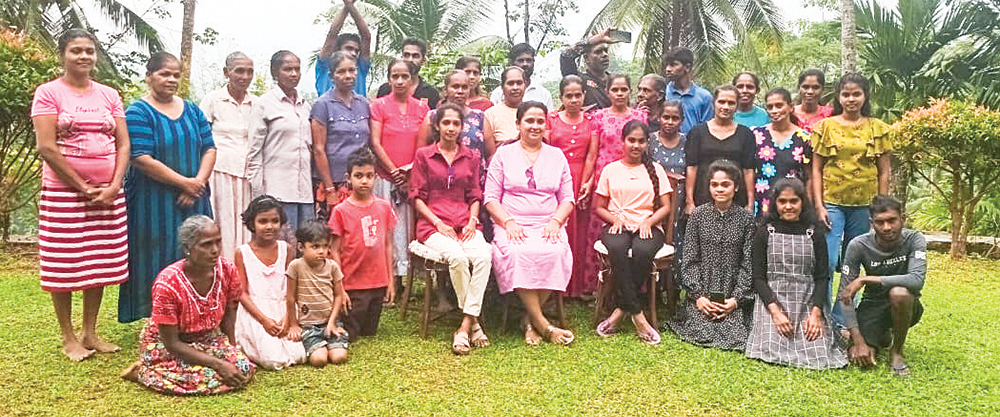
Harini and Chanaka cultivating change
When Harini and Chanaka Mallikarachchi returned to Sri Lanka after more than ten years in the United States, it wasn’t nostalgia alone that they brought home . It was purpose.Beneath the polished resumes and strong computer science backgrounds lay something far more personal- longing to reconnect with the land, and to give back to the country that shaped their memories. From that quiet but powerful decision was born Agri Vision not just an agricultural venture but a community driven movement grounded in sustainability ,empowerment and heritage. They transform agriculture through a software product developed by Avya Technologies (Pvt Limited) Combining global expertise with a deep love for their homeland, they created a pioneering platform that empowers local farmers and introduce innovative, sustainable solutions to the country’s agri sector.
After living for many years building lives and careers in theUnited States, Harini and Chanaka felt a powerful pull back to their roots. With impressive careers in the computer and IT sector, gaining global experience and expertise yet, despite their success abroad, their hearts remained tied to Sri Lanka – connection that inspired their return where they now channel their technological know-how to advance local agriculture.
For Harini and Chanaka, the visionaries behind Agri Vision are redefining sustainable agriculture in Sri Lanka. With a passion for innovation and community impact, they have built Agri Vision into a hub for advanced agri solutions, blending global expertise with local insight.
In Sri Lanka’s evolving agricultural landscape, where sustainability and authenticity are no longer optional but essential. Harini and Chanaka are shaping a vision that is both rooted and forward looking. In the heart of Lanka’s countryside, Uruwela estate Harini and Chanaka alongside the ever inspiring sister Malathi, the trio drives Agri Vision an initiative that fuses cutting edge technology with age old agricultural wisdom. At the core of their agri philosophy lies two carefully nurtured brands artisan tea and pure cinnamon, each reflecting a commitment to quality, heritage and people.
Armed with global exposure and professional backgrounds in the technology sector,they chose to channel thier experiences into agriculture, believing that true progress begins at home.
-
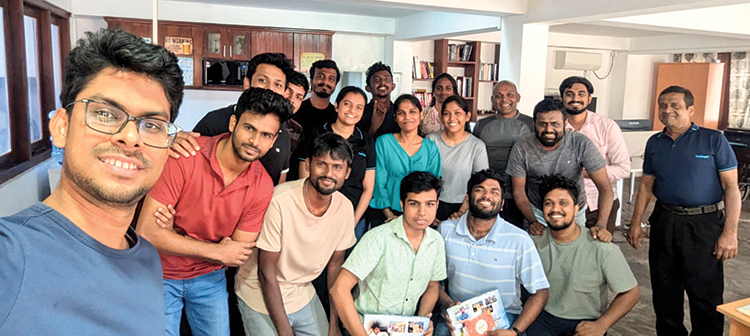
- Avya Technologies (Pvt) ltd software company that developed Agri Vision
-
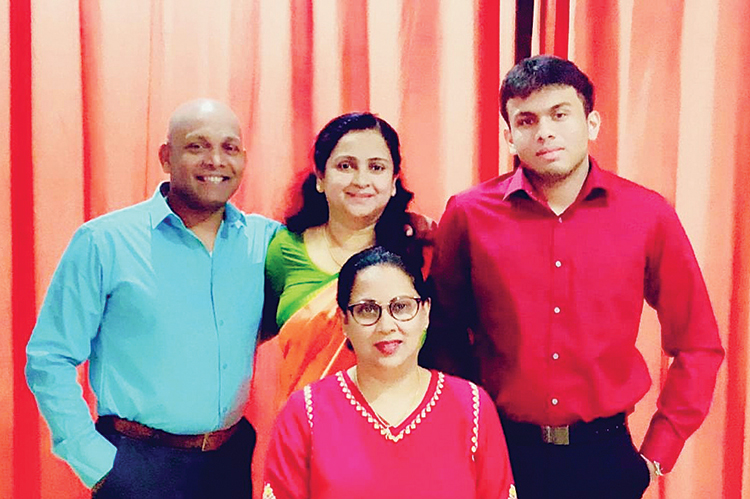
- Chanaka,Harini and Shakya Mallikarachchi and Malathi Malathi dias (middle)
But the story of Agri Vision is as much about relationships as it is about technology. Harini with her sharp analytical mind, ensures the operations runs seamlessly Chanaka, the strategist looks outward, connecting Agri Vision to globally best practices and Malathi is their wind behind the wings, ensures every project maintains a personal community focussed ethos. They cultivate hope, opportunity and a blueprint for a future where agriculture serves both the land and the people who depend on it .
For the trio, agriculture is not merely about cultivation, it is about connection. It is about understanding the rhythm of the land, respecting generations of farming knowledge, and that growth is shared by the communities that sustain it. This belief forms the backbone of Agro’s vision, one that places communities not only on the periphery, but at the very heart of every endeavour.
Artisan tea is a celebration of craft and origin sourced from selected growing regions and produced with meticulous attention to detail, the tea embodier purity, traceability and refinement, each leaf is carefully handled to preserve character and flavour, reflecting Sri Lanka’s enduring legacy as a world class tea origin while appealing to a new generation of conscious consumers complementing this is pure Cinnamon, a tribute to authentic Ceylon, Cinnamon. In a market saturated with substitutes, Agri vision’s commitment to genuine sourcing and ethical processing stands firm.
By working closely with cinnamon growers and adhering to traditional harvesting methods, the brands safeguards both quality and cultural heritage.
What truly distinguishes Harini and Chanake’s Agri Vision is their community approach. By building long term partnerships with smallholders. Farmers, the company ensures fair practises, skill development and sustainable livelihoods, These relationships foster trust and resilience, creating an ecosystem where farmers are valued stakeholders in the journey, not just suppliers.
Agri vision integrates sustainable practices and global quality standards without compromising authenticity. This harmony allows Artisan Tea and Pure Cinnamon to resonate beyond borders, carrying with them stories of land, people and purpose.
As the brands continue to grow Harini and Chanaka remain anchored in their founding belief that success of agriculture is by the strength of the communities nurtured along the way. In every leaf of tea and every quill of cinnamon lies a simple yet powerful vision – Agriculture with communities at heart.
By Zanita Careem
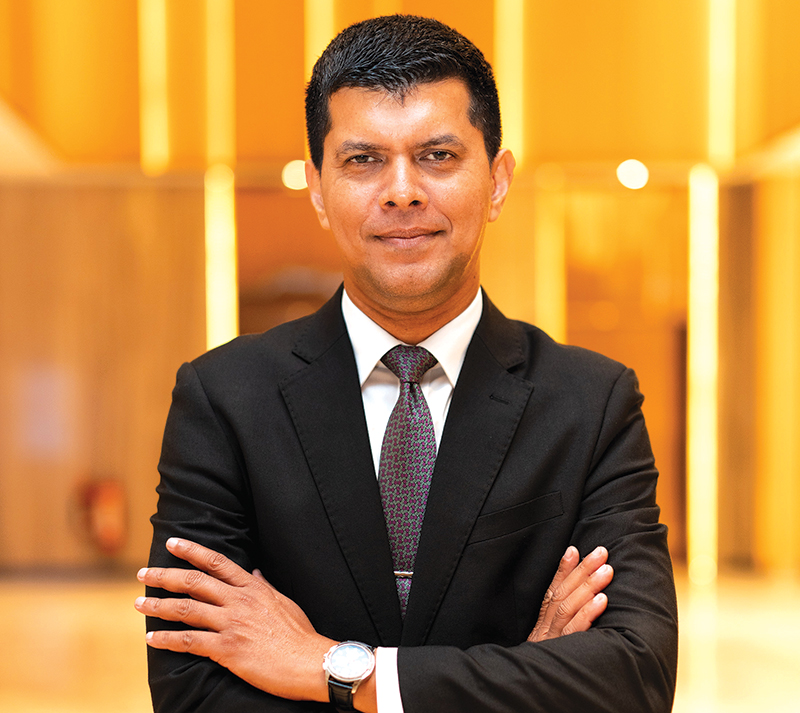
Courtyard by Marriott Colombo has welcomed Suranga Peelikumbura as its new General Manager, ushering in a chapter defined by vision, warmth, and global sophistication.
Suranga’s story is one of both breadth and depth. Over two decades, he has carried the Marriott spirit across continents, from the shimmering luxury of The Ritz-Carlton in Doha to the refined hospitality of Ireland, and most recently to the helm of Resplendent Ceylon as Vice President of Operations. His journey reflects not only international mastery but also a devotion to Sri Lanka’s own hospitality narrative.
What distinguishes Suranga is not simply his credentials but the philosophy that guides him. “Relationships come first, whether with our associates, guests, partners, or vendors. Business may follow, but it is the strength of these connections that defines us.” It is this belief, rooted in both global perspective and local heart, that now shapes his leadership at Courtyard Colombo.
At a recent gathering of corporate leaders, travel partners, and media friends, Suranga paid tribute to outgoing General Manager Elton Hurtis, hon oring his vision and the opportunities he created for associates to flourish across the Marriott world. With deep respect for that legacy, Suranga now steps forward to elevate guest experiences, strengthen community ties, and continue the tradition of excellence that defines Courtyard Colombo.
From his beginnings at The Lanka Oberoi and Cinnamon Grand Colombo to his leadership roles at Weligama Bay Marriott and Resplendent Ceylon, Suranga’s career is a testament to both resilience and refinement. His return to Marriott is not merely a professional milestone, it is a homecoming.

Samra’s record 110 in vain as Phillips and Ravindra put New Zealand in Super Eights

Canada reacts as cheating row rocks curling superpower

Long queues and confusion mar first day of India’s landmark AI summit

Ancient bone may prove legendary war elephant crossing of Alps

Nepal, Scotland chase win to close out what-if tournament

How dark web agent spotted bedroom wall clue to rescue girl from years of harm

‘Dates have the highest sugar content to fight Coronavirus’

Sunday Island 27 December – Headlines

#SundayIsland 17th December – Headlines

Sunday Island – 28th March

Sunday Island Headlines – 21 March

Sunday Island – 21st February – Headlines
-

 Life style2 days ago
Marriot new GM Suranga
-

 Business1 day ago
Ministry of Brands to launch Sri Lanka’s first off-price retail destination
-

 Features2 days ago
Monks’ march, in America and Sri Lanka
-

 Midweek Review6 days ago
A question of national pride
-

 Business6 days ago
Autodoc 360 relocates to reinforce commitment to premium auto care
-

 Opinion5 days ago
Will computers ever be intelligent?
-

 Features2 days ago
The Rise of Takaichi
-

 Features2 days ago
Wetlands of Sri Lanka: