
News
Lankan Embassy in Washington welcomes ‘Walk for Peace’ Buddhist monks

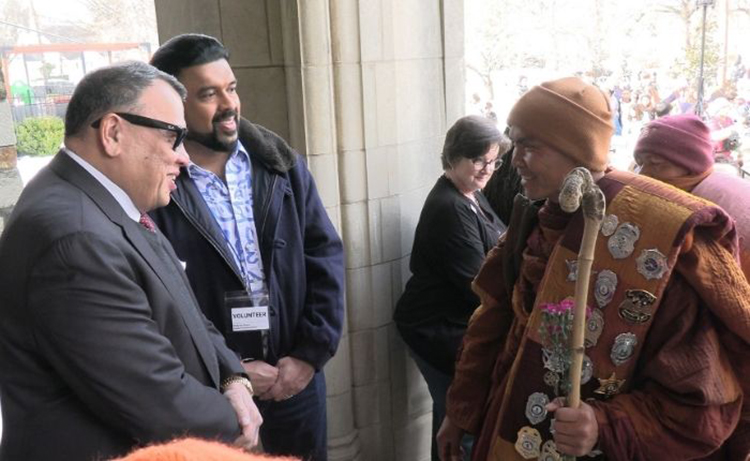
The Sri Lanka Embassy in Washington, D.C., welcomed the ‘Walk for Peace’ on 10 February 2026, as a group of Buddhist monks continued their walk across the United States advocating world peace. The initiative drew participation from people across the United States and abroad.
The Embassy joined a dana organised by the Sri Lankan community in the DMV area at the National United Methodist Church, where more than 200 Buddhist monks were present. Traditional Sri Lankan cuisine was served at the event.
At the invitation of the District of Columbia Secretary Kimberly A. Bassett, Ambassador Mahinda Samarasinghe attended an interfaith ceremony at the Washington National Cathedral. Thousands gathered at the Cathedral in support of the Walk. The Ambassador was accompanied by Deputy Head of Mission Madhuka Wickramarachchi.
The Head Priest and participating monks also visited the Embassy. During the visit, the Ambassador presented an Atapirikara and ceremonially pinned the Sri Lankan flag on the robe of Ven. Pannakara. Embassy staff and members of the Sri Lankan community offered flowers and extended greetings. The Embassy also distributed bottles of water to the participants.


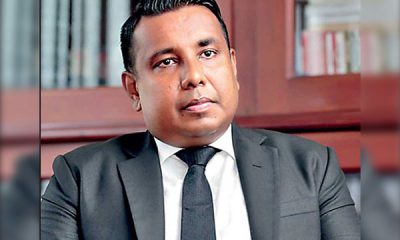




S.B.M.S.B. Sallay, wife of retired Major General Suresh Sallay, has raised serious concerns over the circumstances surrounding her husband’s detention by the Criminal Investigation Department under the Prevention of Terrorism Act.
In a letter addressed to the CID Director, she said restrictions had been imposed on family visits and consultations with lawyers, while requests to provide food from home had also been refused. She said that despite applying for a Police Clearance Certificate to enable their son to visit his father, the document had not yet been issued, preventing him from meeting the detainee.
Sallay’s legal team—President’s Counsel Anujaya Premarathne and Attorneys-at-Law Rasika Balasuriya, Asith Siriwardena and Bhanuka R. Malaviarachchi—have filed a motion before the Fort Magistrate’s Court seeking relief, including access to the full case record, expanded family visitation, permission to provide food, and safeguards for Sallay’s well-being.
During the proceedings, the Magistrate reportedly observed that the court had not been officially informed of Sallay’s detention. A CID officer told court that Sallay had not yet been named as a suspect in any case, though authorities were considering under which case he might be listed.
Mrs. Sallay said the situation raised procedural concerns, noting that the Prevention of Terrorism Act requires a certified copy of any Detention Order to be submitted to court within 48 hours.
She also expressed alarm over a lawyer consultation on 04 March which, she said, was conducted in the presence of CID officers who observed and took notes. According to her, one officer placed a mobile phone on the table in a manner suggesting the conversation was being recorded.
The lawyers objected, citing a breach of attorney–client confidentiality, after which the device was removed. Mrs. Sallay further pointed to conflicting information regarding the case under which her husband was being held.
While CID officers reportedly referred to Case No. 35882/24 at the Fort Magistrate’s Court, earlier statements had indicated that he had not yet been named as a suspect. She has requested written clarification from the CID regarding the specific case, advance notice of court production dates, and assurances concerning her husband’s legal rights and well-being.
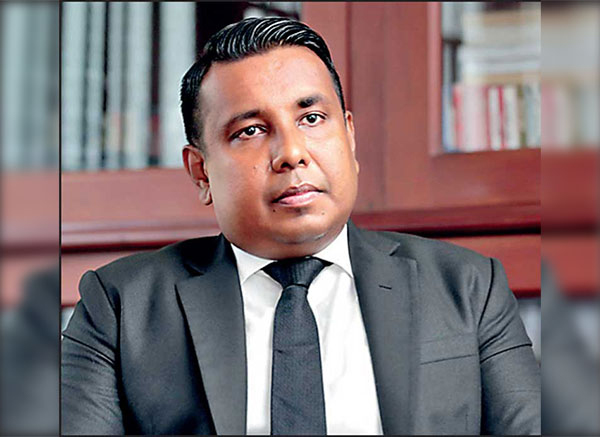
Former SLPP MP and Attorney-at-Law Premanath C. Dolawatta says the government has moved to restructure the post of Justice of the Peace, a position traditionally conferred on respected citizens in villages.
Dolawatta said that under Gazette No. 2489/84, persons above the age of 75 would no longer be eligible to hold the post.
He said medical certification would also be required to determine the suitability of applicants, with authorities stressing the need to assess qualifications for the position.
Dolawatta noted that the office of Justice of the Peace had long been regarded as a community honour.
Referring to the impact of the reforms, he said nearly 41,000 persons would lose their posts and argued that it was unfair to remove those currently serving.
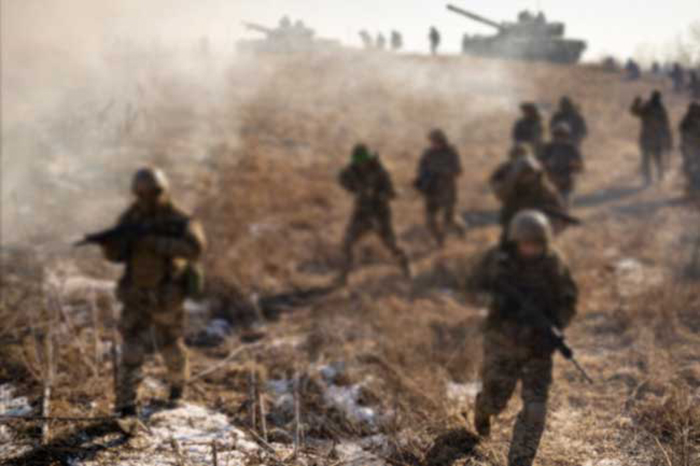
At least 275 Lankans have died fighting for Russia in Ukraine
Sri Lanka has recorded the highest number of deaths among South Asians who joined the Russian Army to fight against Ukraine, according to a new report by Himal Southasian.Data provided to Himal Southasian and the Organised Crime and Corruption Reporting Project (OCCRP) by Ukraine’s Coordination Headquarters for the Treatment of Prisoners of War, the official body, responsible for handling POWs and tracking foreign fighters, shows that at least 275 Sri Lankans have died in the conflict.
This figure is significantly higher than the 59 deaths acknowledged by the Sri Lankan government in February 2025.
The dataset, partly obtained from sources within the Russian military, covers the period from the start of Russia’s full-scale invasion of Ukraine, in 2022, to September 2025.
It indicates that a total of 455 individuals from Sri Lanka, Nepal, India, Bangladesh, Pakistan, and Afghanistan, who joined Russian forces, have been killed on the battlefield.
Full text of the Himal Southasian report: At least 455 Southasians have been killed fighting for Russia in the Russo-Ukrainian war, according to data provided to Himal Southasian and the Organised Crime and Corruption Reporting Project by Ukraine’s Coordination Headquarters for the Treatment of Prisoners of War, an official body responsible for handling POWs and tracking foreign fighters.
The data – in part obtained from sources within the Russian military, according to the Coordination Headquarters – covers the period from the start of Russia’s full-scale invasion of Ukraine in 2022 to September 2025.
The list of those killed – which includes citizens of Sri Lanka, Nepal, India, Bangladesh, Pakistan and Afghanistan – shows casualty figures far higher in some cases than those so far released or acknowledged by governments of the region. The data also names Southasians known to have been recruited into the Russian military from these countries, with a tally of 1923 recruits.
Sri Lanka tops the list of deaths, with at least 275 citizens killed in action out of at least 751 recruited. “The actual number of Sri Lankan nationals recruited into the Russian Army, as well as those killed or missing in action, is likely significantly higher,” the Coordination Headquarters told Himal. The country’s Foreign Minister, Vijitha Herath, informed the Sri Lankan Parliament last year that 59 Sri Lankans had been killed out of 554 recruited as of January 2025. The Sri Lankan Foreign Ministry had not responded to questions from Himal at the time this story was published.
Public information indicates that illicit agents and networks have been recruiting Southasians to fight for the Russian military, often by misleading them with promises of civilian employment. Southasians in the Russian military as well as their families report having promised payments and death benefits delayed, withheld or misappropriated, including via coercion or fraud, sometimes by the fighters’ military superiors.
The data for Nepal shows 852 recruits – the most from any single Southasian country – and 115 deaths, a toll second only to Sri Lanka’s. Figures released in February 2025 by Nepal’s Ministry of Foreign affairs put the death toll slightly higher, at 118, and also count 132 missing..Bangladesh ranks third by fatalities, with 34 deaths listed out of 104 recruits.
Reporting by the Associated Press has quoted a police investigator saying 40 Bangladeshis have been killed. India’s tally in the Ukrainian data is 23 killed out of 170 recruits. In December 2025, the Indian government reported 26 deaths and 202 Indian recruits. Five Afghans have been killed out of 18 recruited, and three out of 22 Pakistani recruits have perished. In August 2025, Pakistan’s government denied that there were any Pakistani nationals fighting in the conflict, dismissing allegations to the contrary as “baseless and unfounded”. Six Myanmar nationals are also listed as recruits, with no deaths recorded.
Himal did not receive responses to queries sent to these governments about updated official figures..A spokesperson for the Coordination Headquarters told Himal that based on data for 3390 foreign fighters killed, including those from beyond Southasia, “42 percent of them died within the first four months after signing the contract.” There have been numerous reports of Southasians being deployed to the frontlines with little or inadequate training.
Language barriers and a lack of modern fighting equipment have also been cited as contributing to Southasians being killed in action. Russia has recruited more than 24,000 combatants from 44 countries, according to the Coordination Headquarters, with the largest cohort coming from Central Asia. Foreign nationals now account for nearly 6 percent of the total number of Russian Armed Forces POWs in Ukrainian custody, and this share has been increasing since Russia began its full-scale invasion of Ukraine in 2022.
“In 2025, 2.5 times more foreign nationals were captured than in all previous years combined,” the Coordination Headquarters said. “We do not disclose the exact number of POWs from each country, but we can state that their number is steadily increasing.”.
NAYOMI MAHESHIKA DISSANAYAKE, a 41-year-old mother of two, last heard from her husband, 45-year-old Ulpakada Pathira Arachchilage Mahesh Suranjith Karunanayake, more than seven months ago. Karunanayake boarded a Moscow-bound bus from Bryanka, a Russian-occupied city in eastern Ukraine, on 1 July 2025, and sent his wife his location. He told another relative that Russian military personnel accompanying him were checking his phone and asked them not to send any messages. His whereabouts have been unknown ever since.
Karunanayake, a former soldier in the Sri Lanka Army, had served in the Russian military for a year at the time. Before his disappearance, Dissanayake said, Karunanayake told her that 3.7 million Russian rubles – over USD 47,000 – had been withdrawn from his account by his commander, and that he had filed a complaint to a superior military officer.
Karunanayake had also described the theft to this reporter. The commander did not respond to questions on WhatsApp about Karunanayake’s whereabouts. Himal did not receive responses to questions emailed to Russia’s Defence Ministry and Ministry of Foreign Affairs regarding the number of foreign citizens recruited into the Russian military and the number of Southasians killed, as well as Karunanayake’s disappearance and the alleged theft.
According to his wife, Karunanayake was recruited by an agent in Sri Lanka, who had given assurances that he would not be deployed to the frontline. “He said he was told that he would be sent to areas [already] captured by the Russian military,” she told Himal. “Then he gave money to a local agent. That agent is in hiding now.”
The family relied largely on Suranjith’s pension from the Sri Lanka Army to sustain itself. With no contact from him for seven months, the Sri Lankan government has halted his pension payments, leaving the family in dire financial straits.
War on the Rocks, a defence and strategy analysis platform, has reported that the compensation for Russian soldiers killed in action came to at least 14 million Russian rubles as of mid-2024 – over USD 150,000 at the time. The total compensation promised for foreign fighters killed is 13 million rubles, or USD 160,000, according to recruits and their families who spoke to Himal. Since December 2025, there have been reports of troop bonuses and death benefits being slashed due to growing budget deficits.
The Russian government promises citizenship to foreign citizens who sign military contracts. The Russian Ministry of Defence offers a one-time sign-on bonus to those who join the military. “These [one-time] payments change over time, but testimony from prisoners of war, as well as active servicemen and Russian advertisements, indicates that the sums can range from 1 to 4 million rubles,” the Coordination Headquarters said. The independent media outlet Re:Russia has put the one-time payment in 2024 at around 480,000 rubles, or roughly USD 5000. Yet many fighters are denied payments promised to them. According to the Coordination Headquarters, “Fraud related to these payments is quite common in the Russian Army, as are cases where commanders kill their own soldiers and take their bank cards in order to obtain the contract signing bonus.”
Russia’s Defence Ministry and Ministry of Foreign Affairs did not respond to questions regarding such fraud. Russia has promised to compensate the family members of Sri Lankans killed in action after Sri Lankan parliamentarians raised the issue in Moscow in July 2024, but many bereaved families report that they have not received compensation. Several dozen Sri Lankan widows have travelled to Russia to try and secure payments, but have described the process as lengthy and opaque.
Dissanayake has appealed to several authorities, including Sri Lanka’s Ministry of Foreign Employment and the country’s President – who is also the Minister of DefenCe – in an effort to reinstate her husband’s pension. The President’s office responded that her letter had been forwarded to the Ministry of Foreign Employment. She has also written to the Russian Embassy in Colombo seeking information about her husband, but has received no response.
Many Sri Lankans who joined the Russian military did so for financial reasons. An economic crisis in 2022 led many to migrate overseas in search of work. Among them were former soldiers, some of them with experience in Sri Lanka’s decades-long civil war. A significant number of them have signed up with the Russian military.
The Coordination Headquarters said some Southasians are being tortured or coerced into fighting for Russia – an allegation corroborated by media reports – and that roughly a third of foreign POWs say they had been offered civilian rather than military employment. It added, “There are many cases where people under investigation or in detention facilities were forced by Russian police to sign contracts through threats, beatings, or promises of leniency.”
In October 2025, Ukrainian forces captured Sahil Majothi, a 22-year-old from the Indian state of Gujarat, who had gone to Russia to study computer engineering. His mother told BBC Gujarati that he had been falsely accused in a drugs case, and Majothi said in a video released by Ukrainian forces that he had signed up to fight in the Russian Army to escape a seven-year jail sentence.
In September 2025, the UN Special Rapporteur on the situation of human rights in the Russian Federation, Mariana Katzarova, said that Sri Lankans and Nepalis had been coerced into signing contracts to fight for the Russian army, with recruits reporting torture and threats to their lives and those of their families. At least three Tamils from Sri Lanka’s war-affected Northern Province had been trafficked into the Russian Army in this way, a UN working group flagged in a letter in July 2025. This January, an Associated Press investigation found that Bangladeshi workers promised civilian work had signed Russian papers that turned out to be military contracts.
In May 2024, India’s Central Bureau of Investigation arrested four traffickers, including a Russian translator, who used YouTube to recruit Indian youth with the promise of work only to deploy them to the frontlines. Police in Nepal have detained at least 10 people who used TikTok and local networks to funnel Nepalis into the Russian military. In 2024, Sri Lankan police arrested an army major and a sergeant for acting as recruiting agents for Russian mercenary firms, as well as six others accused of helping with logistics. Sri Lankan police did not respond to questions requesting for an update on the status of the investigation. The Sri Lankans recruited were promised non-combat roles but ended up on the frontlines. At least one Bangladeshi citizen living in Moscow has been charged by Bangladeshi police, while an agency called SP Global ceased operations in 2025 after being investigated for trafficking recruits to fight for Russia in the war.

Wife raises alarm over Sallay’s detention under PTA

41,000 JPs lose their title under new govt. reforms?

Lanka tops South Asian death toll in Russia–Ukraine war

CDS accounts on the increase, crosses one million accounts

Emergency: Jekylls and Hydes

AG’s help to be sought to tackle rampant corruption at Motor Traffic Department

‘Dates have the highest sugar content to fight Coronavirus’

Sunday Island 27 December – Headlines

#SundayIsland 17th December – Headlines

Sunday Island – 28th March

Sunday Island Headlines – 21 March

Sunday Island – 21st February – Headlines
-

 Features5 days ago
Brilliant Navy officer no more
-

 Opinion5 days ago
Sri Lanka – world’s worst facilities for cricket fans
-

 News2 days ago
Legal experts decry move to demolish STC dining hall
-

 Features5 days ago
A life in colour and song: Rajika Gamage’s new bird guide captures Sri Lanka’s avian soul
-

 Business2 days ago
Cabinet nod for the removal of Cess tax imposed on imported good
-

 Features6 days ago
Overseas visits to drum up foreign assistance for Sri Lanka
-
 Features6 days ago
Sri Lanka to Host First-Ever World Congress on Snakes in Landmark Scientific Milestone
-
 Latest News2 days ago
Around 140 people missing after Iranian navy ship sinks off coast of Sri Lanka