
News
Lanka produces 7,000 tonnes of trash a day

Only half of them being collected as municipal waste
Sri Lanka produces 7,000 tonnes of solid waste per day, with only half being collected as municipal waste, it was revealed at an Inception Workshop for Local Authorities for a Sustainable Sri Lanka by the United Nations Development Programme (UNDP) in Sri Lanka.
A UNDP release said: Municipal Waste Management (MSW) is causing key social, environmental, and economic concerns in Sri Lanka. The country produces 7,000 tonnes of solid waste per day, with only half being collected as municipal waste according to the Waste Management Division of the Central Environmental Authority. Overall, 85% of waste generated is estimated to be disposed of inappropriately, mainly through indiscriminate open dumping and burning giving rise to health and environmental impacts.
The Western Province alone generates more than 59% (approximately 4,200 tonnes) of solid waste with a high degree of biodegradability. With trends in urbanization and rapid population growth, municipal waste generation is expected to rise to 2.2 billion tonnes by 2025. As such, transitioning from a traditional unsustainable system to sustainable waste management is a key necessity. Controlling the generation, storage, collection, transportation, processing and disposal of solid waste materials in a manner that best addresses the range of public health, conservation, economic, aesthetic, engineering, and other environmental considerations is a requirement for Sri Lanka. Therefore, as the country makes headway in its green recovery, it is crucial to build measures to introduce sustainable waste management options for Local Authorities (LAs).
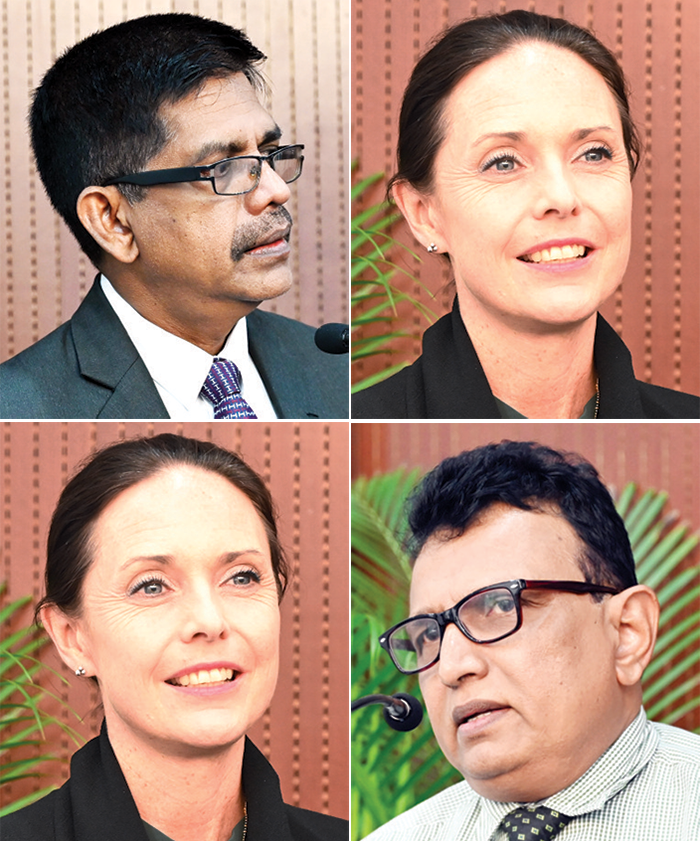
Speaking on the topic at the inception workshop on Scaling up Sustainable and Low-Carbon Municipal Solid Waste Management and Resource Recovery in Sri Lanka held recently, M. M. P. K. Mayadunne, Secretary, Ministry of Public Administration, Home Affairs, Provincial Councils and Local Government noted, “Finding a practical and a long-term solution to Municipal Solid Waste Management is a collective responsibility of all stakeholders. As Local Authorities are on the frontlines of Municipal Solid Waste Management, supporting Local Authorities to come up with a sustainable system with public-private partnerships to control waste generation and final disposal is crucial”.
In line with this, together with the Ministry of Environment in Sri Lanka, the Government of the Republic of Korea, and the Korea Environmental Industry & Technology Institute (KEITI), the United Nations Development Programme (UNDP) in Sri Lanka is scaling up efforts to utilize best available technologies to improve Municipal Solid Waste Management (MSWM), support other waste related value chains and strengthen the capacity of women-led micro and small enterprises to engage in resource recovery initiatives in Sri Lanka.
Speaking on Korea’s expertise, Bohae Na, Programme Coordinator and Associate Researcher, KEITI noted, “It is a pleasure to work with Sri Lanka and UNDP in scaling up Municipal Waste management systems in Sri Lanka and we believe Korea’s technological and knowledge transfer and expertise will be a great asset in developing the sustainability of Sri Lanka’s Waste Management Sector”.
Addressing the gathering, Malin Herwig, Deputy Resident Representative, UNDP in Sri Lanka highlighted, “The Republic of Korea is renowned for its world-class solid waste management systems, waste reduction and waste diversion from landfills.Therefore, through this partnership with the Korea Environmental Industry & Technology Institute, Sri Lanka will indeed benefit from knowledge exchange and technology transfer in appropriate commercialized municipal solid waste management systems in the local context”.
Through this initiative, UNDP and KEITI have reached out to Korean technology providers and experts to provide valuable input and guidance on the available commercialized municipal solid waste management technologies. The project will support Sri Lanka to meet its MSWM targets of the National Development Agenda and waste sector Nationally Determined Contributions (NDCs) by implementing locally relevant comprehensive and sustainable MSWM solutions.
Mahinda Werahera, Director, of the Environment Pollution Control and Chemical Management Division, Ministry of Environment noted, “Although Municipal Solid Waste Management in Sri Lanka is recognized as a national development priority, finding sustainable solutions for this issue has been extremely challenging. Therefore, through this initiative, we hope to work closely with Korean experts in finding economically feasible and socially acceptable solutions for Municipal Solid Waste Management in Sri Lanka”.
The project aims to reduce health and safety concerns to the people and wildlife, damage to the natural environment, Greenhouse Gas emissions and other forms of pollution, and waste management burden to the LAs. It will also stimulate private sector investment for low carbon development, and engagement of small enterprises in green resource recovery value chains and promote green jobs.


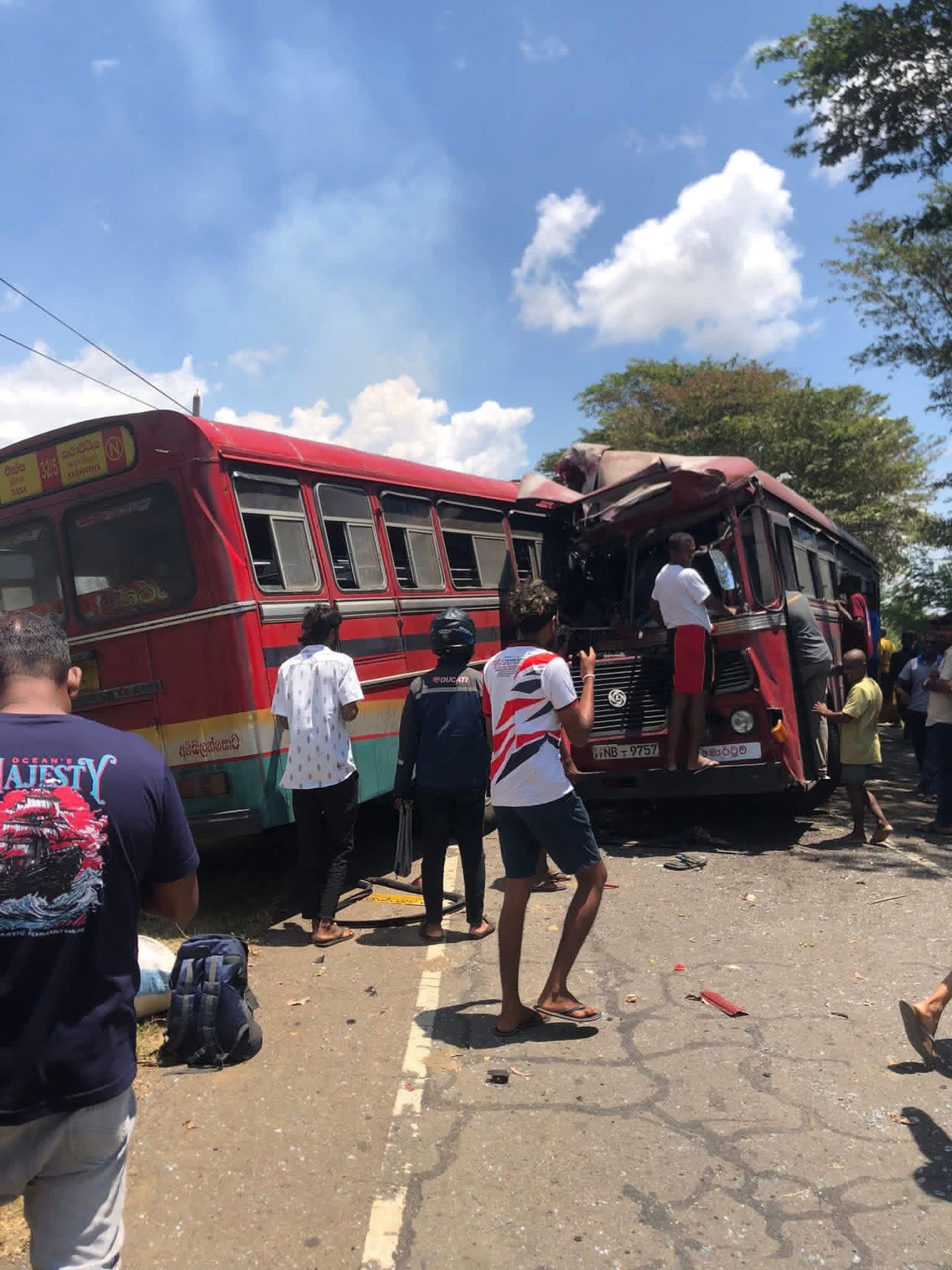
Four persons including a Budhist monk died and 32 others were injured when two SLTB buses collided head on at Weerawila at arond 12 noon today (18).
Three of the deceased were women. 22 of the injured were admitted to the Hambanthota Hospital while 10 others have been admitted to the Debarawewa hospital.

The Japan Maritime Self-Defence Force (JMSDF) ship OONAMI which arrived at the port of Colombo on a goodwill and replenishment visit on 09 Mar 26 departed on 11 March.
The departing ship was given a formal farewell from the Sri Lanka Navy, in keeping with naval traditions at the Port of Colombo.
The 150.5m long JMSDF OONAMI is commanded by Commander IIO Hiromasa.
During the stay in the island, crew members of the ship explored some tourist attractions in Colombo. The itinerary also included a coastal clean-up drive participated by naval personnel of both countries and engagements with the Sri Lanka Navy, designed to strengthen the bonds of friendship and cooperation.
The Central Cultural Fund established under the provisions of the Central Cultural Fund Act No. 57 of 1980 is responsible for development of cultural and religious monuments in Sri Lanka, settling the expenditure borne for development, renovation and conservation of local and foreign cultural monuments, awarding financial donations for artisans as well as awarding those who served the nation in the fields of culture and religious sectors.
The said act has been passed in Parliament 45 years back and, the requirement to revise the provisions of the act according to the contemporary requirements haa been recognized.
Accordingly, the Cabinet of Ministers granted their policy
approval to amend the said act, considering the resolution furnished by the Minister of Buddhasashana, Religious and Cultural Affairs.

SriLankan Airlines Alerts Customers to Social Media Scams

Four dead 32 injured in head on collision at Weerawila

JMSDF ship OONAMI concludes goodwill visit

Cabinet nod to amend Central Cultural Fund Act No. 57 of 1980
’National Namal Uyana’ declared as a National Heritage
Establishment of Supervisory Committees for restoring economic activities.

‘Dates have the highest sugar content to fight Coronavirus’

Sunday Island 27 December – Headlines

#SundayIsland 17th December – Headlines

Sunday Island – 28th March

Sunday Island Headlines – 21 March

Sunday Island – 21st February – Headlines
-

 News7 days ago
Historic address by BASL President at the Supreme Court of India
-

 Sports7 days ago
The 147th Royal–Thomian and 175 Years of the School by the Sea
-

 Business3 days ago
Browns EV launches fast-charging BAW E7 Pro at Rs. 5.8 million
-

 Life style4 days ago
From culture to empowerment: Indonesia’s vision for Sri Lanka
-
 News7 days ago
Power sector reforms jolted by 40% pay hike demand
-
 Opinion6 days ago
M. D. Banda: Memories of Appachchi – II
-

 Latest News4 days ago
QR code system will be implemented for fuel with effect from 06.00 a.m. today (15th)
-
 Business5 days ago
Sri Lanka Institute of Information Technology raises the bar for academic excellence