
News
Lanka launches landmark digital foundations for a data-driven agriculture sector

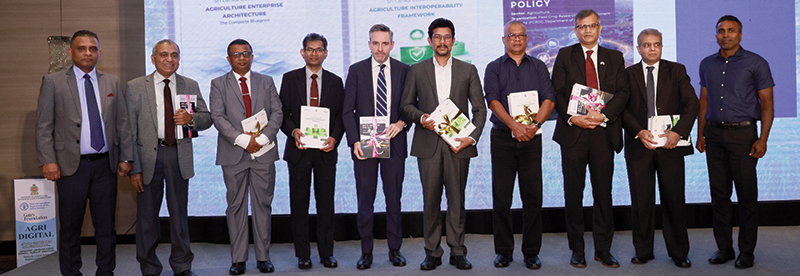
Sri Lanka yesterday took a major step towards transforming its agriculture sector with the official launch of the Agriculture Enterprise Architecture Framework, Agriculture Interoperability Framework, Data Sharing Policies, and CROPIX, a national digital platform for crop data and decision-making.
The high-level launch event, co-hosted by the Ministry of Agriculture, Livestock, Land and Irrigation and the Food and Agriculture Organization of the United Nations (FAO) with funding from the Gates Foundation, marked the formal introduction of a unified digital foundation designed to modernise agricultural governance, improve service delivery, and enable evidence-based decision-making across the sector.
Together, these initiatives form the backbone of Sri Lanka’s emerging Digital Public Infrastructure (DPI) for agriculture, addressing long-standing challenges related to fragmented data systems, institutional silos, and limited data sharing across government entities.
Speaking at the event, K. D. Lalkantha, Minister of Agriculture, Livestock, Land and Irrigation emphasized the strategic importance of the launch for the sector’s future.
“Today marks a decisive shift in how Sri Lanka governs and supports its agriculture sector. By introducing a unified Enterprise Architecture, Interoperability Framework, and clear Data Sharing Policies, we are laying the foundation for a truly data-driven agriculture system that serves farmers, institutions, and decision-makers alike. CROPIX will enable us to move from fragmented information to informed, timely decisions that strengthen food security and farmer livelihoods,” the Minister said.
Highlighting the importance of interoperability and alignment with the national digital agenda, Eng. Eranga Weeraratne, Deputy Minister of Digital Economy, underscored the role of agriculture in Sri Lanka’s wider digital transformation.
“For years, Sri Lanka’s agriculture sector lacked a complete, reliable registry of farmers, lands, and crops—fragmented across systems with duplication and gaps. The solutions launched today change that, introducing a unified, API-driven platform for trusted data-sharing. This will enable smarter policies, targeted services, and innovations like agritech, precision farming, and digital marketplaces—delivering real digital value to those who feed the nation and driving our digital economy forward,” he said.
Dr. Hans Wijayasuriya, Chief Advisor to the President on Digital Economy, highlighted the significance of the initiative within the country’s broader digital transformation agenda.
“What we are witnessing today is the extension of Sri Lanka’s Digital Public Infrastructure into one of our most critical sectors. By applying enterprise architecture, interoperability, and trusted data-sharing principles to agriculture, we are ensuring that digital transformation delivers real value on the ground. This approach enables scalable, secure systems that connect farmers to institutions, data to decisions, and policy to impact,” he said.
The Agriculture Enterprise Architecture Framework provides a strategic blueprint to align people, processes, data, and technology across agricultural institutions, ensuring that digital investments are interoperable, scalable, and future-ready. Complementing this, the Agriculture Interoperability Framework and newly introduced Data Sharing Policies enable secure, standardised, and trusted exchange of agricultural data across ministries, departments, and digital platforms.
At the centre of this digital ecosystem is CROPIX – Crop Resources, Optimising operations, through Precise Information exchange System. CROPIX operationalises the architecture and interoperability frameworks by integrating national crop registry, cultivation and production data, forecasting tools, extension services, near real-time field reporting, APIs and Open Data. Through its web platform and mobile applications, CROPIX connects farmers, extension officers, planners, and policymakers around a single, trusted source of agricultural data.
Vimlendra Sharan, FAO Representative for Sri Lanka and the Maldives, highlighted the broader significance of the initiative and FAO’s continued partnership with the Government of Sri Lanka.
“This launch represents more than the introduction of digital systems; it marks a transformation in how data are governed, shared, and used across the agriculture sector. By establishing strong digital public infrastructure for agriculture, Sri Lanka is positioning itself to respond more effectively to climate risks, improve service delivery, cater to dynamic market demands and make evidence-based decisions that leave no farmer behind. FAO is proud to support this journey towards a resilient, inclusive, and future-ready agriculture sector,” he said.
The launch is expected to accelerate institutional adoption of digital tools within the Department of Agriculture, promote responsible data sharing across government, and foster a culture where near real-time data informs planning, policy formulation, and investment decisions – ultimately ensuring that farmers are the primary beneficiaries through improved services, timely information, and more responsive, evidence-based support.
This milestone marks not just the introduction of new systems, but the beginning of a collaborative national journey towards a resilient, inclusive, and data-driven future for Sri Lanka’s agriculture sector.

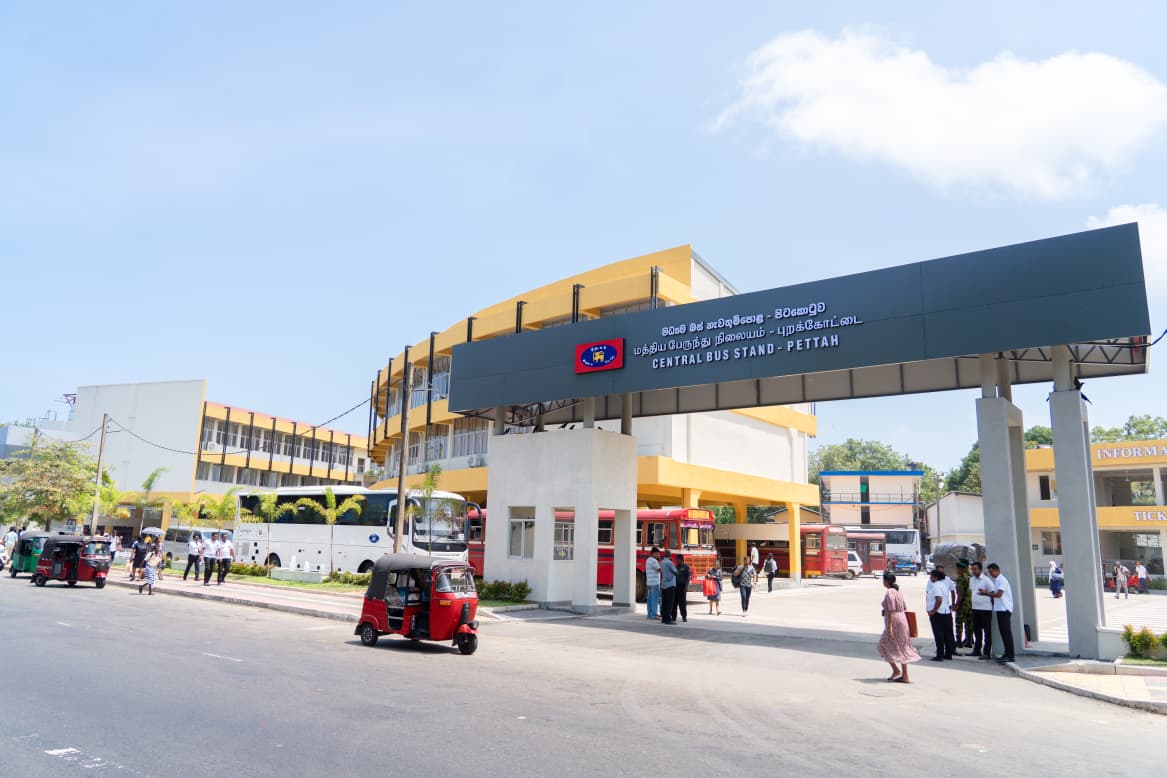
The Colombo Central Bus Stand, which has a history of over six decades and had remained without a proper maintenance for many years, has now been renovated under the current government’s development programme and vested to the public. Following that, the Prime Minister undertook an inspection tour of the newly renovated Colombo Central Bus Stand.
Originally constructed in 1964, the bus stand was refurbished with modern facilities to meet current needs and was officially reopened to the public on April 8. The primary objective of this initiative is to provide passengers with a higher-quality and more comfortable transportation service.
During the renovation process, special attention has been given to the comfort and safety of women, which was commended by the Prime Minister. In particular, a modern rest area designed to ensure privacy for nursing mothers travelling from distant areas received special praise.
The Prime Minister also reviewed the newly introduced passenger seat reservation system and information services established to assist commuters. In addition, the modern surveillance unit and other security measures installed within the premises to ensure passenger safety were also inspected.
During the visit, the Prime Minister engaged in conversations with passengers at the bus stand and inquired about their views on the newly renovated facilities and the quality of transport services.
It was emphasized that the government’s objective is to transform public transportation into a safe, technologically advanced service that can be used with convenience by all citizens.

(Prime Minister’s Media Division)
Latest News
Sun directly overhead Nagawilluwa, Galgamuwa, Sigiriya, Palugasdamana and Mankerni about 12:11 noon today (10)


On the apparent northward relative motion of the sun, it is going to be directly over the latitudes of Sri Lanka from the 05th to 15th of April in this year.
The nearest areas of Sri Lanka over which the sun is overhead today (10th) are Nagawilluwa, Galgamuwa, Sigiriya, Palugasdamana and Mankerni about 12:11 noon.
No-faith motion to be taken up today
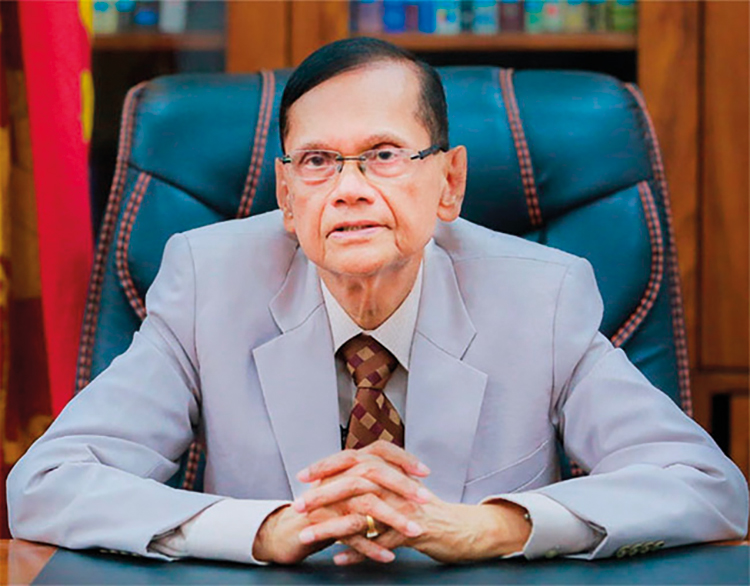
Former Foreign Minister Prof. G. L. Peiris yesterday (9) said that President Anura Kumara Dissanayake should remove Energy Minister Kumara Jayakody unless the minister stepped down on his own.Prof. Peiris, addressing a press conference called by the Opposition, said that Jayakody couldn’t under any circumstance continue to serve as a minister after the Commission to Investigate Allegations of Bribery or Corruption (CIABOC) moved the Colombo High Court against the government member over a previous financial scandal.
Pointing out that Minister Jayakody had been indicted of a corrupt deal struck during the yahapalana regime, Prof. Peiris said it was wrong for the NPP to retain him as a minister, claiming that the offence was not committed during his tenure as a Cabinet minister in the current government.
Prof. Peiris and several other Opposition members dealt with the No-Confidence Motion (NCM) against Jayakody that would be taken up today (10) with the academic calling the vote an acid test for the NPP. Having campaigned on an anti-corruption platform at presidential and parliamentary polls, the NPP couldn’t protect Jayakody though he was widely believed to be close to President Dissanayake.
As the Manager of the Procurement and Import Division of the Ceylon Fertilizer Company, Jayakody is alleged to have committed the offence of corruption, according to CIABOC.
Jayakody has been accused of causing a loss of Rs. 8,859,708 to the State by influencing and exploiting the procurement process.
Following the serving of indictments on 27 March, the judge ordered Jayakody’s release on two personal bail bonds of Rs. 1 million each. The court directed that the defendant’s fingerprints be obtained and a formal report be submitted. The case has been scheduled for a pre-trial conference on 6 May.
Prof. Peiris stressed that the CIABOC action against Jayakody is central to the NCM primarily moved over the irregularities ridden coal procurement process launched in 2025 that caused severe disruption to the power generation. Responding to The Island query after the media briefing, Prof Peiris expressed surprise that the JVP/NPP accommodated a person under investigation by the CIABOC. Having taken an utterly irresponsible decision, the JVP/NPP were now playing down the developing issue, prof. Peiris said.
The entire government parliamentary group faced the prospect of having its image tarnished by defending Jayakody, the former lawmaker said.
Prof. Peiris said that they intended to build a campaign around the issues involving the energy minister to expose the government. With yet another electricity tariff hike in the offing due to the growing demand for thermal generation as a result of coal-fired Lakvijaya power plant’s failure to meet the requirement[RA1] , the energy minister and ministry’s performances have to be examined, Prof. Peiris said.The timely release of the Auditor General’s report on controversial coal procurement should compel the government to decide on the energy minister’s fate or be prepared to face the fallout.
By Shamindra Ferdinando

Brazil bowler Laura Cardoso takes 9 Lesotho wickets in record-breaking T20 win

Zimbabwe Women set for maiden tour of Pakistan

Bangladesh advance match timings to save energy

PM on inspection tour of newly renovated Colombo Central Bus Stand

Israel to hold direct talks with Lebanon but no ceasefire, Netanyahu says

Sun directly overhead Nagawilluwa, Galgamuwa, Sigiriya, Palugasdamana and Mankerni about 12:11 noon today (10)

‘Dates have the highest sugar content to fight Coronavirus’

Sunday Island 27 December – Headlines

#SundayIsland 17th December – Headlines

Sunday Island – 28th March

Sunday Island Headlines – 21 March

Sunday Island – 21st February – Headlines
-

 Features6 days ago
Ranjith Siyambalapitiya turns custodian of a rare living collection
-

 News6 days ago
Global ‘Walk for Peace’ to be held in Lanka
-

 News4 days ago
Lankan-origin actress Subashini found dead in India
-

 Features6 days ago
Beyond the Blue Skies: A Tribute to Captain Elmo Jayawardena
-

 News2 days ago
AG: Coal procurement full of irregularities
-

 Features6 days ago
Aspects of Ceylon/Sri Lanka Foreign Relations – 1948 to 1976
-

 Business2 days ago
Hayleys Mobility introduces Premium OMODA C9 PHEV
-

 Sports2 days ago
DS to face St. Anthony’s in ‘Bridges of Brotherhood’ cricket encounter