
News
Lanka faces looming threat to its environment from haphazard disposal of non-biodegradable face masks

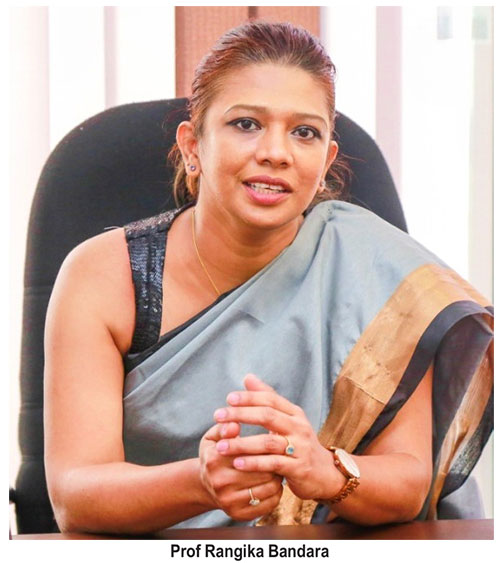
Sri Lanka’s environment is facing a looming threat owing to the haphazard disposal of millions of used face masks and personal protective equipment, reveals a recent study by the University of Kelaniya.
“Mostly, face masks are made of petroleum-based non-renewable polymers that are non-biodegradable, hazardous to the environment and create health issues. It is reported that Sri Lanka generates around 14 to 70 million of face mask waste a week,” said Prof Rangika Bandara, Director of the Centre for Sustainability Solutions of the university’s Department of Zoology and Environmental Management.
She said: “We should understand that disposable face masks which are commonly known as surgical face masks or K-95 masks contain polypropylene which is a popular kind of plastics. According to study findings, a K-95 mask contains about 9 grams of polypropylene and this value is around 4.5 gram in a surgical face mask. By looking at these numbers, it is estimated that as a country Sri Lanka emits 47-185 tons of polypropylene per week to the environment through face masks only.”
“Plastic is considered as a non-biodegradable material as it takes over 500 years to get rid of it from the environment. Disposing facemasks inappropriately on different land surfaces will gradually end up in rivers, lakes, ponds, forests and other vegetation, agricultural fields and finally in oceans by washing them off with runoff and surface flooding and also by wind,” she said.
Prof Bandara said that disposal of used face masks along with other disposable personal protective equipment posed serious risks to valuable global eco-systems creating threats to public health.
According to the health experimental results, wearing a face mask will reduce the risk of transmitting coronavirus by 47% by acting as a particle filter and by minimising the number of times an individual touches the face/mouth/nose with unwashed hands. Therefore, WHO has recommended wearing a suitable face mask appropriately at public places and when interacting with COVID infected or suspected cases. Also, according to the WHO estimates nearly 89 million face masks are needed worldwide to control COVID-19 each month. We should understand that disposable face masks which are commonly known as surgical face masks or K-95 masks contain polypropylene which is a popular kind of plastics. According to study findings, a K-95 mask contains about 9 grams of polypropylene and this value is around 4.5 gram in a surgical face mask.
Prof. Bandara said: “While the soil is contaminated with plastics, soil texture and structure will be altered and become unsuitable for plant growth hence with time, we will not be able to harvest expected yields from agricultural fields. On that day the damage will become irreversible. Not only the soil but also clogging drainage and irrigation channels by waste face masks can be expected. Currently, most of the irrigation and drainage channels in the country, especially in urban areas are already clogged by invasive aquatic weeds such as Eichornia (japan jabara) and Salvinia creating a huge social and environmental problem. Inappropriate disposal of face masks will trigger the problem as they associate with water weeds creating a mesh thereby further blocking water passages. If that is the case, flash floods in cities even in light rains would be unavoidable which is a significant economic loss and greater impact on livelihood specially those who have settled along the water canals.
“Studies carried out in the Mediterranean Sea and ocean bottoms near Hong Kong have shown lining of ocean bottom by layers of face masks which inhibit transfer of oxygen between water and soil in the bottom. With time ocean bottom will create an anaerobic condition which will badly affect the survival of benthic organisms like sea anemones, sponges, corals, sea stars, sea urchins, worms, bivalves, crabs, When the ocean is polluted by facemasks those in settle ocean bottom as well as among aquatic weeds and corals which disturb and disturbed the normal behavioural patterns of aquatic living organisms. Macroorganisms like fishes, jellyfish, and turtles will indigest face masks. This will destroy the eco- system balance and ocean productivity will go down posing a risk to the fisheries industry.
“Plastics will be broken into tiny particles less than 5 micrometres in size and form micro plastics in the form of fibres and/or particulate matter in the ocean, freshwater and marine environment. Different packaging plastic materials, bottling plastic materials and containers from the food processing industries are primary sources of micro plastics pollution. Polypropylene mixed face masks would be another source of micro plastic, especially in ocean and soil. Ultimately, Micro plastics will enter the human body through terrestrial and aquatic food chains causing numerous diseases including different types of cancers.
“As a nation, we have to develop a strategic plan to deal with the post-covid crises. One of the strategies should focus on proper disposal of PPE waste including waste face masks.
If we take examples from the world, countries like China, Canada, Hong Kong, Japan have already identified face masks as an emerging waste category and place bins with a new colour code in public places to separate waste face masks from other type of waste at the point of generation. Incineration of waste face masks is a viable option. Incinerating means burning face masks at high temperatures greater than 1000-1200 centigrade in an incinerator or dumping them in a sanitary landfill after boiling or subjecting to a heat treatment. By practicing this kind of a waste management strategy, we can stop sending waste face masks into different eco-systems. As a nation, we should recognise the importance of waste face masks management by understanding waste face masks and other disposable PPEs as an emerging waste category and should make a waste management plan immediately without further delays. Making this effort a priority by allocating required resources is an investment. Otherwise, we will be desperately looking for solutions to reclaim degraded ecosystems as we drop our agricultural production, fisheries production, increment of vector-borne diseases and other non-communicable diseases, unknown ideologies, losing corals and biological diversity.

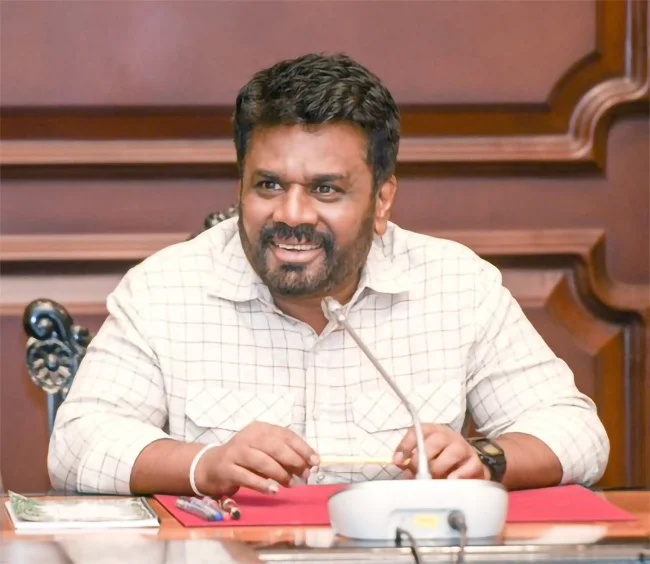
Chief Prelates of the Malwathu, Asgiriya, Amarapura and Ramanna Nikayas, in a joint letter addressed to President Anura Kumara Dissanayake, has expressed concern over the protracted delay in appointing a permanent Auditor General.
The Chief Prelates have said that the appointment of an outsider as the Head of the National Audit Office (NAO) responsible for ensuring transparency and accountability in public finances will be inappropriate.
The Chief Prelates have said that they are of the view that Dharmapala Gammanpila, a senior officer with extensive experience within the Auditor General’s Department, is the ideal candidate for the top post. They have also emphasised that his appointment will strengthen the government’s efforts to promote economic prosperity.
Chulantha Wickramaratne, who served as AG for a period of six years, retired in April 2025. Following his retirement, President Dissanayake nominated H.T.P. Chandana, an audit officer at the Ceylon Petroleum Corporation, as the AG. The CC rejected that nomination. Subsequently, President Dissanayake appointed the next senior-most official at the NAO Dharmapala Gammanpila as Acting Auditor General for a period of six months. Then, the President nominated Senior Deputy Auditor General L.S.I. Jayarathne to serve in an acting capacity, but her nomination, too, was also rejected. Many an eyebrow was raised when the President nominated O.R. Rajasinghe, the Internal Audit Director of the Sri Lanka Army for the top post. That nomination too was rejected. As a result, the vital position remains vacant since 07 December, 2025.
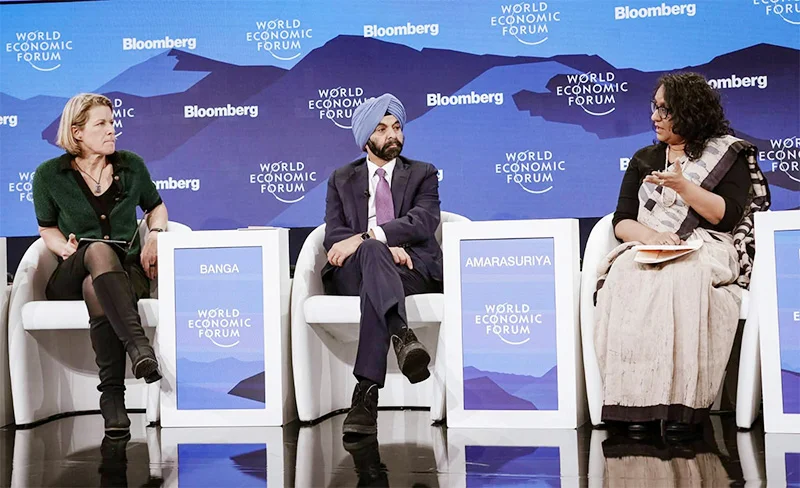
Prime Minister Dr. Harini Amarasuriya shared her views on how the emerging economies over the next decade should close the gap in employment models through expansion of skills and training. She was speaking at the “Stakeholder Dialogue – A Coming Jobs Crisis in Emerging Markets?” on the sidelines of the annual meeting of the World Economic Forum in Davos. She also highlighted the vital importance of recognising the contribution of different categories of workers to bring social stability and dignity of work.
The text of the statement issued by the Sri Lankan mission in Geneva: “The Prime Minister attended the 56th Annual Meeting of the World Economic Forum held in Davos, Switzerland, from 19 to 22 January 2026 at the invitation of the President and Chief Executive Officer of the World Economic Forum, Børge Brende. Over 60 world leaders from government, businesses, civil society and academia attended the Forum in 2026 held under the theme “A Spirit of Dialogue”.
The Prime Minister participated in a panel discussion and high-level dialogue at the Forum while also holding bilateral meetings, addressing high-level platforms on women leaders and tourism, and holding business engagements. She shared Sri Lanka’s experience of resilience and recovery, following Cyclone Ditwah and Government measures to establish economic stability, build investor confidence and commitment to removing inequalities.
Prime Minister Amarasuriya also joined a dialogue at the “Strategy Session – Reskilling Revolution: Shaping the Future of Global Talent” at the Forum, which discussed the challenges posed by technological advancements to the world of work.
On the sidelines of the WEF 2026, the Prime Minister delivered the keynote address at the “World Women Davos Agenda 2026,” organised by the World Woman Foundation, and highlighted the importance of creating a political culture where women can engage in decision-making, at policy level, with confidence and dignity.
Joining the high-level dialogue at the Global Tourism Forum in Euronews Hub, under the theme “Tourism as Soft Power and Diplomatic Capital”, Prime Minister Amarasuriya highlighted Sri Lanka as an example of hope, resilience and recovery in an increasingly unstable world with multiple conflicts. She also underscored the diversity of attractions making Sri Lanka a unique experience and a place to build connections and relationships.
The Prime Minister held a bilateral meeting with the President of Singapore Tharman Shanmugaratnam who shared Singapore’s experience in restructuring the country’ s education model giving greater focus to vocational education. Prime Minister Amarasuriya also met with the President of the Asian Development Bank (ADB); Masato Kanda and Managing Director of the International Monetary Fund (IMF); Kristalina Georgieva, and discussed Sri Lanka’s engagement with these two institutions particularly following the devastation and damage caused by cyclone Ditwah.
Discussions were also held with EU Commissioners for International Partnerships and for Preparedness and Crisis Management. During a meeting with the recently appointed Administrator of the United Nations Development Programme (UNDP) Alexander De Croo, Prime Minister Amarasuriya expressed gratitude for the continued support of UNDP in various social development activities in Sri Lanka.
The Prime Minister’s business engagements included Chairman of A.P. Moller Holding (MAERSK); Robert M. Uggala, Chairman of Menzies Aviation; Hassan El Houry, and separate meetings with the Swiss business community, convened by the Swiss Asian Chamber of Commerce and the Sri Lankan business community in Switzerland.
On the sidelines of the Forum, Prime Minister Amarasuriya was able to visit the Hamiltan Medical AG; a key medical production company specialising in ventilators, and Variosystems; a leading global partner for electronic solutions, with a presence in Sri Lanka. The visits focused on studying their business model that includes providing apprenticeships for vocational and technical education.
The Prime Minister was accompanied by the Minister of Labour and Deputy Minister of Finance and Planning, Dr. Anil Jayantha Fernando, and Ambassador and the Permanent Representative of Sri Lanka to the United Nations in Geneva, Himalee Arunatilaka.”
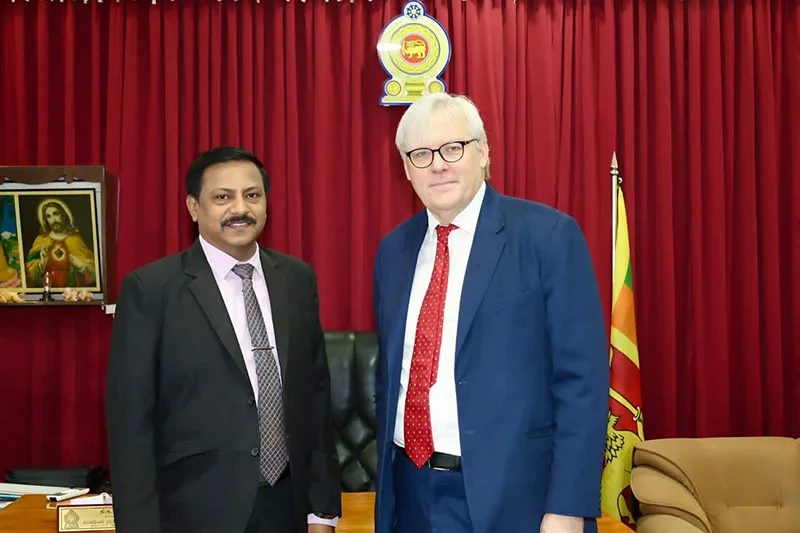
British High Commissioner to Sri Lanka, Andrew Patrick, visited Jaffna last week, meeting families of the disappeared, civil society organisations, and district officials, as longstanding demands for truth and accountability over enforced disappearances remain unresolved.
During his visit, Patrick met families of those disappeared in Chemmani, a site synonymous with some of the most notorious allegations of mass killings and enforced disappearances carried out by Sri Lankan security forces in the late 1990s. Following the meeting, the High Commissioner wrote on social media, “Grateful for the opportunity to meet with the families of those disappeared in Chemmani. Hearing their stories firsthand was a powerful reminder of their unwavering search for answers and their decades long pursuit of justice.”
The Tamil Guardian reported that Chemmani has long stood as a stark symbol of the Tamils demand for accountability, with families continuing to seek answers decades after their loved ones were abducted, amid persistent delays and obstruction in investigations. A mass grave uncovered in the area last year has unearthed 240 bodies so far.
Patrick also held discussions with grassroots organisations and civil society actors in Jaffna. Commenting on these engagements, he stated: “I had interesting discussions with grassroots groups in Jaffna. Civil society organisations continue to tackle a wide range of critical issues on the ground, and their unwavering commitment to justice, equality, and reconciliation is vital for shaping Sri Lanka’s future.”
The British High Commissioner also met Jaffna District Secretary Maruthalingam Pradeepan at the District Secretariat, where a detailed discussion was held on post-cyclone recovery and development challenges in the district. During the meeting, Patrick inquired about the impact of Cyclone Ditwah on the Jaffna District.
In response, the District Secretary explained that 20,023 families had been affected by the cyclone. He stated that a payment of 25,000 rupees had been provided to 13,168 families to assist with cleaning their homes, while 15,000 rupees per student had been granted to 15,260 affected schoolchildren to support the purchase of educational materials.
Commenting on the recovery efforts, Patrick said that funds for those affected by Cyclone Ditwah were being provided to the Sri Lankan government and implemented through the Red Cross.
The High Commissioner also highlighted the importance of employment opportunities for young people in the Jaffna District, noting that local youth possess strong skills in information technology and productivity-related sectors. He observed that the implementation of appropriate employment programmes would contribute significantly to the economic development of both the district and the country.
In addition, Patrick reiterated his belief that Tamil expatriates living in the United Kingdom would invest in Jaffna, and sought information from the District Secretary on the district’s current socio-economic development, the Kankesanthurai Investment Zone, and other available investment opportunities.
Also present at the meeting were Raman Chettiar, Second Secretary for Political Affairs at the British High Commission, and Farah Firdous, Political Officer.

The RAPP sheet: Steve Smith, Daryl Mitchell, Umesh Yadav among over 1300 players

U19 World Cup: Pakistan overcome New Zealand by 8 wickets

U19 World Cup: Vihaan Malhotra ton headlines India’s massive win

Dry weather will prevail in most parts of the island

Nigeria president ‘in great shape’ after falling at Turkey reception

Spain plans to give half a million undocumented migrants legal status

‘Dates have the highest sugar content to fight Coronavirus’

Sunday Island 27 December – Headlines

#SundayIsland 17th December – Headlines

Sunday Island – 28th March

Sunday Island Headlines – 21 March

Sunday Island – 21st February – Headlines
-
 Business2 days ago
ComBank, UnionPay launch SplendorPlus Card for travelers to China
-
 Business3 days ago
ComBank advances ForwardTogether agenda with event on sustainable business transformation
-
 Opinion6 days ago
Remembering Cedric, who helped neutralise LTTE terrorism
-
 Business6 days ago
CORALL Conservation Trust Fund – a historic first for SL
-
 Opinion3 days ago
Conference “Microfinance and Credit Regulatory Authority Bill: Neither Here, Nor There”
-

 Opinion5 days ago
A puppet show?
-

 Opinion2 days ago
Luck knocks at your door every day
-
 Features5 days ago
‘Building Blocks’ of early childhood education: Some reflections