
News
Lanka at brink of humanitarian crisis – Amnesty International


Financial partners should support basic needs, promote respect for rights
The dramatic fuel shortages that accompanied mass protests in Sri Lanka earlier this year may have eased, but for millions of Sri Lankans the economic crisis is worse than ever, said a report by the Amnesty International released on Thursday.It said: This month, the United Nations renewed a humanitarian appeal, stating that 28 percent of the population faces food insecurity and that the poverty rate this year has doubled.
Food price inflation was over 85 percent in October, and acute shortages of foreign currency mean that many imports, including essential medicines, are scarce or unobtainable. Meanwhile, authorities have cracked down on peaceful protest. President Ranil Wickremasinghe has suppressed demonstrations and has used the notorious Prevention of Terrorism Act (PTA) to detain student activists. Wickremasinghe has even warned that he will again declare a state of emergency and deploy security forces in the event of major protests.
Without respect for human rights, including the right to peacefully protest, Sri Lankans cannot hold politicians accountable, whether for mismanagement or corruption. It is essential that Sri Lanka’s international partners, including the United States and European Union, press the government to fulfill its human rights obligations as an essential step towards addressing the crisis.
Sri Lankan economists fear the economic situation could deteriorate rapidly without action by foreign creditors, placing the basic needs of millions of people in further jeopardy. To stabilize the economy, international creditors should agree to restructure Sri Lanka’s debt so the country can secure final approval for an International Monetary Fund (IMF) loan and financing from other global agencies.
In April, Sri Lanka defaulted on over US$50 billion in debts to international creditors, and in September it reached a staff-level agreement with the IMF for a four-year, $2.9 billion bailout. The first tranche of that bailout would ease the crippling shortage of foreign exchange and unlock access to other funding, including from the World Bank and Asian Development Bank, which cannot provide new funding until the IMF agreement is completed.
Sri Lanka’s major foreign creditors, including China, Japan, and India, should urgently mitigate the adverse human rights impacts of the economic crisis. The IMF should use its procedures to make needed funds available as soon as possible, putting into place safeguards to protect people’s economic and social rights.And the Wickremesinghe administration should respect fundamental rights, including to peaceful protest.


The National Water Supply and Drainage Board (NWSDB) on Friday said the largest groundwater source discovered in Sri Lanka so far had been identified during tube-well drilling near the Pitabeddara Police Station.
Indrajith Gamage, geologist in charge of the Southern Province, said the source recorded a continuous flow of about 10,000 litres (10 cubic metres) per minute, marking the first instance in the country where a groundwater source of that magnitude had been found.
He noted that the previous largest groundwater source was discovered in the Madhu area, which recorded a flow of about 7,000 litres per minute.
According to the NWSDB, the tube well was drilled following geological studies of rock layers and the identification of underground water through fractures in rock strata using specialised technical instruments.
The Board said steps would be taken to distribute water from the newly discovered source to residents facing shortages in Pitabeddara, Morawaka and surrounding areas.

The Ceylon Chamber of Commerce has formally handed over its historical records to the National Archives Department, entrusting over a century of the nation’s commercial history to the country’s official custodians of heritage.
The archive, spanning from the CCC’s founding in 1839 to 1973, includes correspondence, meeting minutes, reports, ledgers, and publications that chronicle the development of trade, enterprise, and industry in Sri Lanka. Together, the records provide a rare and detailed account of the island’s economic evolution and the role of its business community in shaping national progress.

The Ministry of Defence said on Friday (13) that arrangements had been made to repatriate to Iran the bodies of 84 sailors who died aboard the IRIS Dena, which sank in the southern seas off Sri Lanka.
A special aircraft carrying the bodies departed from Mattala Rajapaksa International Airport on Friday, the Ministry said, adding that the repatriation was carried out in coordination with the Embassy of Iran in Sri Lanka.
The remains had been kept in two mobile cold-storage units at the Galle National Hospital before being transported to Mattala by lorry following a court order. Forty-five bodies were moved in the morning, while the remaining 39 were transported later in the day.
Earlier this month, the Iranian naval vessel suffered an incident about 40 nautical miles off Port of Galle while carrying around 180 personnel. Thirty-five rescued sailors were admitted to the Karapitiya Teaching Hospital, while 84 bodies were subsequently recovered.
Following the incident, Pete Hegseth confirmed that the Iranian vessel had been sunk in international waters by a torpedo fired from a submarine of the United States Navy.
Showers will occur at several places in the Western, Sabaragamuwa, Central, North-western and Uva provinces and in Galle, Matara, Mannar and Anuradhapura districts after 2.00 pm.

Lanka discovers largest groundwater source

Lanka’s commercial legacy preserved in National Archives

Bodies of 84 Iranian sailors flown home

Kirsten brings pedigree, but Sri Lanka must fix the system

Barrels vs bombs

‘Dates have the highest sugar content to fight Coronavirus’

Sunday Island 27 December – Headlines

#SundayIsland 17th December – Headlines

Sunday Island – 28th March

Sunday Island Headlines – 21 March

Sunday Island – 21st February – Headlines
-

 News6 days ago
Repatriation of Iranian naval personnel Sri Lanka’s call: Washington
-
 Features6 days ago
Winds of Change:Geopolitics at the crossroads of South and Southeast Asia
-

 News5 days ago
Prof. Dunusinghe warns Lanka at serious risk due to ME war
-

 Sports4 days ago
Royal start favourites in historic Battle of the Blues
-

 Sports3 days ago
The 147th Royal–Thomian and 175 Years of the School by the Sea
-
 News3 days ago
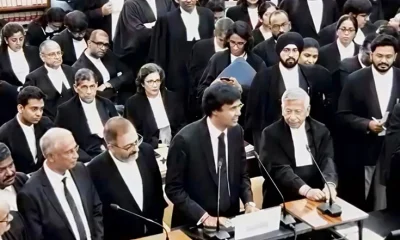
Historic address by BASL President at the Supreme Court of India
-

 News4 days ago
CEBEU warns of operational disruptions amid uncertainty over CEB restructuring
-

 Business4 days ago
BOI launches ‘Invest in Sri Lanka’ forum