
News
Keheliya says Pfizer booster a must to be categorised as fully vaccinated


Second dose for 16-19 age group can be received countrywide on Jan 29
By Shamindra Ferdinando
Health Minister Keheliya Rambukwella says in spite of Sri Lanka handling the first two phases of the Covid-19 vaccination drive quite well, the country was not out of the woods yet due to the poor public response to the Pfizer-BioNTech booster.
Continuing public apathy could cause a setback to ongoing economic recovery efforts, Rambukwella asserts.
Flanked by colleagues, Ports and Shipping Minister Rohitha Abeygunawardena and Tourism Minister Prasanna Ranatunga, lawmaker Rambukwella explained the difficulty in attracting the public to the booster, thereby the threat they posed, at a meeting with the media at the Health Ministry.
President Gotabaya Rajapaksa brought in Rambukwella as the Health Minister last August, the first Cabinet reshuffle since the August 2020 parliamentary polls. The Kandy district MP succeeded Pavitra Wanniarachchi who received the transport portfolio.
Minister Rambukwella said that an overall review was required as Sri Lanka marked the first anniversary of the launch of the inoculation campaign on Saturday (January 29). Health Minister Rambukwella, Health Secretary Maj. Gen. Dr. Sanjeewa Munasinghe and Director General of Health Services (DGHS) Dr. Asela Gunawardena urged the public to take the booster without further delay or face the consequences. They said that the booster could be taken at over 1,000 hospitals and other centres next Saturday. The health administration urged the public to take advantage of the opportunity to join the fully vaccinated group. The appeal was made in the wake of a weeklong (January 11 to 17) countrywide campaign failing to attract adequate numbers to take the booster shot.
Minister Rambukwella accepted a suggestion that the booster be considered a third dose and those who had received them categorized as fully vaccinated. They agreed on the urgent need to pressure the public on the third dose against the backdrop of Attorney General Sanjay Rajaratnam declaring Covid-19 vaccination couldn’t be made mandatory.
At the onset of the briefing, the former Media Minister recalled the daunting challenges faced by the current dispensation at the time of the Covid-19 eruption a few months after the last presidential election in Nov 2019. Acknowledging that the government had minimal capacity to meet such a challenging task, lawmaker Rambukwella said that the Opposition questioned whether the new administration could secure the support of the international community.
“We are in a comparatively comfortable situation today thanks to the vaccination rollout made possible by the international support,” Minister Rambukwella said. Underscoring the pivotal importance in President Gotabaya Rajapaksa’s role in securing vaccines amidst fierce competition among the countries, big and small, Sri Lanka was able to obtain 51 mn doses. “Now, 8 mn Pfizer doses remain for the third dose,”
Minister Rambukwella said whatever the lies propagated by interested parties the responsibility in going for the booster/third jab lay with the public.
The Minister said that 4.9 mn (30 percent) of those eligible for the vaccination had received the booster so far, whereas GMOA Secretary Dr. Senal Fernando also said on the same day only 22.47 percent had taken the booster.
Minister Rambukwella said that they observed a relatively lower number of 20-30 category having received the booster. Having failed to undermine the earlier phases of the inoculation drive, the social media seemed to have succeeded in their efforts, Minister Rambukwella said.
Referring to the increase in the number of reported cases and the challenge posed by Covid-19 variant, Omicron, Minister Rambukkwella explained the measures so far taken to counter the threat. According to him, depending on the requirement, home quarantine could be expanded.
The media was told the government decided to conduct religious ceremonies at vaccination centres on January 29 to invoke blessings on those who succumbed to Covid-19. Such activities will begin at the auspicious time 10.06 am and last less than one hour.
Minister Rambukwella said that the original plan was to conduct the main event at the Nelum Pokuna Theater.
Minister Rambukwella cited several instances of various interested parties interfering with the vaccination drive. Referring to an incident at a temple in Matale, the lawmaker said that he had no option but to obtain a court order against the chief incumbent of that temple and also request the Inspector General of Police (IGP) to take necessary action.
The Minister said that once the top management of a leading garment manufacturer objected to workers being vaccinated as it could hamper the manufacturing process. What they basically said was that if workers reported sick after vaccination the company wouldn’t be able to meet specific deadlines, Minister Rambukwella said, questioning their responsibility at a time the country faced a grave threat.
The Island raised the delay in giving the second dose for the 16-19 year category which included those scheduled to sit for the GCE Advanced Level examination early February. Dr. Gunawardena responded that specific instructions had been issued in that regard whereas children 12-15 were being inoculated now. The Island pointed out that inquiries made regarding the second dose for 16-19 year category revealed that the process was yet to begin. The media was told that the Health Ministry would inquire into the complaint and arrangements would be made for them to receive the second dose at vaccination centres on January 29.
Minister Rambukwella speculated on the possibility of bankrupt political parties being responsible for the ongoing organized campaign against the booster. Perhaps some believed the situation could be exploited for political gain at the expense of the government and the national economy.
Minister Ranatunga emphasized the responsibility on the part of the media to clearly present facts. Failure to do so would cause damage, the Aviation Minister said. Aeroflot decided against resumption of flights to Colombo primarily on the basis of misleading media reports.

Latest News
Heat Index at ‘Caution Level’ in the Northern, North-central, North-western, Western, Eastern and Southern provinces and in Monaragala district


Warm Weather Advisory
Issued by the Natural Hazards Early Warning Centre
Issued at 3.30 p.m. on 14 April 2026, valid for 15 April 2026.
The Heat index, the temperature felt on human body is likely to increase up to ‘Caution level’ at some places in the Northern, North-central, North-western, Western, Eastern and Southern
provinces and in Monaragala district.
The Heat Index Forecast is calculated by using relative humidity and maximum temperature and this is the condition that is felt on your body. This is not the forecast of maximum temperature. It is generated by the Department of Meteorology for the next day period and prepared by using global numerical weather prediction model data.

Effect of the heat index on human body is mentioned in the above table and it is prepared on
the advice of the Ministry of Health and Indigenous Medical Services.
ACTION REQUIRED
Job sites: Stay hydrated and takes breaks in the shade as often as possible.
Indoors: Check up on the elderly and the sick.
Vehicles: Never leave children unattended.
Outdoors: Limit strenuous outdoor activities, find shade and stay hydrated.
Dress: Wear lightweight and white or light-colored clothing.
Note:
In addition, please refer to advisories issued by the Disaster Preparedness & Response Division, Ministry of Health in this regard as well. For further clarifications please contact 011-7446491.
Latest News
“I extend my heartfelt wishes to all Sri Lankans for a peaceful and joyous Sinhala and Tamil New Year!” – President

President Anura Kumara Dissanayake, issuing a New Year message, extend his heartfelt wishes to all Sri Lankans for a peaceful and joyous Sinhala and Tamil New Year!
The Sinhala and Tamil New Year, which symbolises the aspiration for renewal both physically and spiritually, is the foremost cultural festival of the people of this country.
During the Sinhala and Tamil New Year, traditional customs are upheld, with priority accorded to rituals and religious observances, and activities undertaken collectively at a common auspicious time. This shared cultural practice vividly reflects our nation’s identity before the world, as well as the strong socio-cultural bonds that exist among our communities.
We firmly believe that the future path of national development can only be shaped in harmony with this invaluable culture and our distinguished historical heritage. Accordingly, it must be recalled that all our future development plans have been formulated upon the firm foundation of these precious traditions and cultural values.
Moreover, the common aspiration embodied in the customs and rituals associated with the solar transition is the nurturing of a compassionate individual who values togetherness, respects others, and lives in harmony with nature. I believe that the virtues and values of unity reflected in these New Year traditions should not be confined to these few days alone, but should instead be demonstrated throughout the year in our daily conduct.
In the face of the most significant recent natural disaster challenge encountered in the past year, we demonstrated to the world our resilience and capacity to withstand internal shocks. At the same time, in responding to the external challenges arising from the conflict in the Middle East, the Government has already set in motion a well-planned and effectively managed programme to overcome these difficulties.
As a nation, in overcoming these challenges together, I call upon all of you to further dedicate yourselves to enriching your lives through the values of togetherness, sharing, and solidarity exemplified during the Sinhala and Tamil New Year season.
As we strengthen the achievements we have secured and move forward with unwavering resolve in the face of emerging challenges, I invite everyone to join hands in unity to realise the vision of “A Thriving Nation – A Beautiful Life” for all.
I extend my heartfelt wishes to all Sri Lankans for a peaceful and joyous Sinhala and Tamil New Year!
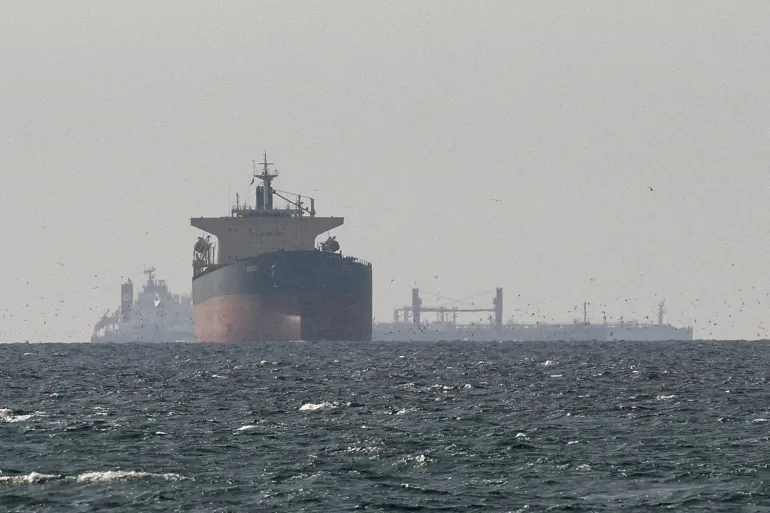
United States President Donald Trump’s planned naval blockade of Iran would further cripple international shipping, exacerbating the energy crisis roiling the global economy, analysts warn.
Oil prices surged above $100 a barrel on Monday after Trump announced that the US Navy would blockade the Strait of Hormuz and “interdict every vessel in international waters that has paid a toll to Iran”
“Iran will not be allowed to profit off this Illegal Act of EXTORTION,” Trump said on Truth Social.
Central Command, the US military’s command responsible for operations in the Middle East, said in a statement the blockade would affect only ships entering and exiting Iranian ports, an apparent scaling-back of Trump’s threat to fully block the strait.
Trita Parsi, cofounder of the US-based Quincy Institute for Responsible Statecraft, said a US blockade would have a cascading impact across the global economy.
“Anything that currently takes more oil off the market will push prices up, which in turn will push gas prices further,” Parsi told Al Jazeera.
Oil could rise above $150 a barrel if the blockade were to trigger retaliation from the Iran-aligned Houthis in Yemen, who could shut down Bab al-Mandeb, a strait that connects the Red Sea to the Gulf of Aden and Indian Ocean, Parsi said.
The strait is an alternative export route for Gulf oil and gas.
A blockade aimed at depriving Iran of revenues would mark a sudden reversal in policy by Washington.
The Trump administration last month announced it would waive some sanctions on Iranian oil exports as a way to help ease the global energy crunch.
Iran has essentially closed the strait since the start of the US-Israeli war on February 28, allowing only a small number of ships to transit after vetting and authorisation.
About 3,200 vessels were stranded west of the strait due to the blockage as of Saturday, according to the maritime intelligence company Windward.
Anas Alhajji, former chief economist at NGP Energy Capital Management, said expected non-Iranian ships would likely keep avoiding the strait despite the US military’s assurances that they will not be impeded because of elevated insurance premiums.
Ships may also fear retaliation from Iran, Alhajji said.
“Therefore, the Trump blockade of the Iranian ports is an actual blockade of the Hormuz Strait,” Alhajji told Al Jazeera.
The resulting rise in oil and gas prices would also cause the cost of chemicals, fertilisers and raw materials used to make plastics to increase, according to analysts.
Cameron Johnson, a senior partner at the Shanghai-based supply chain consultancy Tidalwave Solutions, said he expects prices of many raw materials to rise within several weeks if Trump makes good on his blockade threat.
“The wild card really is the timeframe on this,” Johnson told Al Jazeera.
“If this is a negotiating tactic – remember we still have eight or nine days left of the ceasefire – then it may not really matter. But if this prolongs itself into the end of the month and into the first week of May, you will see prices all over the world spike for raw materials.”
Deborah Elms, head of trade policy at the Hinrich Foundation in Singapore, said the situation for global supply chains could get “much worse” under the blockade.
“Some of the problems are obvious, but many are not. As an example, fabrics will get more expensive,” Elms told Al Jazeera.
“Packaging is already a challenge for firms. Many can’t get blister packs for pills or lids for consumer goods. We can expect consequences for food production later this year and into next year with fertiliser disruptions and lack of supply,” Elms said.
Chad Norville, president of the oil and gas industry news site Rigzone, said Trump’s threat is a further blow to confidence in the situation in the strait ever returning to normal.
The threat alone is likely to drive up insurance premiums for shipping and logistics companies and reduce the volume of trade passing the strait each day, he said.
“Disruptions to shipping and elevated risk in the region were already well established due to the conflict,” Norville told Al Jazeera.
“This threat doesn’t create that baseline. It amplifies it by reinforcing uncertainty around one of the world’s most critical chokepoints.”
[Aljazeera]

Showers will occur at several places in the Western, Sabaragamuwa, Central, Southern, and North-western provinces, and in Anuradhapura district after 1.00 pm.

Heat Index at ‘Caution Level’ in the Northern, North-central, North-western, Western, Eastern and Southern provinces and in Monaragala district

“I extend my heartfelt wishes to all Sri Lankans for a peaceful and joyous Sinhala and Tamil New Year!” – President

US blockade of Iran would worsen global energy crisis, analysts say

Praful Hinge’s stunning debut ends Rajasthan Royal’s four-match winning streak

“Let us resolve, with renewed determination to overcome obstacles and build a better and more prosperous nation” -PM

‘Dates have the highest sugar content to fight Coronavirus’

Sunday Island 27 December – Headlines

#SundayIsland 17th December – Headlines

Sunday Island – 28th March

Sunday Island Headlines – 21 March

Sunday Island – 21st February – Headlines
-

 News3 days ago
CEB orders temporary shutdown of large rooftop solar systems
-

 News6 days ago
AG: Coal procurement full of irregularities
-

 Business5 days ago
Israeli attack on Lebanon triggers local stock market volatility
-
 Features3 days ago
From Royal College Platoon to National Cadet Corps: 145 years of discipline, leadership, and modern challenges
-

 Business6 days ago
Hayleys Mobility introduces Premium OMODA C9 PHEV
-

 Business5 days ago
HNB Assurance marks 25 years with strategic transformation to ‘HNB Life’
-

 Sports6 days ago
DS to face St. Anthony’s in ‘Bridges of Brotherhood’ cricket encounter
-
 Latest News2 days ago
PNS TAIMUR & ASLAT arrive in Colombo