
Sports
Juggernaut derailed and the Blues scrape home


by Rajitha Ratwatte
It was expected to be a one-sided easy win for the Canterbury Crusaders. They were playing the lowly Otago Highlanders, top of the table against the near bottom. Furthermore, the Otago coach Tony Brown had dropped six of the stars or starting players, due to a breach of team discipline and ethics. Otago had Mitch Hunt was playing at no10 against the mercurial Ritchie Mo’uanga, both former teammates at Canterbury. A team of Wannabees from Otago against a team of superstars from Canterbury.
It was a frenetic start and the normally reliable George Bridge on the wing for Canterbury dropped a perfectly placed cross-kick and with it a chance for the Crusaders to get ahead early. 10 minutes into the game the Highlanders got a penalty far left of field and about 40 meters out. Mitch Hunt stepped up and converted, 3 – 0 to the underdogs. Seven minutes later Codie Taylor the Canterbury hooker was pinged for offside, 30 meters out and mid-right. Again, the Otago no10 converted 6 -0. Otago had learned from the Auckland Blues’ mistakes of not taking three points whenever Crusaders gave a penalty, as happened last week. The Highlanders continued their dominance with no seven Billy Harmon going over for a try within easy converting distance in the 23rd minute. 13 – 0 and a few punters who had taken the long odds, were beginning to smile. The Punters even began to buy drinks for their mates when another penalty was converted in the 31st minute and the ‘Landers went ahead by 16 – 0.
Crusaders were making many mistakes, dropped balls, wild passes, and even mistakes in the line out resulting in turnovers, and loss of territory was very “uncrusaderlike”. Otago continued to play well with Jonah Nareki one of my favorite up-and-coming young wingers in the tournament, pulling off an amazing turn-over off a defensive ruck and turning another Crusader attacking move to naught.
On the halftime hooter, the Crusaders forwards powered their way over the line from a rather scrappy line out. Codie Taylor the red and black hooker scored, and the conversion was simple for Ritchie Mo’uanga; 16 -7 at halftime.
Ten minutes into the second half Scott Barret the captain of the Crusaders was caught offside mid-right and inside their 22. Another three points for the ‘Landers and the score; 19 – 7. A good old-fashioned fly hack off a crusader’s dropped pass saw useful territory gained and 10 phases later Michael Collins of the Highlanders went over the line for another try which was converted. 26 – 7, where was the famed Crusader second-half spurt, even if it did come, was the margin too much? These were the burning questions around the long bar of the Ellerslie pub! The 68th minute saw David Haveli of the Crusaders score but Ritchie Mo’uanga missed a relatively easy conversion 26 -12 and into the last 10 minutes. It was all over in the 73rd minute when the Highlanders bench no12, Garden-Bachop picked up another dropped pass and scored a seven pointer 33 -12 and a half-strength (in theory) Highlanders team had achieved the impossible! Crusaders were beaten by what was possibly a record margin and against all odds. Committed, keen disciplined players are worth more than “superstars” to a coach – Is a theorem that has been proved time and time again; Kudos to Tony Brown, this is the stuff that great coaches are made of.
The Auckland Blues at home to the Wellington Hurricanes. Eden park the bastion of the Blues not as full as usual due to the Easter long weekend and the more affluent denizens of Auckland away at their holiday “batches” and on their boats. However, the Blues fan base are mostly pacific Islanders from the hard-working lower-income bracket of society, and they were probably also celebrating an increase of the minimum wage, brought about by the ruling Labour Government with effect from the beginning of April! The Auckland coach, Leon McDonald had made vital changes to the no 9 and no 12 positions in his team and the Blues skipper Patrick Tuapoletu was out of the game due to a shoulder injury. The ginger-haired Tom Robinson who had thus far been mainly a bench player started as the stand-in captain. A big job ahead of him, particularly as the usually wrong Sir John Kirwan of the expert panel backed the Blues to win!
The Blues kicked off and four minutes into the game the first scrum showed a bit of dominance by the home side. Two penalties 50 – 60 meters out but kickable for the giant Jordie Barret were not attempted and the Blues also disregarded a possible three pointer and chose the touch option. Jordie Barret can’t be kept out of the game and a huge 50-meter clearance kick from a defensive position may have woken his captain up to the fact that here was a kicking machine. In the 15th minute a penalty right in front of the posts, conceded by the Blues was a mere formality for Jordie Barret and the score read 0 – 3 to the ‘Canes. The Blues were pinged again, but the TV ref intervened, and the penalty was reversed, and a yellow card issued to Duplessis Kurefi of the Hurricanes for a high tackle. The 18th minute saw a great ruck by Aardie Savea the captain and no 8 of the ‘Canes, earning a penalty around 52 meters out and slightly left of the posts. Since the Hurricanes were a player down due to the yellow card and this was well within the kicking range of Jordie Barret, trying for the 3 pointer was a no-brainer. Barret missed but it was not due to lack of distance!
The Blues were not looking good. Basic mistakes, ball handling errors, forward passes, and bad line out throws plagued them to an extent that the fans started to wonder if it back to the bad old days. They were unable to take advantage of being one man up in the 10 minutes that ensued. In the 30th minute, a Blues rolling maul heading for the opposition line was apparently collapsed by Aardie Savea and a penalty try was awarded to the Blues and Savea yellow carded. Score 7 – 3. The general consensus was that Savea was hard done by, he will have to be careful however because if he wants to captain the All Blacks in the possible absence of Sam Cane the incumbent skipper, due to a shoulder injury, he has to reduce the number of times he is being sent to the sin bin. Savea is undoubtedly the best no 8 playing Super rugby Aotearoa at present, sometimes his over-enthusiasm results in too much attention from the referees!
The deficit was reduced four minutes later in the 34th minute when the Blues conceded another penalty in front of the posts and around 22 meters out. 7 – 6 with Barret junior doing the needful. However, the 37th minute saw the ‘Canes pinged in front of their posts and on the 22-meter line. Another “gimme” three pointer took the score to 10 – 6 in favor of the Blues. On the half-time hooter the ‘Canes got penalty 30 meters out from the Blues posts, in front of the posts and amid Jeff Wilson (Goldie) of the commentary panel waffling on about the Hurricanes needing to try and score a try, Jordie Barret took the three points. The score read 10 – 9 to the Blues at halftime.
Two minutes into the second half saw the Blues loose head prop Tu’ungafasi go off the field with a knee injury and another of my favorite players Alex Hodgeman come on. Hodgeman is very good in the loose and was soon showing his handling skills with a couple of great offloads. However, he was given a hard time by the ‘Canes tight head Alex Fidow and conceded a couple of “knee down” scrum penalties. He will no doubt learn not to get sucked in by these tactics as time goes on. Two minutes later in the 44th minute the Blues conceded one of those scrum penalties, it was around 55 meters out with the angle and mid-right. Jordie Barret stepped up and over it went, right down the middle. 10 -12 ‘Canes back in the lead and the youngest Barret brother making an emphatic statement as to why he should be a permanent member of the All Blacks. The ability to score three points from anywhere inside 60 meters of the opposition’s goalposts, surely assures a player of his place? Even in the All Blacks!
Around the 50th minute, the changes in the Blues three-quarter line began to pay dividends with a series of nice running breaks and great passes resulting in the new no 12 T.J. Faiane scoring mid-left. Duly converted and score reading 17 -12 for the Blues. The 64th minute saw Mark Telea score on the right-wing off a Ricco Ioane pass. A difficult kick was slotted by Otere Black, and Blue’s lead was extended to 24 -12. The Blues continued to show a lack of initiative on the field and probably missed the leadership of their injured skipper. A needless penalty was conceded in the 75th minute and Reed Princep went over for a try that Jordie Barret was unable to convert. 24 -17 was the scoreline until almost on full-time hooter when the Hurricanes scrum conceded another penalty 40 meters out and mid-right. Oteri Black who had a relatively quiet game but seemed to have regained his kicking form, put this one over too, to secure a 27 -17 victory for the Blues at home. This kick saw the Hurricanes lose their “losing bonus point” due to the increase in the winning margin.
A singularly unimpressive victory with shades of the “bad old days” of mindless, unthinking rugby that we had witnessed from the Auckland team in the past, raising its ugly head once again.


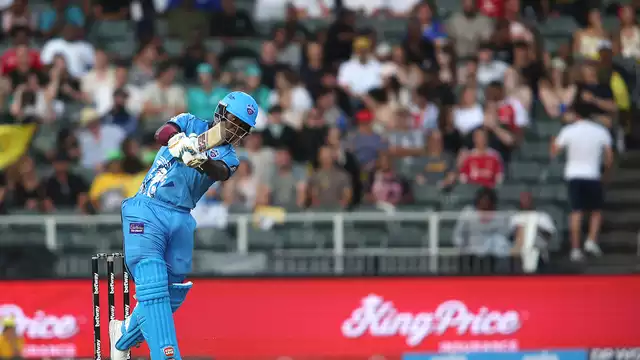
Durban’s Super Giants kept their playoff hopes alive with a bonus-point 58-run win in their final home game, powered by a commanding century from Aiden Markram. His 108 off 58 balls lifted DSG to 189 for 7 on a surface that became increasingly difficult to bat on as the match progressed.
Durban’s Super Giants 189 for 7 (Markram 108; Viljoen 4-21) beat Paarl Royals 131 for 9 (Fortuin 35*; Narine 2-18) by 58 runs
Joburg Super Kings vs Pretoria Capitals
Pretoria Capitals 143 for 6 (Rutherford 74*, Brevis 53; Worrall 2-12) beat Joburg Super Kings 122 for 8 (Forrester 44*; Maharaj 3-15, Williams 3-25) by 21 runs


England will touch down in Colombo shortly for a six-match white-ball series, with the ODI leg staged in Colombo and the T20Is unfolding in Pallekele. But make no mistake, it is the T20 chapter that carries the weight of expectation. With the World Cup just around the corner, this series doubles as the final dress rehearsal before Sri Lanka co-host the sport’s showpiece alongside India.
Sri Lanka learned a few hard truths during the recently concluded Pakistan series, identifying areas that still need sanding down. The England tour offers a last chance to tighten the screws, apply the final coat of polish and crucially, nail down the remaining seats on the World Cup bus.
A bit of rotation is expected during the ODI leg. Speedster Dushmantha Chameera sat out the final game against Pakistan with a groin niggle and the think-tank may opt to wrap him in cotton wool, using their spearhead sparingly and unleashing him primarily in the T20Is.
While most World Cup berths are already pencilled in ink, a couple remain in erasable pencil. With the squad deadline looming before the end of the month, selectors will effectively have just the first T20I to make their calls, with the second and third matches slated for February 1 and 3. It does raise the question whether the T20Is should have been played first, or whether the England series might have been better slotted immediately after the Pakistan games, keeping momentum rolling.
Look across the Palk Strait and India appear to have their ducks in a row. They are hosting New Zealand in an eight-match white-ball series that wraps up on January 31, five T20Is and three ODIs, an almost tailor-made build-up for a global tournament. India and New Zealand are, incidentally, locking horns in five T20Is, prompting the inevitable thought: would Sri Lanka have been better served going down the same route?
Sri Lanka’s bowling cupboard is well stocked and capable of putting the brakes on even the most belligerent line-ups at the World Cup. The lingering concern remains the batting. If the chronic collapses can be curbed and partnerships stitched together, there is no reason why Sri Lanka cannot push deep into the business end of this 20-nation competition.
A heavy load rests on opener Pathum Nissanka’s shoulders, but if Kusal Mendis finds his groove and bats with freedom, Sri Lanka could yet savour this World Cup. The batting unit appears largely settled, and Dhananjaya de Silva edging out Kusal Janith Perera looks a no-brainer. Kamindu Mendis, with the all-round package he brings, is not only a long-term investment but also a calming influence in the middle order here and now. Whether the selectors read the game from the same page, however, remains to be seen.
by Rex Clementine
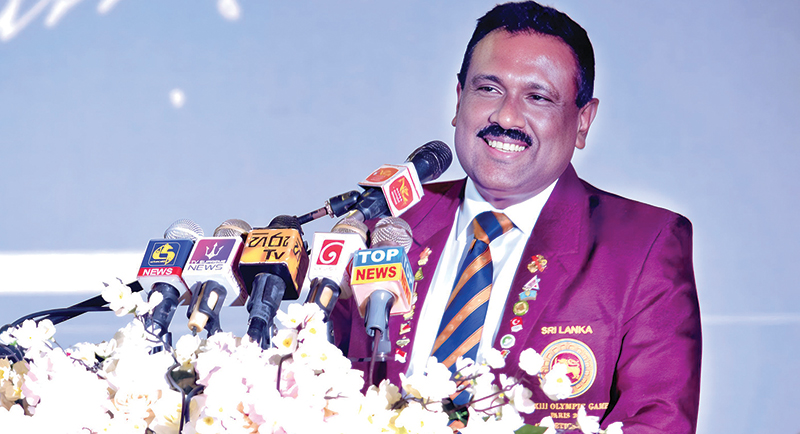
Whether it is the number of medals or the number of productive citizens it produced since its inception as s sports school, the achievements of A. Ratnayake Central Walala will remain unmatched among sports schools of the country. Behind every successful sports school stands a coach. For Ratnayake central it was Susantha Fernando—a man whose contribution to Sri Lankan athletics extends far beyond podium finishes and into the very foundations of sports education and athlete development.
For more than three decades, Fernando has been the driving force behind the track and field sucess at A. Rathnayake Central College, Walala, transforming a little kown school into one of the most dominant track and field institutions in Sri Lankan school sports history. Under his guidance, Walala achieved unprecedented sucess, winning titles at the All Island School Games, Sir John Tarbat Senior Championships and National Schools Relay Championships more than any other school in the country.
Walala’s success was not accidental. It was built on discipline, long-term planning, and a coaching philosophy that valued development over quick results. Fernando believed that talent, when nurtured patiently and systematically, could rival any advantage offered by superior facilities or urban exposure. Walala became living proof of that belief.
Renowned for his expertise in middle- and long-distance running, Susantha has been instrumental in shaping some of Sri Lanka’s finest athletes. His eye for potential and his understanding of physical and mental growth allowed young runners to mature into elite competitors on the international stage.
Among those who rose under his mentorship are Tharushi Karunaratne, Asian Games gold medalist and national 800m record holder; Dilshi Kumarasinghe, triple gold medalist at the South Asian Games and former national record holder; Manoj Pushpakumara, a multiple medalist at the Asian Junior Championships; and Indunil Herath, a national 800m record holder whose early development took place at Walala.
Collectively, athletes coached by Fernando have secured over 70 international medals, including achievements at the Asian Games, Youth Olympics, and South Asian Games. These results reflect not just individual brilliance, but a coaching system capable of producing excellence across generations.
Yet, those who know Susantha Fernando well insist his greatest strength lies beyond training schedules and race strategies. He viewed coaching as a form of education and character building. Discipline, humility, responsibility, and respect were central to his program. Winning mattered, but never at the expense of values.
This philosophy resonates strongly with long-standing discussions in Sri Lankan sports circles—often highlighted in The Island and The Sunday Island—about the need for structure, continuity, and ethics in sports development. Fernando’s career stands as a practical demonstration of those ideals.
His influence expanded when he was entrusted with duties as Assistant Director of Education (Sports and Physical Education) at the Wattegama Zonal Education Office. In this role, he has emerged as a strong advocate for reforming how physical education is treated within the school system.
Fernando proposed several progressive measures, including the introduction of mandatory termly fitness assessments for secondary students, compulsory participation in at least one sport, and the inclusion of physical fitness grades on GCE O/L and A/L result sheets. His vision was clear: physical education must be an integral part of national development, not a secondary concern.
Recognition for his work has come as Best Coach awards at Sports Awards ceremonies. More meaningful, however, was the tributes paid by former Walala athletes, his fellow officials and a distinguished gathering including former Director of Education Sunil Jayaweera at a felicitation ceremony organized by Tharanga Gunaratne, Director of Education at Wattegama Zone on the occation of his retirement from government service and at the launch of his autobiography ‘Dekumkalu Kalunika’ recently.
Both events reflected the gratitude not only for medals won, but for lives shaped.
Like many coaches working within limited systems, Fernando’s journey was marked by challenges—restricted resources, long hours, and personal sacrifice. Yet his quiet resilience ensured that standards were never compromised.
Susantha Fernando’s legacy is not confined to record books. It lives in the systems he built, the athletes he guided, and the values he instilled. As Sri Lanka continues to search for sustainable sporting success, his career offers a powerful lesson: ‘true excellence is built patiently, ethically, and with unwavering belief in people’.
In Susantha Fernando, Sri Lanka has not only produced champions—but a model of coaching worth preserving. He leaves a huge vacuum hard to fill.
Prime Minister launches Zahira College, Puttalam Website

Pretoria Capitals recover from 7/5 to beat Joburg Super Kings

Dry weather will prevail in most parts of the island

Premadasa: Grade 6 syllabus fiasco signals deeper issues

Sri Lankan Airlines launches Intl branding initiative for Colombo Nawam Maha Perahera 2026

Reports on Grade 6 module adult website link due next week

‘Dates have the highest sugar content to fight Coronavirus’

Sunday Island 27 December – Headlines

#SundayIsland 17th December – Headlines

Sunday Island – 28th March

Sunday Island Headlines – 21 March

Sunday Island – 21st February – Headlines
-

 Editorial23 hours ago
Illusory rule of law
-

 News2 days ago
UNDP’s assessment confirms widespread economic fallout from Cyclone Ditwah
-

 Business4 days ago
Koaloo.Fi and Stredge forge strategic partnership to offer businesses sustainable supply chain solutions
-

 Editorial2 days ago
Crime and cops
-

 Editorial3 days ago
The Chakka Clash
-

 Features23 hours ago
Daydreams on a winter’s day
-

 Business4 days ago
SLT MOBITEL and Fintelex empower farmers with the launch of Yaya Agro App
-

 Features3 days ago
Online work compatibility of education tablets