
Latest News
Joe Root’s magnificent 166* drives England to 309-run chase, and series win


England did not quite turn their back on Joe Root as a limited-overs batter, but certainly the schedule threatened to axe him from white-ball cricket.
A couple of crises and a change of management later, here Root was in Cardiff, unfurling perhaps the best of his 18th ODI hundreds, a career-best 166 not out. His first 42 runs put him top of the pile of English run scorers in the format, usurping Eoin Morgan’s tally of 6,957, before the rest iced a chase of 309 to secure a series win over West Indies with a game to spare.
This was Root’s second hundred in his eighth innings since returning to the 50-over format this year, ahead of an admittedly disastrous ICC Champions Trophy as far as the team was concerned. Not only is he averaging 30 runs more than his overall average of 49.18, but his strike rate is also 10 points higher. An immaculate straight drive, his 23rd boundary of a fever-dream knock, confirmed victory with three wickets and seven balls to spare.
This second ODI did not, all told, seem befitting for Root’s historic brilliance. Mainly because, for the first half, it seemed to belong to West Indies – specifically Keacy Carty’s 103, the centrepiece of West Indies’ 308 all out. Skipper Shai Hope’s 78 at the end and Brandon King’s 59 up top were vital bookends.
Though they left 14 deliveries unused having been inserted by England, it didn’t seem to matter as West Indies’ attack took just nine deliveries to remove openers Jamie Smith and Ben Duckett for ducks – 2 for 2 – then had England 93 for 4 when Jos Buttler was also bagelled. From that point on, it was Root at his absolute best, accompanied for the most part by Will Jacks. You might have described his 49 off 58 in a stand of 143 from 122 as “playing the Joe Root role”, had the man himself not been at the other end strumming 87 off 64. Root’s last 70 runs with Jacks came off just 45 balls, by the way.
The catastrophic start to the chase added a layer of jeopardy to Root’s innings that he never felt. But it did mean more because of a West Indies outfit hell-bent on disavowing themselves from Thursday’s 238-run loss in the first ODI at Edgbaston. Smith nicked Jayden Seales behind for a duck after four legal deliveries, before Ben Duckett scythed a thick edge off Matthew Forde to deep third, his three-ball nought capping off a horrendous day that included two dropped catches and a missed run-out.
Both Duckett’s chances would have nipped a second-wicket stand between Carty and Brandon King in the bud. It reached 141 but should not have made it to double figures, let alone out of the first powerplay, Duckett’s misses at second slip off Brydon Carse – the first diving to his right, the second tipped over the bar – came when King had 10, then 11. Duckett’s hat-trick of fielding botches was completed when, spoilt for choice, both King (55 not out) and Carty (57 not out) were stuck in the middle of the pitch. King ended up running to the far end, beating Duckett’s loopy under-arm to wicketkeeper Buttler.
The biggest error in the first innings, however, was Saqib Mahmood’s tame drop of Carty on 41, when Bethell was worked around the corner. He also might have been run out on 57 had the throw from midwicket been crisper after he had been sent back. Both of those gifts were reciprocated to Root, who could have been found short of his ground twice.
The best chance was at the end of the second over when Root was dead in the water after Harry Brook called him through for a dodgy single, only for Roston Chase to miss from backward point. A tougher opportunity arose in the 11th over when, on 30, he had again given up. This time, King missed, albeit having mad a brilliant stop at midwicket followed by a throw at the non-striker’s end from the ground. But maybe the biggest grievance as far as West Indies were concerned was an LBW appeal at the end of the sixth over. Forde hit Root on the back leg and giving it the celebrappeal, only for the review to find the ball clipping the bails.
Brook was also dropped on 30 – which he had made from just 16 deliveries – when Hope palmed a diving catch to his right after Seales had found the edge. England’s captain had just launched an assault on Forde, smashing three boundaries in a row – the first a towering boundary to the leg side – but fell short of fifty when flipping Alzarri Joseph’s bouncer to backward square leg. And though Joseph would then snare the former white-ball captain six deliveries later – Buttler playing on, undone by bounce – Root was well on his way.
That Joseph was even on owed to four elegant boundaries from Root – including a couple of crisp cover drives – to take 17 off what would prove to be the last over of Forde’s opening spell. From then on, Root managed the situation, calmly at first with Bethell and thereafter in a remarkable partnership with Jacks. Most spectacular of all was the acceleration from Root, despite Jacks’ game being far more suited to the pyrotechnics he produced.
The key passage came with 135 needed from 18.2 overs, with Root on 77 fron 82. After taking 16 deliveries to move to his hundred – a milestone he reached with a six over midwicket and a four swept around the corner off Gudakesh Motie – he then smashed 43 from his next 24 deliveries up to Jacks’ dismissal. He ramped, scooped and then charged Chase’s offies for boundaries in four balls, before Jacks was trapped in front to give Joseph an impressive 4 for 31 from his allocation.
A gorgeous carve over extra cover off Forde then took Root past 150 for the first time in ODIs, from 129 deliveries, and thereafter it was only a matter of how, not when. A picture-perfect on-drive for four sealed the deal with seven balls to spare.
Both teams had made a single change each from the first ODI; England swapping Matthew Potts for Jamie Overton (broken little finger), while West Indies erred for experience with Shimron Hetmyer moving into the XI at the expense of Amir Jangoo.
Precocious Antigua batter Jewel Andrew was moved to open with Evin Lewis still missing with the groin injury that kept him out of the first ODI. It was the first time the 18-year-old had performed the role in his professional career, across all formats – and it did not last long. A hard length from Carse lifted into harder hands from Jewell, who was surprised by the bounce and fended it away on instinct, gifting a straightforward catch to Jacks at point for a five-ball duck.
Carty’s binding of the innings began at this point, and the value of his stickability felt particularly crucial with the 58 shared with Hope. Their stand began when King found Carse at long-on off Rashid – the first of the legspinner’s 4 for 63. Nine overs later, a late dab through third brought Carty’s 13th four off his 102nd delivery to take him to three figures. And while he was unable to launch from there, stumped off Jacks three balls after the milestone, Hope was now set.
Nevertheless, West Indies lost their final eight wickets for 103. Mahmood removed Forde and Chase in consecutive balls before Motie took to Jacks. But Rashid’s two wickets in his final over shifted the onus even more so on Hope, who toed a simple catch to Brook to give Mahmood figures of 3 for 37.
England’s target of 309 could have been 50 more with better choices throughout, and maybe 111 fewer had England taken their chances against Carty and King. Then again, Root would not have had the scope to unfurl his brilliance. Sometimes, the game works itself out.
Brief scores:
England 312 for 7 in 48.5 overs (Joe Root 166*, Will Jacks 49, Harry Brook 47, Alzarri Joseph 4-31) beat West Indies 308 in 47.4 overs (Keacy Carty 103, Shai Hope 78, Brandon King 59, Justin Greaves 22; Saqib Mahmood 3-37, Adil Rashid 4-63) by three wickets
[Cricinfo]


Torrential rains have killed more than 100 people across Southern Africa, forcing mass evacuations and rescue operations as authorities warn that more destructive weather may still be to come.
Weeks of heavy rainfall have battered South Africa, Mozambique and Zimbabwe, overwhelming rivers and infrastructure and leaving entire communities cut off. Weather services across the region have issued further alerts, raising fears of additional flooding.
In South Africa, officials said on Friday that flooding in the northern provinces of Limpopo and Mpumalanga had killed at least 30 people.
Army helicopters have been deployed to rescue residents trapped on rooftops and in trees as swollen rivers swept through towns and villages. Security personnel were also evacuated from a border checkpoint with Zimbabwe after floodwaters surrounded the area.
President Cyril Ramaphosa toured affected parts of Limpopo on Thursday, saying the province had received about 400mm (16 inches) of rain in less than a week. In one district, he said, “there are 36 houses that have just been wiped away from the face of the earth.”
Limpopo Premier Phophi Ramathuba said more than 1,000 homes had been damaged across the province. “It’s so terrible,” she said.
In neighbouring Zimbabwe, the government’s disaster management agency reported at least 70 deaths since the start of the year, with more than 1,000 homes destroyed, and schools, roads and bridges collapsing under the force of the floods.
Mozambique has been the hardest hit. Its disaster management authorities said 103 people had died during an unusually severe rainy season since late last year. The figure includes deaths caused by flooding, lightning strikes, infrastructure collapse and a cholera outbreak linked to contaminated water supplies.
More than 200,000 people have been affected nationwide, with thousands of homes damaged and tens of thousands facing evacuation, according to the World Food Programme. The agency warned that flooding has submerged more than 70,000 hectares (173,000 acres) of crops, deepening food shortages for small-scale farmers in a country already struggling with poverty and repeated cyclones.

The United States Famine Early Warning System said flooding was reported or expected in at least seven Southern African countries, possibly linked to the La Nina phenomenon, which often brings heavier rainfall to the region.
South Africa’s Kruger National Park has also been hit, with about 600 tourists and staff evacuated from flood-affected camps. Park authorities said no deaths or injuries had been reported, but large areas remain inaccessible after rivers burst their banks.
Southern Africa has endured a series of extreme weather events in recent years, from deadly cyclones to severe droughts, exposing the region’s vulnerability to climate-driven disasters and fragile infrastructure.
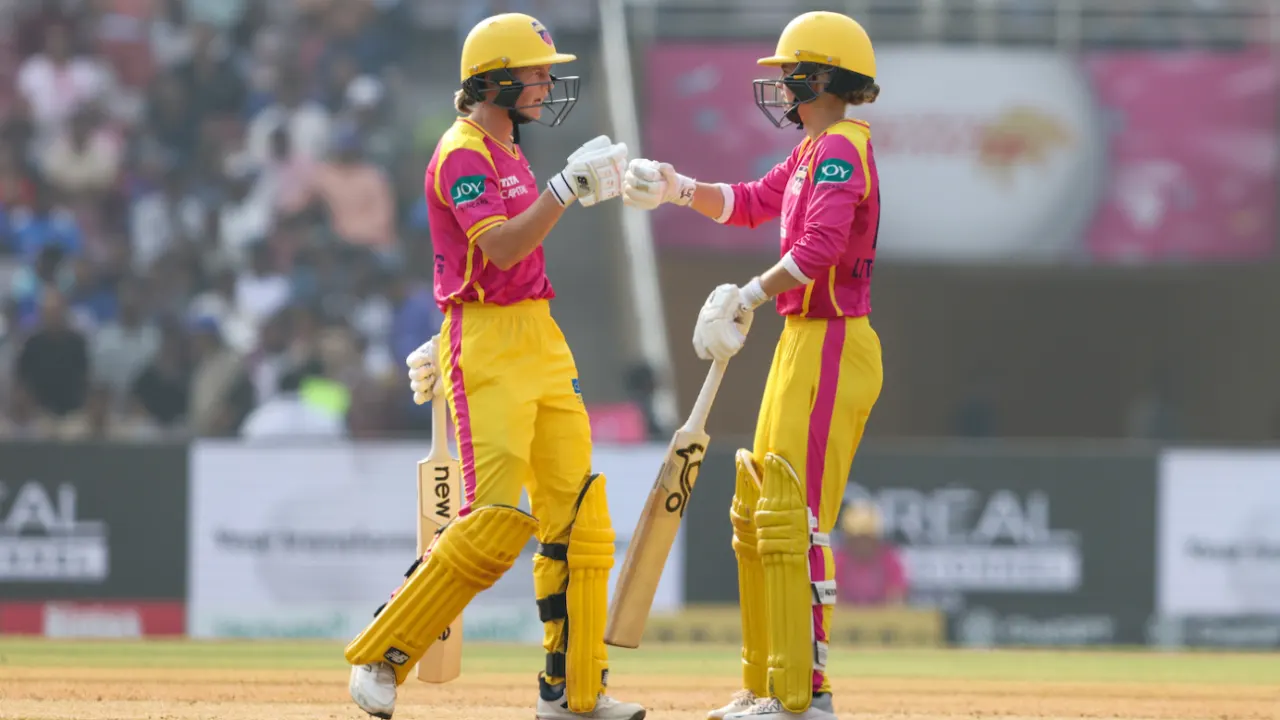
A 119-run partnership between MegLanning and Phoebe Litchfield set up a second successive win for UP Warriorz (UPW) against Mumbai Indians (MI) as they continued their bounceback after starting the season with a hat-trick of defeats.
Put in to bat, Lanning and Litchfield hit fifties before MI managed to restrict them to 187 for 8. However, a rejigged batting line-up faltered in the chase as the defending champions succumbed to their third defeat of the season in their last game in Navi Mumbai. UPW became just the second team to do the league double over MI in the WPL, after Delhi Capitals last year, also led by Lanning.
Nicola Carey, opening the bowling with Shabnim Ismail rested, continued her great form in WPL 2026 as she cleaned up Kiran Navgire for a golden duck with an inswinging yorker that beat the batter all ends up. But Lanning ensured a good powerplay for UPW.
After Litchfield picked up her first boundary courtesy an inside edge through backward square, Lanning got going with a pick-up flick off Carey that went all the way as 12 runs came off the third over. She then swept Nat Sciver-Brunt through square leg before picking up two more boundaries off Carey.
When Hayley Matthews was introduced in the sixth over, Litchfield first drove her through cover before Lanning hit back-to-back boundaries to take UPW to 56 for 1 at the end of the powerplay.
After a quiet eighth over bowled by Amelia Kerr, Litchfield was on 18 off 16 and needing to pick up the tempo. Next over, she square drove Amanjot Kaur for four before skipping down the track to loft her over long-off.
Lanning reached her half-century off 35 balls in the next over, hammering Kerr over long-off to get there. Litchfield, who Kerr had dismissed eight times in T20s, also lofted her over her head for a boundary as the two Australians started to pick up the pace. A quiet over followed, courtesy Sciver-Brunt, which also saw Triveni Vasisht drop Litchfield, but Litchfield and Lannning both picked up a boundary each off Sanskriti Gupta.
In a two-over period of frenzy that followed, UPW racked up 34 runs but lost both their set batters. Litchfield first just beat Carey running to her left at deep midwicket as she swept Amanjot for six and then brought up a 33-ball half-century with a cover drive. When Amanjot went short, Litchfield pulled her for another boundary through midwicket. She then chipped one to cover, where she was given another life, this time by Harmanpreet Kaur. Litchfield picked up another six off long-off to make it a 20-run over before a pick-up flick found deep backward square, where Sanskriti held on this time.
Lanning didn’t want to release any pressure and took on Matthews next over, putting away a couple of short balls for back-to-back fours. She swept the spinner for another boundary before picking out deep square leg to finish on 70 off 45.
After a period of 12 balls without a boundary after Lanning’s departure, Chloe Tryon launched a six over long-off. Tryon and Harleen Deol kept the boundaries coming as they picked up 23 runs off the next two overs.
But, MI’s star overseas allrounders then dampened the finish for UPW. First, Sciver-Brunt started the 19th over with back-to-back wickets. Tryon sliced a full toss to cover, where Harmanpreet made amends by holding on to the catch before Shweta Sehrawat was caught behind first ball. She got a thin edge that popped up off G Kamalini’s gloves but she did well to grab it in the second attempt.
Deol hit another boundary before missing a legbreak from Kerr in the final over to be out stumped. Kerr then also had Sophie Ecclestone stumped and Deepti Sharma caught behind to give away only two runs in the final over and restrict UPW to 187 for 8.
MI came into the game with the second worst average for the opening partnership and the worst run rate. On Saturday, they tried their fourth different combination of the season, with Sajeevan Sajana partnering Matthews. Matthews started well, with a three boundaries through the off side off Kranti Gaud and Shikha Pandey.
Sajana got into the action in the third over, pulling Gaud for six over midwicket before getting an outside edge for four. But, Gaud came back strong by trapping her in front to give UPW the first breakthrough.
Ecclestone then nearly had Matthews lbw, choosing not to review after the batter missed a sweep, even though it looked close. But it didn’t matter as Matthews chipped the next ball back to Ecclestone, who went on to bowl a wicket maiden.
Sciver-Brunt then got a couple of boundaries off Gaud and Harmanpreet was crafty in gliding one between backward point and short third off Ecclestone, but they only managed 38 runs in the first six, continuing their trend of slow starts.
Sciver-Brunt, who was looking in great touch, hit Pandey straight to Lanning at cover in the first over after the powerplay as MI’s job got harder. Then Deepti, who bowled a quiet first over, had Carey miscuing one down the ground and Deol took a good catch running back from mid-on.
Harmanpreet, who was struggling to get going, pulled Tryon for a six over midwicket but fell in the same over trying the same shot. Having lost half their side and needing to score at over 13 runs an over, it was effectively game over for MI.
Kerr and Amanjot tried to mount a comeback, with an 83-run stand that saw the latter hammer three sixes, but they could not keep up with the asking rate. Amanjot offered a return catch to Pandey in the penultimate over and MI ended up 22 runs short.
Brief scores:
UP Warriorz Women 187 for 8 in 20 overs (Meg Lanning 70, Phoebe Litchfield 61, Harlene Deol 25, Chloe Tryon 21; Nicola Carey 1-38, Amelia Kerr 3-28, Nat Sciver-Brunt 2-22, Hayley Maththews 1-40, Amanjot Kaur 1-38) beat Mumbai Indians Women 165 for 6 in 20 overs (Hayley Maththews 13, Sajeevan Sajana 10, Nat Sciver Brunt 15, Harmanpreet Kaur 18, Amelia Kerr 49*, Amanjot Kaur 41; Kranti Gaud 1-38, Shikha Pandey 2-30, Sophie Ecclestone 1-33, Deepti Sharma 1-35, Chloe Tryon 1-18) by 22 runs
[Cricinfo]

President Yoweri Museveni has been declared the winner of Thursday’s election extending his four decades in power by another five years.
He gained 72% of the vote, the election commission announced, against 25% for his closest challenger Bobi Wine, who has condemned what he described as “fake results”.
Wine has called on Ugandans to hold non-violent protests.
Museveni, 81, first came to power as a rebel leader in 1986 but since then has won seven elections.
The election process was marred by violence and Wine, a 43-year-old former pop star, says that at least 21 people have been killed.
The authorities have so far confirmed seven deaths.
Access to the internet has been cut in the country since Tuesday, making it hard to verify information.
The authorities say the blackout was necessary to prevent misinformation, fraud and the incitement of violence – a move condemned by the UN human rights office as “deeply worrying”.
Wine has demanded that the internet be restored.
[BBC]

Floods kill more than 100 across southern Africa as rains intensify

Lanning, Litchfield and Pandey help UP Warriorz do the double over Mumbai Indians

Ugandan leader to extend 40-year rule after being declared winner of contested poll

Iran supreme leader blames US for deadly protests

Trump names Tony Blair, Jared Kushner to Gaza ‘Board of Peace’

The Government is taking steps to regulate early childhood education to ensure quality education while enhancing the professionalism of preschool teachers. — PM

‘Dates have the highest sugar content to fight Coronavirus’

Sunday Island 27 December – Headlines

#SundayIsland 17th December – Headlines

Sunday Island – 28th March

Sunday Island Headlines – 21 March

Sunday Island – 21st February – Headlines
-

 Business3 days ago
Koaloo.Fi and Stredge forge strategic partnership to offer businesses sustainable supply chain solutions
-

 Business7 days ago
Dialog and UnionPay International Join Forces to Elevate Sri Lanka’s Digital Payment Landscape
-

 News19 hours ago
UNDP’s assessment confirms widespread economic fallout from Cyclone Ditwah
-

 Editorial2 days ago
The Chakka Clash
-

 Editorial19 hours ago
Crime and cops
-

 News7 days ago
Sajith: Ashoka Chakra replaces Dharmachakra in Buddhism textbook
-

 Features7 days ago
The Paradox of Trump Power: Contested Authoritarian at Home, Uncontested Bully Abroad
-

 Features7 days ago
Subject:Whatever happened to (my) three million dollars?