
News
Japan donates 388 MT canned fish for school meals program

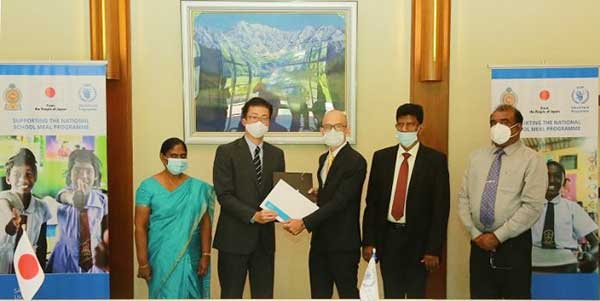
GOSL and WFP welcomes gift02
The Government of Japan has donated a large shipment of canned fish, weighing 388 MT and worth JPY 300 million (LKR 519 million), to the United Nations World Food Programme (WFP) and the Government of Sri Lanka, to meet the protein needs of school children covered by the national school meal programme a jhoint press release from WFP and the Japanese Embassy here said on Friday..
The donation was formalized at a ceremony held at the Japanese Ambassadors residence in Colombo, at which the Exchange of Notes were signed by Kitamura Toshihiro, Charge dAffaires ad interim of Japan to Sri Lanka and Andrea Berardo, WFP Deputy Country Director of Sri Lanka.
The event was chaired by N.H.M. Chitrananda, Secretary of the Ministry of Education, L.M.W. Darmasena, Additional Secretary, School Activities of the Ministry of Education and Renuka Peiris, Director, Health and Nutrition of the Ministry of Education.
The Governments of Sri Lanka and Japan have had a strong bond with a mutually supportive relationship between the people of our countries for many years, said Toshihiro. The Government of Sri Lanka and its people demonstrated their solidarity to Japan in the immediate aftermath of the Great East Japan Earthquake and Tsunami in March 2011, through a cash donation of US$ 1 million and 3 million tea bags.
The canned fish provided by Japan is sourced from the areas supported by Sri Lanka, as an extension of the continuous supply provided by Japan, reflecting our appreciation of our Sri Lankan friends for lending a hand to Japan in times of need. We will continue to support Sri Lanka, in the spirit of unity and solidarity in our joint battle against the effects of Covid-19, the release said.
Through this agreement, the Government of Japan commits to making available to the Government of Sri Lanka – through WFP – 388 MT of canned fish, enough for the preparation of 19 million nutritious meals, rich in protein, for 270,000 school children. This latest contribution ensures that canned fish will continue to be offered to school children, for the period 2021 2022, in addition to the previous consignment of canned fish supplied by the Government of Japan which will last up to mid next year, it added.
Nutritious meals are the foundation to good health, especially for children, said Andrea Berardo, WFP Deputy Country Director in Sri Lanka. This generous contribution from Japan comes at a crucial time when so many Sri Lankan families are hard hit by COVID-19 with reduced incomes and job loss. Fish is a great source of protein and by including it in school meals, we can be certain that children are getting the right nutrients they need to grow and develop.
Lack of adequate protein intake could result in several health issues amongst children, including slow growth, poor concentration and decreased immunity. In Sri Lanka, nutrition surveys have indicated that 40% of primary-level school children were too thin before Covid-19. Consumption of protein-rich foods such as fish is vital to help children meet their dietary requirements.
The Government of Sri Lanka has been conducting the National School Meal Programme for several decades, said the Secretary of the Ministry of Education, N.H.M. Chitrananda. The programme was developed with the objective of ensuring that children are healthy and can optimally benefit from educational opportunities provided to them. We are thankful to the Government of Japan and WFP for providing canned fish to supplement the school meal programme and for supporting us in enhancing the nutritional status of school children.
The National School Meal Programme which WFP has supported since 2003 was disrupted by Covid-19-induced school closures in March 2020. The Government of Japan, through WFP, has been supporting the programme since 2011, with approximately 1,500 MT of canned fish worth more than JPY 1 billion, to supplement school meals twice a week, adding diversity, nutrition and taste. WFP, together with the Government of Japan, will continue to support the Government of Sri Lanka in its efforts to scale up and enhance the National School Meal Programme.

Latest News
Advisory for Severe Lightning issued to the Western and Sabaragamuwa provinces and Nuwara-Eliya, Galle and Matara districts

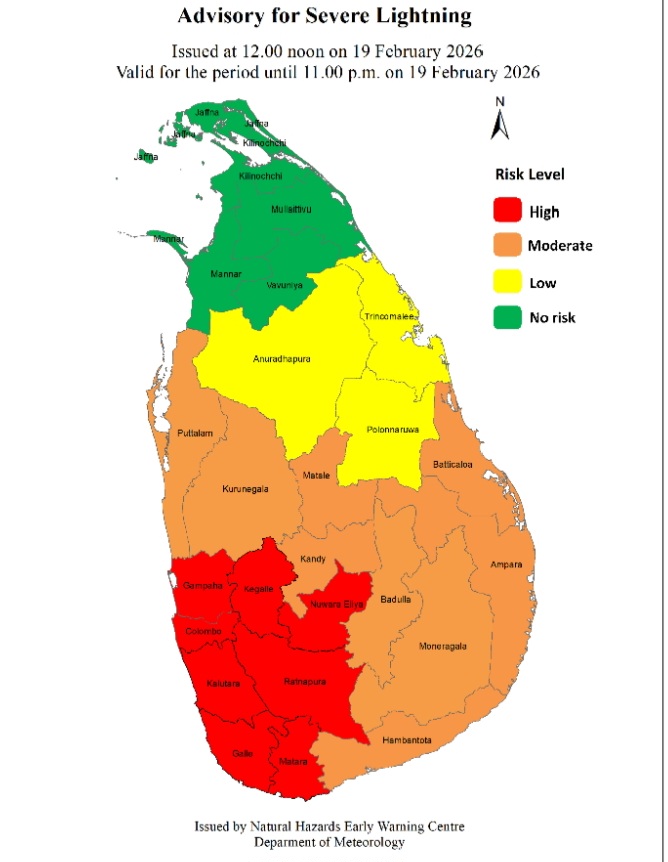
Advisory for Severe Lightning
Issued by the Natural Hazards Early Warning Centre at 12.00 noon 19 February 2026 valid for the period until 11.00 p.m. 19 February 2026
The public are warned that thundershowers accompanied with severe lightning are likely to occur at some places in in the Western and Sabaragamuwa provinces and in Nuwara-Eliya, Galle and Matara districts after 2.00 p.m.
There may be temporary localized strong winds during thundershowers.
General public is kindly requested to take adequate precautions to minimize damages caused by lightning activity.
ACTION REQUIRED:
The Department of Meteorology advises that people should:
Seek shelter, preferably indoors and never under trees.
Avoid open areas such as paddy fields, tea plantations and open water bodies during thunderstorms.
Avoid using wired telephones and connected electric appliances during thunderstorms.
Avoid using open vehicles, such as bicycles, tractors and boats etc.
Beware of fallen trees and power lines.
For emergency assistance contact the local disaster management authorities.
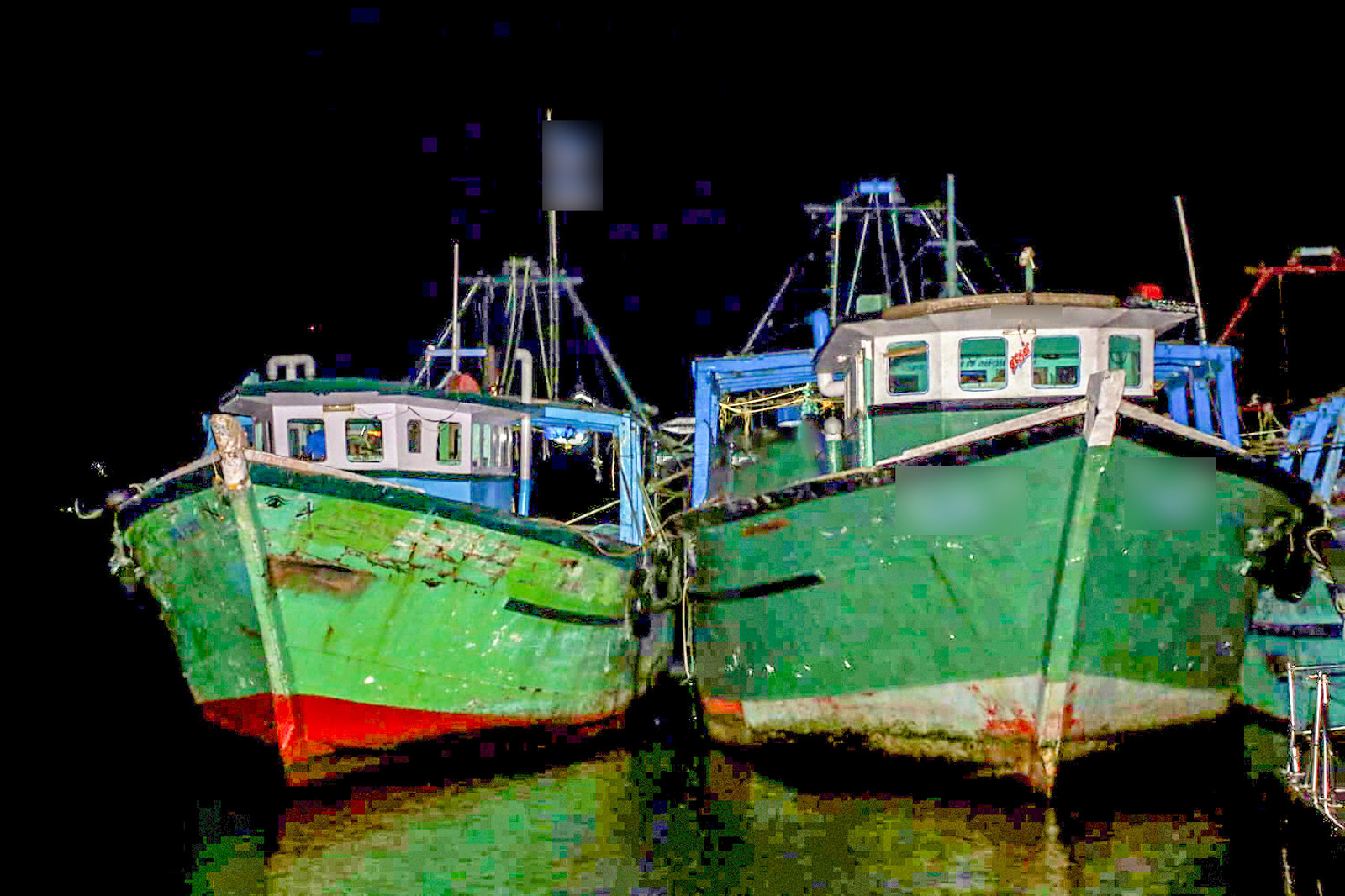
During operations conducted in the dark hours of 18 Feb 26, the Sri Lanka Navy and Coast Guard seized 04 Indian fishing boats and apprehended 22 Indian fishermen, while they were poaching in Sri Lankan waters north of Mannar and off the Delft Island, Jaffna.
Recognizing the detrimental effects of poaching on marine resources and the livelihoods of local fishing communities, the Sri Lanka Navy and Coast Guard continue to conduct regular operations as proactive measures to deter such activities. These efforts underscore the collective robust approach and steadfast commitment to safeguarding the nation’s marine ecosystems while ensuring the economic security and wellbeing of its citizens.
The 02 fishing boats along with the 10 fishermen held in Mannar were handed over to the Fisheries Inspector of Mannar and the remaining 02 fishing boats intercepted off the Delft Island, together with 12 Indian fishermen were handed over to the Fisheries Inspector of Myliddy for onward legal proceedings.
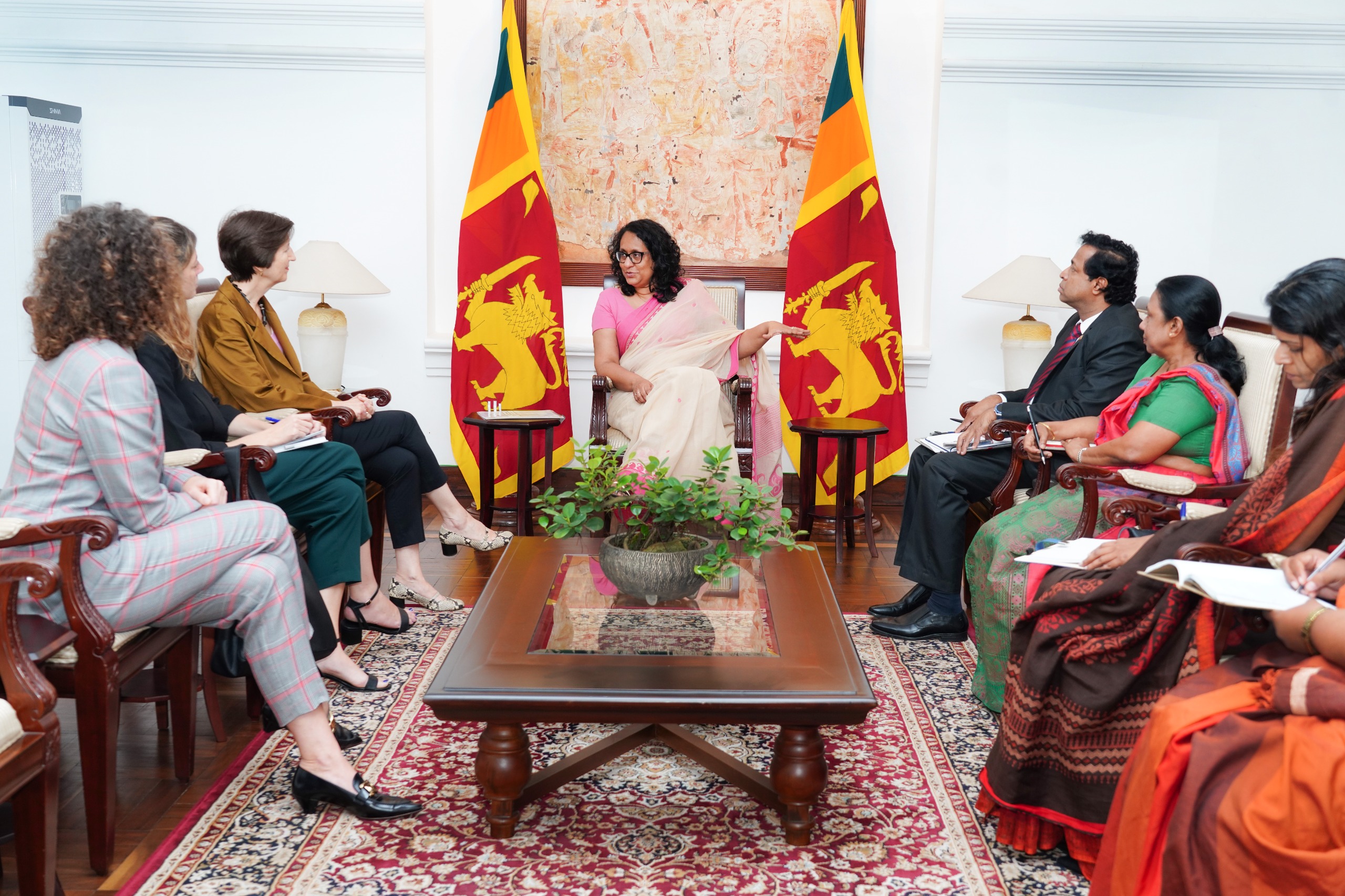
The Ambassador of Switzerland to Sri Lanka Dr. Siri Walt paid a courtesy call on Prime Minister Dr. Harini Amarasuriya on the 17th of February at the Temple Trees.
Welcoming the Ambassador of Switzerland to Sri Lanka the Prime Minister briefed the Ambassador on her recent visit to Davos to participate in the World Economic Forum Annual Meeting noting that the series of high-level bilateral meetings held on the sidelines of the Forum, along with two important industry visits provided valuable insights for Sri Lanka’s economic engagement.
The discussion focused on Switzerland’s vocational education and training (VET) system, with particular interest in exploring possible cooperation and knowledge-sharing opportunities.
The Prime Minister also conveyed her appreciation for the assistance extended by the Government of Switzerland following Cyclone Ditwah. She emphasized Sri Lanka’s need for enhanced technical assistance during the ongoing rebuilding phase, especially in relation to the reconstruction of bridges and railway infrastructure.
Both sides reaffirmed their shared commitment to further strengthening bilateral relations between Sri Lanka and Switzerland, and to expanding cooperation in areas of mutual interest.
First Secretary (Political) of the Embassy of Switzerland in Colombo Ms. Justine Boillat, First Secretary (Migration) of the Embassy of Switzerland in Colombo Ms. Andrea Kienast and the Secretary to the Prime Minister, Pradeep Saputhanthri, Additional Secretary to the Prime Minister, Ms. Sagarika Bogahawatt and officials from the Ministry of Foreign Affairs , Foreign Employment, Tourism.attended the meeting.
[Prime Minister’s Media Division]

Ex-UK Prince Andrew arrested on suspicion of misconduct in public office

Advisory for Severe Lightning issued to the Western and Sabaragamuwa provinces and Nuwara-Eliya, Galle and Matara districts

Navy and Coast Guard seize 04 Indian fishing vessels poaching in Sri Lankan waters

Hope’s 75, Forde and Joseph’s wickets help West Indies go into playoffs unconquered

Sri Lanka opt to bat against Zimbabwe, play Madushanka and Madushan

South Korea’s ex-president jailed for life for masterminding an insurrection

‘Dates have the highest sugar content to fight Coronavirus’

Sunday Island 27 December – Headlines

#SundayIsland 17th December – Headlines

Sunday Island – 28th March

Sunday Island Headlines – 21 March

Sunday Island – 21st February – Headlines
-

 Life style5 days ago
Marriot new GM Suranga
-

 Business4 days ago
Ministry of Brands to launch Sri Lanka’s first off-price retail destination
-

 Features5 days ago
Monks’ march, in America and Sri Lanka
-

 Features5 days ago
The Rise of Takaichi
-
 Features5 days ago
Wetlands of Sri Lanka:
-
 News4 days ago
Thailand to recruit 10,000 Lankans under new labour pact
-

 News4 days ago
Massive Sangha confab to address alleged injustices against monks
-

 News2 days ago
IMF MD here